
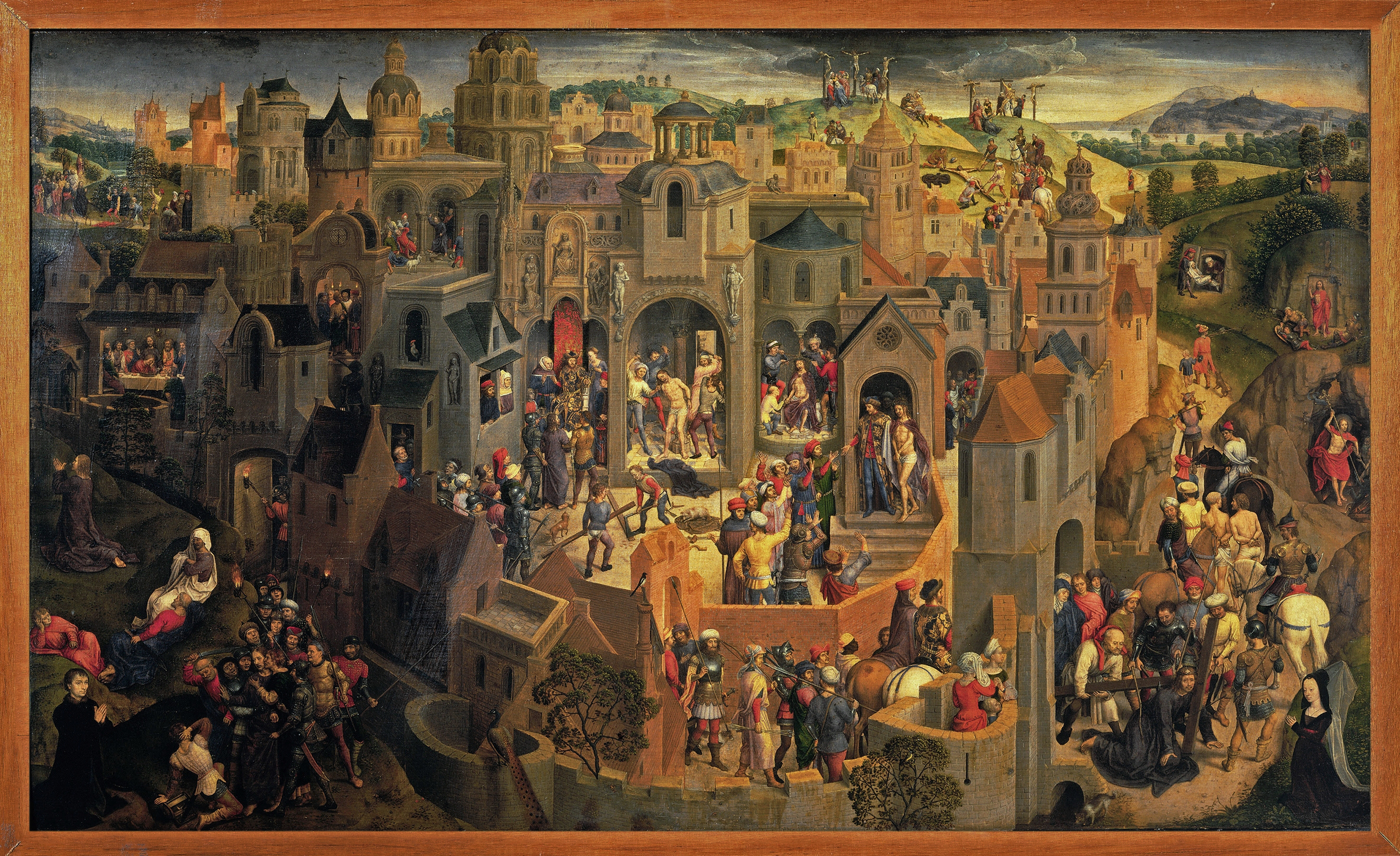
The following entry appears in Charles Carroll Bombaugh’s Gleanings from the Harvest Fields of Literature: A Melange of Excerpta, Curious, Humorous, and Instructive (1867):
THE MOST CURIOUS BOOK IN THE WORLD
The most singular bibliographic curiosity is that which belonged to the family of the Prince de Ligne, and is now in France. It is entitled Liber Passionis Domini Nostri Jesu Christi, cum Characteribus Nulla Materia Compositis. This book is neither written nor printed! The whole letters of the text are cut out of each folio upon the finest vellum; and, being interleaved with blue paper, it is read as easily as the best print. The labor and patience bestowed in its completion must have been excessive, especially when the precision and minuteness of the letters are considered. The general execution, in every respect, is indeed admirable; and the vellum is of the most delicate and costly kind. Rodolphus II of Germany offered for it, in 1640, eleven thousand ducats, which was probably equal to sixty thousand at this day. The most remarkable circumstance connected with this literary treasure is, that it bears the royal arms of England, but it cannot be traced to have ever been in that country.
A much more detailed description of the book is found in Pierre Lambinet’s Recherches historiques, littéraires et critiques sur l’origine de l’imprimerie (1798). Lambinet recounts first hearing about it, and then later being able to see it for himself:
I had read the following anecdote in the first volume of Les Nuits Parisiennes, and had transcribed it: “The emperor Rodolphe (Rodolphe II, son of the emperor Maximillian II), offered eleven thousand ducats for a book, which he saw, in 1640, in the study of the Prince of Ligne (in Brussels).” The book was entitled Liber passionis domini nostri Jesu Christi, cum figuris et caracteribus ex nulla materia compositis (“Book of the passion N. S. J. C. with figures and letters not made of any matter”). A few years later, engaged in the pleasures of bibliography, I beseeched Le Gros, secretary of the Prince de Ligne, to show me this singular book. I have carefully examined this masterpiece of industry and patience; here is the description, the history, and the explanation of this enigma.





 corvusfugit.com