1869: The Well of Well-being

15241930_10211519538443770_7500620785868034560_n

From P. W. Joyce’s Origin and History of Irish Names of Places (Dublin: McGlashan and Gill, 1869):

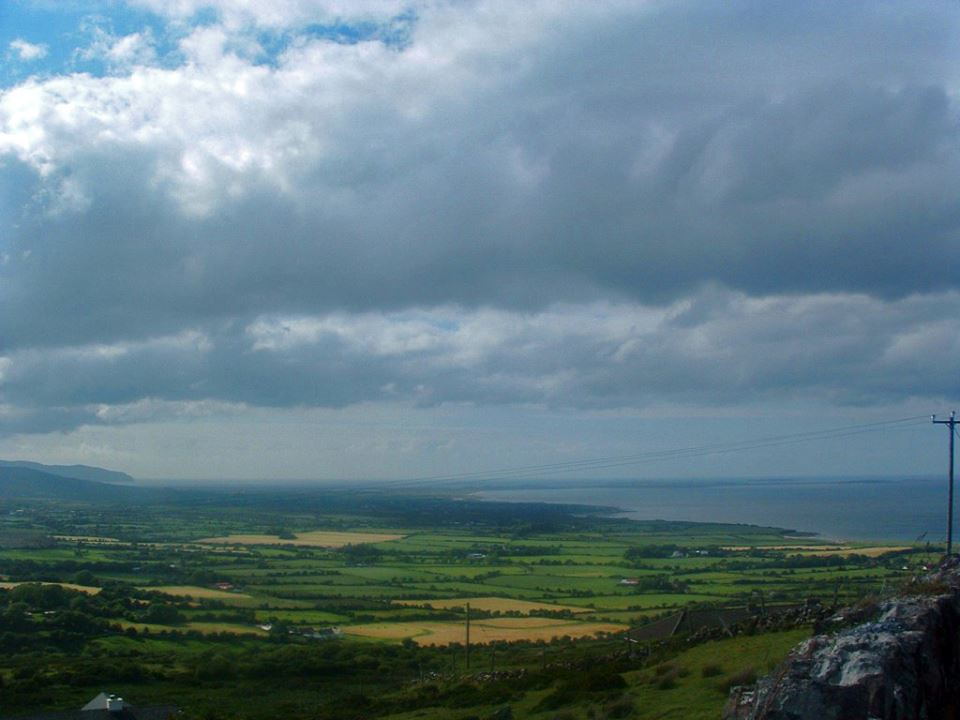
In the parish of Kilgobban in Kerry, about eight miles west of Tralee, is situated the beautiful valley of Glannagalt; and it was believed not only in Kerry, but over the whole of Ireland, wherever the glen was known, that all lunatics, no matter in what part of the country, would ultimately, if left to themselves, find their way to this glen to be cured. Hence the name, Gleann-na-nGealt, the valley of the lunatics. There are two wells in the glen, called Tobernagalt, the lunatics’ well, to which the madmen direct their way, crossing the little stream that flows through the valley, at a spot called Ahagaltaun, the madman’s ford, and passing by Cloghnagalt, the standing stone of the lunatics; and they drink of the healing waters, and eat some of the tresses that grow on the margin—the water and the cress, and the secret virtue of the valley, will restore the poor wanderers to sanity.

The belief that gave origin to these strange pilgrimages, whatever may have been its source, is of great antiquity. In the ancient Fenian tale called Cad Finntragha, or “The battle of Ventry,” we are told that Dairif Dornmhar, “The monarch of the world,” landed at Ventry to subjugate Erin, the only country yet unconquered; and Finn-mac-Cumhail and his warriors marched southwards to oppose him. Then began a series of combats, which lasted for a year and a day, and Erin was successfully defended against the invaders. In one of these conflicts, Gall, the son of the king of Ulster, a youth of fifteen, who had come to Finn’s assistance, “having entered the battle with extreme eagerness, his excitement soon increased to absolute frenzy, and after having performed astounding deeds of valour, he fled in a state of derangement from the scene of slaughter, and never stopped till he plunged into the wild seclusion of this valley.” (O’Curry, Lect., p. 315.) O’Curry seems to say that Gall was the first lunatic who went there, and that the custom originated with him.

From the Irish Times, October 23, 2012:

The scientific analysis carried out on behalf of the TG4 documentary confirms the presence of lithium in the well water, perhaps going some way towards explaining the link between the well and people with mental health issues through the centuries.

One of those who has visited the well in recent times is Dingle-based writer Dairena Ní Chinnéide (43), who was diagnosed with bi-polar disorder almost two decades ago. Ní Chinnéide grew up near a well and her father instilled in her some of the traditions about wells and rural life.

“I liked the water and I felt there was something very cleansing to it. At times when I felt very low, I would visit it and it gave me peace of mind.” (source)

Image: View of Castlegregory and the Maharees from Gleann na nGealt (source)

Posted in Uncategorized | Tagged , , , , | Leave a comment

2013: Your Flying Cars Are Here

flying_citroen_visas_by_jacobmunkhammar-d5vu2ya

Jacob Munkhammar: Flying Citroen Visas (2013)

See more here.

Posted in Uncategorized | Tagged , , , , , | Leave a comment

2014: These Cinder Blocks Are Made of Buildings

Screen Shot 05-20-17 at 06.17 AM

Evol: Blocked Delivery (2014)

See more here.

Posted in Uncategorized | Tagged , , , , | 1 Comment

1912: Branches

Léon_Spilliaert,_Branches_Léon_Spilliaert_(1881-1946)_Boom…_Flickr_-_2016-10-19_20.32.35

Léon Spilliaert: Branches (1912)

Posted in Uncategorized | Tagged , , , , , | 1 Comment

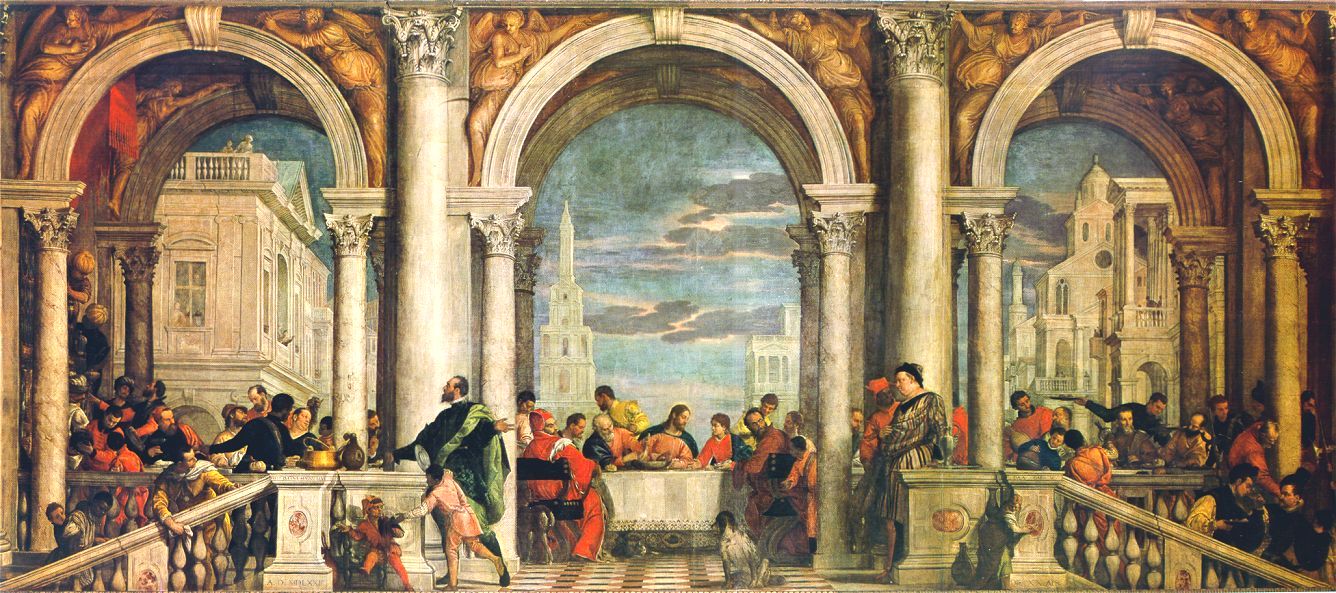
1573: The Inquisition Grills an Artist for the Last Supper

Veronese

Paolo Veronese: The Feast in the House of Levi (1573)

Veronese’s painting was the cause of an investigation by the Roman Catholic Inquisition, which balked at the lavish settings and costumes—as well as the “buffoons, drunken Germans, dwarfs and other such scurrilities” present at the feast. Veronese was called to answer for his irreverence and indecorum, and threatened with the serious charge of heresy.

The painting was originally presented as a Last Supper; here is the transcript of the interrogation, which took place on July 18, 1573:

Continue reading

Posted in Uncategorized | Tagged , , , , , , | Leave a comment

2010: This City is Made of Staples

Peter-root-e1272204910125

Peter Root: Ephemicropolis (2010)

Found here.

Posted in Uncategorized | Tagged , , | Leave a comment

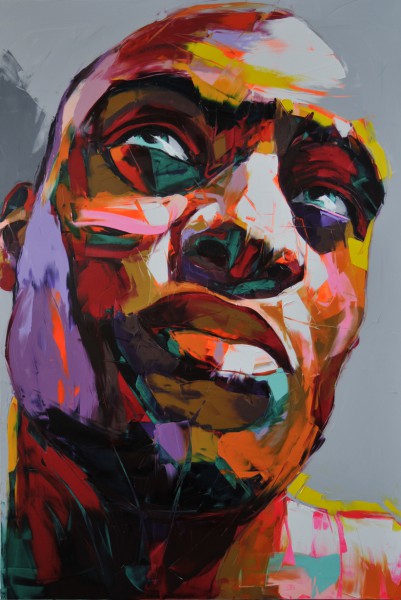
2012: This Painting is Untitled

12509836_10208573008022351_1248688898345699820_n

Françoise Nielly: Untitled 660 (2012)
(source)

Posted in Uncategorized | Tagged , , , , | Leave a comment

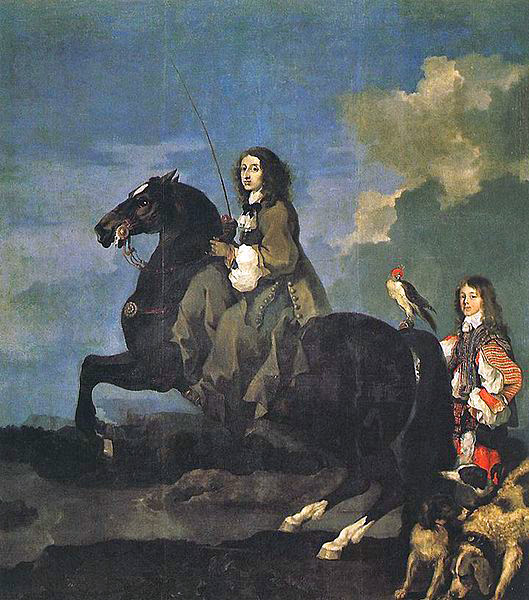
1653: She Cursed and Swore like a Musketeer

529px-Sébastien_Bourdon-Christina_of_Sweden_1653

Christina, the Queen of Sweden from 1632 to 1654, famously rejected traditional gender roles, often wearing men’s clothing and excelling at traditionally masculine pursuits. She was also one of the most educated women of the Renaissance, had a mischievous sense of humor, and once provoked the jealousy of Elisabeth, Princess Palatine of Bohemia by luring René Descartes to her court in Stockholm, where he died of pneumonia.

The daughter of King Gustav II Adolph and his wife Maria Eleonora of Brandenburg, Christina officially succeeded her father on the the throne when she was six years old; he been killed at the Battle of Lützen during the Thirty Years’ War. She began ruling when she was eighteen.

“Her hair was rough, her hands dirty, her clothes tumbled, she cursed and swore like a musketeer,” wrote Mme. Charles Vincens, “but she rode divinely on horseback, could kill a hare with a rifle, slept on a hard bed and profoundly despised women—their ideas, their occupations, their conversations.”

Continue reading

Posted in Uncategorized | Tagged , , , , , , , , , , , | 1 Comment

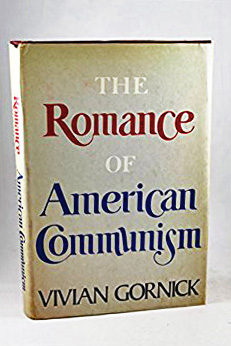
1979: Eric Lanzetti Tells You What a Communist Is

41kXLLiT4NL._SY344_BO1,204,203,200_

In 1938, after a childhood in a West Virginia mining town and a bright college career at Brown and Oxford, Eric Lanzetti —radicalized by the revolutionary fight against fascism in Spain—became a communist organizer on the Lower East Side of New York City.

Forty years later, Vivian Gornick interviewed Lanzetti for her 1979 book The Romance of American Communism; she tells this story:

Once, in the middle of a long conversation, I began to make a distinction between “real” Communists and fellow travelers or revolving-door Communists. Lanzetti turned on me and said: “Real Communists? What the hell does that mean, real Communists?” And he delivered to me the ultimate, mythic speech on what a Communist was. “I’ll tell you what a Communist is,” Lanzetti said. “An organizer goes into a factory. He works with the men, begins giving them leaflets, points out what’s happening at work, suggests relationships the workers didn’t see before. A worker becomes interested in what the organizer is saying. He begins coming to a few meetings. He begins to read. He gets a little larger a sense of things. He begins to think about capitalism. He learns about slavery and feudalism. He sees a pattern to this thing. He starts to feel history. Now he begins to see his life not only in him, or just in terms of the corporation, or the sonofabitch over his lousy life that keeps pissing on him. He sees a system of oppression older than God and he feels himself part of something his bigger than he ever knew existed. It eases his heart, gives him courage and stamina, he’s politicized.

“All this time he belongs to the [Communist Party]. Now, let’s say he moves. Drops out of meetings, gets to a new town. Delays looking up the Party. They don’t go looking for him. He doesn’t pay his dues, he’s dropped from the rolls, he’s no longer in the Party. Time passes. He doesn’t feel like going to meetings. Times change. He drifts away. Now, you tell me, what is that man? I’ll tell you what he is. That man is a Communist! And for the rest of his life he’s a Communist. Wherever some shitty thing is happening and he’s anywhere near it he is going to respond in a certain way and act on a certain understanding. And men like him are everywhere. These are the Communists, these are my people, my children, my own. . . .

“And we’re everywhere, everywhere. We saved this fucking country. We went to Spain, and because we did America understood fascism. We made Vietnam come to an end, we’re in there in Watergate. We built the CIO, we got Roosevelt elected, we started black civil rights, we forced this shitty country into every good piece of action and legislation it has ever taken. We did the dirty work and the Labor and Capital establishments got the rewards. The Party helped make democracy work.

“We’re the changing, shaping force that rears its head again and again. That’s what a Communist is. If we reach a hundred or five hundred with any action, any pamphlet, our ultimate effect is a thousand-fold that. Because it’s a way of feeling, a way of responding, a way of seeing the deeper meaning of this fucking profit system, and ultimately it’s all of a piece.”

Posted in Uncategorized | Tagged , , , , , , | 1 Comment

1958: The Quiet American Shows at the Victoria

08

Pete Tuner: The Quiet American (1958)

(source)

Posted in Uncategorized | Tagged , , , , | Leave a comment