1987: A Book Comes from the Sky

Tianshu_title

Xu Bing’s A Book from the Sky (1987) is a 604-page volume in the style of the Song and Ming dynasties—but it contains no actual Chinese characters; instead, the symbols—4,000 of them—are “meaningless glyphs designed to resemble traditional Chinese characters.” This is the title page. (source)

Posted in Uncategorized | Tagged , , , , , | Leave a comment

1970: A Crow Builds a Nest

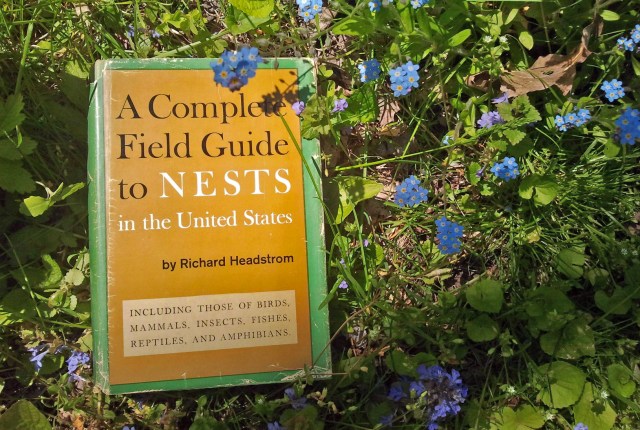
WP_007140I liked these descriptions of nests from Richard Headstrom’s Complete Field Guide to Nests in the United States (1970). The book contains a few photographs, but largely depends on written descriptions of nests for identification.

The description of the crow’s nest, for example, falls under the category of “Small, Under 15 Inches, Outside Diameter”:

Substantial, well-built, cup-shaped, crude in external appearance; of sticks and twigs; warmly lined with strips of bark, grasses, moss, and fine roots. Sometime the interior has a warm yellowish color. Occasionally the nest will contain such materials as seaweed, corn-stalks, pieces of rope and twine, feathers, dried cow dung, and horse manure. Outside diameter, 12 inches; outside height, 9 inches; inside diameter, 7 inches; inside depth, 4½ inches. Usually in a conifer and close to the trunk but also in other trees, averaging 30 feet above the ground. Woodlands and coniferous forests. Eastern and central United States south to Florida and Texas.

Crow

Here are a few more that I liked:

Continue reading

Posted in Uncategorized | Tagged , , , , , | Leave a comment

1907: It Rains in Ireland

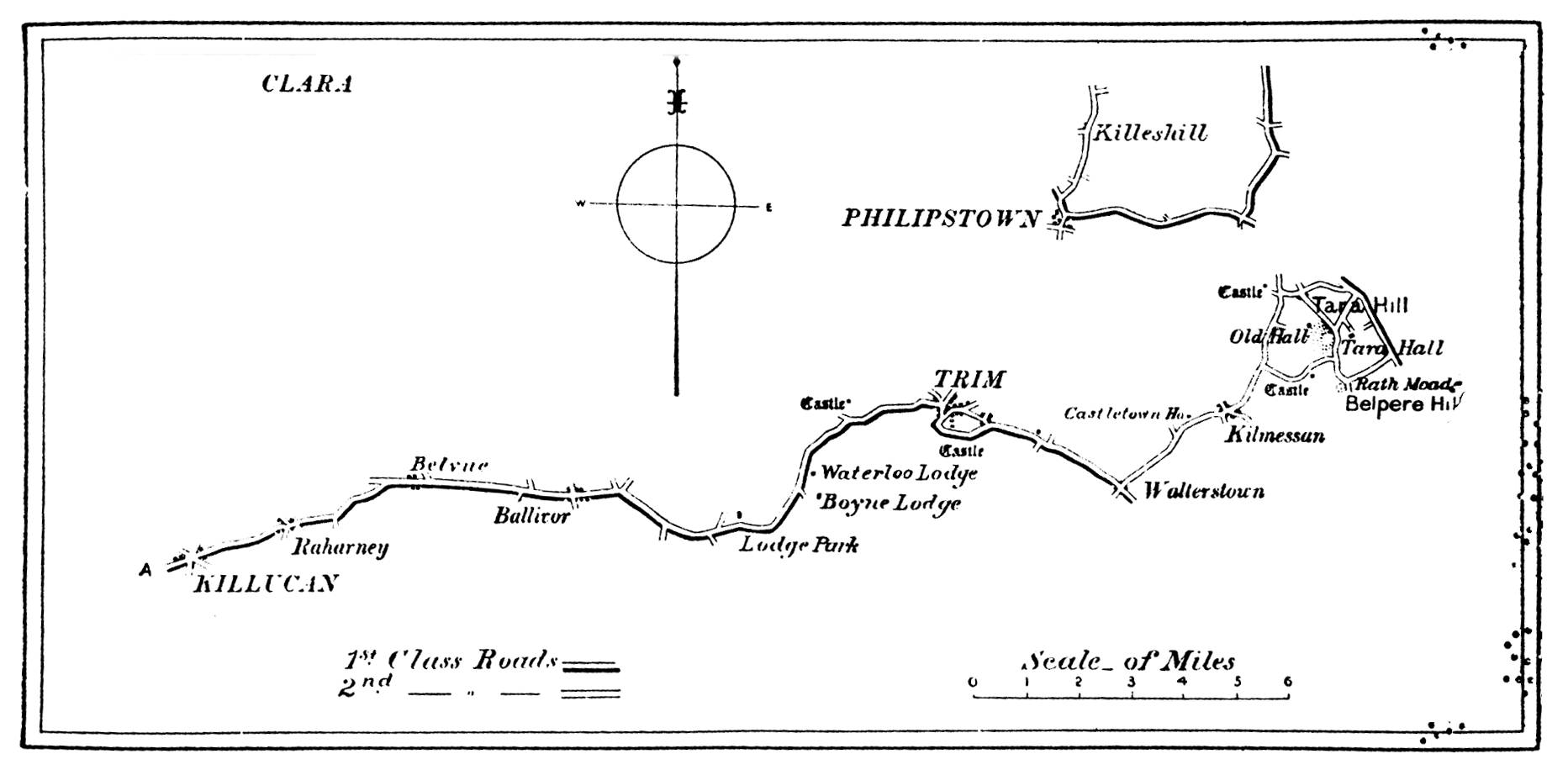
PDFsam_Rambles_in_Eirinn

Irish rain of the summer and autumn is a kind of damp poem. It is humid fragrance, and it has a way of stealing into your life which disarms anger. It is a soft, apologetic, modest kind of rain, as a rule; and even in its wildest moods, it gives you the impression that it is treating you as well as it can under the circumstances. It does not come heralded by dust and thunder and accompanied by lightning, and roaring tempests, like the rain of the tropics. Nor does it wet you to the bones in five minutes. You scarcely know when it begins. It grows on you by degrees. It comes on the scene veiled in soft shadows and hazes, and maybe a silver mist. You think the day is beginning to look like rain, and you are not wrong. But you also think that it may clear off; no doubt, it often thinks so itself. Nevertheless, it finally decides not to clear off. The shadows deepen. The hazes thicken. And was that a drop you felt? It was-just a drop. Another comes presently, and you feel it on your cheek. Then a few more come. Then the rest of the family encircle you shyly. They are not cold or heavy or splashy. They fall on you as if they were coming from the eyes of many angels weeping for your sins. They caress you rather than pelt you, and they are laden with perfume from the meadow flowers,or the glistening trees, or the sweet, rich earth, or the heathery bogland. But they soak you all the same. In due course you are wet to the skin. They fold you in, do those spells of Irish rain, and make of you a limp, sodden, unsightly thing in their soft embraces. They soak the road and make it slippy,and your. bicycle wobbles now and then; and you have to ride it through the mud by the ditch, where the blades of grass and pebbles and leafdrifts give a grip to the tyres.

At first, perhaps, you dread the rain. You regard it as a calamity. The mud on the road is too much for your tyres, and your limited experience, and you have some unpleasant falls. You are spilled into the ditch or over the handle bars, or thrown on your back a helpless case. You would exchange places with the dirtiest tramp you have ever met on a fair day, or with the most extensively married tinker that you have ever met concentrating on Abbeyshrule. But after two or three months you become weather-proof. You get used to the softness of the weather. You acquire such skill in ‘riding for a fall,’ that even if you do come down it is only on your feet.

—William Bulfin, Rambles in Eirinn  (1907)

(source)

Posted in Uncategorized | Tagged , , , , | Leave a comment

2014: A Train Goes Somewhere

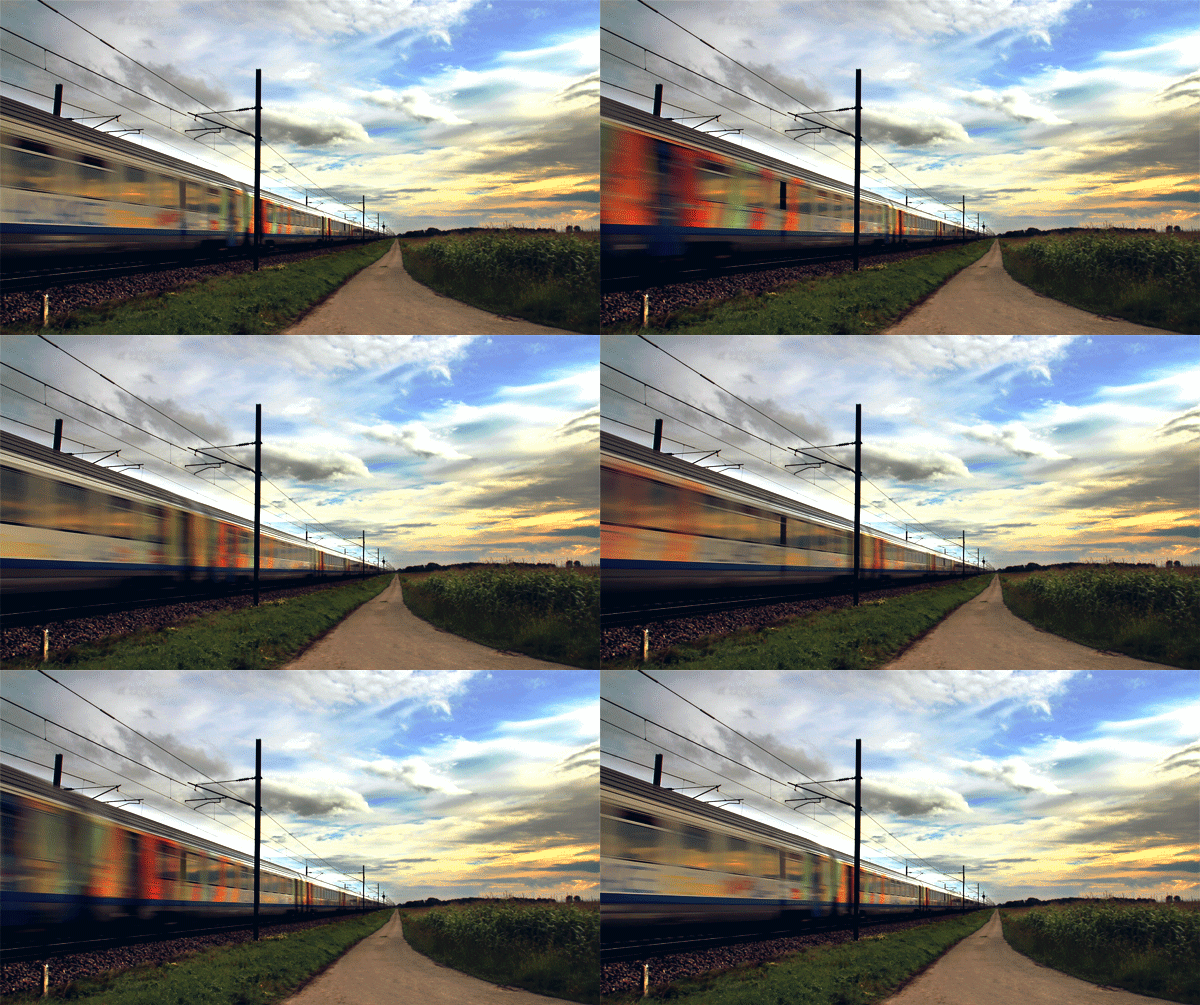
julien-douvier-animated-gif-22

Animated gif by Julien Douvier; more here. This one isn’t dated; 2014 is my best guess.

Posted in Uncategorized | Tagged , , , , | Leave a comment

2016: Mind of My Mind

palencar1

John Jude Palencar: Mind of My Mind (2016)

(source)

Posted in Uncategorized | Tagged , , , , , , | Leave a comment

2001: 300 Love Letters

Screen Shot 05-14-17 at 07.02 PM 001“So I’m telling this boy, one of the boys that lots of these love letters are to, about this project. ‘I’m writing three hundred love letters and sending them to strangers. The letters are going to be glued to the outside of the envelopes, so that the mailman, and presumably whoever the recipient lives with, will be able to see and read them. The letters aren’t to the strangers, they’re to people I know.’ The boy looks at me. We’re walking around, after work, deserted streets. He says, ‘I don’t understand. Why are you doing this?’, and I answer vaguely, talking about crossing space and the kind of intimacy that I believe is lacking from our society. And I’m left thinking: Is this project complicated or simple, idiotic or interesting?”

300 Love Letters


Posted in Uncategorized | Tagged , , , , , | Leave a comment

1862: Cotopaxi Erupts

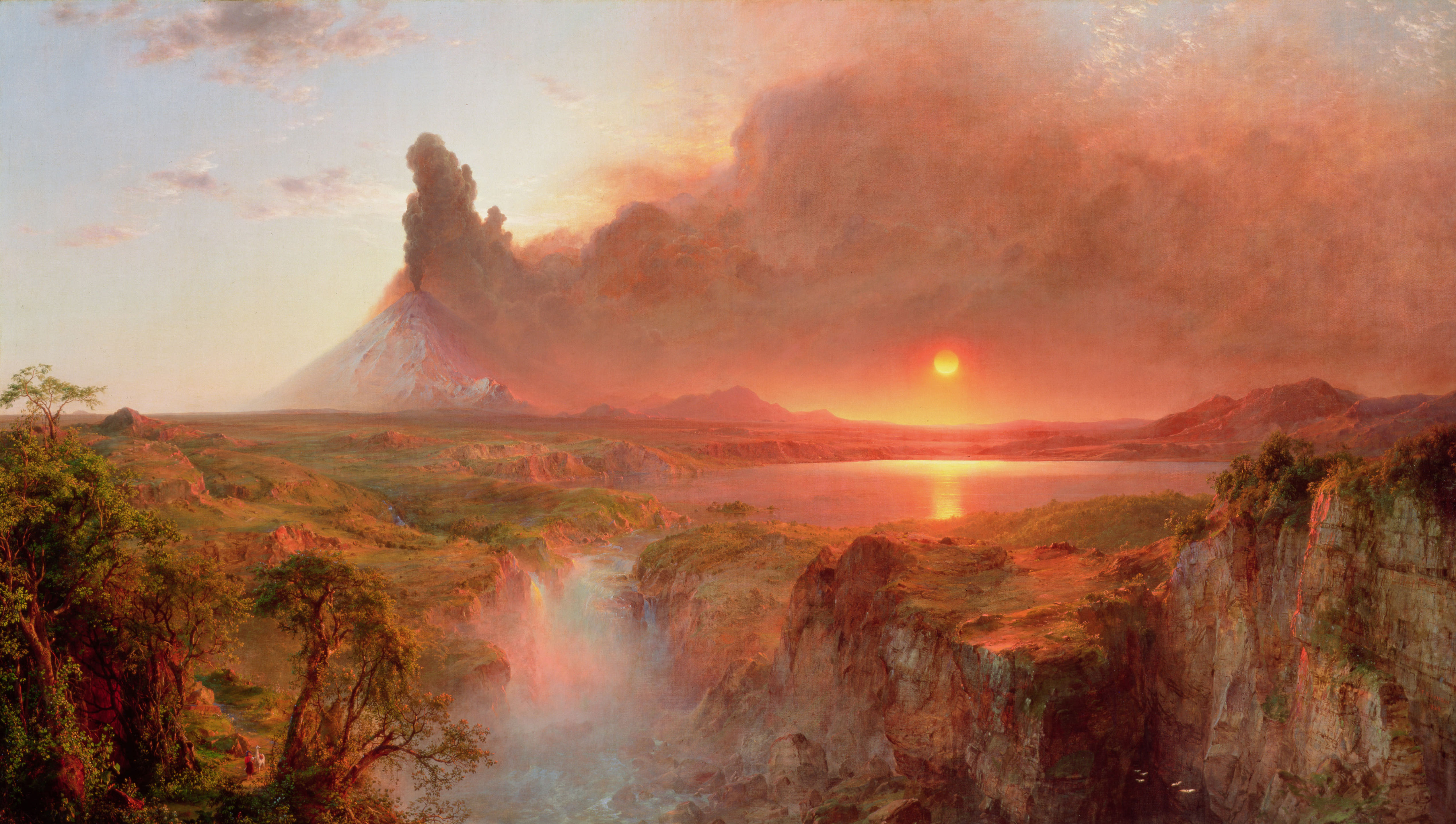
cotopaxi-1862

Frederic Edwin Church: Cotopaxi (1862)

Cotopaxi is one of the world’s highest volcanoes, located in the Andes Mountains about thirty miles south of Quito. It has erupted more then 50 times since 1738, the resulting lahars (mudflows) forming numerous valleys around it.

Smithsonian Curator Eleanor Harvey connects the explosive imagery in Church’s painting to the turbulence of the American Civil War: “By 1862 the nation was locked in a bloody Civil War with no end in sight. Journalists, preachers, poets, and soldiers wrote about extreme weather and violent natural events to describe a world that was coming apart at the seams. Volcanoes had become a popular metaphor to symbolize the war’s destructive force. During 1862 Frederic Church worked on his monumental image of Cotopaxi. In this painting the cinder cone of the erupting volcano dominates a panoramic sweep of the Andean plateau. The smoke and ash rolling from the caldera drift down the side of the mountain, nearly obliterating the surrounding landscape.” (source)

Posted in Uncategorized | Tagged , , , , , , , | Leave a comment

1895: Melancholy

Melancholie_Enckell_Magnus_1870_1925_Pori_Satakunta_FI_Porin_361f5622

Magnus Enkell: Melancholie (1895)
(source)

Posted in Uncategorized | Tagged , , , , , , , , , | Leave a comment

1550: A Book Is a Heart

The Heart Book - Denmark 1550s

“The Heart Book is regarded as the oldest Danish ballad manuscript. It is a collection of 83 love ballads compiled in the beginning of the 1550’s in the circle of the Court of King Christian III. Shown above is the beginning of ballad no. 43, Store længsel, du går mig nær (Great Yearning, thou touches me). A later reader—the otherwise unknown Christen Masse – has added some notes, i.a. this pious hope: “gvd ende oc vinde alle mit er lende til en god oc gledelig ende amen” (may god end and turn my misery into a good and happy ending amen).” (source)

Posted in Uncategorized | Tagged , , , | Leave a comment

1845: Frederick Douglass Visits Ireland

12742141_10208809475013878_2673814161193080918_n

Shortly after the 1845 publication of his Narrative of the Life of Frederick Douglass, an American Slave, Frederick Douglass left the US for a two-year tour of Ireland and Britain. During his time in Ireland, he befriended and appeared on stage with Daniel O’Connell, the Irish Catholic nationalist, abolitionist, and advocate of Catholic emancipation. The episode in Douglass’s life is notable for the ways in which the American and Irish politics of oppression intersect, overlap, and, sadly, reinforce one another in spite of the efforts of these two great advocates of justice.

Douglass was 27 when he arrived in Ireland. He was immediately struck by a culture that treated him as an equal:

Continue reading

Posted in Uncategorized | Tagged , , , , , , , , | 1 Comment