
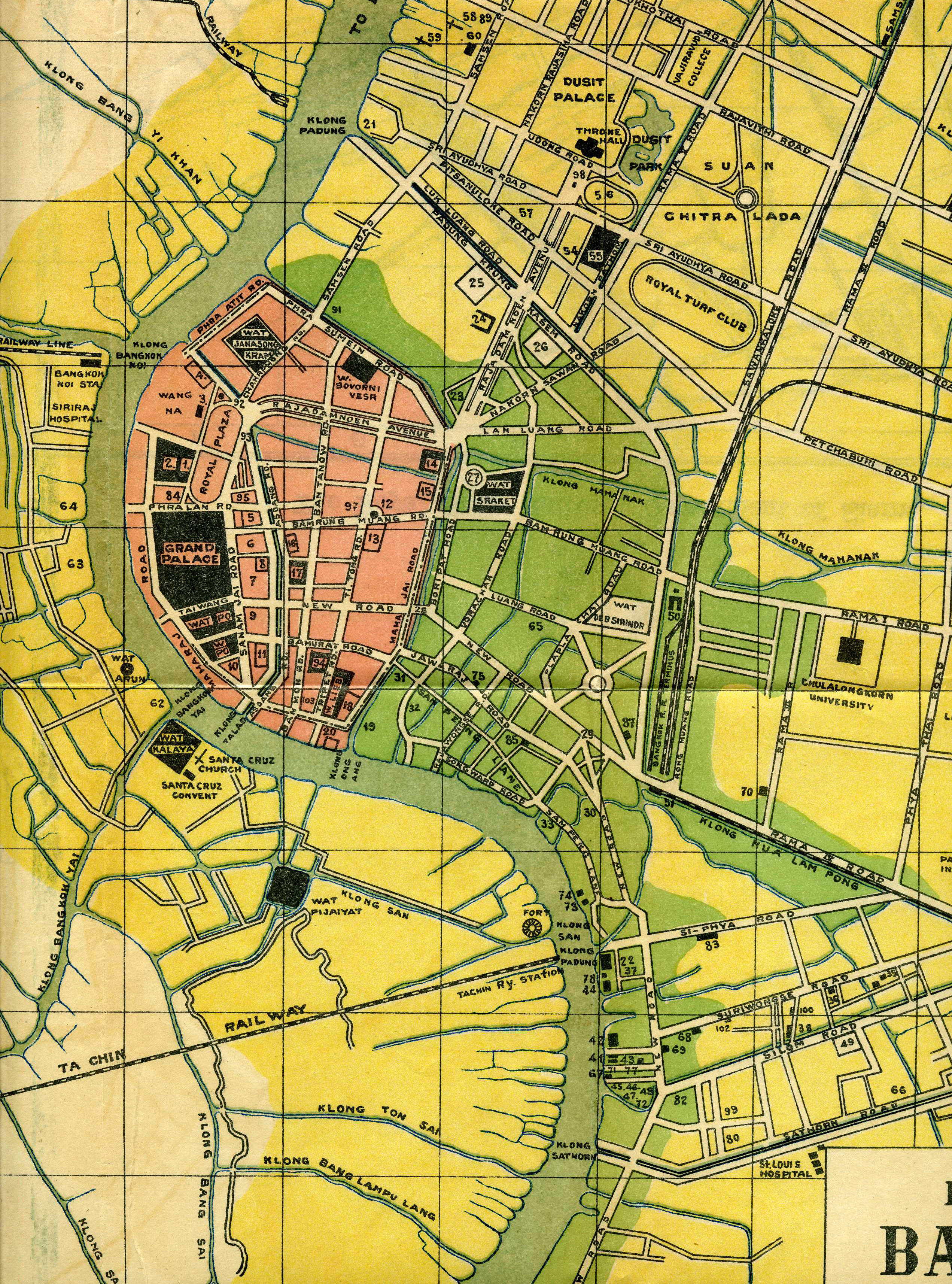
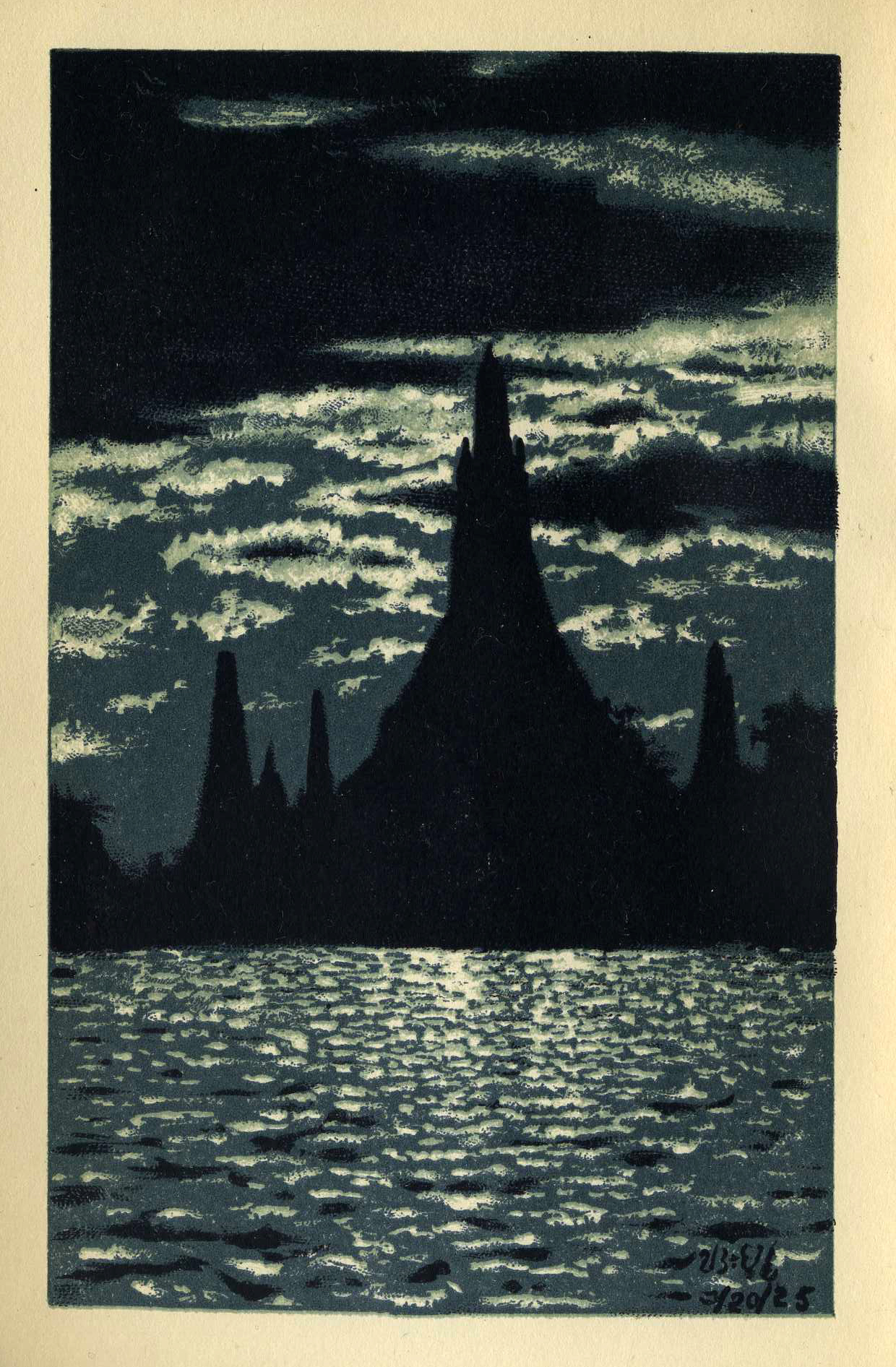

Map, frontispiece, and cover of the Royal State Railways’s Guide to Bangkok with Notes on Siam (1928); the frontispiece shows Wat Arun at night.
Map, frontispiece, and cover of the Royal State Railways’s Guide to Bangkok with Notes on Siam (1928); the frontispiece shows Wat Arun at night.

In the turmoil of the English Civil War (1642-1651), an engraving based on this portrait of King Charles I underwent a remarkable number of transformations. The original portrait was painted by Anthony van Dyck in 1633 (above). The French engraver Pierre Lombart then produced seven—possibly eight—versions of it during the tumultuous period in which the monarchy of England was toppled and then ultimately reinstated.
Charles was beheaded in 1649 after being put on trial by the revolutionary Roundheads; England’s monarchical system of government was then replaced with, first, the Commonwealth of England (1649–1653) and then the Protectorate (1653-1659) under which Oliver Cromwell ruled as Lord Protector until he died of natural causes in 1658. His position was assumed by his son Richard until the Royalists returned to power in 1660. Cromwell’s corpse was exhumed, hung in chains, and posthumously beheaded.
![Pierre Lombart - Headless Horseman (1655)]](https://corvusfugit.com/wp-content/uploads/2017/12/pierre-lombart-headless-horseman-16551.png)
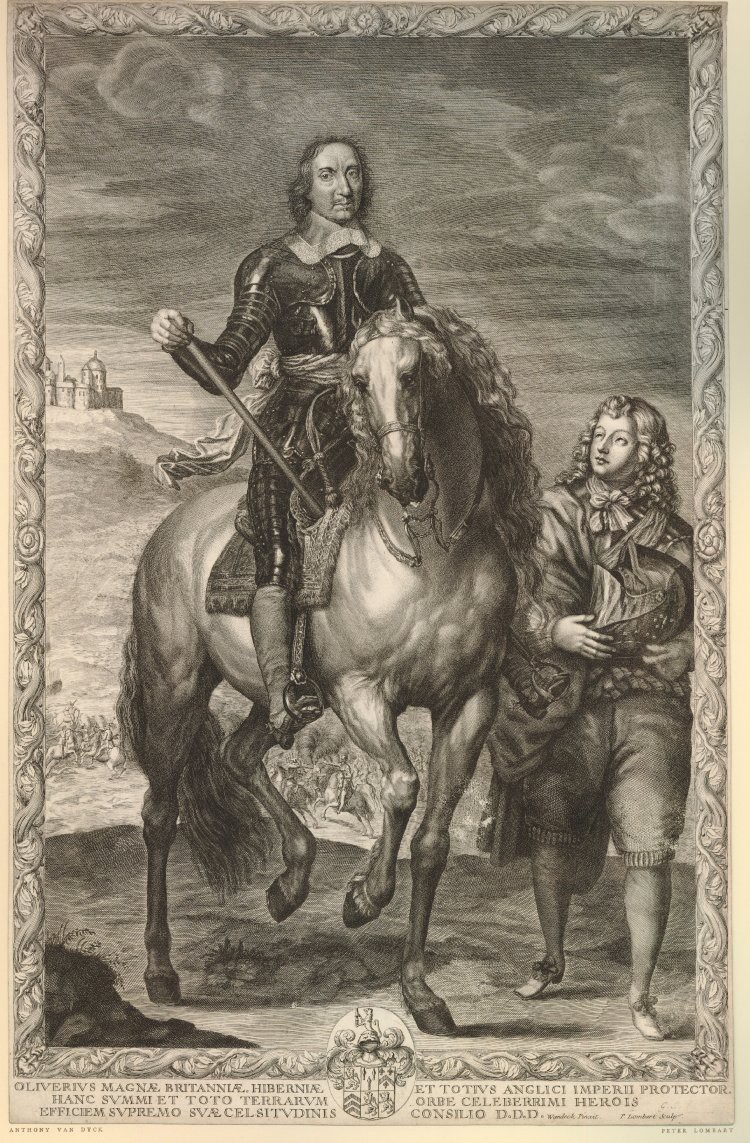
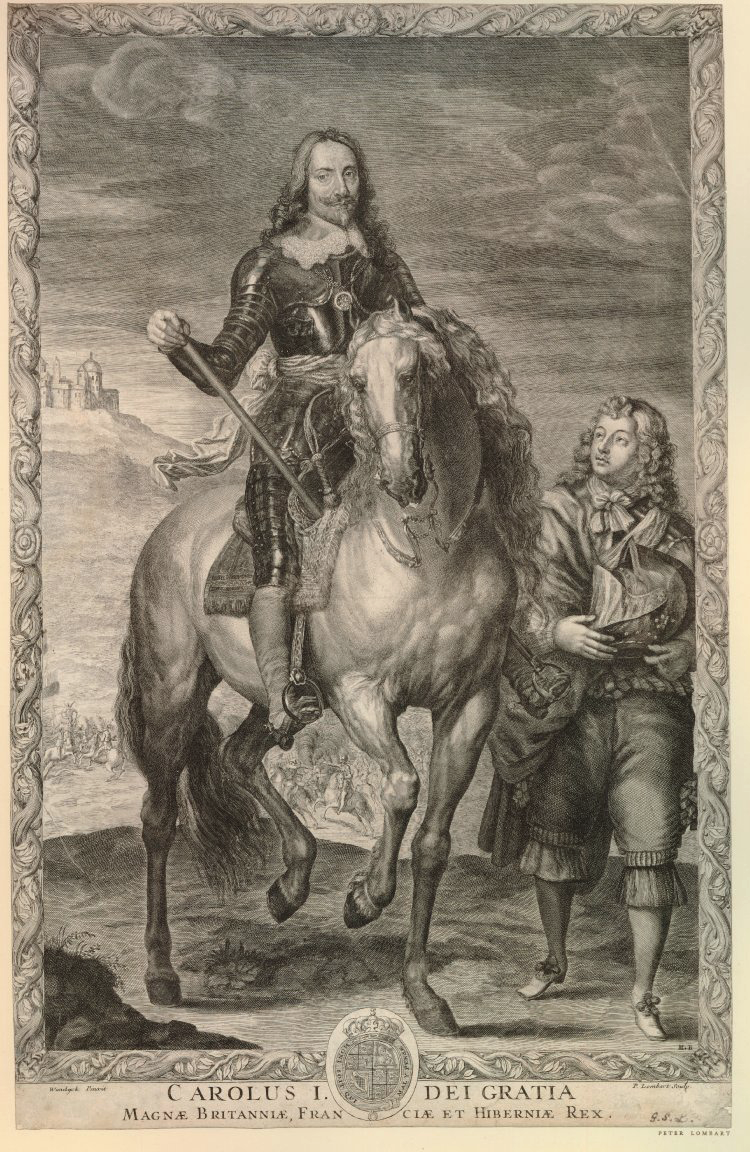
For his first engraving (1655) (not shown), Lombart simply reproduced van Dyck’s portrait of the king but substituted the head of Cromwell, adding a battle in the background and a new inscription; he was paid twenty pounds (roughly $6,000 today). In 1658, after Cromwell had died, Lombart burnished out the head on the copper printing plate (above, left), and substituted the likeness of King Louis XIV of France; two versions of this print survive. Later, for the fifth version, Louis’s head was scraped out and Cromwell’s re-engraved (above, center). Still later, likely after Lombart’s death, the head of Charles I returned (above, right)—and then, in the final version, Cromwell’s was restored. The British Museum says that there may have been an earlier first state.

Thomas Alexander Harrison: The Sea. I think this is a photogravure print of one of his paintings. I made up the date.

J. J. Grandville: The Bridge of Infinities, an illustration from Un Autre Monde (1844)

Hilma af Klint: The Swan, No. 19, Group IX-SUW (1914-1915)
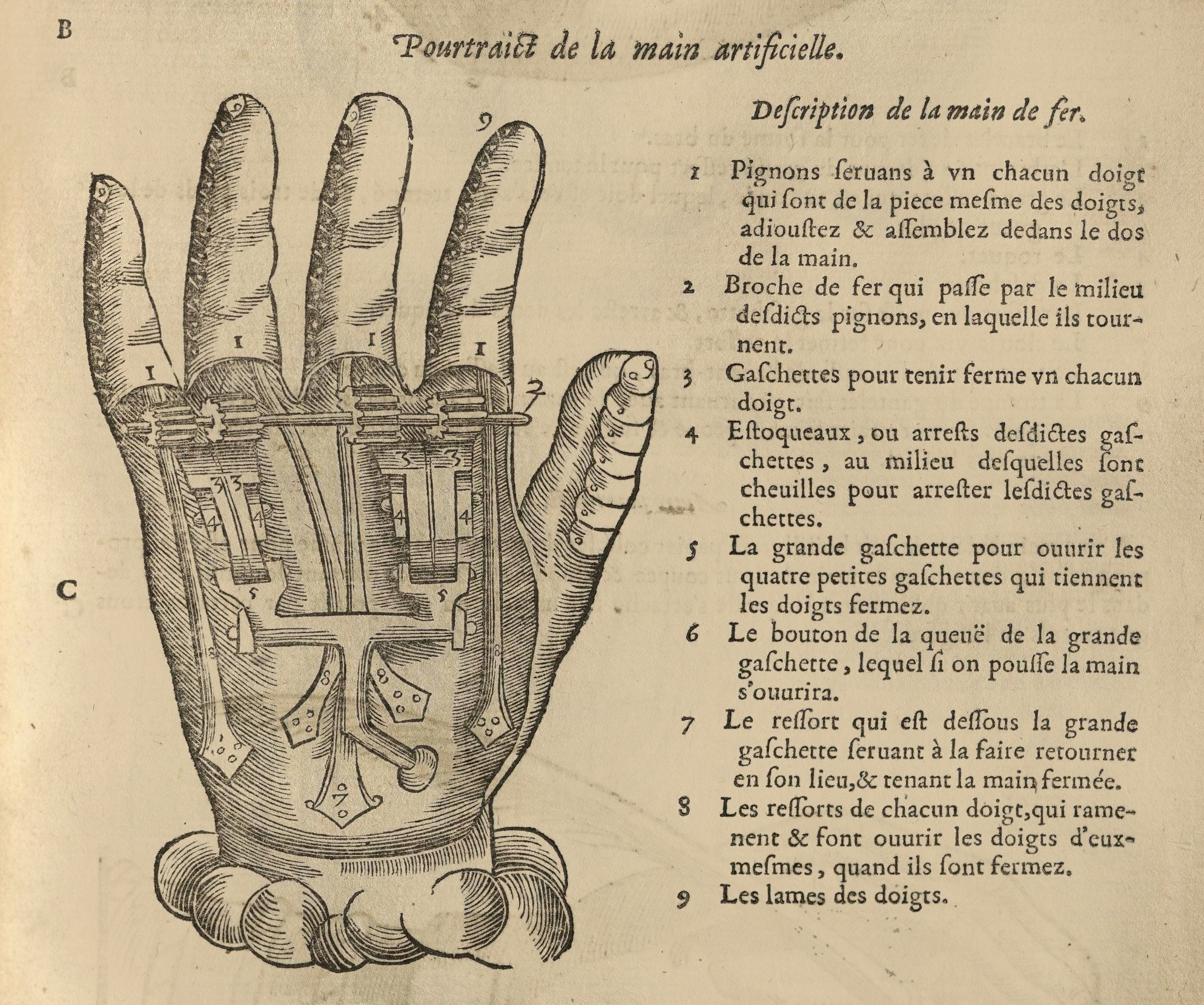
Ambroise Paré’s designed this mechanical hand—which he named “Le Petit Lorrain” — in the 1550’s for a French Army captain. The thumb is stationary, but a mechanical lever operates the other fingers. This illustration is taken from a 1663 edition of his complete works. (source)

George W. Lambert: Important People (1914-1921)
“By creating a portrait of ordinary people—a flower-seller, a clerk and a boxer—George W Lambert sought to parody the convention of only those with wealth or social status having their portraits painted. He questioned social values by mixing people of different social classes.” (source)

Jacques Le Moyne de Morgues: A Young Daughter of the Picts (ca. 1585)
An engraving based on this miniature appeared in the section on Picts and ancient Britons in Thomas Hariot’s Briefe and True Report of the New Found Land of Virginia (1590) and was originally attributed to the artist John White. The illustrations of the Picts—who lived in eastern and northern Scotland during the Late Iron Age and Early Medieval periods—were intended to show that early inhabitants of the British Isles had much in common with the native people of the Americas. (source)
 “How real is the possibility of a societal collapse?”
We conducted a series of experiments with the HANDY model, considering first an egalitarian society without Elites (xE = 0), next an equitable society (κ = 1) where Non-Workers and Workers are equally paid, and finally an unequal society whose Elites consume κ times more than the Commoners….the results of our experiments…indicate that either one of the two features apparent in historical societal collapses – over-exploitation of natural resources and strong economic stratification – can independently result in a complete collapse. Given economic stratification, collapse is very difficult to avoid and requires major policy changes, including major reductions in inequality and population growth rates.
—Safa Motesharrei, et al., “Human and nature dynamics (HANDY): Modeling inequality and use of resources in the collapse or sustainability of societies” (here)

I made these about a year ago. Let me know if you like them.


 corvusfugit.com