

Koen van den Broek: Untitled (c. 2010)
Koen van den Broek: Untitled (c. 2010)

Sarah Stone: Perspective interior view of Sir Ashton Lever’s Museum in Leicester Square, London March 30 1785

“Unidentified employees working at Brooklyn Public Library’s Central Library prior to its opening on February 1, 1941.” (source)
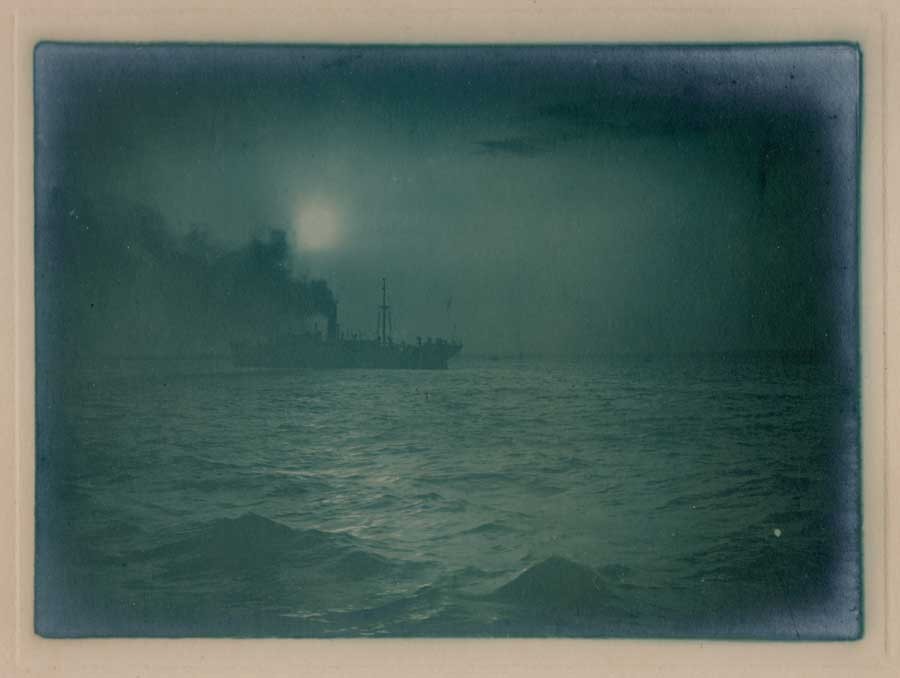
Unknown Brooklyn photographer: Steamer in New York Harbor (c. 1910-20); found on PhotoSeed.

Robert Koehler: The Strike (1886)
The Strike spoke to issues of urgent concern on both sides of the Atlantic—issues that remain timely even today. From the painting’s debut and initial reception against a fevered background of seething ferment among industrial workers, it acquired an increasingly transnational aura as it traveled back and forth between the United States and Europe at a time when activists on both continents, such as August Bebel in Germany and Eugene Debs in America, were energizing socialist politics and the industrial labor movement. Variously contextualized, The Strike was introduced to a German public by means of a widely reproduced wood engraving erroneously identified as a depiction of striking Belgian coal miners. But while Koehler traced the inspiration of his painting to the Great Railroad Strike of 1877 in the United States, he clearly intended its action to be universal in meaning, unattached to any specific event.
—James M. Dennis: Robert Koehler’s The Strike: The Improbable Story of an Iconic 1886 Painting of Labor Protest (2011)

Henry Stacy Marks: Capital and Labor (1874)
In 1871, the Trade Union Act decriminalized trade unions in Great Britain:
The purposes of any trade union shall not, by reason merely that they are in restraint of trade, be deemed to be unlawful so as to render any member of such trade union liable to criminal prosecution for conspiracy or otherwise.
A minimum of seven members was required in order to officially register a union with the government.

Martin Johnson Heade: Sunset Over the Marshes (1890-1904)

A cento is a poem composed of lines taken from other poems, either by different authors or from the same author. (Homer and Virgil are traditional favorites.) The word comes from the Greek κεντρόνη, which means “patchwork garment.”
The following example is taken from Charles Carroll Bombaugh’s Gleanings for the Curious from the Harvest-fields of Literature: A Melange of Excerpta (1890):
I only knew she came and went Lowell
Like troutlets in a pool; Hood
She was a phantom of delight, Wordsworth
And I was like a fool. Eastman
“One kiss, dear maid,” I said and sighed, Coleridge
“Out of those lips unshorn.” Longfellow
She shook her ringlets round her head, Stoddard
And laughed in merry scorn. Tennyson
Ring out, wild bells, to the wild sky! Tennyson
You hear them, oh my heart? Alice Carey
‘Tis twelve at night by the castle clock, Coleridge
Beloved, we must part! Alice Carey
“Come back! come back!” she cried in grief, Campbell
“My eyes are dim with tears— Bayard Taylor
How shall I live through all the days, Mrs. Osgood
All through a hundred years?” T. S. Perry
‘Twas in the prime of summer time, Hood
She blessed me with her hand; Hoyt
We strayed together, deeply blest, Mrs. Edwards
Into the Dreaming Land. Cornwall
The laughing bridal roses blow, Patmore
To dress her dark brown hair; Bayard Taylor
No maiden may with her compare, Brailsford
Most beautiful, most rare! Read
I clasped it on her sweet cold hand, Browning
The precious golden link; Smith
I calmed her fears, and she was calm, Coleridge
“Drink, pretty creature, drink!” Wordsworth
And so I won my Genevieve, Coleridge
And walked in Paradise; Hervey
The fairest thing that ever grew Wordsworth
Atween me and the skies. Osgood
For modern examples, see The Cento: A Collection of Collage Poems and John Reed’s “new” Shakespeare play, All the World’s A Grave (2008), composed only of lines from actual Shakespeare plays—which he summarizes as follows:
The story: Hamlet goes to war for Juliet, the daughter of King Lear. Having captured his bride—by unnecessary bloodshed—Prince Hamlet returns home to find that his mother has murdered his father and married Macbeth. Hamlet, wounded and reeling, is sought out by the ghost of his murdered further, and commanded to seek revenge. Iago, opportunistic, further inflames the enraged Prince, persuading him that Juliet is having an affair with Romeo; the Prince goes mad with jealousy.
Image: Hannah Hoch: Fashion Show (1925-35)
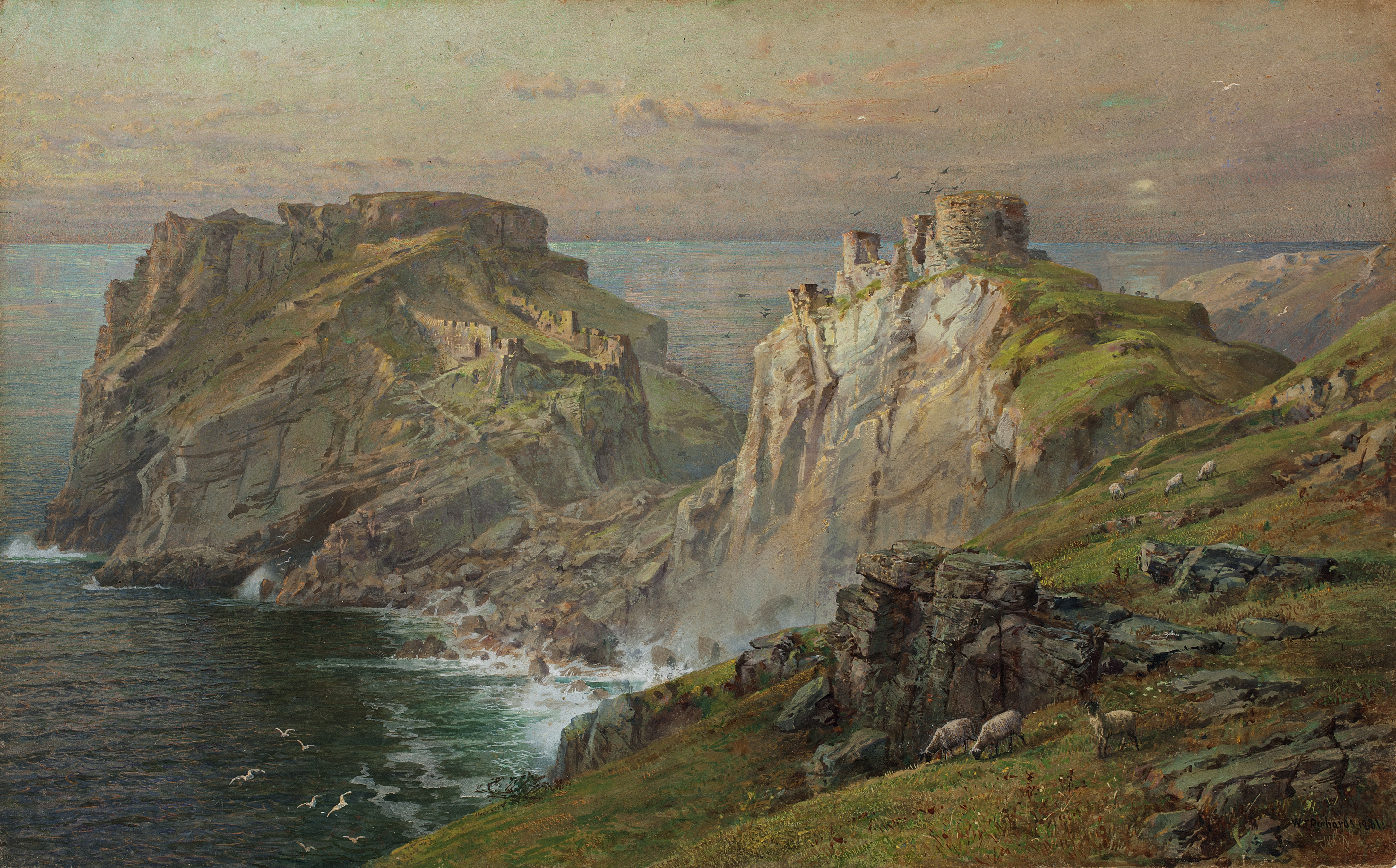
William Trost Richards: Tintagel (1881)
Binn sin, a luin Doire an Chairn!
ní chuala mé i n-aird san bhith
ceól ba binne ná do cheól
agus tú fá bhun do nid.Aoincheól is binne fán mbith,—
mairg nách éisteann ris go fóil,
a mhic Arphluinn ná gclog mbínn,
‘s go mbéarthá a-rís ar do nóin.Agat, mar tá agam féin,
dá mbeith deimhin sgéil an eóin,
do dhéanta déara go dian,
‘s ní bhiadh th’aire ar Dhia go fóil.I gcrích Lochlann ná sreabh ngorm
fuair mac Cumhaill na gcorn ndearg
an t-éan do-chí sibh a-nois—
ag sin a sgéal doit go dearbh.Doire an Chairn an choill úd thiar,
mar a ndéindís an Fhiann fos;
ar áille is ar chaoimhe a crann
iseadh do cuireadh ann an lon.Sgolghaire luin Doire an Chairn,
búithre an daimh ó Aill na gCaor,
ceól le gcolladh Fionn go moch,
lachain ó Loch na dTrí gCaol.Cearca fraoich um Chruachain Chuinn,
feadghail dobhráin Druim Dhá Loch,
gotha fiulair Ghlinn na bhFuath,
longhaire cuach Chnuic na Sgoth.An tráth do mhair Fionn ‘s an Fhiann,
do b’annsa leó sliabh ná cill;
fá binn leósan fuighle lon,
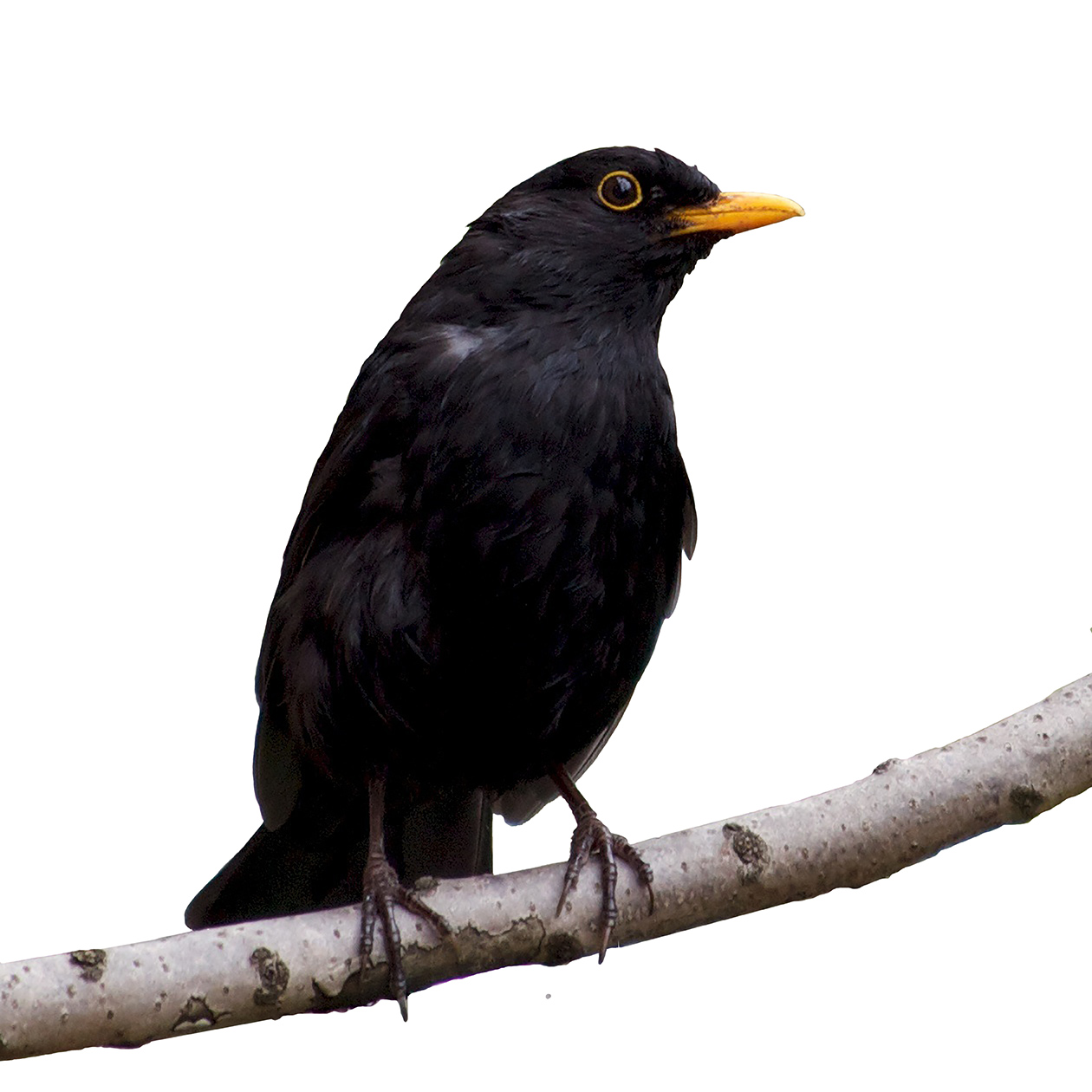
gotha ná gclog leó níor bhinn.That is sweet, blackbird from Doire an Chairn; I did not hear in any place music that was sweeter than the song you sing while you are nesting.
The sweetest music in the world, sad it is for any who do not listen still, 0 son of Alpronn of the melodious bells, and sad for you to go back to your prayers.
If you knew for certain, as I do, the story of the bird, you would shed tears bitterly and you would not keep your attention on God.
In Norway of the azure streams, Mac Cumhaill of the wine-filled cups obtained the bird that is now seen and that’s the story of its origin for you.
That wood there is Doire an Chairn where the Fiana used to shelter and there the blackbird was put because of the beauty and loveliness of its trees.
The whistle of the blackbird of Doire an Chaim, the lowing of the stag from Aill na gCaor, and the noise of the ducks from Loch na dTrí gCaol, this was the music to which Finn slept until early morning.
The grouse about Cruachain Chuinn, the shrill cry of the otters of Druim Dá Loch, the shriek of the eagle of Gleann na bhFuath and the song of the cuckoo from Cnoc na Scoth.
When Finn and the Fiana were living, they preferred the mountainside to churchyard. Sweet to them was the song of blackbird and they did not enjoy the sound of church bells.
—from the Field Day Anthology of Irish Writing, Seamus Deane, ed. The lyric likely dates from the late Classical period (1600-1800). The Fiana is the great warrior band of Irish mythology, lead by Fionn [Finn] mac Cumhaill.

 corvusfugit.com