1972: Boycott Gulf

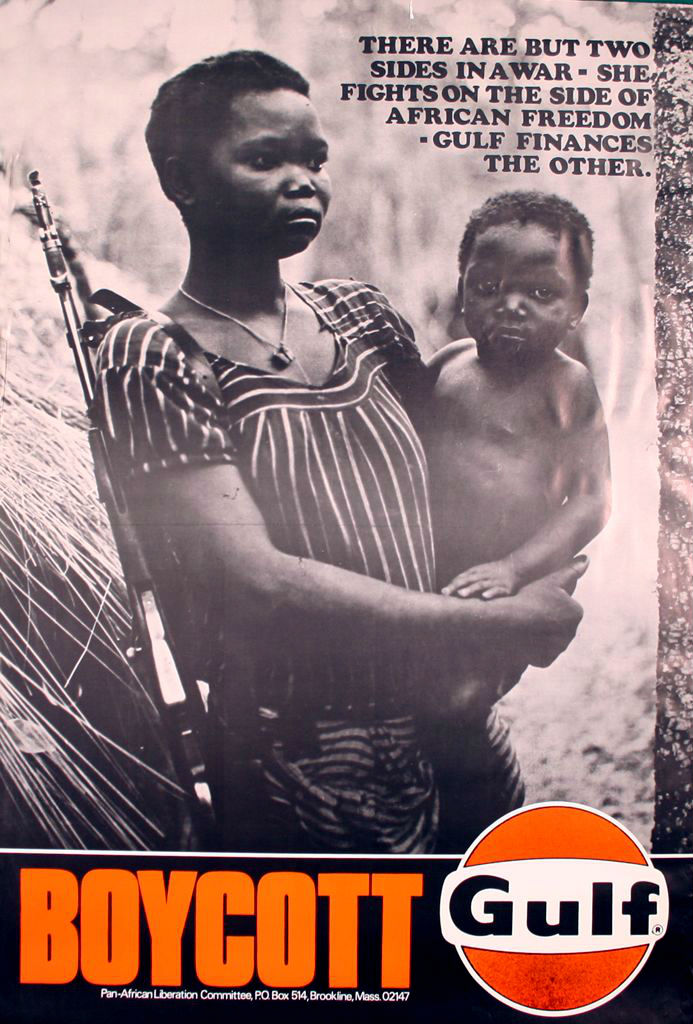
Boycott Gulf

An anti-colonialist poster from the early 1970’s produced by the Pan-African Liberation Committee in Brookline, Massachusetts: “There are but two sides in a warshe fights on the side of African freedom – Gulf finances the other.”

At the time, Angola was still a Portuguese colony. Gulf, an American company, had begin drilling oil in the country since 1968, paying the colonial government $500 million a year and thus funding an ongoing war against rebel armies.

Sadly, of course, there were in fact more than “two sides in a war.” Competing rebel organizationsformed from communities of different ethnicitieswere supported by the Soviet Union; Cuba; China; the apartheid regimes in Rhodesia and South Africa; and the US. A long, devastating civil war lasted from Angola’s independence in 1975 into the 2000’s. Although the country holds vast potential natural resources in diamonds, oil, gold, and copper, wealth is concentrated in the hands of a few and most Angolans continue to struggle without basic resources and with the trauma of the war’s aftermath.

(source)

Posted in Uncategorized | Tagged , , , , , , , | Leave a comment

2016: I Saw the Danger and Still I Pased along the Enchanted Way

Melita Denaro - I Saw the Danger and Still I Pased along the Enchanted Way (2016)

Melita Denaro: I Saw the Danger and Still I Pased along the Enchanted Way (2016)

Posted in Uncategorized | Tagged , , , , , , , | Leave a comment

1680: Indiscreet

Circle of Pierre Mignard - Portrait of Louis de Bourbon, Comte de Vermandois (c. 1680)

In [Renaissance] France homosexuality was long deemed a caprice reserved to the nobility, the intellectual and artistic elite, and the princes of the Church. To be sure, other classes are known to have been involved, but their activity tended to be severely repressed. The notion of homosexuality as the aristocratic vice took root and thrived into modern times, though even this privileged minority did not enjoy absolute immunity from prosecution. At the court both male and female homosexuality could at times flourish. The “flying squadron” of Catherine de’ Medici was accused of lesbianism by such contemporaries as Brantôme. Henri III was celebrated for his mignons, the favorites drawn from the ranks of the petty nobility—handsome, gorgeously attired and adorned adolescents and magnificent swordsmen ready to sacrifice their lives for their sovereign

The intellectual nonconformity of the last centuries of the Old Regime was accompanied, or perhaps motivated, by a sexual nonconformity that found expression in different modes. The amalgam of free thought and sodomy precisely mirrored the medieval association of heresy and sodomy. The circle of “libertine” poets whose work launched the great tradition of French erotic verse included Denis Sanguin de Saint-Pavin, who so openly proclaimed his fondness for Greek love that he earned the nickname “the King of Sodom.”

Under Louis XIV, who himself was strongly averse to homosexuality, the court nevertheless had its little clique of homosexuals led by the king’s brother “Monsieur” (Philippe of Orleans), who may have inherited the tendency from their father Louis XIII, if indeed he was their biological father. Despite France’s long history of homoeroticism, the king and his associates affected to believe that the practice had been recently introduced from Italy. About 1678 the court homosexuals formed a secret fraternity whose statutes provided for total abstinence from women other than for the purpose of obtaining offspring and whose insignia depicted a man trampling a woman underfoot in the manner of Saint Michael and the devil. In 1681 the young Count de Vermandois, the son of Louis by Louise de La Vallière, applied for admission, but so indiscreetly that the king learned of the order in 1682 and broke it up with great severity. He sent for his prodigal son, had him whipped in his presence, and then exiled him. The other members of the fraternity were in their turn disgraced and driven from the court.

—Wayne R. Dynes: Encyclopedia of Homosexuality (2016)

Image:
Circle of Pierre Mignard: Portrait of Louis de Bourbon, Comte de Vermandois (c. 1680)

Posted in Uncategorized | Tagged , , , , , , , | Leave a comment

1984: Action Painting

Mark Tansey - Action Painting II (1984)

Mark Tansey: Action Painting II (1984)

Posted in Uncategorized | Tagged , , , , , , | Leave a comment

2017: More Sky

2017-11-30-07

See more here.

Posted in Uncategorized | Tagged , , , , , | Leave a comment

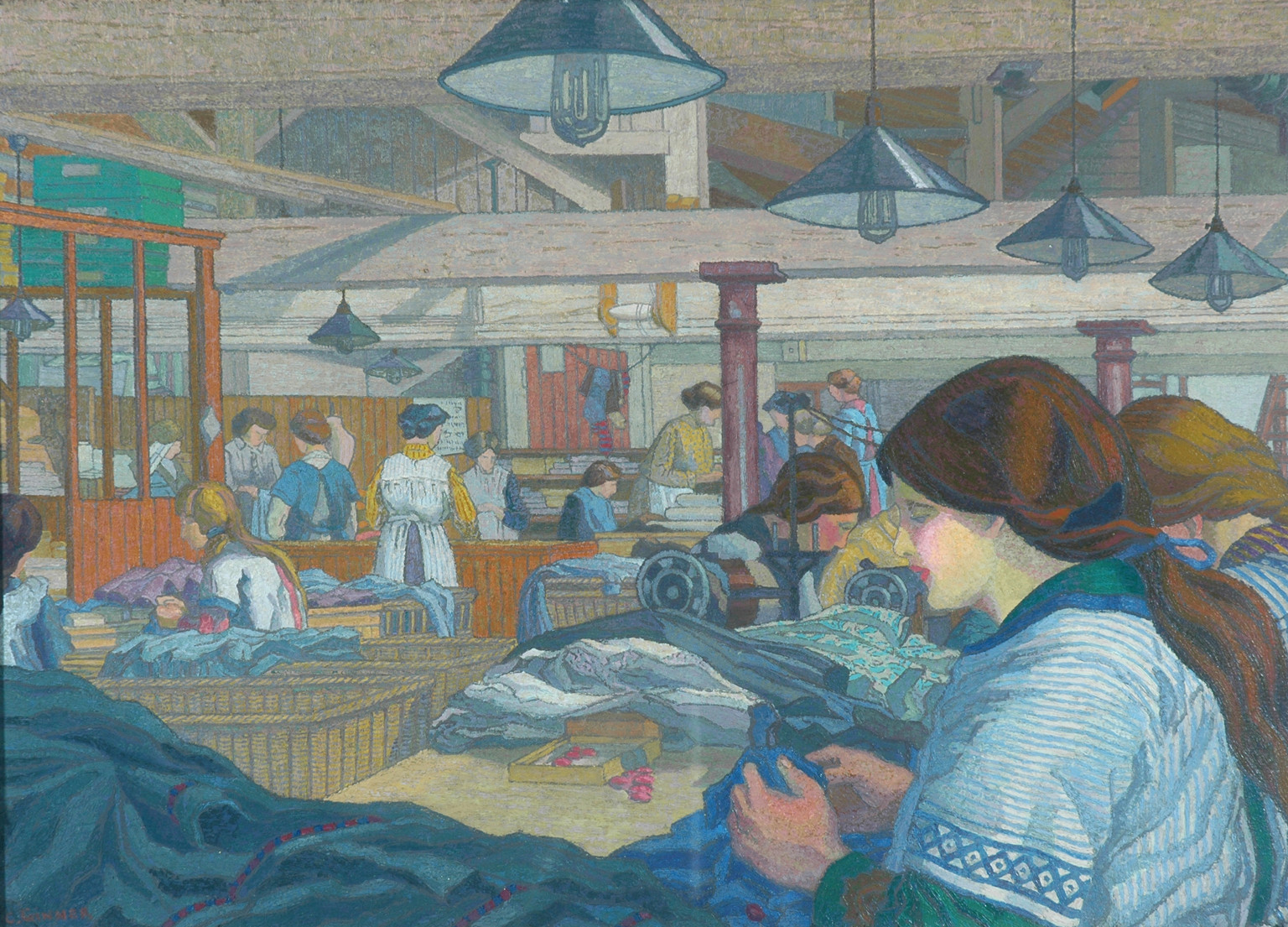
1914: Factory

Charles Ginner - The Dressmaking Factory (c. 1914)

Charles Ginner: The Dressmaking Factory (c. 1914)

Posted in Uncategorized | Tagged , , , , , , , , , | Leave a comment

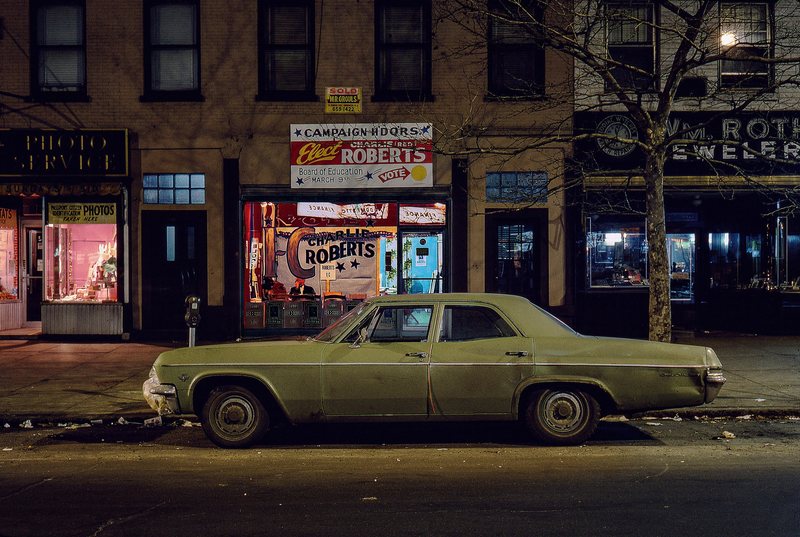
1976: Bel Air

Langdon Clay - Charlie Robert_s campaign car, Chevrolet Bel Air, Hoboken, NJ, 1976

Langdon Clay: Charlie Robert’s campaign car, Chevrolet Bel Air, Hoboken, NJ, 1976

Posted in Uncategorized | Tagged , , , , , , , | Leave a comment

2017: The Sky

WP_007869

This morning’s sky. See more here.

Posted in Uncategorized | Tagged , , , , | Leave a comment

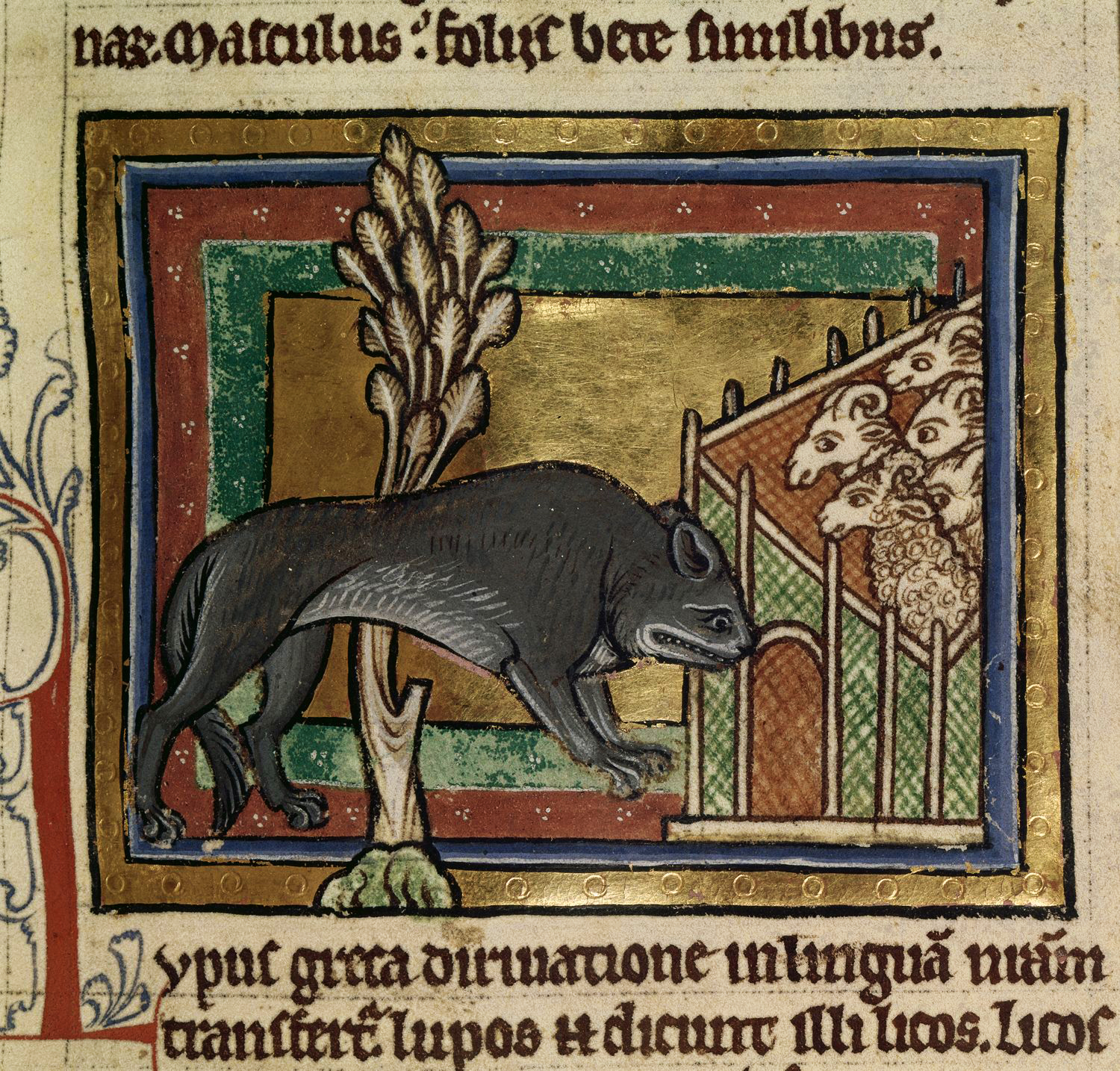
13th Century: Brother Wolf

Royal 12 C.XIX, f.19

OF THE MOST HOLY MIRACLE OF ST FRANCIS IN TAMING
THE FIERCE WOLF OF GUBBIO

At the time when St Francis was living in the city of Gubbio, a large wolf appeared in the neighbourhood, so terrible and so fierce, that he not only devoured other animals, but made a prey of men also; and since he often approached the town, all the people were in great alarm, and used to go about armed, as if going to battle. Notwithstanding these precautions, if any of the inhabitants ever met him alone, he was sure to be devoured, as all defence was useless: and, through fear of the wolf, they dared not go beyond the city walls. St Francis, feeling great compassion for the people of Gubbio, resolved to go and meet the wolf, though all advised him not to do so.

Making the sign of the holy cross, and putting all his confidence in God, he went forth from the city, taking his brethren with him; but these fearing to go any further, St Francis bent his steps alone toward the spot where the wolf was known to be, while many people followed at a distance, and witnessed the miracle. The wolf, seeing all this multitude, ran towards St Francis with his jaws wide open. As he approached, the saint, making the sign of the cross, cried out: “Come hither, brother wolf; I command thee, in the name of Christ, neither to harm me nor anybody else.”

Continue reading

Posted in Uncategorized | Tagged , , , , , , , , | Leave a comment

1945: Hiroshima

City Model in Peace Memorial Museum, Hiroshima

Model of the atomic bomb impact on Hiroshima at the Peace Memorial Museum there.

Posted in Uncategorized | Tagged , , , , , | Leave a comment