1906: The Union Butcher Shop

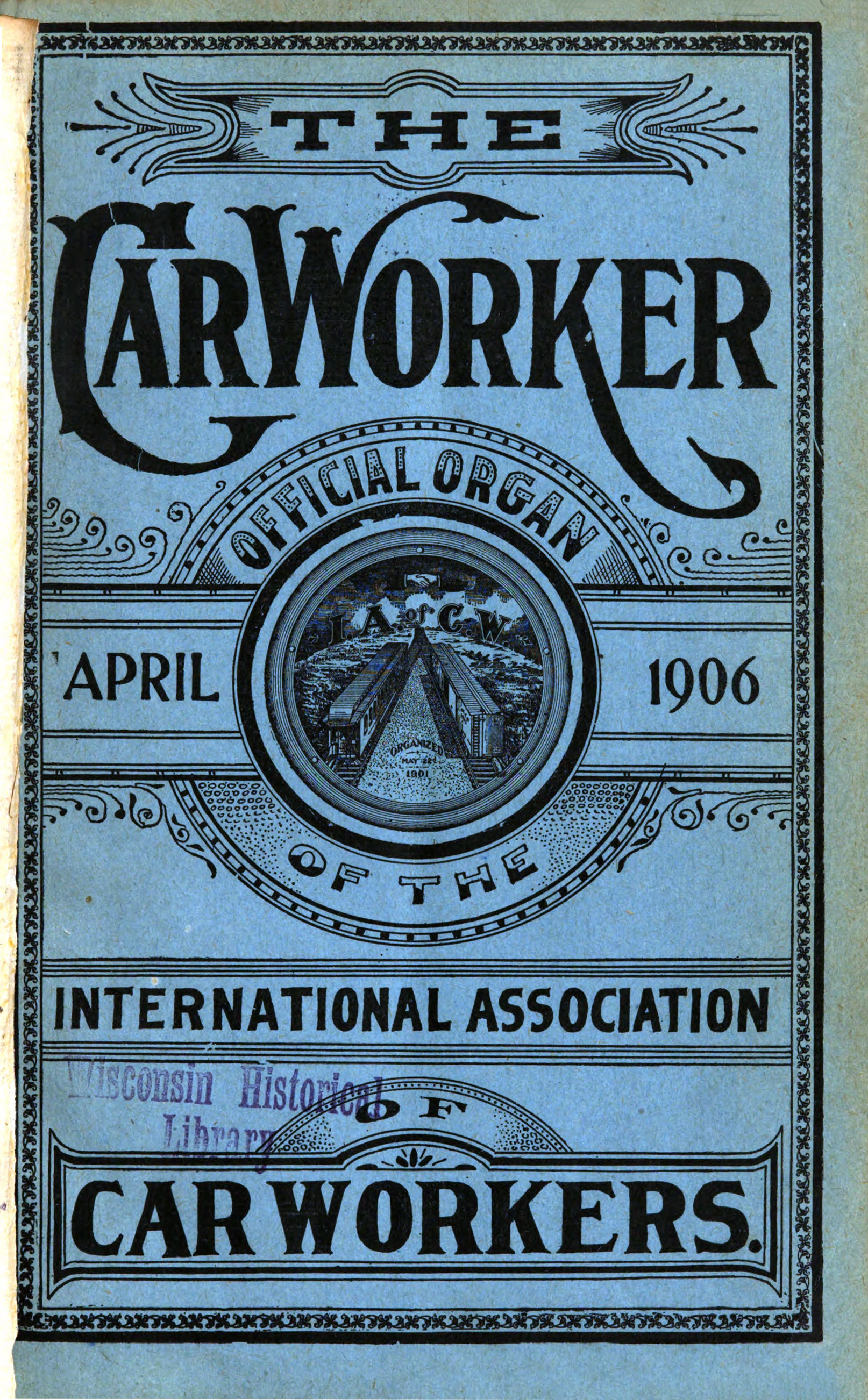
The Car Worker

The Union Butcher Shop.

A non-union man entered a butcher’s shop in which was conspicuously displayed the card of the meat cutter’s union. The following dialogue ensued:

Mr. Non-Union—I see by that card you run a union shop.

Butcher—Yes, sir; strictly union.

Mr. Non-Union—All union meat?

Butcher—Everything union.

Mr. Non-Union—I would like a calf’s head, but I wish a non-union head.

Butcher—Just wait a second. (taking a calf’s head from a counter, and going into a back room of the shop, but shortly returns). Here you are.

Mr. Non-Union—But it is the same one you had on the counter. What did you do to make it non-union?

Butcher—I took the brains out of it.

The Car Worker Vol. 4, #2 (May, 1906)

Posted in Uncategorized | Tagged , , , , , , , | Leave a comment

1953: A Piece of String

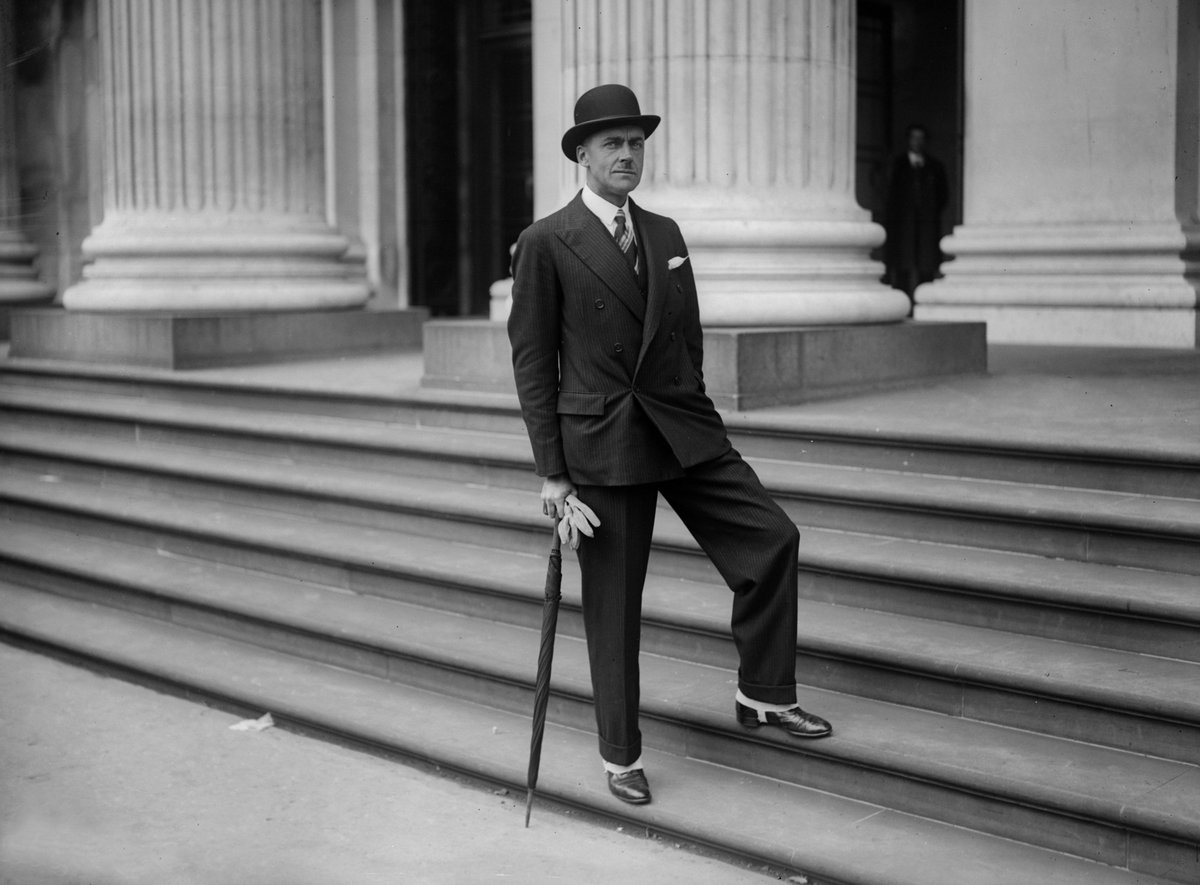
Mr Wyldie of the Port of London Authority

The most celebrated of all British practical jokers was William Horace De Vere Cole…He was a citizen of substance and had a large house in a fashionable section of London. One day he was hanging some paintings in his home when he ran out of twine. He put on his hat and walked to the nearest stringmonger’s shop and bought a ball of twine. On his way home he saw an elegant Englishman, a stranger, approaching. The man was so stiffish, so splendidly dressed, that Cole could not pass him by. Quickly he whipped out his ball of twine and stepped up to the gentleman.

“I say,” he spoke with some show of deference, “I’m in a bit of a spot. We’re engaged in surveying this area in order that we may realign the kerb, and my assistant has somehow vanished. I wonder if I could prevail upon your time for just a few moments.”

“To be sure,” said the stranger, ever the proper Englishman.

“If,” said Cole, “you’d be so kind as to hold the end of this string. Just stand where you are, and keep a tight hold on we’ll be finished in a few moments. Its really quite important.”

The splendid gentleman took hold of the end of the string and Cole began backing away from him, unwinding the ball. He continued all the way to the corner, turned the corner and disappeared. He proceeded, still unwinding the ball, until he was halfway up the block, at which point the string gave out. He stood for a moment, not knowing quite what he should do now. He had about decided to tie the string to a doorknob when Providence sent him a second gentleman, fully as elegant and polished as the first. Cole stopped him. Would the good sir be so kind as to assist him in an engineering project? Certainly! Cole handed him the end of the string and asked that he simply stand firm and hold it. Then Cole disappeared through an alleyway, hastened to the shop for another ball of twine, and returned to his home to resume hanging pictures.

Cole never knew how long those two men stood holding the string. He could have circled back and spied on them, but he didn’t even consider doing it. The more accomplished practical jokers seem to prefer a situation in which the denouement is left to their imaginations. They enjoy sitting down and thinking about what may have happened.

—H. Allen Smith: The Compleat Practical Joker (1953)

Image: Mr Wyldie of the Port of London Authority

Posted in Uncategorized | Tagged , , , , , , , | 1 Comment

17th Century: The Dog-Headed Saint

Saint Chritopher - Cappadoca, 17th Century

In Eastern Christian Orthodox iconography, Saint Christopher sometimes appears with the head of a dog. As a consummate outsider who would become the patron saint of travellers, Christopher came to be associated with tales of far-flung peoples who blurred the boundary between human and animaland the connection came to be taken literally. The representation was not isolated to the East; in the medieval Irish Passion of St. Christopher, “This Christopher was one of the Dog-heads, a race that had the heads of dogs and ate human flesh” (source). Even the more traditional Western narrative maintains this sense of otherness by depicting Christopher as a fearsome giant. The story of his conversion to Christianity and sainthood is thus a narrative about the possibility of salvation for even those at the margins of humanity.

This image is from Cappadocia, now in Turkey, and dates from the 17th century. (source)

Posted in Uncategorized | Tagged , , , , , , , , | Leave a comment

1945: The Book of Alfred Kantor

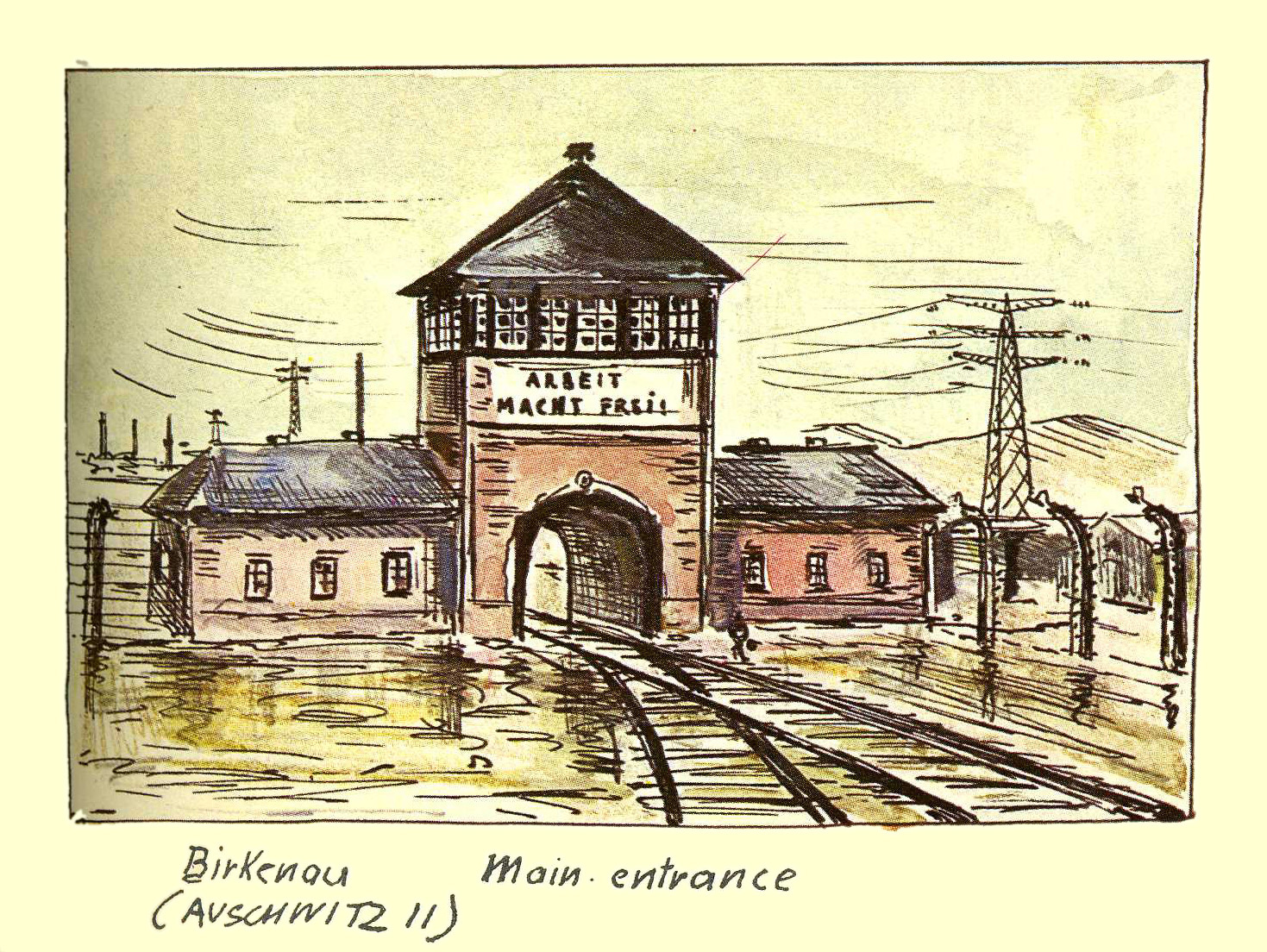
Kantor002

Today is Holocaust Remembrance DayYom HaShoah

Alfred Kantor was 22 when he was sent to Theresienstadt, the ”model ghetto” 40 miles north of Prague that the Nazis had created for Czech Jews. He was then sent to Auschwitz and, later, Schwarzheide. When the war ended, he was one of 175 prisoners out of 1,000 who survived a death march back to Theresienstadt. Once freed in 1945, he spent two months in a displaced persons camp, during which he recorded his experience in 160 drawings and watercolors. They were published in 1971 as The Book of Alfred Kantor.

While in the Nazi camps, Kantor had made sketches of the things he saw. Some of these sketches he managed to save, but most he destroyedthe exercise of composition having committed the scenes to memory, which he was then able to recreate after the war.

Few photographs of life in the concentration camps survive. Kantor’s is thus one of the few eyewitness visual representations we have of the conditions and atrocities of the Holocaust.

Art Spiegelman, whose Pulitzer-Prize-winning graphic novel Maus depicts his father’s experience as a Polish Jew during the Holocaust, wrote this about Kantor and his drawings:

Before embarking on Maus I consciously set about looking for material that could help me visualize what I needed to draw. The few collections of survivors’ drawings and reproductions of surviving art that I could get my hands on were essential for me. Those drawings were a return to drawing not for its possibilities of imposing the self, of finding a new role for art and drawing after the invention of the camera, but rather a return to the earlier function that drawing served before the camera—a kind of commemorating, witnessing, and recording of information—what Goya referred to when he says, “This I saw.” The artists, like the memoirists and diarists of the time, are giving urgent information in the pictures, information that could be transmitted no other way, and often at great risk to their lives….

Alfred Kantor was…an amazing resource. Kantor was a teenager in Terezin and Auschwitz, evidently drawing to keep himself sane, drawing what was around him. He destroyed most of the drawings he made while in Auschwitz, but reconstructed them while he was in a DP camp right after the war. At that point, now that the drawings would no longer cost his life, he redrew a visual diary of what he’d just gone through, He went on to a successful career in advertising.

Late in his life a friend saw it and encouraged him to publish The Book of Alfred Kantor, which—for somebody with my doubletrack disposition toward reading and looking—was an important clue to the moment-to-moment texture of life in a death camp. Kantor was drawing many of the same places and situations my parents were in, so his book became indispensable.

Posted in Uncategorized | Tagged , , , , , , , , , , , , , | Leave a comment

1812: I Awoke in the Greatest Agitation

PercevalShooting

On May 11, 1812, John Bellingham, a disgruntled Liverpool merchant, assassinated British Prime Minister Spencer Perceval in the lobby of the House of Commons in London. In his autobiography, the civil engineer Sir John Rennie (whose company built the London Bridge) tells the following story related to the crime:

In 1815 Mr. John Fox, a Quaker, having come to town on business, breakfasted with my father and several others, including myself. The conversation happened to turn on the death of Mr. Perceval. Mr. Fox said in a simple, unaffected manner, “I remember it very well; it is a curious story, and now I will tell it you. I was then visiting my friend Williams at Redruth. I went to bed as usual, and awoke in a most restless state, having had an extraordinary dream. I dreamed that I went to the House of Commons, where I had never been before, and having no admission into the interior of the House, I sat down quietly on one of the benches in the lobby, expecting a Cornish member who had promised when I came to London to give me a ticket of admission to hear the debates. Beside me on the bench sat a tall, muscular man (describing Bellingham most exactly), who appeared to be very restless, and continually asking whether Mr. Perceval had come to the House, and every now and then putting his right hand into his left breast pocket. At length, after waiting some minutes, there was a bustle, and several persons near me said that Mr. Perceval was coming ; and shortly after Mr. Perceval made his appearance (Mr. Fox describing the exact dress he wore, namely, a blue coat with gilt metal buttons, white cravat and waistcoat, with nankeen shorts, white stockings, and shoes, according to his usual attire in the summer). Immediately after Mr. Perceval made his appearance, the man who sat next to me got up, and, advancing close to Mr. Perceval, drew a pistol from his left breast pocket, fired, and Mr. Perceval fell at his feet. This occasioned great commotion. The man who fired the pistol was at once seized, and I rushed out and asked what had happened, and the bystanders told me that Mr. Perceval had been shot by a man named Bellingham, who was the identical individual who had been a few minutes before sitting by my side. When my dream had come to this point I awoke in the greatest agitation. I could not account for it. I had never seen Mr. Perceval, nor his murderer, Bellingham ; I had never been in the lobby of the House, and I had been in no way connected with Mr. Perceval, either by correspondence or otherwise, still I was so much affected by the dream that I felt convinced that Mr. Perceval had been murdered. I passed the remainder of the night in great restlessness. I could not sleep, but was always thinking of the dream, being thoroughly convinced that it was true. I came down to breakfast at the usual hour, in the most anxious and nervous state, which I in vain endeavoured to conceal as much as possible ; but my friend and partner Williams and his whole family observed it, and said that I looked very ill, and kindly asked me to explain the cause. After much pressing, I told my story. Friend Williams and the whole of his amiable family said that it was nonsense ; that I had been unwell, and still was so, and said that they would send for their family doctor. I said no ; I felt perfectly convinced that my dream would, unfortunately, prove but too true, and that the mail, which would arrive in the evening, would bring a confirmation of it. They tried to laugh me out of it, but nothing would do; I therefore went about with my friend Williams, transacting our mining business, being convinced that the arrival of the mail in the evening would confirm the truth of my dream in all particulars. We returned to -dinner at five o’clock; at nine the mail arrived, and confirmed every particular of my dream. I was afterwards taken to the House of Commons, where I had never been before, and I correctly pointed out the whole particulars of the melancholy transaction exactly as they occurred, to the astonishment of my friends and the bystanders. The whole story seems so strange that I cannot account for it. I relate it to you just as it occurred to me.”

This is certainly one of those marvellous instances of foresight which baffles all comprehension. John Fox was generally considered by his numerous friends and acquaintance to be a most honest, plain, straight-forward, business man, and incapable of stating anything but what he believed to be true. I heard him relate the dream, and my father and all present believed it. The curious part of the story is how he should have dreamed such a thing, being in no way connected with it.

Image source: Wikipedia

Posted in Uncategorized | Tagged , , , , , , , , , | Leave a comment

1915: Sugar Factory

Daniel Putnam Brinley - Hudson River View (Sugar Factory at Yonkers) (1915)

Daniel Putnam Brinley: Hudson River View (Sugar Factory at Yonkers) (1915)

Posted in Uncategorized | Tagged , , , , , , , | Leave a comment

2009: A Trade Union for Trees

Moonclouds - Forest Canopy in Coromandel, New Zealand

Look at a single tall tree standing proud in the middle of an open area. Why is it so tall? Not to be closer to the sun! That long trunk could be shortened until the crown of the tree was splayed out over the ground, with no loss in photons and huge savings in cost. So why go to all that expense of pushing the crown of the tree up towards the sky? The answer eludes us until we realize that the natural habitat of such a tree is a forest. Trees are tall to overtop rival trees — of the same and other species….

And now, here’s an odd thought. If only all the trees in the forest could come to some agreement — like a trades union restrictive practice — to grow no higher than, say, 10 feet, every one would benefit. The entire community — the entire ecosystem — could gain from the savings in wood, and energy, which are consumed in building up those towering and costly trunks….Imagine the fate of a hypothetical forest — let’s call it the Forest of Friendship — in which, by some mysterious concordat, all the trees have somehow managed to achieve the desirable aim of lowering the entire canopy to 10 feet. The canopy looks just like any other forest canopy except that it is only 10 feet high instead of 100 feet. From the point of view of a planned economy, the Forest of Friendship is more efficient as a forest than the tall forests with which we are familiar, because resources are not put into producing massive trunks that have no purpose apart from competing with other trees.

—Richard Dawkins: The Greatest Show on Earth: The Evidence for Evolution (2009)

Image: Photo of Forest Canopy in Coromandel, New Zealand by reddit user Moonclouds. (source)

Posted in Uncategorized | Tagged , , , , , , , , , , | Leave a comment

1874: Lost Beauties

Johan Laurentz Jensen (1800-1856) - Still Life of Anemones

A few entries from Charles Mackay’s Lost Beauties of the English Language: An Appeal to Authors, Poets, Clergymen and Public Speakers (1874):

Airt, the quarter from which the wind blows.

“Helter skelter from a’ airts,
In swarms the country drives.”    — Stagg’s Cumberland Ballads.

“Of a’ the airts the wind can blaw,
I dearly lo’e the west,
For there the bonnie lassie lives,
The lass that I lo’e best.”      — Robert Burns.

Bangled, beaten down by the wind, like corn or long grass. “A bangled-eared dog” signifies a dog like a spaniel, with hanging ears.

Breezeblossom, the wild anemone.

Flurn, to think little of, to disparage, used in a sense somewhat less invidious than scorn or sneer. The word occurs in the preface to Fletcher’s Poems, as quoted by Nares, wherein he says of some of his earlier compositions, “The abortive birth slipped from my brain, which can carry neither worth nor weight in this pregnant age, so fraught and furnished with a variety of gallant pieces and performances of the choicest of writers; give me leave to flurn at them, as the poor excrescences of nature,” &c. Neither the two great English lexicographers, Johnson and Richardson, nor the two great Americans, Webster and Worcester, seem to have been cognizant of the word. Halliwell cites it as a Lincolnshire word, meaning to sneer at, or despise.

Knevel, the moustache. The hair on the upper lip was worn for ages, before the modern, and now the only name for the thing was borrowed from the Spanish. The word is entirely obsolete, but pure English.

Mich or Meech, to skulk, act by stealth, or indulge in secret amours.

Shaftmond, the measure of the palm of the hand with the thumb extended.

A shaftemonde large.      —Morte Arthur.

The word is still current in Scotland and the North of England.

Ure, chance, fate, fortune. From the French heur or heure, a word now only used with the adjectives “bon” and “mal,” to signify good and evil fortune.

Drive the thing right to the end,
And take the ure that God will send.      —Barbour.

Image:
Johan Laurentz Jensen (1800-1856): Still Life of Anemones

Posted in Uncategorized | Tagged , , , , , , , , , , , | Leave a comment

1889: Clouds

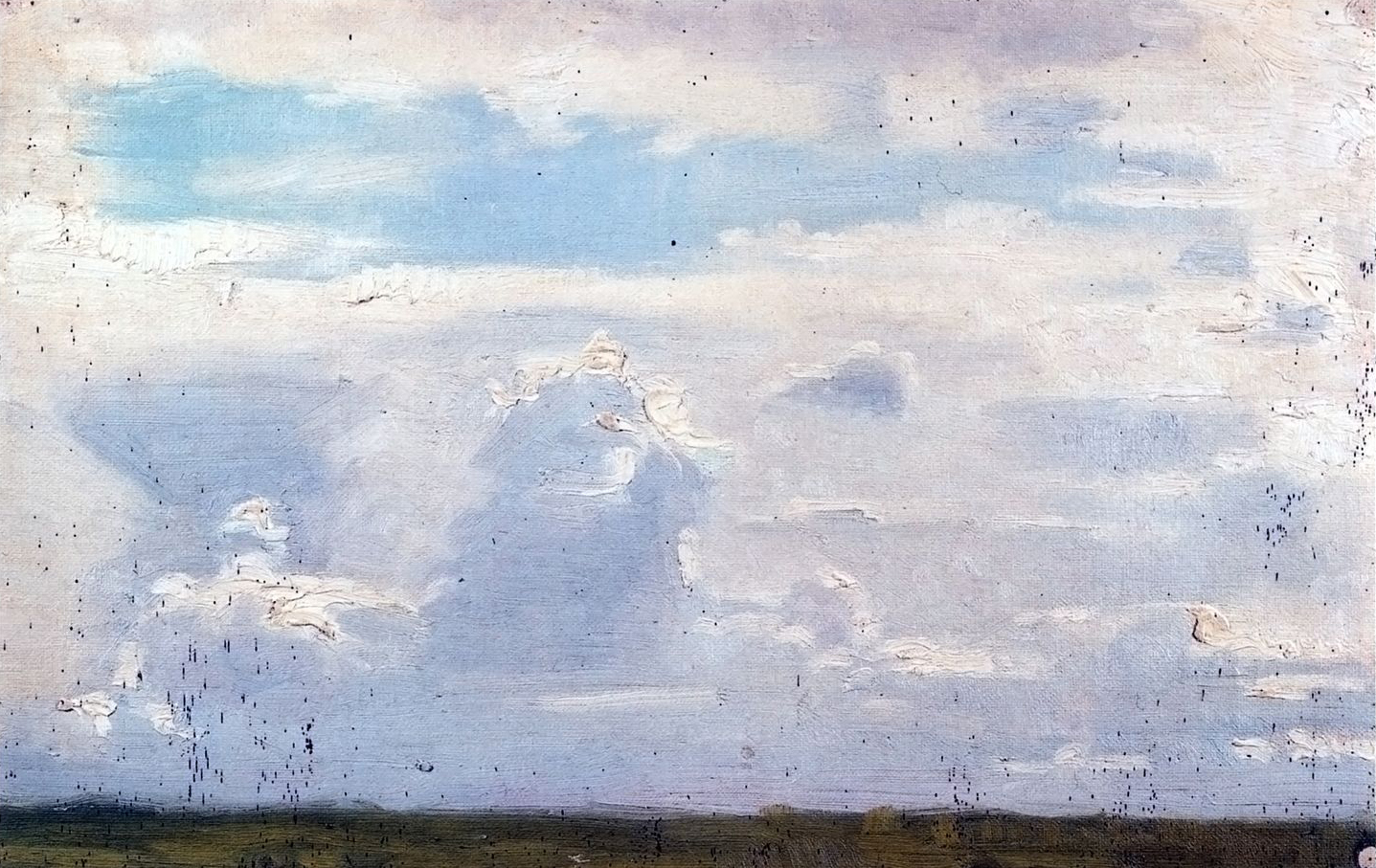
Marie Triepcke Kroyer - Clouds (1889)

Marie Triepcke Kroyer: Clouds (1889)

Posted in Uncategorized | Tagged , , , , , , , , | Leave a comment

1666: Too Stars Fighting

Ben Bromley - Double Sunset (2015)

In the same moneth [September, 1666] was seen a strange prodigy near us, Grace Butler my near neighbour that saw it told me of it, togather with several of James Brookesbankes family, it was too stars fighting, they struck violently one at the other, and fetcht compasses and returned, striking, striving with great violence, a cloud covered them from sight, but when that vanished they saw them again, thus they continued almost an houre, the one they see every night in the same place, but the other they see not.

The Rev. Oliver Heywood, B.A., 1630-1702: His Autobiography, Diaries, Anecdote and Event Books; Illustrating the General and Family History of Yorkshire and Lancashire (1883)

Image: “In this acrylic painting, University of Utah astrophysicist Ben Bromley envisions the view of a double sunset from an uninhabited Earthlike planet orbiting a pair of binary stars.” (source)

Posted in Uncategorized | Tagged , , , , , , , , , , | Leave a comment