

Yesterday morning. See more here.
Yesterday morning. See more here.
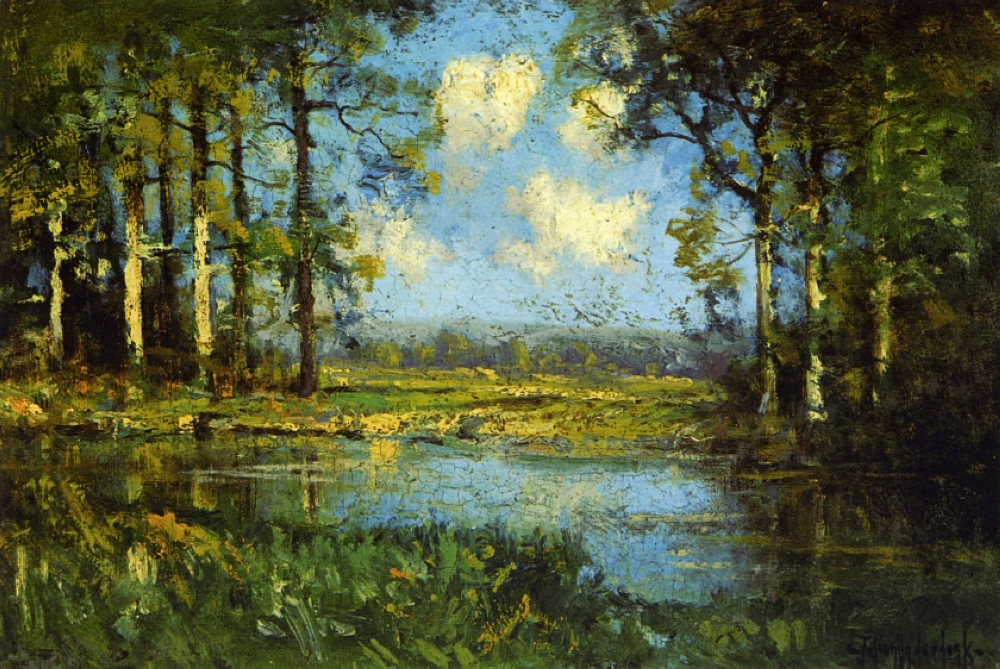
Julian Onderdonk: The Woodland Pool (1908)
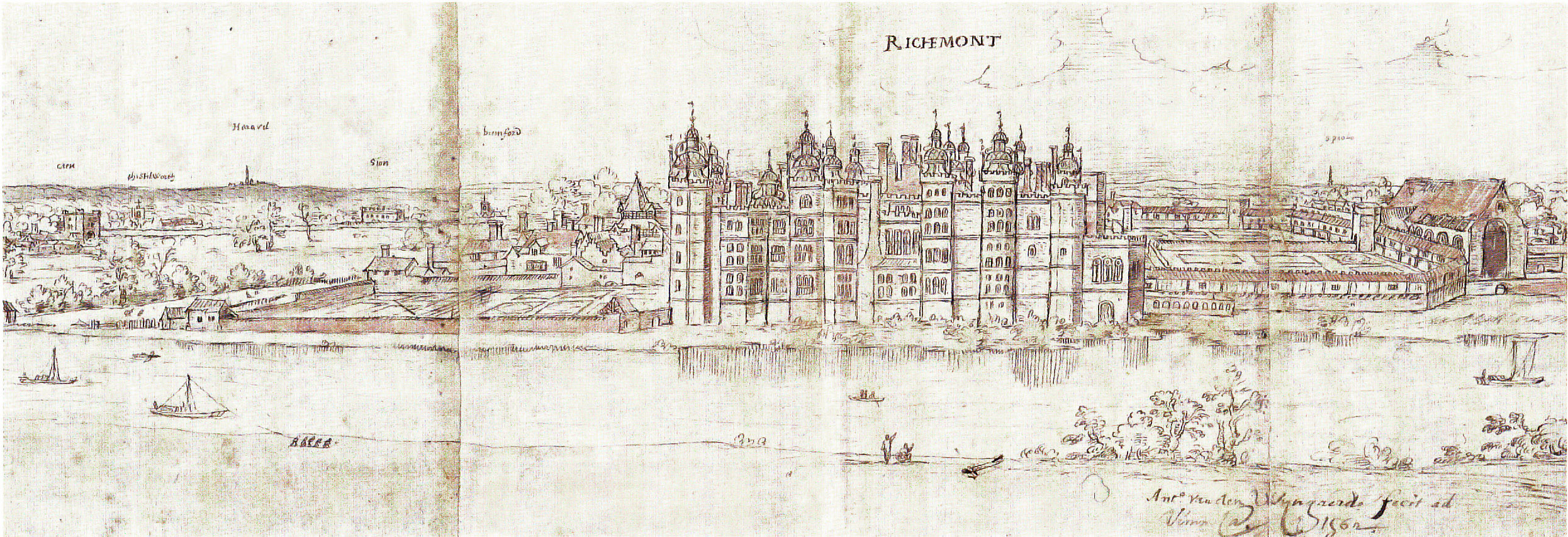 The city of Richmond, California is named after the city of Richmond, Virginia, which is named after the English town of Richmond near London, which was named for Richmond Palace, which Henry VII named after his ancestral home in Richmond, Yorkshire, which takes its name from the town of Richemont in Normandy, France.
Image:
Antony Wyngaerde: Richmond Palace, west front (1562)

Here we are, alone again. It’s all so slow, so heavy, so sad … I’ll be old soon. Then at last it will be over. So many people have come into my room. They’ve talked. They haven’t said much. They’ve gone away. They’ve grown old, wretched, sluggish, each in some corner of the world.
Yesterday, at eight o’clock, Madame Bérenge, the concierge, died. A great storm blew up during the night. Way up here where we are, the whole house is shaking. She was a good friend, gentle and faithful. Tomorrow they’re going to bury her in the cemetery on the rue des Saules. She was really old, at the very end of old age. The first day she coughed I said to her: “Whatever you do, don’t stretch out. Sit up in bed.” I was worried. Well, now it’s happened … anyway, it couldn’t be helped …
I haven’t always been a doctor … crummy trade. I’ll write the people who’ve known her, who’ve known me, and tell them that Madame Bérenge is dead. Where are they?
I wish the storm would make even more of a clatter, I wish the roofs would cave in, that spring would never come again, that the house would blow down.
Madame Bérenge knew that grief always comes in the mail. I don’t know whom to write to anymore … Those people are all so far away … They’ve changed their souls, that’s a way to be disloyal, to forget, to keep talking about something else.
Poor old Madame Bérenge; they’ll come and take her cross-eyed dog away.
For almost twenty years all the sadness that comes by mail passed through her hands. It lingers on in the smell of her death, in that awful sour taste. It has burst out … it’s here … it’s skulking through the passageway. It knows us and now we know it. It will never go away. Someone will have to put out the fire in the lodge. Whom will I write to? I’ve nobody left. No one to receive the friendly spirits of the dead … and let me speak more softly to the world … I’ll have to bear it all alone.
Toward the end the old lady was unable to speak. She was suffocating. She clung to my hand … The postman came in. He saw her die. A little hiccup. That’s all. In the old days lots of people used to knock on her door and ask for me. Now they’re gone, far away into forgetfulness, trying to find souls for themselves. The postman took off his cap. I know I could talk about my hatred. I’ll do that later on if they don’t come back. I’d rather tell stories. I’ll tell stories that will make them come back, to kill me, from the ends of the world. Then it will be over and that will be all right with me.
—Louis-Ferdinand Céline: Death on the Installment Plan (1936); trans. Ralph Manheim
Image:
Adam Stennett: Mouse on Book 1 (Death on the Installment Plan) (2005)

Sol Halabi: Viaje en Bote (2012)
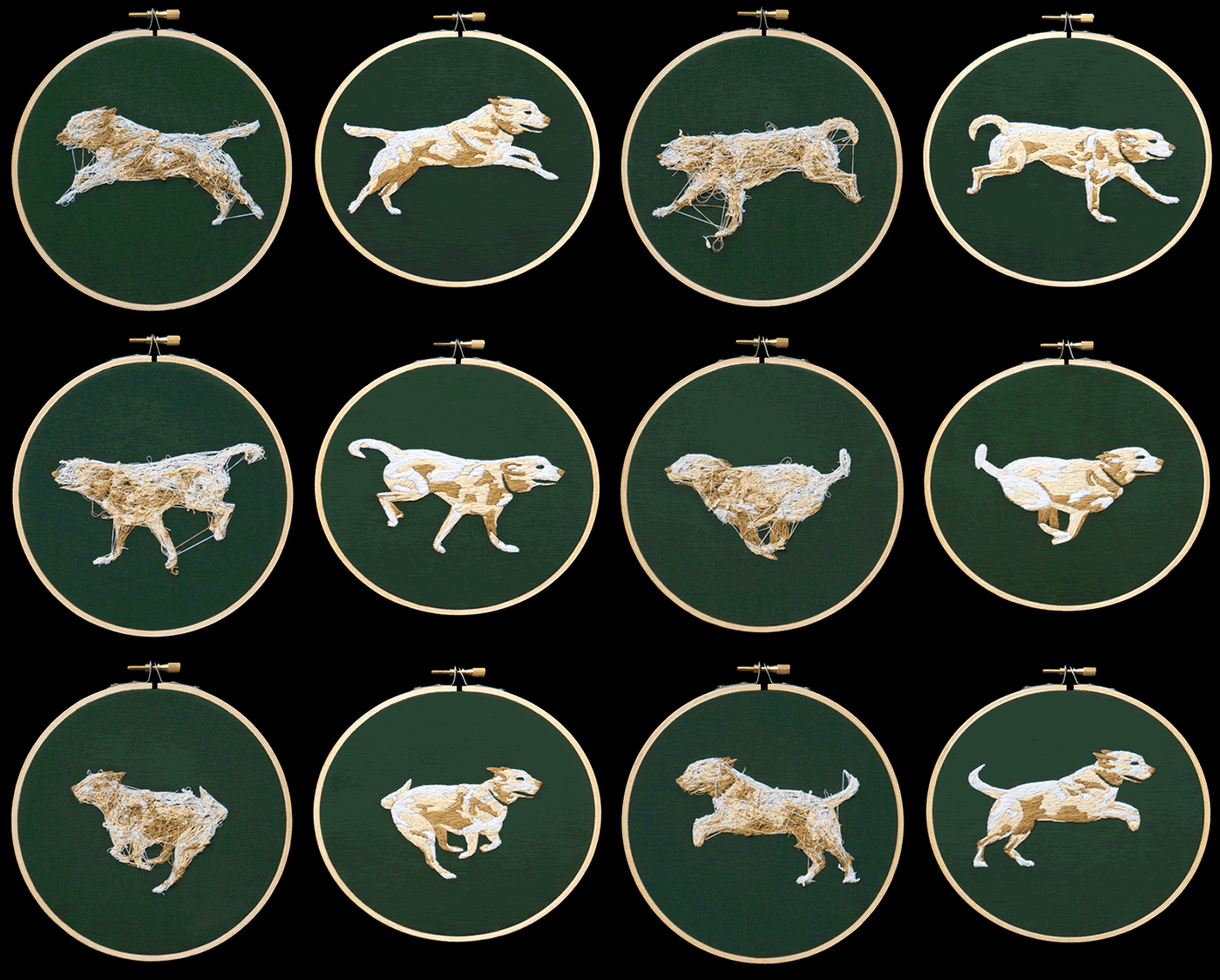
Aubrey Longley-Cook: Runaway (2010); Longley-Cook’s blog is here.

Max Jensen: Seagulls over the Waves; I made up the date.
As for his feet, sometimes he wore on each a sock, or on the one a sock and on the other a stocking, or a boot, or a shoe, or a slipper, or a sock and a boot, or a sock and a shoe, or a sock and a slipper, or a stocking and boot, or a stocking and shoe, or a stocking and slipper, or nothing at all. And sometimes he wore on each a stocking, or on the one a stocking and on the other a boot, or a shoe, or a slipper, or a sock and a boot, or a sock and shoe, or a sock and slipper, or a stocking and boot, or a stocking and shoe, or a stocking and slipper, or nothing at all. And sometimes he wore on each a boot, or on the one a boot and on the other a shoe, or a slipper, or a sock and boot, or a sock and shoe, or a sock and slipper, or a stocking and boot, or a stocking and shoe, or a stocking and slipper, or nothing at all. And sometime he wore on each a shoe, or on the one a shoe and on the other a slipper, or a sock and boot, or a sock and shoe, or a sock and slipper, or a stocking and boot, or a stocking and shoe, or a stocking and slipper or nothing at all. And sometimes he wore on each a slipper, or on the one a slipper and on the other a sock and boot, or a sock and shoe, or a sock and slipper, or a stocking and boot, or a stocking and shoe, or a stocking and slipper, or nothing at all. And sometime he wore on each a sock and boot, or on the one a sock and boot and on the other a sock and shoe, or a sock and slipper, or a stocking and boot, or a stocking and shoe, or a stocking and slipper, or nothing at all. And sometimes he wore on each a sock and shoe, or on the one a sock and shoe and on the other a sock and slipper, or a stocking and boot, or a stocking and shoe, or a stocking and slipper, or nothing at all. And sometimes he wore on each a sock and slipper, or on the one a sock and slipper and on the other a stocking and boot, or a stocking and shoe, or a stocking and slipper, or nothing at all. And sometimes he wore on each a stocking and boot, or on the one a stocking and boot and on the other a stocking and shoe, or a stocking and slipper, or nothing at all. And sometime he wore on each a stocking and shoe, or on the one a stocking and shoe and on the other a stocking and slipper, or nothing at all. And sometimes he wore on each a stocking and slipper, or on the one a stocking and slipper and on the other nothing at all. And sometimes he went barefoot.
—Samuel Beckett: Watt (1953)

Charles-Geneviève-Louis-Auguste-André-Timothée d’Éon de Beaumont—known more simply as the Chevalier d’Éon—was a French soldier, diplomat, and spy who settled in London, living from 1762-1777 as a man and from 1786-1810 as a woman.
Born to a poor noble family in Burgundy and raised as a boy, d’Éon attended law school in Paris before joining the civil service. He was quickly was promoted through the ranks until appointed ambassador to Russia in 1756.
Sent to the court of Empress Elizabeth in Russia, d’Éon may have at that time already been working as a spy for Louis XV, tasked with advancing French interests in eastern Europe; he likely also attended the famous regular Tuesday night “drag balls” of the Russian court where—at Elizabeth’s command—women dressed as men and men as women. In one version of the story, d’Éon actually arrived and lived in Russia disguised as a woman, since the British had endeavored to restrict travel there to only women and children.
In 1756, when the Seven Years’ War swept all of Europe into turmoil, d’Éon returned to France to serve as a soldier in the French army. Toward the end of the war, he was appointed as a secretary to the French ambassador to Great Britain (France’s enemy in the conflict), where he helped negotiate the Peace of Paris, which ended the war and restored peace to the continent.
In spite of the treaty, d’Éon was given a secret mission to scout the British coast in preparation for a French invasion; however, his relationship with the French government had begun to deteriorate; a new ambassador had demoted him to the rank of secretary and he became embroiled in factional conflict. He reacted by scandalously publishing secret correspondence and threatening to reveal the invasion plans, eventually securing a pension from the French king in exchange for his silence.
As a condition of this arrangement and of his return to and pardon in France 1777, Louis XVI required that d’Éon declare a gender. Rumors about d’Éon’s gender had already begun to circulate, with some claiming he bought and dressed in woman’s clothes and others speculating that he was a woman who had disguised her gender to join the army—several such instances had been recorded. In some versions of the story, it was d’Éon who demanded recognition as a woman as part of the settlement, eventually negotiating with the King to include a large sum with with to purchase a new wardrobe of women’s clothes.
In any case, at this point d’Éon began her public life as a woman. She said she had been born a girl but raised as a boy for purposes of gaining an inheritance from her father’s in-laws. She dressed lavishly at an official coming-out party at the French court.
Returning to Britain in 1785, d’Éon became a celebrity, her notoriety drawing crowds to fencing demonstrations in which she faced her opponents wearing (as in the portrait above), an elegant black dress and her Croix de St Louis. Although public debate continued regarding her gender, she was in large part recognized, accepted, and praised as a model example of her sex. She is mentioned in Mary Wollstonecraft’s Vindication of the Rights of Woman as one of many women “who, from having received a masculine education, have acquired courage and resolution.”
Her life ended sadly. Her French army pension ended with the French Revolution, and she was forced to sell off her possessions. She was wounded in a fencing tournament in 1796 and spent five months in a debtors’ prison. She died in poverty in 1810 at the age of 81.
The 1792 portrait is a copy by Thomas Stewart of an original by Jean-Laurent Mosnier.

Eervar; the last pig in a litter. This bonnive [sucking-pig] being usually very small and hard to keep alive is often given to one of the children for a pet; and it is reared in great comfort in a warm bed by the kitchen fire, and fed on milk. I once, when a child, had an eervar of my own which was the joy of my life. Irish iarmhar [eervar], meaning ‘something after all the rest’; the hindmost.
—P. W. Joyce: English as We Speak it in Ireland (1910)


 corvusfugit.com