
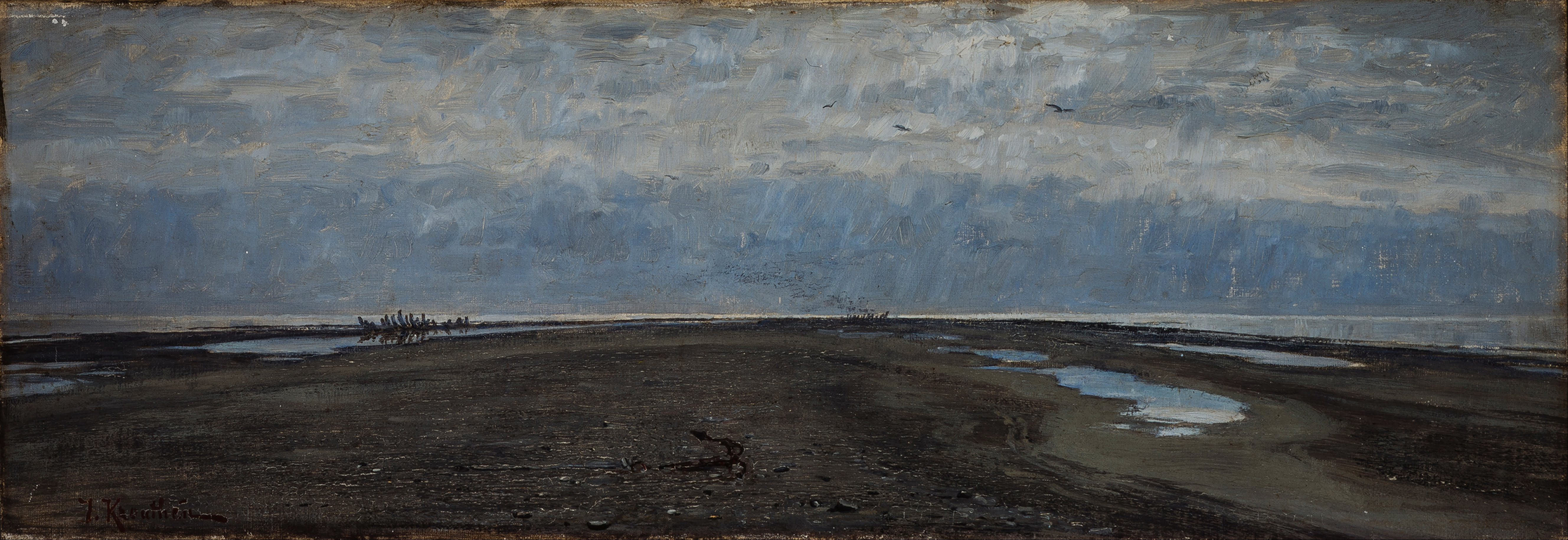
Johan Krouthén: The Skaw Spit, Skagen (1883)
Johan Krouthén: The Skaw Spit, Skagen (1883)


From Live Science:
Huge Jelly Blobs Spotted Off Norway Coast: What Are They?
Giant, jelly-like blobs have been sighted off the western coast of Norway, but the identities of these mysterious objects have scientists stumped.
The blobs are about 3.3 feet (1 meter) in diameter and are translucent, except for a strange dark streak running through their center, Science Nordic reported. No one knows what they are, or what made them.
“This is a mystery, actually,” said Michael Vecchione, an invertebrate zoologist at the Smithsonian Institution who has been corresponding with Norwegian researchers about the blobs. “It could be an egg mass, or something completely different, but we just don’t know at this point until we get some more detailed observations.”
Watchers of The Prisoner know, of course:

It’s Rover.

On the first day of 1802, President Thomas Jefferson received a gift of mythic proportions. Amid great fanfare, a “mammoth” Cheshire cheese was delivered to the President’s House by the itinerant Baptist preacher and political gadfly Elder John Leland (1754-1841). It measured more than four feet in diameter, thirteen feet in circumference, and seventeen inches in height; once cured, it weighed 1,235 pounds. According to eyewitnesses, its crust was painted red and emblazoned with Jefferson’s favorite motto: “Rebellion to tyrants is obedience to God.”
The prodigious cheese was made by the predominantly Baptist and staunchly Republican citizens of Cheshire, a small farming community in the Berkshire Hills of western Massachusetts. At the turn of the century, the Federalist party dominated New England politics…The religious dissenters created the cheese to celebrate Jefferson’s recent electoral victory over his Federalist rival, John Adams, and to commemorate his long-standing devotion to religious liberty….
On the same New Year’s Day… Jefferson…penned a missive to the Danbury Baptist Association. The president used the occasion to articulate his views on the constitutional relationship between church and state. More specifically, Jefferson had been under Federalist attack for refusing to issue executive proclamations setting aside days for national fasting and thanksgiving, and, even though the Baptists had not requested such a proclamation, he wanted to explain his policy on this delicate matter. With this controversy in mind, Jefferson wrote:
Believing with you that religion is a matter which lies solely between Man & his God, that he owes account to none other for his faith or his worship, that the legitimate powers of government reach actions only, & not opinions, I contemplate with sovereign reverence that act of the whole American people which declared that their legislature should “make no law respecting an establishment of religion, or prohibiting the free exercise thereof,” thus building a wall of separation between Church & State.
The celebrated “wall of separation” metaphor, conceived by Jefferson in 1802, would, in the course of time, be accepted by many Americans as an authoritative expression of the First Amendment and adopted by courts as a virtual rule of constitutional law.
—Daniel Dreisbach: Thomas Jefferson and the Wall of Separation Between Church and State (2003)
The cheese was celebrated in a widely-published ode; here are a few verses:
Most Excellent—far fam’d and far fetch’d CHEESE!
Superior far in smell, taste, weight and size,
To any ever form’d ‘neath foreign skies,
And highly honour’d—thou wert made to please,
The man belov’d by all—but stop a nice,
Before he’s praised—I too must have a slice.God bless the Cheese—and kindly bless the makers,
The givers—generous—good and sweet and fair,
And the receiver—great beyond compare,
All those who shall be happy as partakers;
0! may no traitor to his county’s cause
E’er have a bit of thee between his jaws.Some folks may sneer, with envy in their smiles,
And with low wit at ridicule endeavour,
Their sense and breeding’s shewn by their behaviour,
Well—let them use Aristocratic wiles,
Do what they can—and say just what they please,
RATS love to nibble at good Cheshire Cheese.
When the cheese—transported by sleigh, sloop, and wagon—arrived on Dec. 29, Leland proudly stated to the slave-owning Jefferson that the cheese “was produced by the personal labor of freeborn farmers and with the voluntary and cheerful aid of their wives and daughters, without the assistance of a single slave” (source).
The occasion marks the first time that the word “mammoth” was used as an adjective.
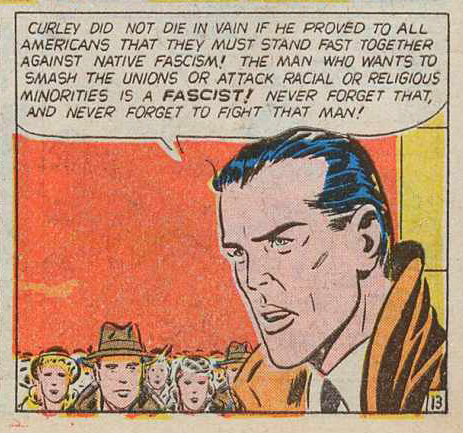
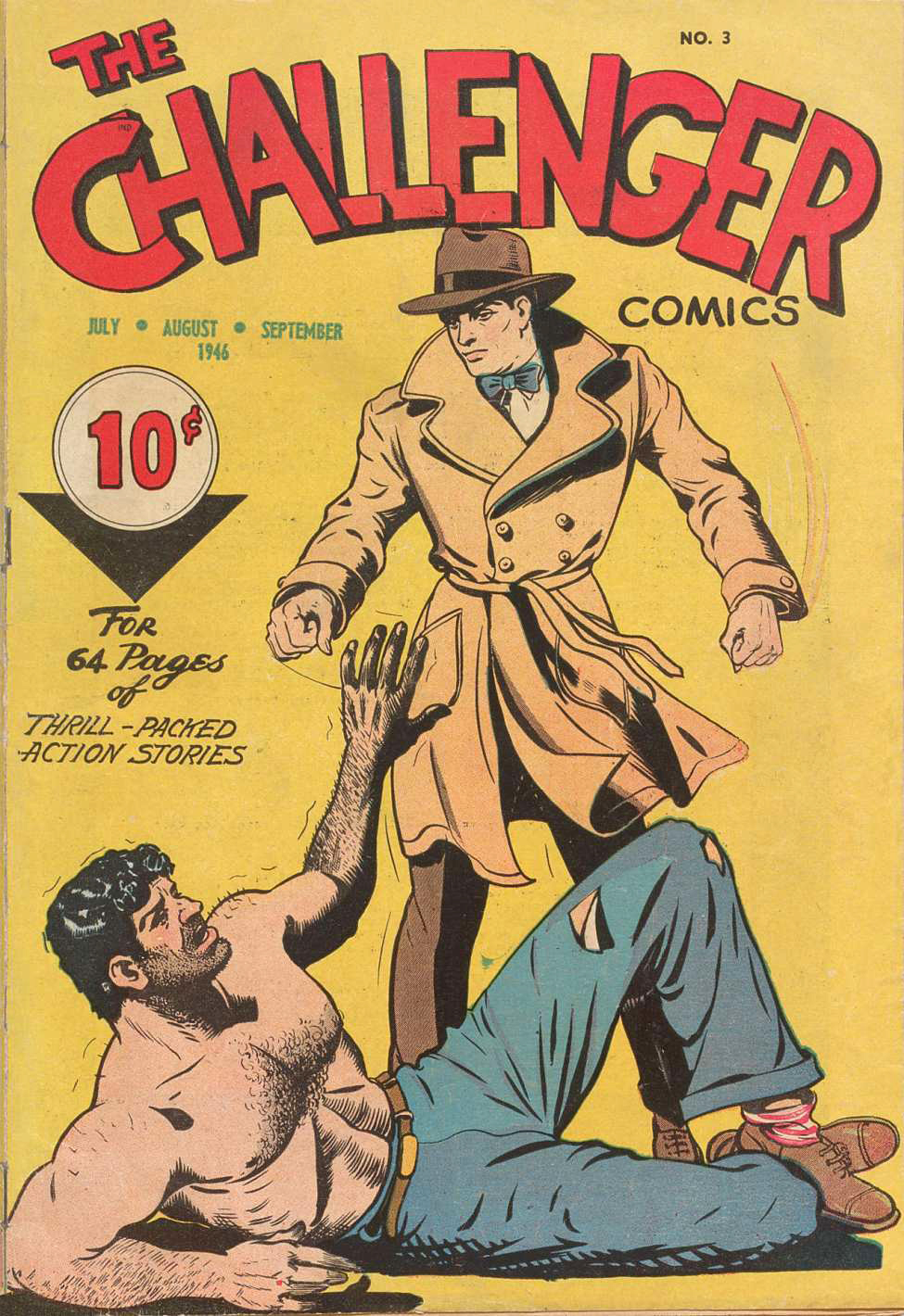
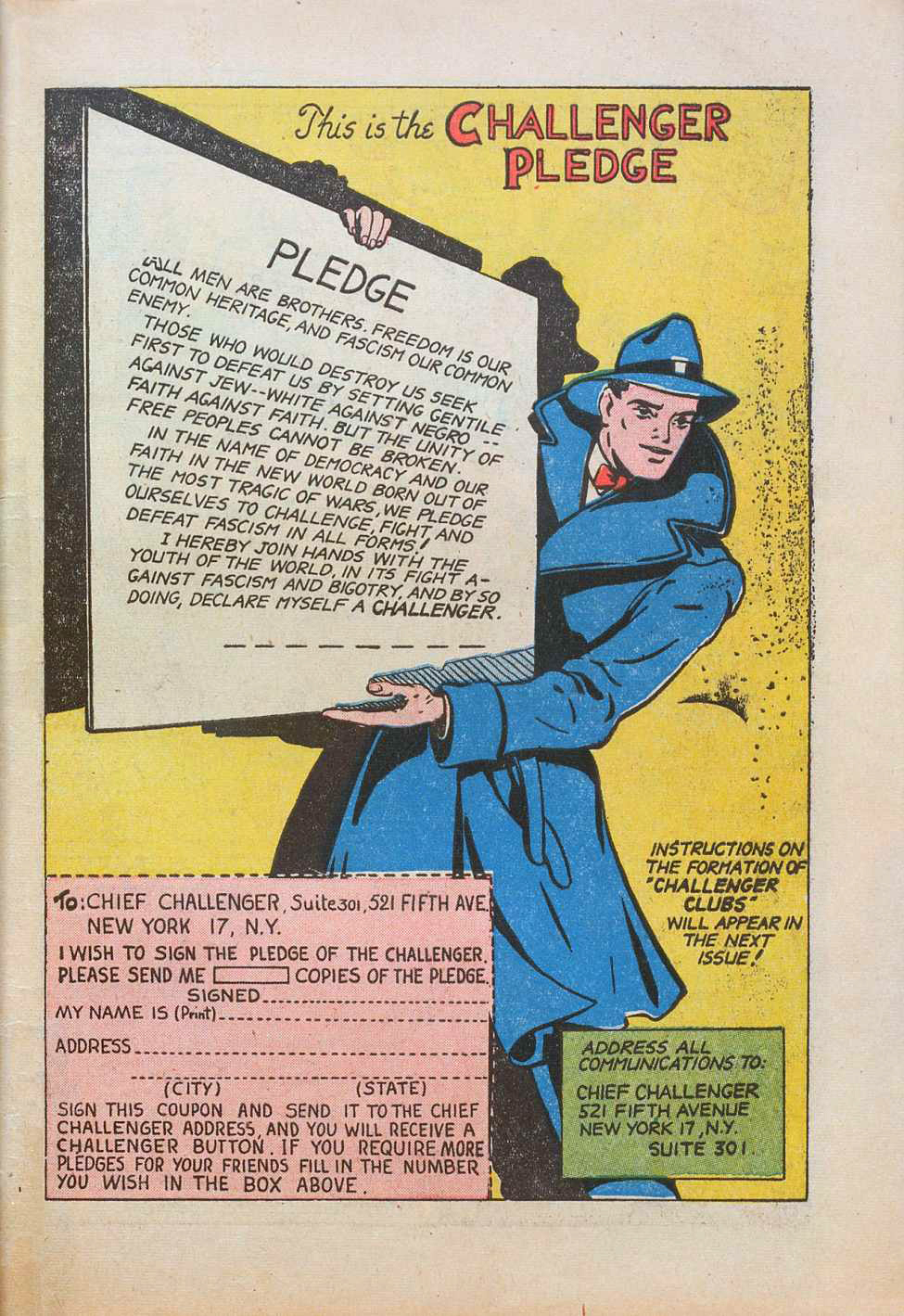
The Challenger—a tough-talking comic book hero from the 1940’s who fights fascism at home: “The man who wants to smash the unions or attack racial or religious minorities is a fascist! Never forget that, and never forget to fight that man!” Read the whole issue here—and take the Challenger Pledge!
![Léon Frédéric - All Things Die, But All Will Be Resurrected through God's Love (c 1893-1918) [detail]](https://corvusfugit.com/wp-content/uploads/2019/03/lc3a9on-frc3a9dc3a9ric-all-things-die-but-all-will-be-resurrected-through-gods-love-c-1893-1918-detail.jpg)
Detail from Léon Frédéric’s seven-panel work All Things Die, But All Will Be Resurrected through God’s Love (1893-1918). Here is the whole thing:

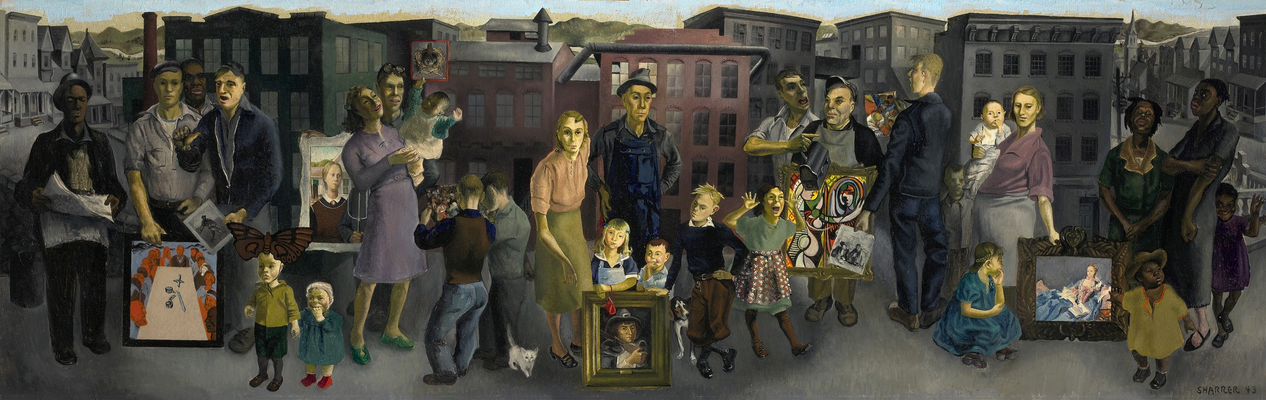
Honoré Sharrer: Workers and Paintings (1943)
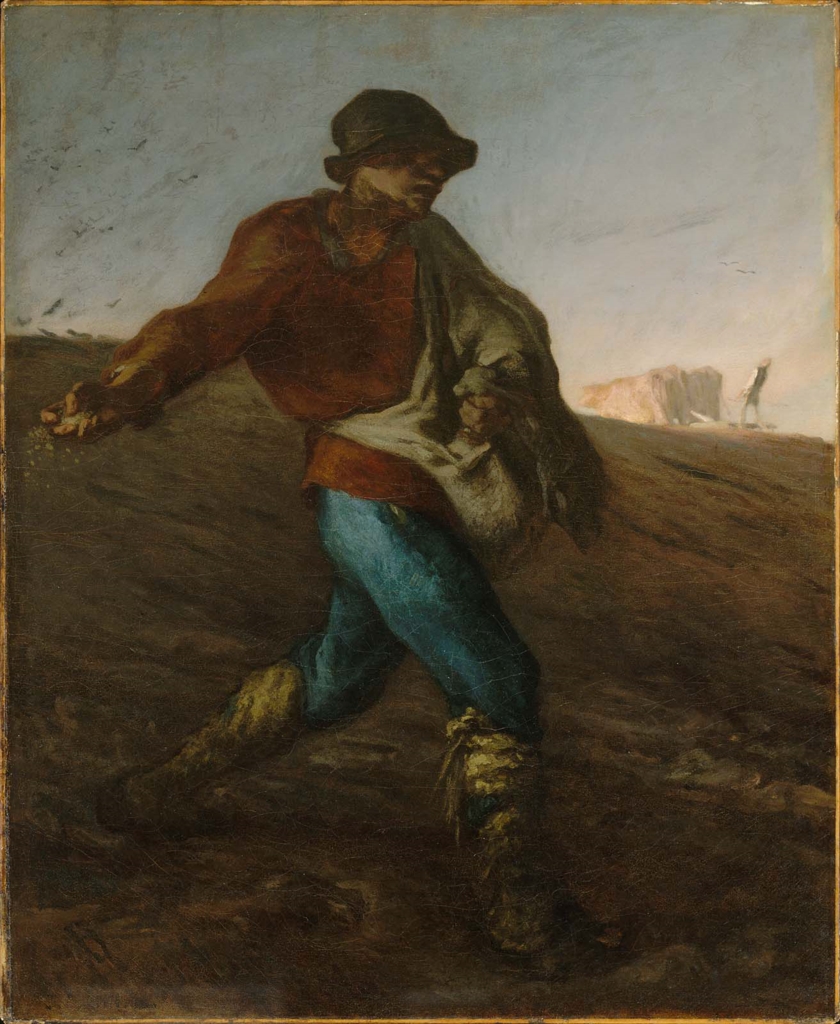
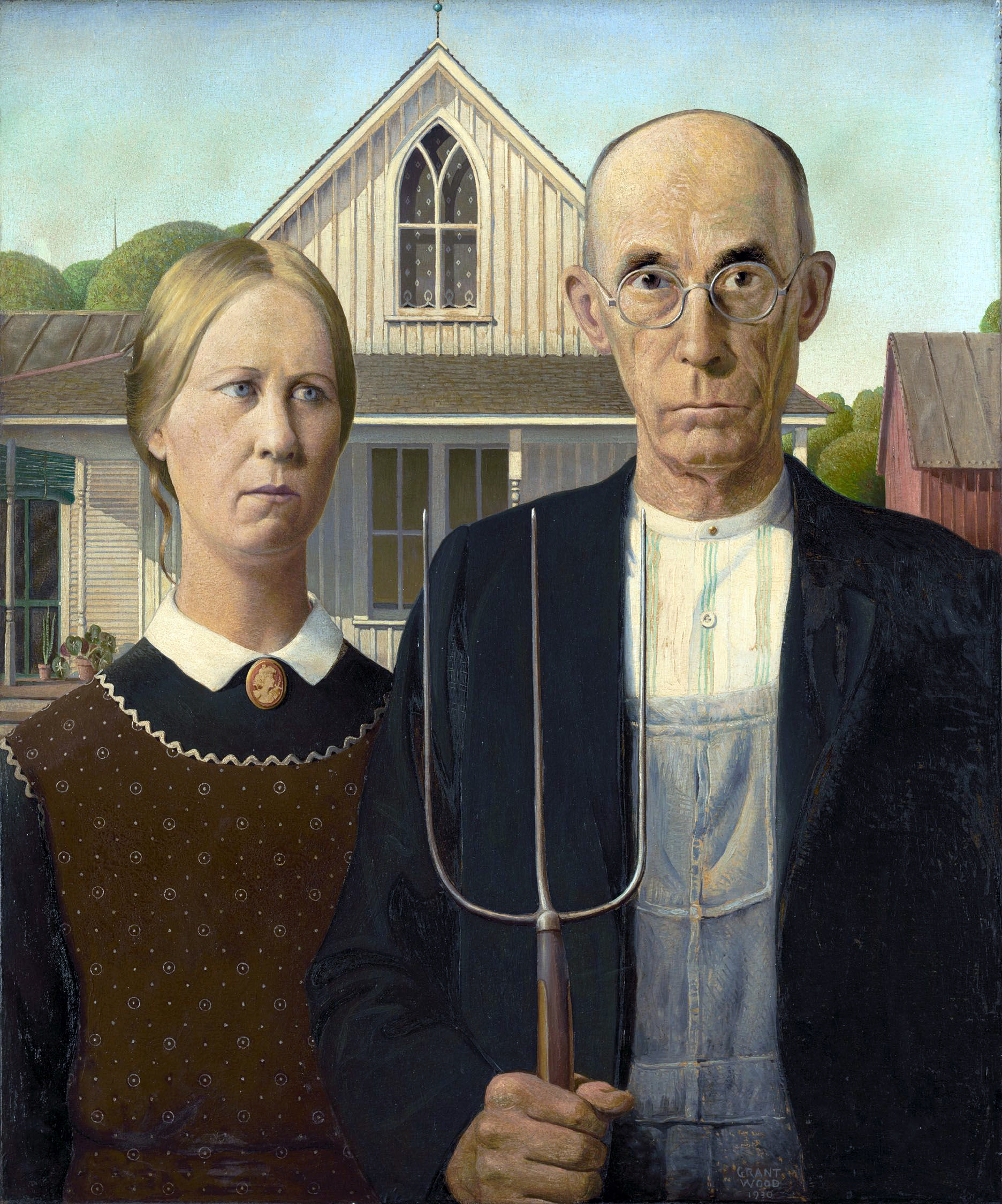
I can’t identify all the paintings in this painting. Leave a comment if you can fill in the blanks:
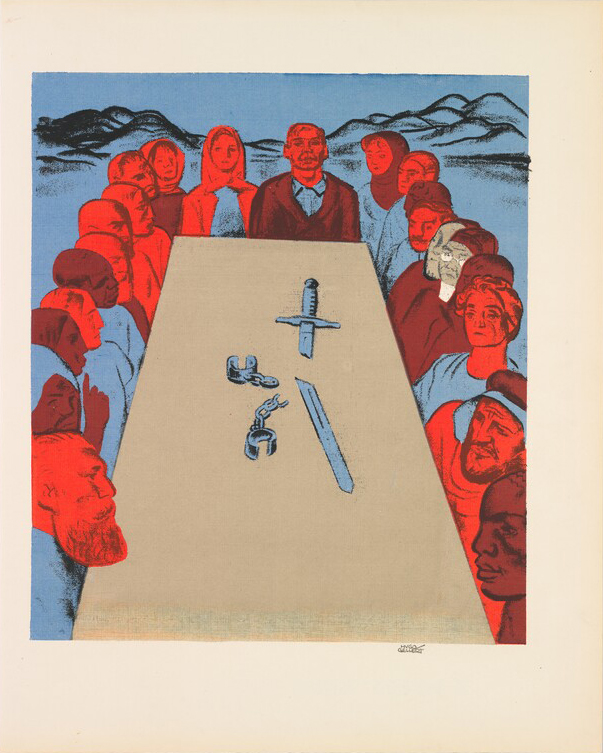

Hugo Gellert : Free Man’s Duties (No 4) (1943)
Jean-François Millet: The Sower (1850)
Grant Wood: American Gothic (1930)
?
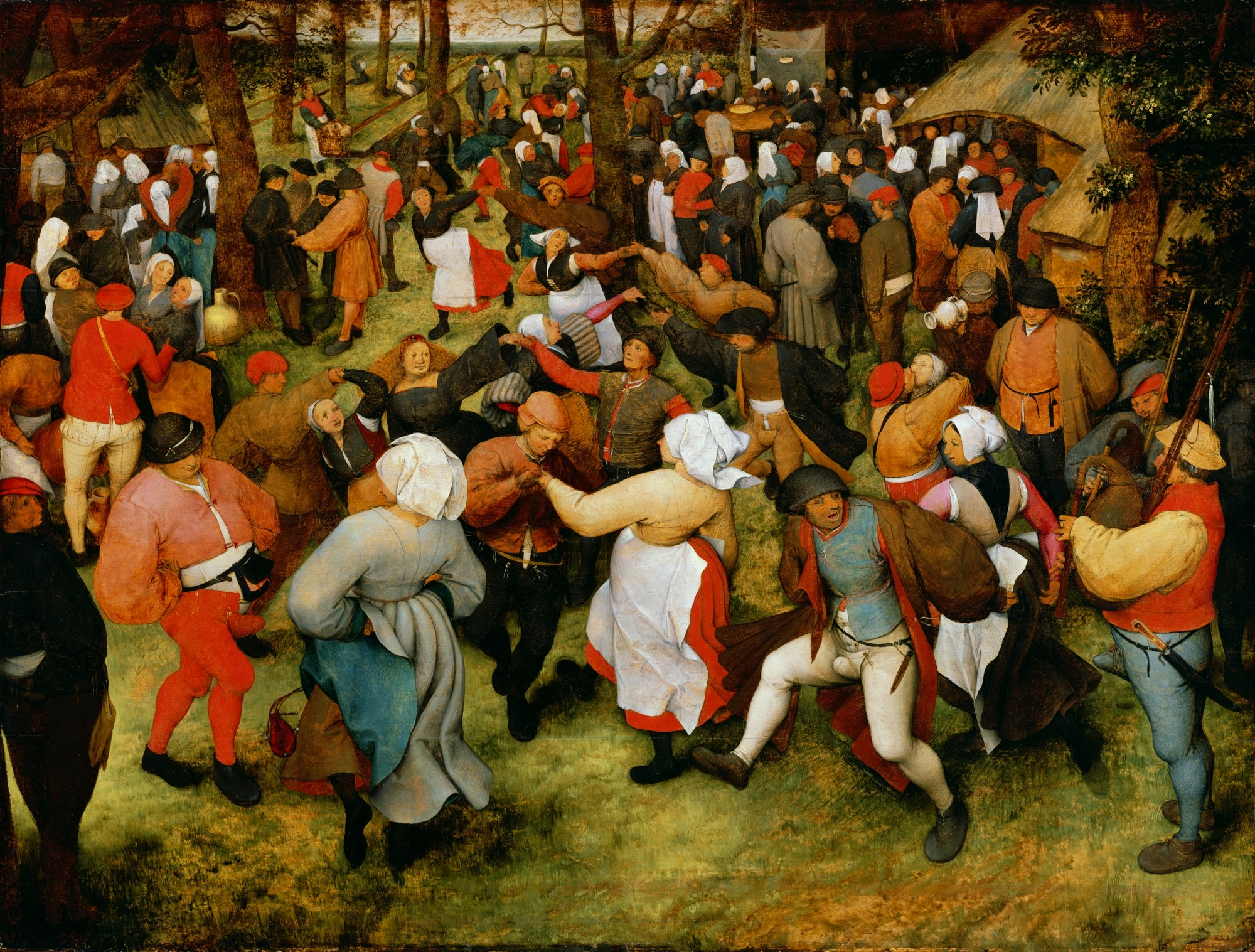
Pieter Bruegel the Elder: The Wedding Dance (1566)
?
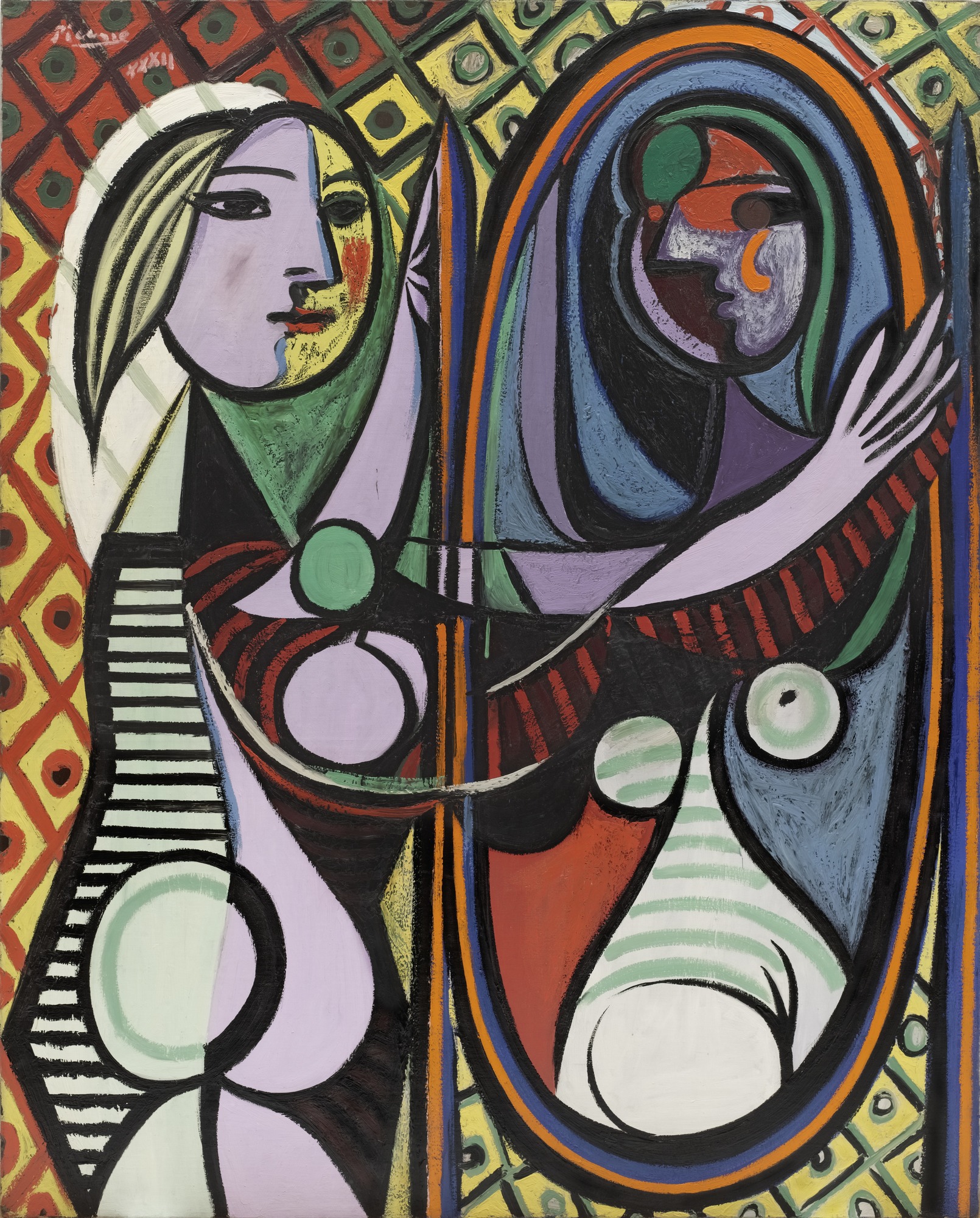
Pablo Picasso: Girl Before the Mirror (1932)
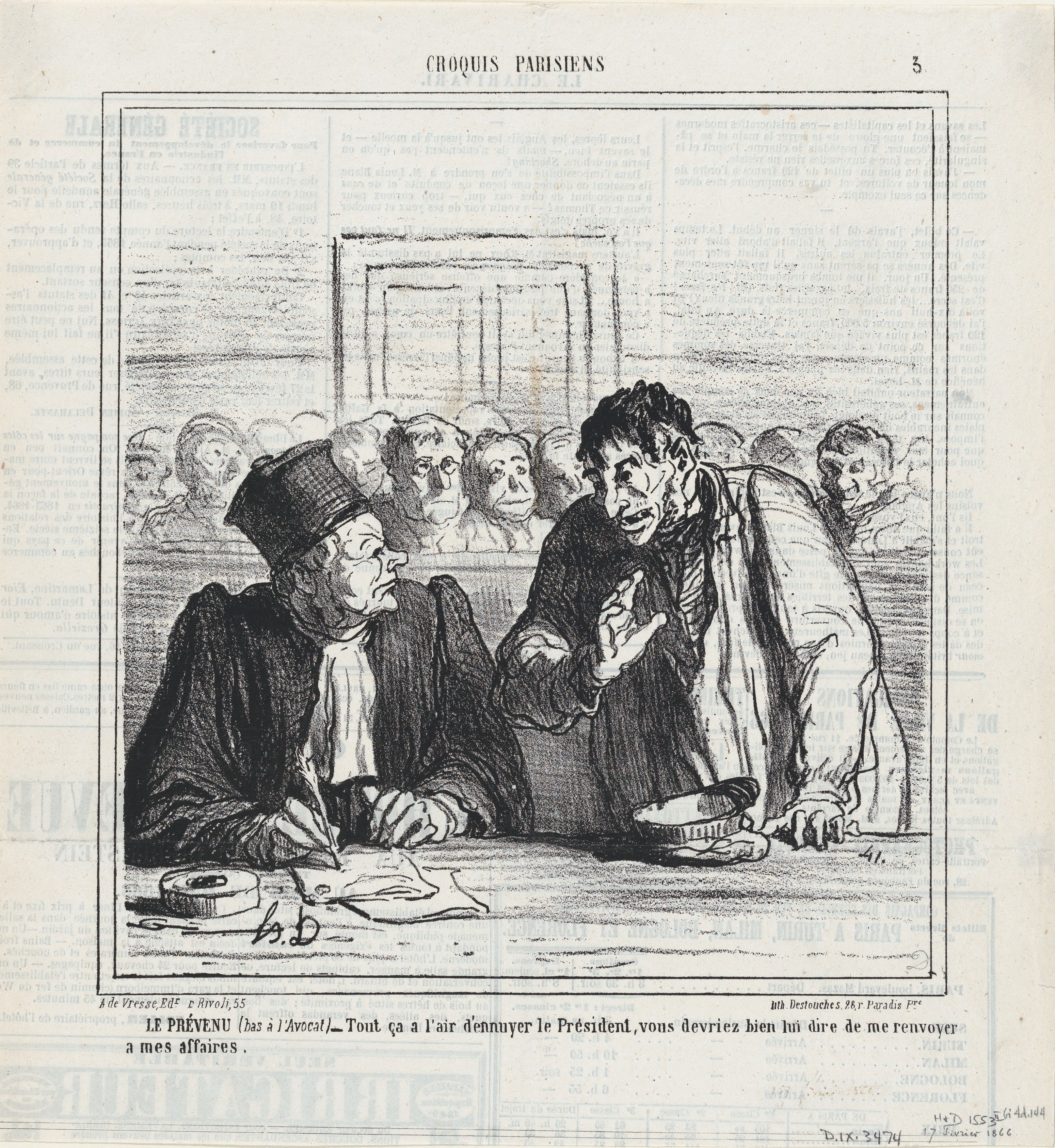
Honoré Daumier: The Defendant (1866) (source)
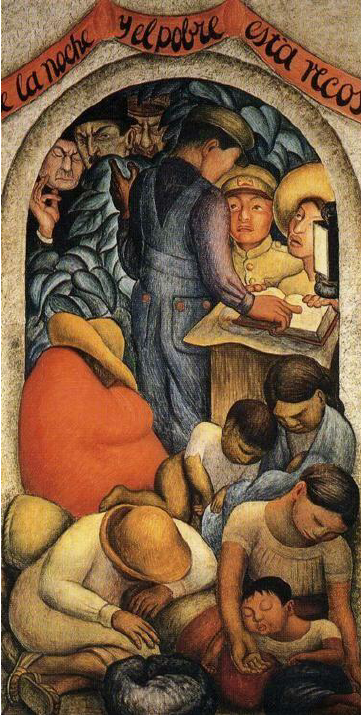
Diego Rivera: El sueño (La noche de los pobres) [Sleep (The Night of the Poor)] (1928)
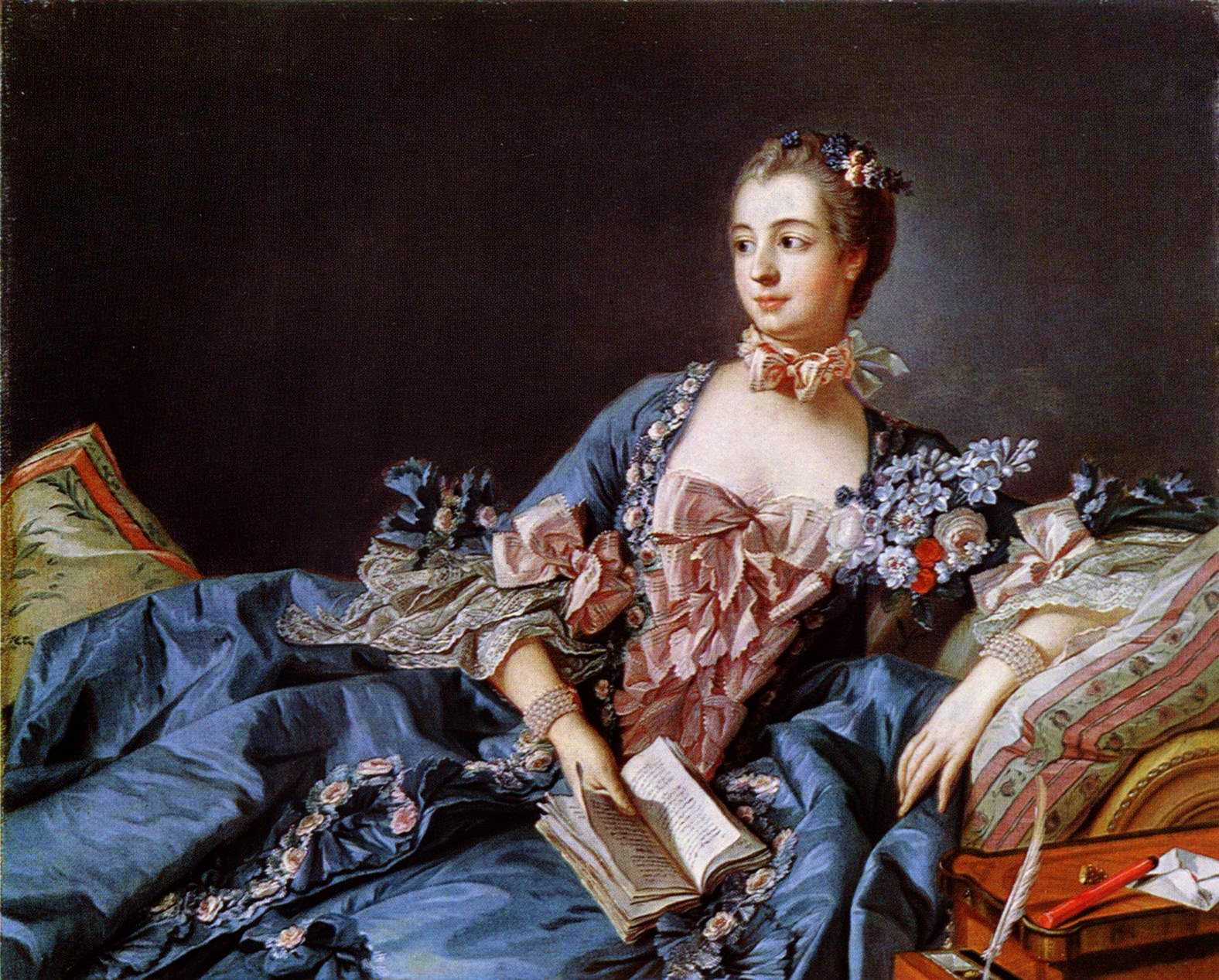
François Boucher: Portrait of Madame de Pompadour (c. 1750-1758)

At Lynn, Mass., one evening in 1682, after the sun had set, and darkness had begun to throw its pall over the land, a man by the name of Handford went out of doors to ascertain if the new moon had risen. In the western sky lay a black cloud of strange appearance, and after looking at it a short time he discovered that it contained the figure of a man completely armed, standing with his legs apart, and holding a pike in his hands across his breast. Mrs. Handford also came out and saw the apparition. After awhile the figure vanished, and in its place appeared a large ship, fully rigged and with all sails set, apparently in motion, though retaining the same position. It was seen as plainly as a ship was ever seen in the harbor, and was to their imagination, the handsomest craft that they ever saw. It had a high majestic bow, heading southwardly, with a black hull, white sails, and a long and beautiful streamer floating from the top of the mainmast. This was plainly visible for some time. After awhile the people went into their houses though the image still remained in the cloud. On coming out again after a short time it was not to be seen, the cloud had also gone and the sky was clear. Many reliable people in the town saw the apparition, and all agree that the above statement is true; but what it was, and how it can be accounted for is still unknown.
—Sidney Perley: Historic Storms of New England: Its Gales, Hurricanes, Tornadoes, Showers with Thunder and Lightning, Great Snow Storms, Rains, Freshets, Floods, Droughts, Cold Winters, Hot Summers, Avalanches, Earthquakes, Dark Days, Comets, Aurora-borealis, Phenomena in the Heavens, Wrecks Along the Coast, with Incidents and Anecdotes, Amusing and Pathetic (1891)
Image:
Willem van de Velde: Aemilia, the Flagship of Tromp (ca. 1639)
![R. Sikoryak - Inferno Joe (1989) [detail]](https://corvusfugit.com/wp-content/uploads/2019/02/r.-sikoryak-inferno-joe-1989-detail.jpg)
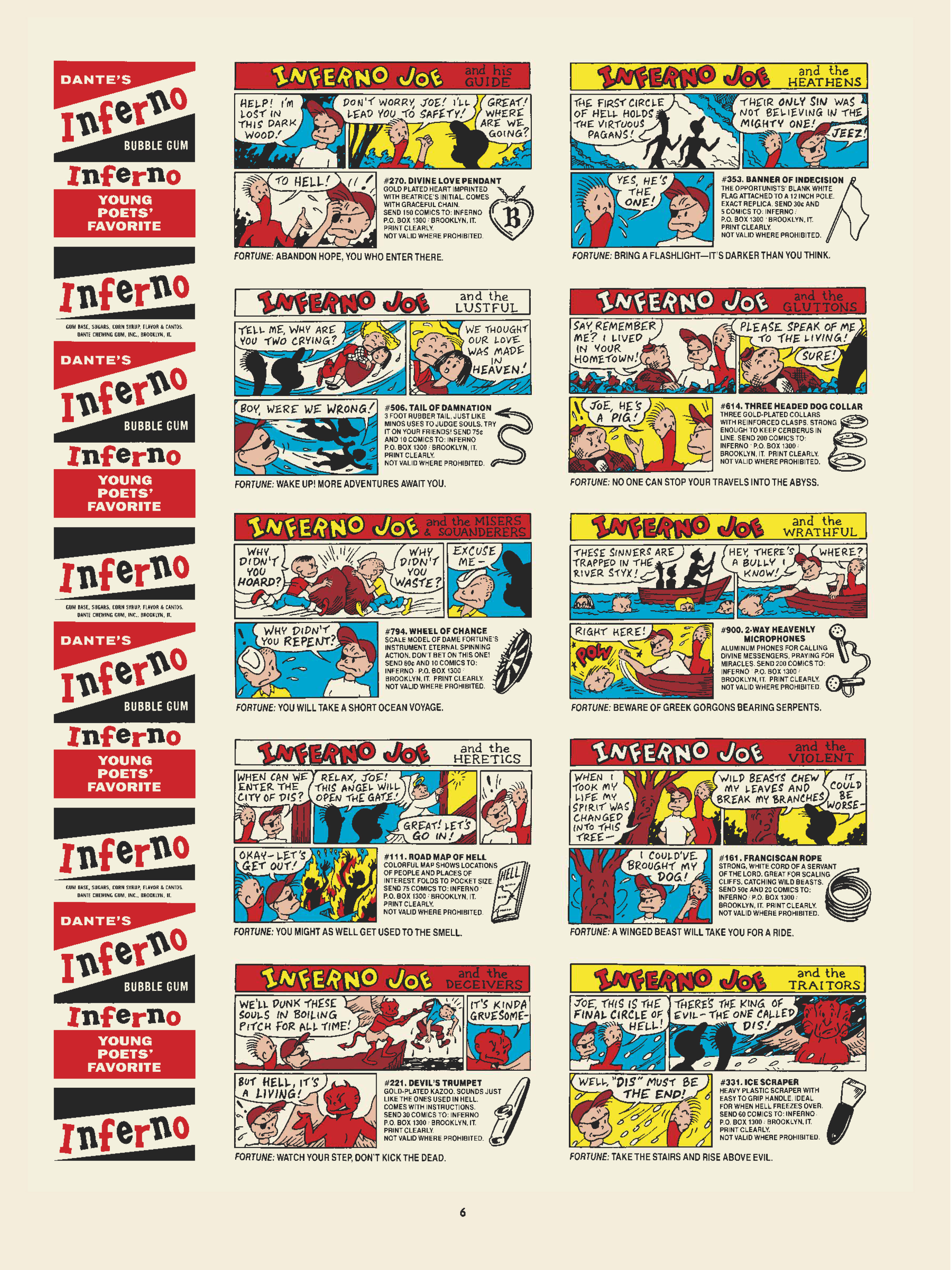
Robert Sikoryak’s version of Dante’s Inferno as a series of “Bazooka Joe” comics (1989). Sikoryak has also done a version of The Scarlet Letter as a series of “Little Lulu” strips, a “Peanuts” version of Kafka’s Metamorphosis, Crime and Punishment in the style of early Batman comic books, and an action-comic rendition of the iTunes terms and conditions.
Click for full page:

René Laloux, director: La Planète sauvage (1973). Released as Fantastic Planet in the USA. (In French, “sauvage” means “wild” in the sense of “untamed.” Wildflowers are fleurs sauvages, for example.)
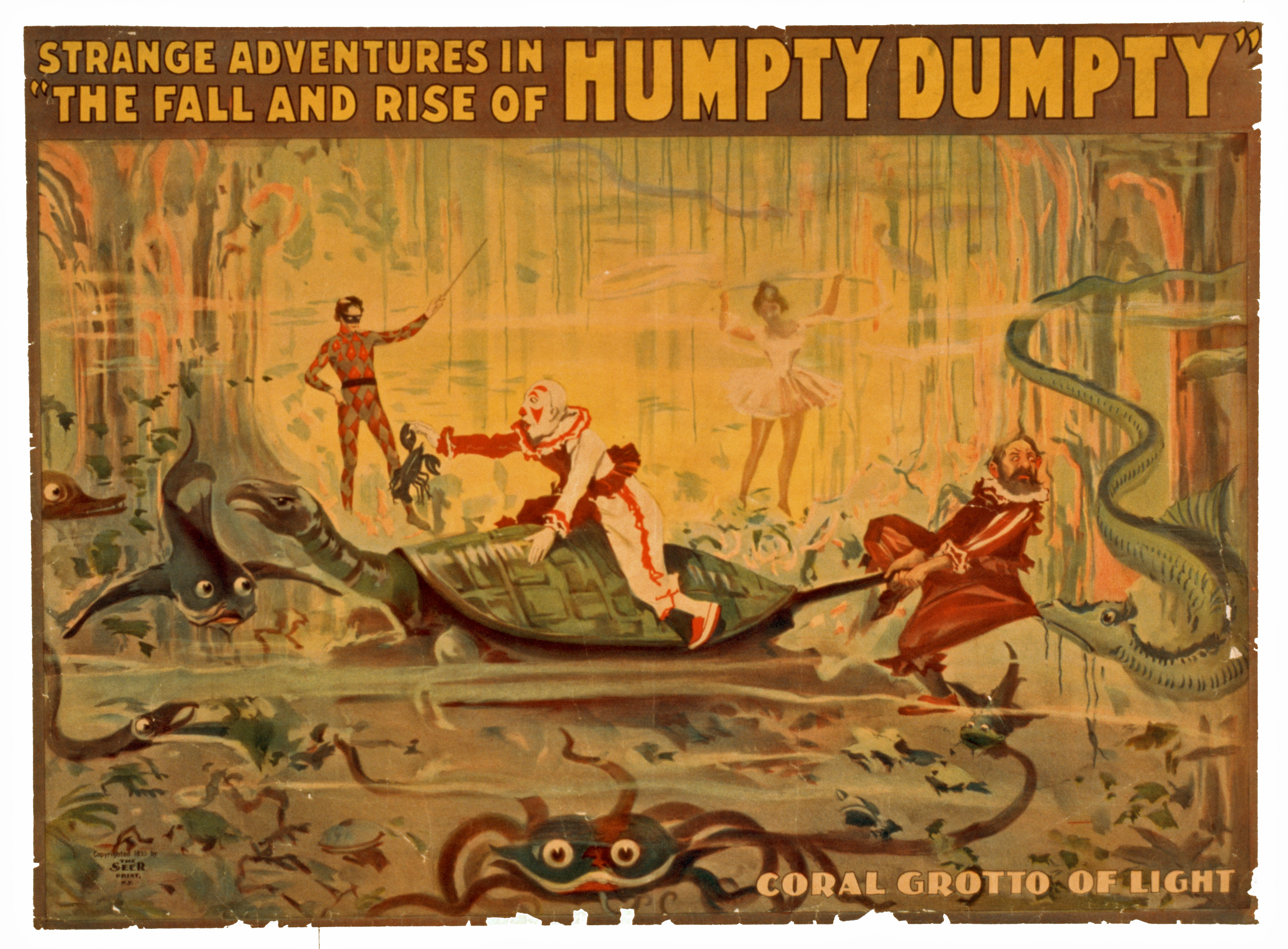
A. S. Seer, printer: Strange Adventures in The Fall and Rise of Humpty Dumpty (c. 1899) (source)

 corvusfugit.com