
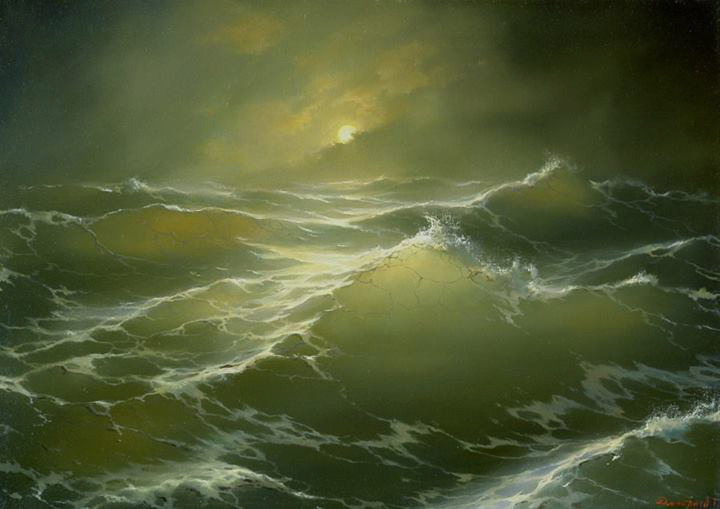
George Dmitriev: Moon and Sea (c. 2015)
George Dmitriev: Moon and Sea (c. 2015)

New additions to the gallery.
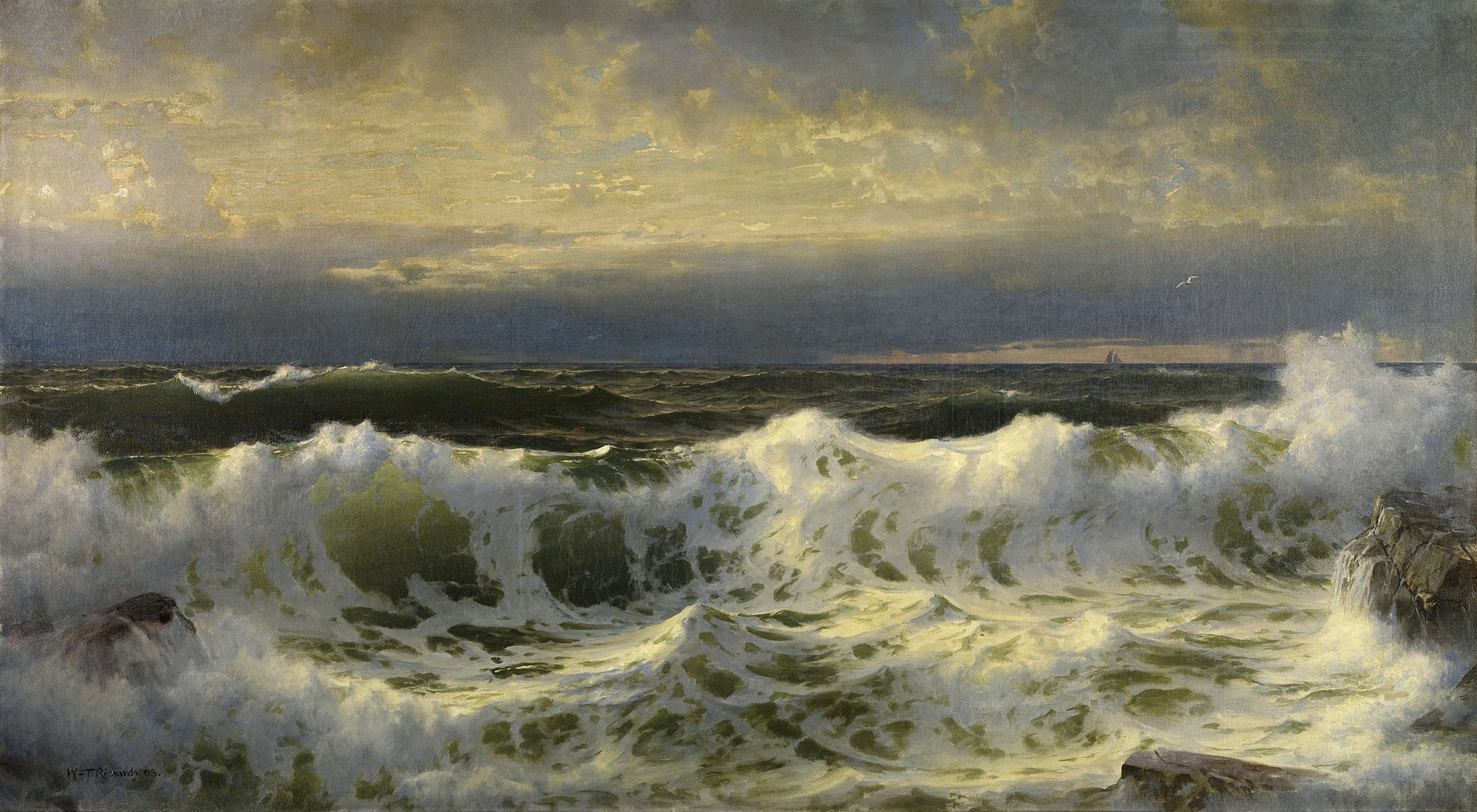
William Trost Richards: Along the Shore (1903)

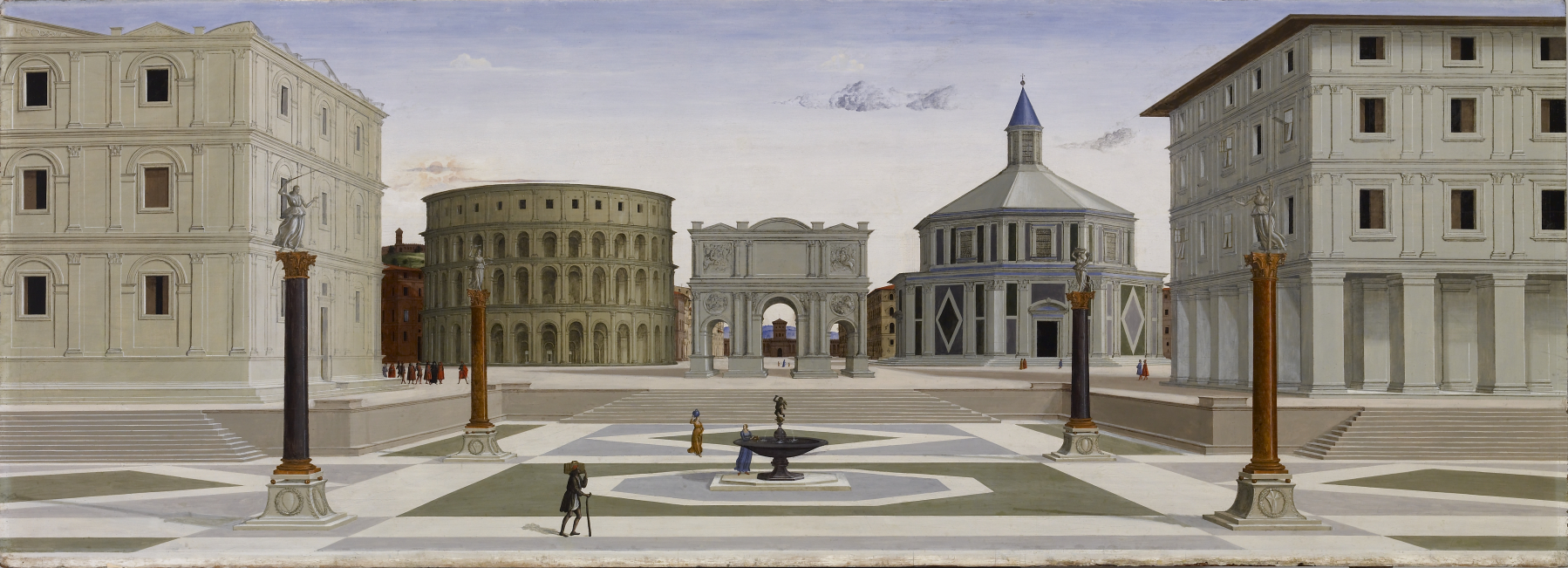
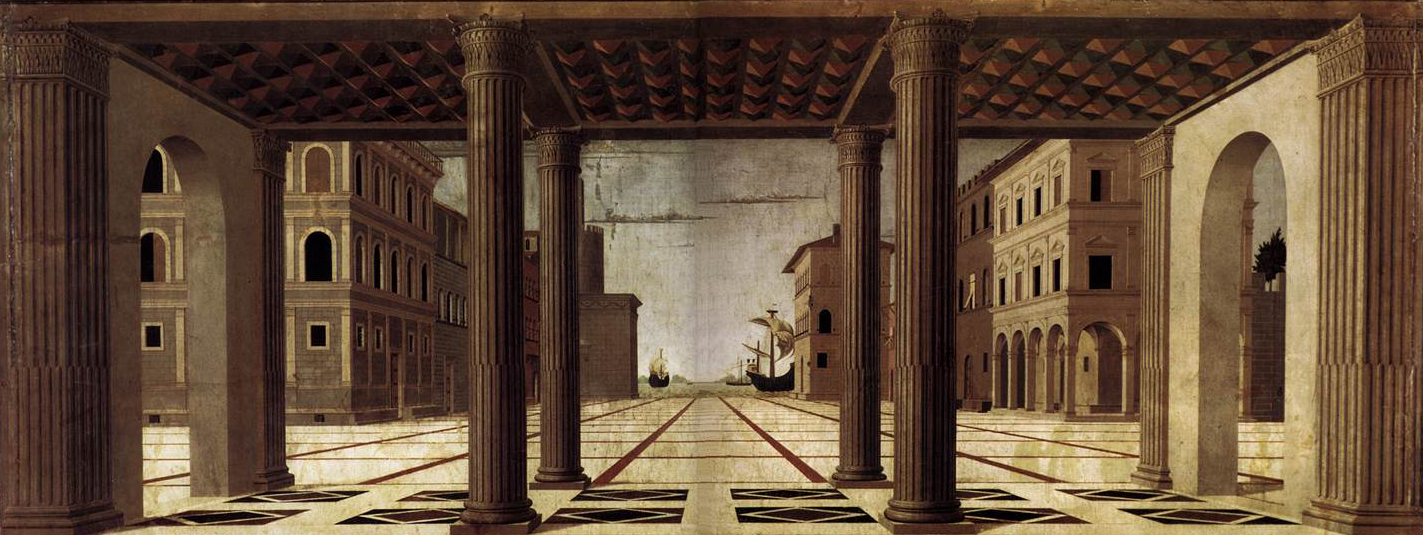
The Ideal City is the title given to three different paintings. The are generally referred to as The Ideal City of Urbino, The Ideal City of Baltimore, and The Ideal City of Berlin, according to where they are located—although all are Italian in origin.
All three date from the fifteenth century. The Ideal City of Urbino was formerly attributed to Piero della Francesca, then to Luciano Laurana, Francesco di Giorgio Martini or Melozzo da Forlì. The Ideal City of Baltimore is attributed to Fra Carnevale and dated between c.1480 and c. 1484; it was possibly painted for the Ducal Palace of Federico da Montefeltro, duke of Urbino. The Ideal City of Berlin has been tentatively attributed to Francesco di Giorgio Martini and dated 1477.
With cities, it is as with dreams: everything imaginable can be dreamed, but even the most unexpected dream is a rebus that conceals a desire or, its reverse, a fear. Cities, like dreams, are made of desires and fears, even if the thread of their discourse is secret, their rules are absurd, their perspectives deceitful, and everything conceals something else.
―Italo Calvino, Invisible Cities
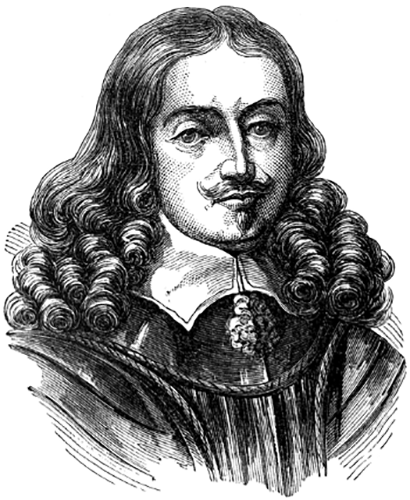
In 1655, Edward Somerset, 2nd Marquess of Worcester composed his Century of Inventions — a listing of 100 things that needed to be invented. The full title is A Century of the Names and Scantlings of such Inventions As at present I can call to mind to have tried and perfected, (which my former Notes being lost) I have, at the instance of a powerful Friend, endeavoured now in the Year 1655, to set these down in such a way as may sufficiently instruct me to put any of them in practice.
Some of the devices Worcester imagines—telephones, machine guns, airplanes, steam engines—have been invented, and some have not. Here is a selection:
No. VI.
How, at a window, as far as eye can discover black from white, a man may hold discourse with his correspondent, without noise made or noise taken ; being, according to occasion given and means afforded, ex re nata, and no need of provision beforehand; though much better if foreseen, and means prepared for it, and a premeditated course taken by mutual consent of parties.No. VII.
A way to do it by night as well as by day, though as dark as pitch is black.No. XII.
A way to make a ship not possible to be sunk, though shot at an hundred times between wind and water by cannon, and should she lose a whole plank, yet, in half an hour’s time, should be made as fit to sail as before.No. XVII.
How to make upon the Thames a floating garden of pleasure, with trees, flowers, banqueting-houses, and fountains, stews for all kind of fishes, a reserve for snow to keep wine in, delicate bathing places, and the like; with music made by mills; and all in the midst of the stream, where it is most rapid.No. XXXII.
How to compose an universal character, methodical and easy to be written, yet intelligible in any language ; so that if an Englishman write it in English, a Frenchman, Italian, Spaniard, Irish or Welsh, being scholars, yea, Grecian or Hebrean, shall as perfectly understand it in their own tongue as if they were English, distinguishing the verbs from the nouns, the numbers, tenses, and cases, as properly expressed in their own language as it was written in English.No. XLVI.
How to make an artificial bird to fly which way and as long as one pleaseth, by or against the wind, sometimes chirping, other times hovering, still tending the way it is designed for.No. LXXVII.
How to make a man to fly: which I have tried with a little boy of ten years old, in a barn, from one end to the other, on a hay-mow.No. LXXVIII.
A watch to go constantly, and yet needs no other winding from the first setting on the cord or chain, unless it be broken, requiring no other care from one than to be now and then consulted with, concerning the hour of the day or night ; and if it be laid by a week together, it will not err much ; but the oftener looked upon, the more exact it showeth the time of the day or night.No. LXXXIV.
An instrument whereby persons, ignorant in arithmetic, may perfectly observe numeration and subtraction of all sums and fractions.
The full text of a 1746 edition is here.
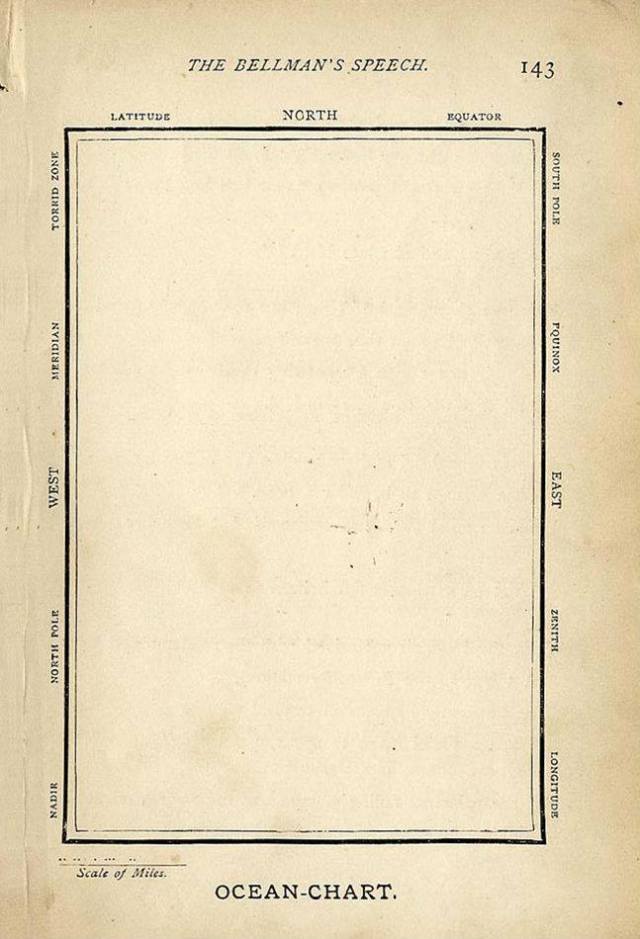
He had bought a large map representing the sea,
Without the least vestige of land:
And the crew were much pleased when they found it to be
A map they could all understand.
—Lewis Carroll: The Hunting of the Snark (An Agony in Eight Fits) (1876)

Jean-François Fourtou: from Mes Maisons (2007) (source)

Takahiro Iwasaki: Geo Eye (Victoria Peak) (2012)

Hans Emmenegger: Hard Shadow Cast on Trunk (1934)

Sunil Janah: Indrani Rahman
Born in Chennai, Indrani Rahman was instilled with a sense of independence by her mother, a dancer from Petosky, Michigan who had changed her name from Esther Sherman to Ragini Devi when she’d married Ramalal Balram Bajpai and converted to Hinduism. Bajpai was a scientist and activist for Indian independence from British colonial rule.
Beginning in her mother’s dance company at the age of five, Rahman went on to master many styles of classical Indian dance, including Bharata Natyam, Kuchipudi, Mohini Attam, Kathakali, and Orissi. She was the first professional dancer to perform Orissi on stage.
In 1952, Rahman became the first Miss India and competed in the Miss Universe Pageant in California. As a dancer, she toured the world and was seen as a cultural ambassador for her country. She performed for John F. Kennedy, Haile Selassie, Queen Elizabeth II, Mao Zedong, Nikita Khrushchev, and Fidel Castro, among others.
She spent the last two decades of her life in the US after joining the Juilliard School faculty in 1976. Rahman died in 1999.
(I took a guess on the date of the photo based on the fact that production on the Douglas DC-6—and the DC-7; I can’t really tell which the model is in the photo—stopped in 1958; Rahman was born in 1930 and was touring in Europe in the 1950’s.)


