1927: Death to the Machines!

Lang     75388_1_Lang

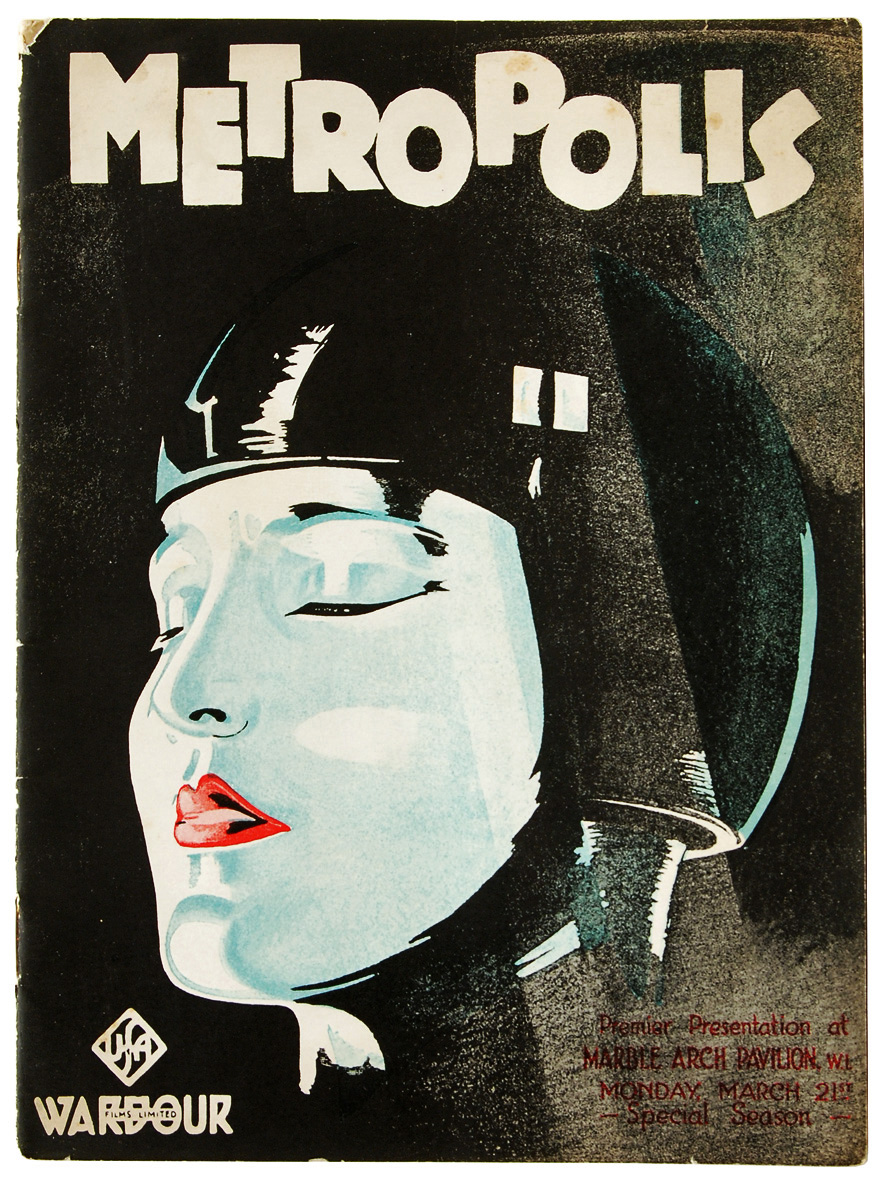
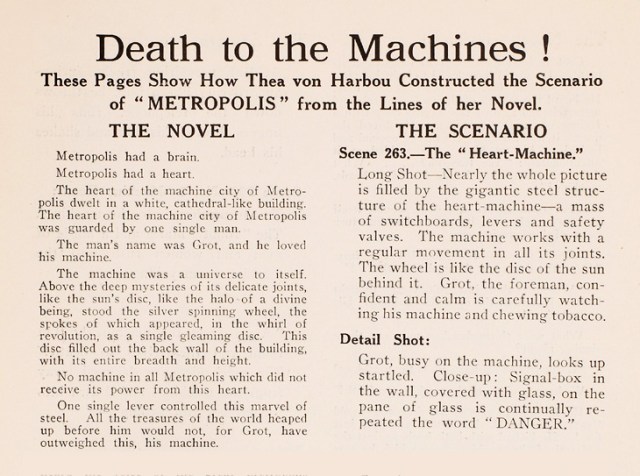
This program for the London premiere of Fritz Lang’s Metropolis in 1927 includes a comparison, in parallel columns, of the novel and the screenplay, both of which were written by by Lang’s collaborator (and wife) Thea von Harbou.

Metropolis

The entire program can be seen here.

Posted in Uncategorized | Tagged , , , , , , , , , , | Leave a comment

1914: The Workers Produce Everything!

Tressell“The workers produce Everything! If you walk through the streets of a town or a city, and look around, Everything that you can seeFactories, Machinery, Houses, Railways, Tramways, Canals, Furniture, Clothing, Food and the very road or pavement you stand upon were all made by the working class, who spend all their wages in buying back only a very small part of the things they produce. Therefore what remains in the possession of their masters represents the difference between the value of the work done and the wages paid for doing it. This systematic robbery has been going on for generations, the value of the accumulated loot is enormous, and all of it, all the wealth at present in the possession of the rich, is rightly the property of the working classit has been stolen from them…”

For some moments an oppressive silence prevailed. The men stared with puzzled, uncomfortable looks alternately at each other and at the drawings on the wall. They were compelled to do a little thinking on their own account, and it was a process to which they were unaccustomed. In their infancy they had been taught to distrust their own intelligence and to leave “thinking” to their “pastors” and masters and to their “betters” generally. All their lives they had been true to this teaching, they had always had blind, unreasoning faith in the wisdom and humanity of their pastors and masters. That was the reason why they and their children had been all their lives on the verge of starvation and nakedness, whilst their “betters” who did nothing but the thinkingwent clothed in purple and fine linen and fared sumptuously every day.

—Robert Tressell: The Ragged-Trousered Philanthropists (1914)

Robert Tressell” was the pen name of Robert Noonan, the illegitimate son of a  Protestant member of the Royal Irish Constabulary and a Catholic mother, Mary Noonan.  After some time in South Africa, he settled in London, where he worked as a painter. Following some political wanderings, he eventually became a socialist, largely influenced by the ideas of the artist and designer William Morris. He took up writing after developing tuberculosis, choosing the name “Tressell” as a play on “trestle table,” part of a painter and decorator’s kit.

He finished The Ragged-Trousered Philanthropists, (originally titled The Ragged-Arsed Philanthropists) in 1910, but the book was rejected by several publishing houses. He died a year later at the age of 40 and was buried in a pauper’s grave. The novel was published posthumously through the efforts of his daughter, Kathleen; originally published in 1914 in an abridged version, with much of the explicitly socialist language edited out,  the novel was eventually published in an unabridged edition in 1955.

George Orwell reviewed the original version of the book, praising its attention to “the actual detail of manual work and the tiny things almost unimaginable to any comfortably-situated person which make life a misery when one’s income drops below a certain level.” He called it “a book that everyone should read” that left one “with the feeling that a considerable novelist was lost in this young working-man whom society could not bother to keep alive.”

Posted in Uncategorized | Tagged , , , , , , , , , | Leave a comment

1793: In Saddam Hussein’s Basement

babylonian-talmud-1798-during-treatment-xl

Title page of a volume from a multi-volume Talmud set published in Vienna in 1793 by Yozef Hroshontsḳi and recovered from the flooded basement of the Mukhabarat, Saddam Hussein’s intelligence headquarters, in 2003.

Tens of thousands of Jewish documents were discovered in the basement by the US Army, shedding light on the 2,500-year history of the Iraqi Jewish community. Most Jews had fled the country in the early 1950’s after the Iraqi government had instituted a series of anti-Semitic laws in response to Israel’s Declaration of Independence in 1948;  a number of synagogues had also been bombed. By 1951, more than a hundred thousand Jews had left the country.

This volume of the Talmud discusses laws and topics relating to Yom Kippurthe Day of Atonement, the most important Jewish holiday.

(source)

Posted in Uncategorized | Tagged , , , , , , , , , | Leave a comment

1920: Thomas Shields Clarke Leaves his Autochromes

FERNWOOD-60


The Autochrome Lumièrepatented in 1903 by the brothers Lumière in France and first marketed in 1907was the first method of making color photographs, and quickly become popular among amateur photographers like Thomas Shields Clarke, an American painter and sculptor born in Pittsburgh in 1860.

Clarke had established a studio called Fernbrook in Lenox, Massachusetts in 1904, where he worked during the summer months. He died in 1920, and his Autochromes eventually found a home in the archives of the Pennsylvania Academy of the Fine Artswhere they were recently rediscovered by Barbara Katus, a photographer of the Academy’s art collection. (Sources here and here.)

Posted in Uncategorized | Tagged , , , , , , , | Leave a comment

1896: Stand True

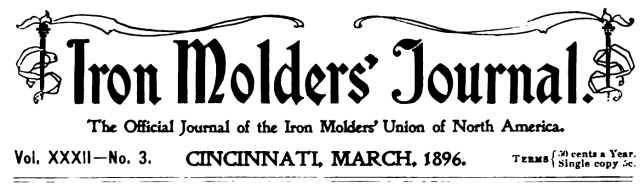
masthead

TRADE-UNIONS FROM THE STANDPOINT OF A TRADE-UNIONIST
by John F. Sheehan

I have been asked to defend trade-unionism. It is unnec­essary; trade-unions are their own defense: by the added comforts they bring into thousands of homes, through increased wages and greater leisure; by the stimulus they give to the virtues of fraternity and mutual help among their members; by their influence in leveling the barriers of nationality and of race prejudice; by their work in a hundred ways in developing man intellectu­ally and morally, they have won such recognition from all fair minded citizens that their utility is as well established as that of any form of association into which men enter for their mutual benefit….

Continue reading

Posted in Uncategorized | Tagged , , , , | Leave a comment

2012: Nefertiti in the Streets

Cairo

Graffiti in Cairo by El Zeft

Posted in Uncategorized | Tagged , , , , , , , , | Leave a comment

1819: Kahikona arrives in Hawai’i

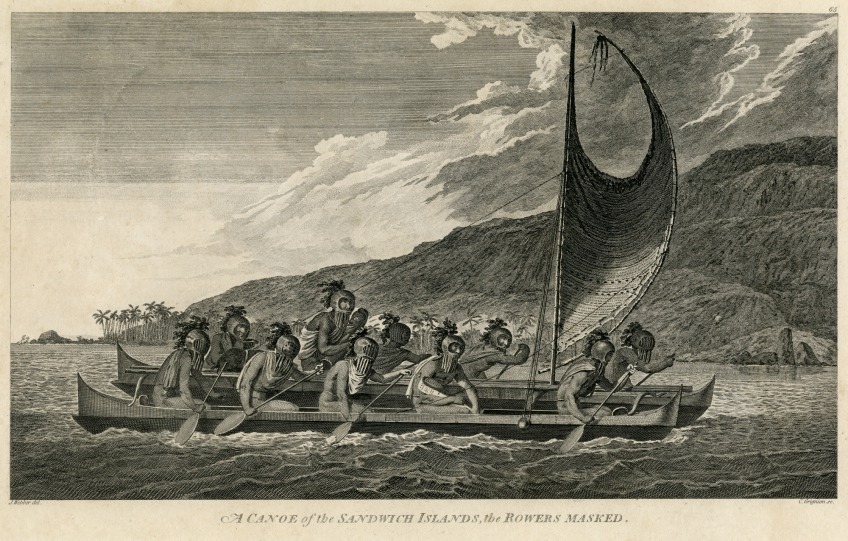
Sandwich Canoe

Beginning in the early part of the last millennium, Polynesians explored 16 million square miles of ocean by canoe, navigating by the stars, sun, clouds, ocean swells, and currents; they settled on every habitable island in the Pacific and likely arrived in Hawai’i around the year 300. Later, between 1000-1300,  the migration of Tahitian chiefs and priests shifted the society toward a more rigid and stratified social structure, with governance through councils of elders and experts giving way to the rule of ali`i, a class of chiefs defined by lineage. The ali‘i ruled over kahuna (priests), koa (warriors), maka‘ainana (workers), and kaua (servants) enforcing a strict system of  kapu (taboos). By 1400, Tahitians, sailing double-hulled canoes like the one pictured, controlled the trade routes between Hawai‘i and Tahiti.

The first documented landing of Europeans in Hawai’i occurred in 1778: British Capt. James Cook arrived in his ships Resolution and Discovery at Waimea, Kaua’i and was welcomed as the god Lono, who had been prophesied to return on a “floating island.” Protestant missionaries and whaling ships began to settle in the years thereafter.

By the 1820’s, this Western influence had begun to replace the system of social reciprocity within Hawai’ian culture—in which those lower in social standing were protected by those above in return for their obedient service—with that of a system of labor for profit in an emerging market economy.

A journal ledger from this time survives, written by a Tahitian named Kahikona, originally a teacher of Christianity to Hawaiian chiefs—and it reflects the turbulence and hardship of this cultural change.

Kahikona arrived in Hawai’i in 1819 and was recruited for the American missionary effort in Hawai’i, eventually becoming a private tutor and chaplain to the family of Queen Kaʻahumanu, who had publicly embraced Protestantism in 1824 and encouraged her subjects to become baptized into the faith. He preached sermons in Honolulu in the fall of 1826, and is listed in 1827 as a  “Native Assistant…employed to conduct prayer meetings among the people at different places.”

By 1835, however, Kahikona had been excommunicated. We learn from the journal that his wife Lonokahikini has left him; we also know that his patron chiefs have been found guilty of adultery and “habitual neglect of public worship without sufficient reason”; and  that Kahikona himself has been suspended “for falsehood, having signed a pledge to abstain from smoking, but having violated it”—there are also charges of drunkenness. Although his patrons are reunited with the church, Kahikona is not, having been “proved guilty of striving to prevent others from returning to the bosom of the church.”

Continue reading

Posted in Uncategorized | Tagged , , , , , , , , | Leave a comment

1965: Struggling from Darkness

5623366016f9b-szomory-dezso-a-parizsi-regeny-atheneum

If we approach the novel with one eye on the natural sciences today, we may say that it assembles its structure from…models of existence or reality in a manner that will hopefully be more true and more real than the various models on their own. Let me give an example. Let’s call R1– that veritably hand-me-down, agreed-upon model of reality produced by mankind to date which we may rather crudely characterize by saying that we are born, we live, we die, generations succeed each other on the earth, and they have brought about a culture we might call Cartesian, Euclidean, Aristotelian, Newtonian: the individual is only one of many, though beyond his moral obligations, he also strives to achieve his own happiness and salvation. This way of looking at things has withstood the test of time and is practical to boot. That is why it was developed. It has space, absolute cause, bivalent logic, continuity, psychology, a system of ethics and even aesthetics. We all accept it and use it for what it was meant. This R1 —from where the reader is attending to it, who (according to our definition) sees just about everything from this vantage point—almost inevitably means one aspect of the novel,  its second plane, so to speak, the median perspective of Newtonian mechanics: and the novel is threatened by the possibility of this finished model of reality carried by language swallowing it up in its entirety. Yet the novel cannot be contained in another system of reality; the order imposed by R1 is a fallacious and flat generalization, its light a cheap imitation, its confines narrow. So the novel searches for another model of reality in order to expand—more precisely, to correct, the former within wider confines, within what we may call the metamodel.

R1 says more or less that reality is what we call reality. Let R0 be the solipsist theory that nothing exists or is real but the self. At least, this resolves the untenable contradiction which makes R1 a model of catastrophe, so to speak, i.e., that it has incorporated the I which gave existence and stability to the model into the model itself. It comes to grief in the space and irreversible time of R1. It dies as it was born, its only petty consolation being that through the generations that come and  go, some slight traces of its short material existence remain, some minuscule memory of it, some slight effect: worse than nothing. For, compared to the real intensity and unimpaired entirety of its existence, these are merely pale abstractions. Luckily, through the R0 it also says that not only the line of short-lived generations, the futility of glory, work and morals, not only the lack of absolutes, the irreversibility of time, but the entirety of R1, together with its birth and death, are not reality, but only a model of reality they themselves produced, and the fact that you were born in it and I die in it, this is merely the way the subject sees it within R1.

Continue reading

Posted in Uncategorized | Tagged , , , , , , | Leave a comment

2012: Dipped

without-a-doubt-pt2-4

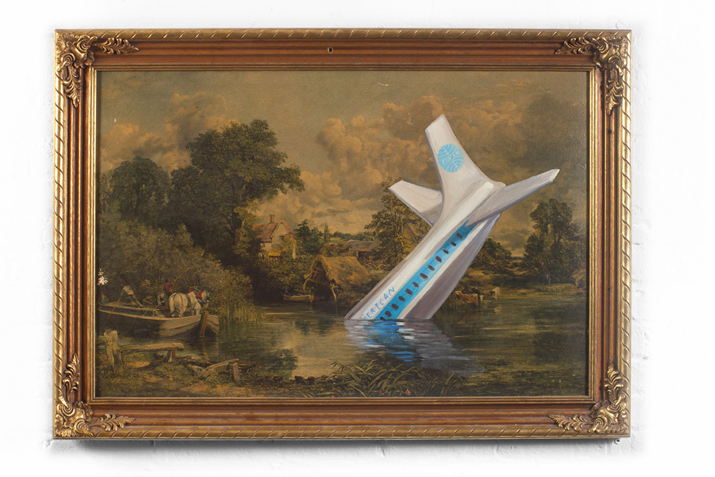
Oliver Jeffers: Dipped Painting (2012)

More:

Also:

tragedy-at-dawn

Tragedy at Dawn (2012)

(source)

Posted in Uncategorized | Tagged , , , , , | Leave a comment

2011: The Black Square

wundercamera_03

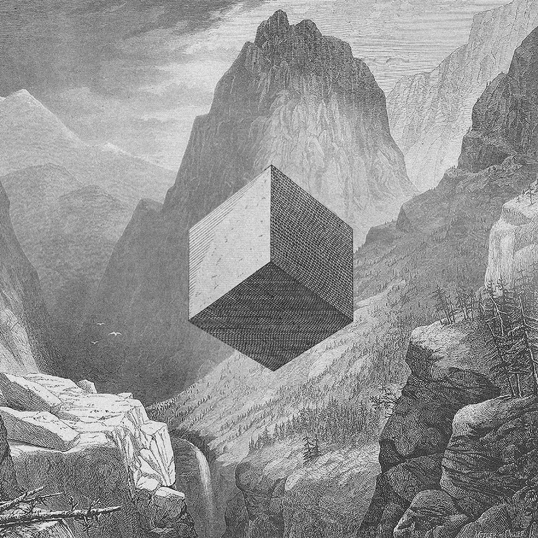
Jakub Woynarowski: from the cycle Wunderkamera (2011)

Posted in Uncategorized | Tagged , , , , | Leave a comment