

Artwork by Francesco Lorenzetti. I guessed at the date. (source) See more cubes here.

 Senegalese artist Omar Victor Diop stages his self-portraits as historical photographs—complete with “original” dates. The photo above, for example, is titled A Moroccan man (1913); the one to the left is Dom Nicolau (Circa. 1830–1860). Both are from his 2014 series Project Diaspora. His subjects are drawn from various moments in history in which African men (and men of African descent) have played a role, but which have been forgotten or erased. Dom Nicolau, for example, was one of the earliest African leaders to protest against colonial rule; a letter he wrote to a newspaper in Lisbon is the first written record of Angolan protest against Portuguese commercial, political, and military influence and is seen as an antecedent to the later move toward Angolan independence. Nicolau was assassinated in Kissembo under obscure circumstances in February 1860.
The inclusion of soccer paraphernalia (balls, cleats, red cards) is not, of course, historically accurate. Bansie Vasvani writes that “Soccer here is the double-edged nemesis of the African people: Both revered and patronized by the West, it is perceived as Africa’s main achievement in recent history. By commingling the old with the new, Diop inserts conspicuously absent historical black male figures into Western art while making it amply evident that there is more to African history than sports.”

The opening of The Story of Mary MacLane:
Butte, Montana
January 13, 1901I of womankind and of nineteen years, will now begin to set down as full and frank a Portrayal as I am able of myself, Mary Mac Lane, for whom the world contains not a parallel.
I am convinced of this, for I am odd.
I am distinctly original innately and in development.
I have in me a quite unusual intensity of life.
I can feel.
I have a marvelous capacity for misery and for happiness.
I am broad-minded.
I am a genius.
I am a philosopher of my own good peripatetic school.
I care neither for right nor for wrong — my conscience is nil.
My brain is a conglomeration of aggressive versatility.
I have reached a truly wonderful state of miserable morbid unhappiness.
I know myself, oh, very well.
I have attained an egotism that is rare indeed.
I have gone into the deep shadows.
All this constitutes oddity. I find, therefore, that I am quite, quite odd.
I have hunted for even the suggestion of a parallel among the several hundred persons that I call acquaintances. But in vain….I think at this moment, however, of two minds famous in the world of letters between which and mine there are certain fine points of similarity. These are the minds of Lord Byron and of Marie Bashkirtseff. [Marie Bashkirtseff was a a Ukranian painter and sculptor whose confessional Journal of a Young Artist had been published in 1889 to international acclaim.]
….Yes, I am rather like her in many points, as I’ve been told. But in most things I go beyond her.
Where she is deep, I am deeper.
Where she is wonderful in her intensity, I am still more wonderful in my intensity.
Where she had philosophy, I am a philosopher.
Where she had astonishing vanity and conceit, I have yet more astonishing vanity and conceit.
But she, forsooth, could paint good pictures,—and I—what can I do?
She had a beautiful face, and I am a plain-featured, insignificant little animal.
She was surrounded by admiring, sympathetic friends, and I am alone—alone, though there are people and people.
She was a genius, and still more am I a genius.
She suffered with the pain of a woman, young; and I suffer with the pain of a woman, young and all alone.
And so it is.
Along some lines I have gotten to the edge of the world. A step more and I fall off. I do not take the step. I stand on the edge, and I suffer.
Nothing, oh, nothing on the earth can suffer like a woman young and all alone!
 MacLane wrote the book at the age of nineteen—and originally titled it I Await the Devil’s Coming before it was changed by the publishers. She penned two other books: My Friend Annabel Lee (1903) and I, Mary Maclane: A Diary of Human Days (1917). She also wrote and starred in a feature film—Men Who Have Made Love to Me—which is now believed to be lost.
Butte, Montana could not contain MacLane, and she moved to Chicago; Rockland, Massachusetts; and Greenwich Village, “living,” as Wikipedia has it, “a decadent and Bohemian existence.” She was openly bisexual and a staunch feminist.
MacLane died in 1929; she was 48.

Square pyrite cube
flickr Geological Curators’ Group
http://tinyurl.com/hwyxrfn
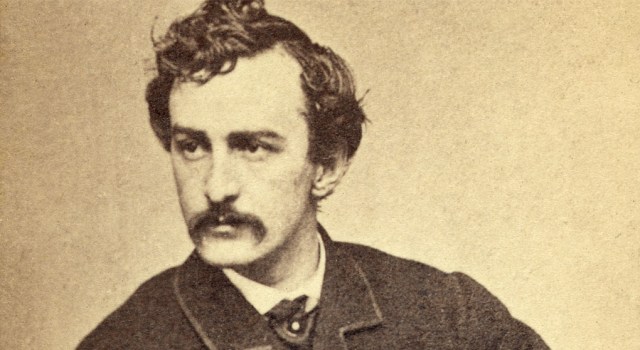
In a letter published in the April 1910 issue of The Journal of Psychical Research, a woman named Ella Hughes recalled a childhood connection to John Wilkes Booth and a strange dream of her mother’s at the time of Lincoln’s assassination:
In the autumn of 1860 my father went to California, leaving my mother and the rest of the family in a large house in Longwood, a beautiful suburb of Boston. In the spring of 1861 a noble looking, sad-faced gentleman came to our house to ask if my mother could take into her family, for a few months, his mother, sister, and two brothers. The gentleman was Edwin Booth, saddened by the recent death of his wife. His mother, Miss Anna Booth, John Wilkes, and Joseph Booth boarded with us that summer.
John Wilkes Booth was then about the age of my eldest brother, perhaps twenty-four years old. To my childish eyes he was very handsome, with dark hair curling over a high forehead, brown eyes, and dark mustache. He was, I believe, an attractive man, with a winning manner And a pleasant smile.
My mother with her gracious dignity, and ready sympathy, always drew young people to her, and John Booth responded to her motherly interest, with the respectful affection that a young man sometimes gives to a lady much his senior.
It must be remembered that, in those days, he seemed so worthy of friendship, as anyone now held in high esteem. That he could ever be guilty of crime, was then unthinkable. As little anticipated was the feeling of abhorrence with which every photograph, letter, and every reminder of him whatsoever was afterwards destroyed by us.
Those were the first months of the Civil War, and fathers, brothers, husbands, and lovers were leaving home and dear ones, for the battlefield. In speaking of this conviction that he ought to go to war John Booth told my mother that he felt that he ought to be a Christian first. In none of his conversations with my mother did he lead her to infer that his sympathies were with the South. Our family were strong Republicans, and had voted for Abraham Lincoln. Their sympathies were wholly for the Union and the North. My mother thought naturally that he intended to enter the northern army.
At the end of the summer the family left us, and we afterwards saw them only occasionally. The following winter John Wilkes Booth acted in Boston. Now and then he came to see us. Child-fashion, I usually appropriated the lion’s share of his visits to myself.
In October, 1863, my mother and the rest of us followed my father to California. Soon after we ceased to hear from the Booths.
One night my mother awoke my father suddenly, saying, “O Charles! I have had such a terrible dream ! I dreamed that John Wilkes Booth shot me! It seemed that he sent me seats for a private box in a theatre, and I took some young ladies with me. Between the acts he came to me and asked how I liked the play. I exclaimed, ‘Why John Booth! I am surprised that you could put such a questionable play upon the stage. I am mortified to think that I have brought young ladies to see it.’ At that he raised a pistol, and shot me in the back of the neck. It seems as if I feel a pain there now.” After awhile my mother fell asleep and dreamed the same thing a second time.
The next morning came the terrible news which plunged our nation into grief and mourning.
Almost at the hour of my mother’s dream—President Lincoln was assassinated: shot, in the back of the neck, in a private box in a theatre, by John Wilkes Booth.
(Mrs.) Ella Howard Hughes
Nov. 2, 1909
Image: Photo of Booth by Alexander Gardner [detail] (source)

America
America I’ve given you all and now I’m nothing.
America two dollars and twenty-seven cents January 17, 1956.
I can’t stand my own mind.
America when will we end the human war?
Go fuck yourself with your atom bomb
I don’t feel good don’t bother me.
I won’t write my poem till I’m in my right mind.
America when will you be angelic?
When will you take off your clothes?
When will you look at yourself through the grave?
When will you be worthy of your million Trotskyites?
America why are your libraries full of tears?
America when will you send your eggs to India?
I’m sick of your insane demands.
When can I go into the supermarket and buy what I need with my good looks?
America after all it is you and I who are perfect not the next world.
Your machinery is too much for me.
You made me want to be a saint.
There must be some other way to settle this argument.
Burroughs is in Tangiers I don’t think he’ll come back it’s sinister.
Are you being sinister or is this some form of practical joke?
I’m trying to come to the point.
I refuse to give up my obsession.
America stop pushing I know what I’m doing.
America the plum blossoms are falling.
I haven’t read the newspapers for months, everyday somebody goes on trial for
murder.
America I feel sentimental about the Wobblies.
America I used to be a communist when I was a kid and I’m not sorry.
I smoke marijuana every chance I get.
I sit in my house for days on end and stare at the roses in the closet.
When I go to Chinatown I get drunk and never get laid.
My mind is made up there’s going to be trouble.
You should have seen me reading Marx.
My psychoanalyst thinks I’m perfectly right.
I won’t say the Lord’s Prayer.
I have mystical visions and cosmic vibrations.
America I still haven’t told you what you did to Uncle Max after he came over
from Russia.
I’m addressing you.
Are you going to let our emotional life be run by Time Magazine?
I’m obsessed by Time Magazine.
I read it every week.
Its cover stares at me every time I slink past the corner candystore.
I read it in the basement of the Berkeley Public Library.
It’s always telling me about responsibility. Businessmen are serious. Movie
producers are serious. Everybody’s serious but me.
It occurs to me that I am America.
I am talking to myself again.
Asia is rising against me.
I haven’t got a chinaman’s chance.
I’d better consider my national resources.
My national resources consist of two joints of marijuana millions of genitals
an unpublishable private literature that goes 1400 miles and hour and
twentyfivethousand mental institutions.
I say nothing about my prisons nor the millions of underpriviliged who live in
my flowerpots under the light of five hundred suns.
I have abolished the whorehouses of France, Tangiers is the next to go.
My ambition is to be President despite the fact that I’m a Catholic.
America how can I write a holy litany in your silly mood?
I will continue like Henry Ford my strophes are as individual as his
automobiles more so they’re all different sexes
America I will sell you strophes $2500 apiece $500 down on your old strophe
America free Tom Mooney
America save the Spanish Loyalists
America Sacco & Vanzetti must not die
America I am the Scottsboro boys.
America when I was seven momma took me to Communist Cell meetings they
sold us garbanzos a handful per ticket a ticket costs a nickel and the
speeches were free everybody was angelic and sentimental about the
workers it was all so sincere you have no idea what a good thing the party
was in 1835 Scott Nearing was a grand old man a real mensch Mother
Bloor made me cry I once saw Israel Amter plain. Everybody must have
been a spy.
America you don’re really want to go to war.
America it’s them bad Russians.
Them Russians them Russians and them Chinamen. And them Russians.
The Russia wants to eat us alive. The Russia’s power mad. She wants to take
our cars from out our garages.
Her wants to grab Chicago. Her needs a Red Reader’s Digest. her wants our
auto plants in Siberia. Him big bureaucracy running our fillingstations.
That no good. Ugh. Him makes Indians learn read. Him need big black niggers.
Hah. Her make us all work sixteen hours a day. Help.
America this is quite serious.
America this is the impression I get from looking in the television set.
America is this correct?
I’d better get right down to the job.
It’s true I don’t want to join the Army or turn lathes in precision parts
factories, I’m nearsighted and psychopathic anyway.
America I’m putting my queer shoulder to the wheel.
—Allen Ginsberg
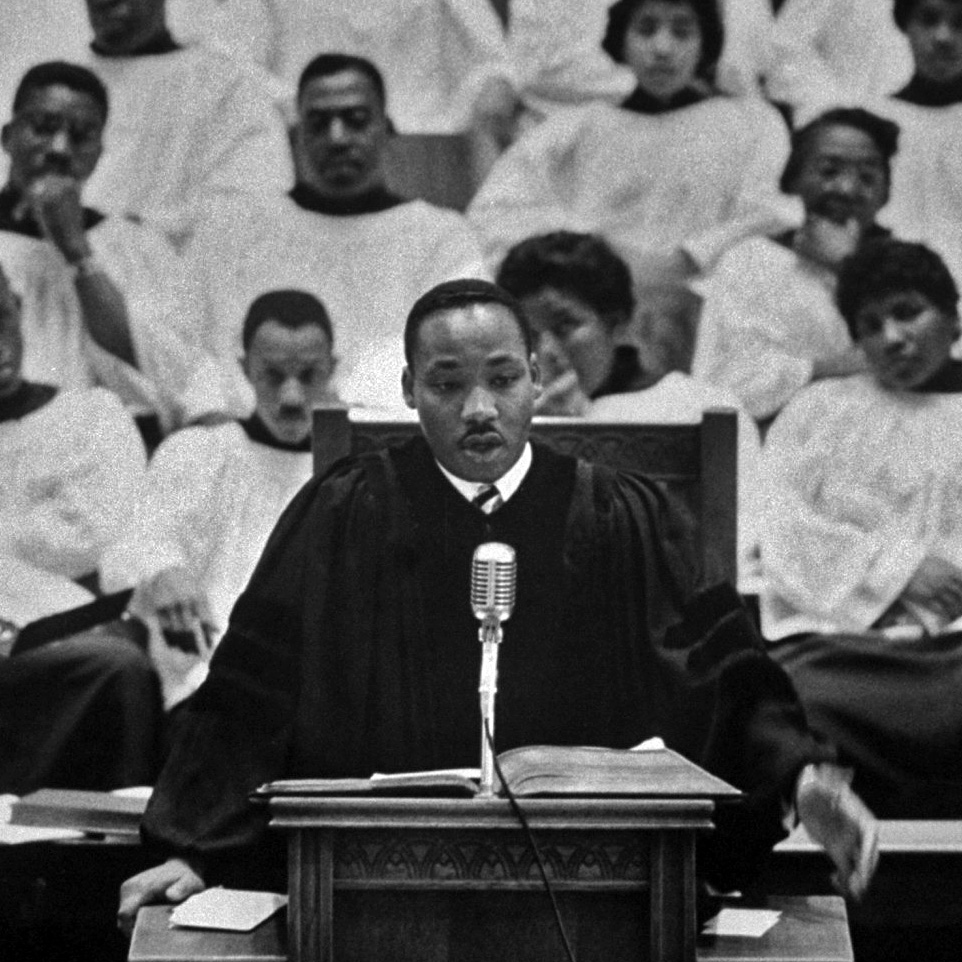
MLK preaches on July 4, 1965, two years after the March on Washington:
About two years ago now, I stood with many of you who stood there in person and all of you who were there in spirit before the Lincoln Monument in Washington. (Yes) As I came to the end of my speech there, I tried to tell the nation about a dream I had. I must confess to you this morning that since that sweltering August afternoon in 1963, my dream has often turned into a nightmare; (Lord) I’ve seen it shattered. I saw it shattered one night on Highway 80 in Alabama when Mrs. Viola Liuzzo was shot down. (Lord, Lord) I had a nightmare and saw my dream shattered one night in Marion, Alabama, when Jimmie Lee Jackson was shot down. (Lord) I saw my dream shattered one night in Selma when Reverend Reeb was clubbed to the ground by a vicious racist and later died. And oh, I continue to see it shattered as I walk through the Harlems of our nation (Yes) and see sometimes ten and fifteen Negroes trying to live in one or two rooms…. And not only Negroes at this point. I’ve seen my dream shattered because I’ve been through Appalachia, and I’ve seen my white brothers along with Negroes living in poverty. (Yeah) And I’m concerned about white poverty as much as I’m concerned about Negro poverty. (Make it plain)
So yes, the dream has been shattered, (Amen) and I have had my nightmarish experiences, but I tell you this morning once more that I haven’t lost the faith. (No, sir) I still have a dream (A dream, Yes, sir) that one day all of God’s children will have food and clothing and material well-being for their bodies, culture and education for their minds, and freedom for their spirits. (Yes)
I still have a dream this morning: (Yes) one day all of God’s black children will be respected like his white children.
I still have a dream this morning (Yes) that one day the lion and the lamb will lie down together, and every man will sit under his own vine and fig tree and none shall be afraid.
I still have a dream this morning that one day all men everywhere will recognize that out of one blood God made all men to dwell upon the face of the earth.
I still have a dream this morning (Yes, sir) that one day every valley shall be exalted, and every mountain and hill will be made low; the rough places will be made plain, and the crooked places straight; and the glory of the Lord shall be revealed, and all flesh shall see it together.
I still have a dream this morning (Amen) that truth will reign supreme and all of God’s children will respect the dignity and worth of human personality. And when this day comes the morning stars will sing together (Yes) and the sons of God will shout for joy.
“We hold these truths to be self-evident that all men (All right) are created equal, that they are endowed by their Creator with certain inalienable Rights, (Yes, sir) that among these are Life, Liberty, and the pursuit of Happiness.”
Read and/or listen to the whole sermon here.

It may appear to those whom I have the honor to address a singular taste for me, an Indian, to take an interest in the triumphal days of a people who occupy, by conquest or have usurped, the possessions of my fathers and have laid and carefully preserved a train of terrible miseries to end when my race ceased to exist…. Let it not surprise you, my friends, when I say that the spot upon which I stand has never been rightly purchased or obtained. And by justice, human and Divine, is the property of the remnant of the great people from whom I am descended. They left it in the tortures of starvation and to improve their miserable existence; but a cession was never made, and their title was never extinguished.
My friends, your Holy Book, the Bible, teaches us that individual offenses are punished in an existence—when time shall be no more—and the annals of the earth are equally instructive that national wrongs are avenged, and national crimes atoned for in this world to which alone the conformation of existence adapts them. These events are above our comprehension, and for a wise purpose; for myself and for my tribe I ask for justice—I believe it will sooner or later occur, and may the Great Spirit enable me to die in hope.
—John Wannuaucon Quinney, from a speech given July 4, 1854 in Reidsville, NY. Read the full speech here.
Quinney was a Mohican diplomat, representative, and advocate. He is credited with being the first to use the term “Native American” (In a 1852 address to Congress).
Originally from the New England area, the Mohican were pressured to relocate to northeastern Wisconsin under the federal Indian Removal Program in the 1830’s. The tribe’s name—Muh-he-ka-neew—came from their original home: “People of the continually flowing waters.”
According to the Declaration of Independence, one of King George’s alleged wrongs had been his incitement of “insurrections” by Native Americans—who are referred to a “merciless Indian Savages, whose known rule of warfare, is an undistinguished destruction of all ages, sexes and conditions.” The tragic irony, of course—repeated so often in history—is that the leaders of one insurrection could not see the justice of another.
Image: Portrait of Quinney by Amos C. Hamlin, Jr. (source)

What, to the American slave, is your 4th of July? I answer: a day that reveals to him, more than all other days in the year, the gross injustice and cruelty to which he is the constant victim. To him, your celebration is a sham; your boasted liberty, an unholy license; your national greatness, swelling vanity; your sounds of rejoicing are empty and heartless; your denunciations of tyrants, brass-fronted impudence; your shouts of liberty and equality, hollow mockery; your prayers and hymns, your sermons and thanksgivings, with all your religious parade, and solemnity, are, to him, mere bombast, fraud, deception, impiety, and hypocrisy — a thin veil to cover up crimes which would disgrace a nation of savages. There is not a nation on the earth guilty of practices, more shocking and bloody, than are the people of these United States, at this very hour.
—Frederick Douglass, from a speech given July 5, 1852 in Rochester, NY. Read the full speech here.
Image: Portrait of Douglass by Samuel J. Miller (source)
Read about Douglass’s trip to Ireland here.
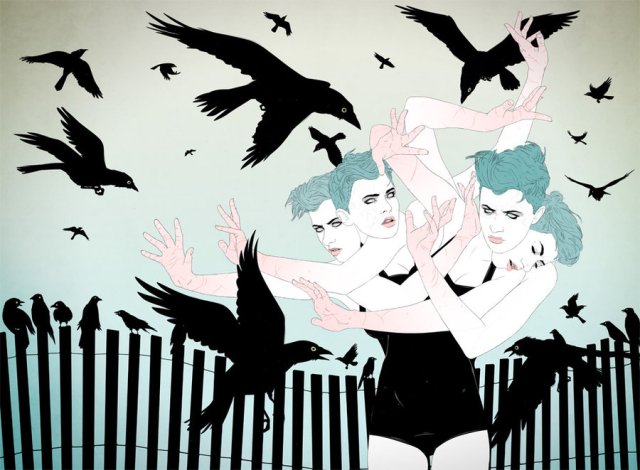
stuntkid: The Birds (2012) (source)


