

Lev Vladimirovich Rudnev: City of the Future (1927)
Lev Vladimirovich Rudnev: City of the Future (1927)

C. R. Tucker: Dorothy Tucker (1905-1910)
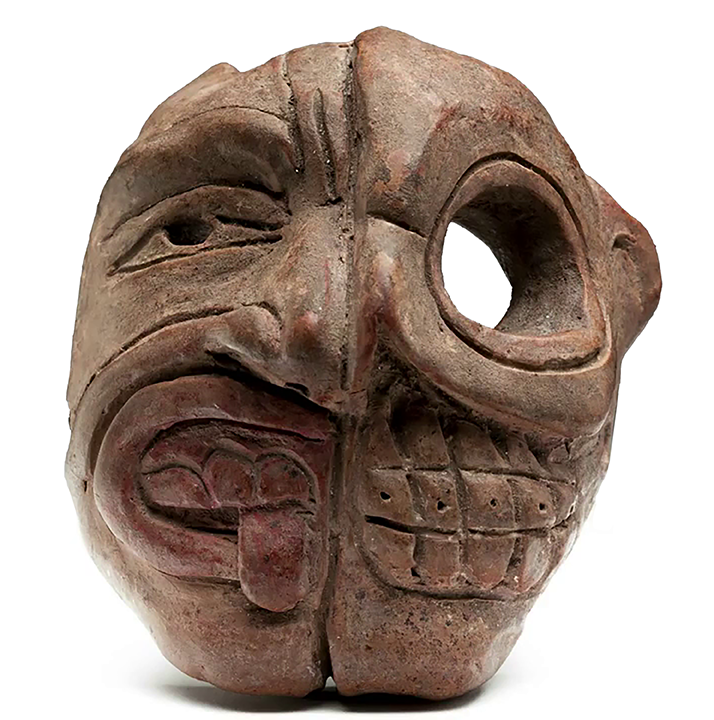
Tlatilco Mask (1100-600 BC); the Tlatilco culture flourished in the Valley of Mexico between 1250 and 800 BC.
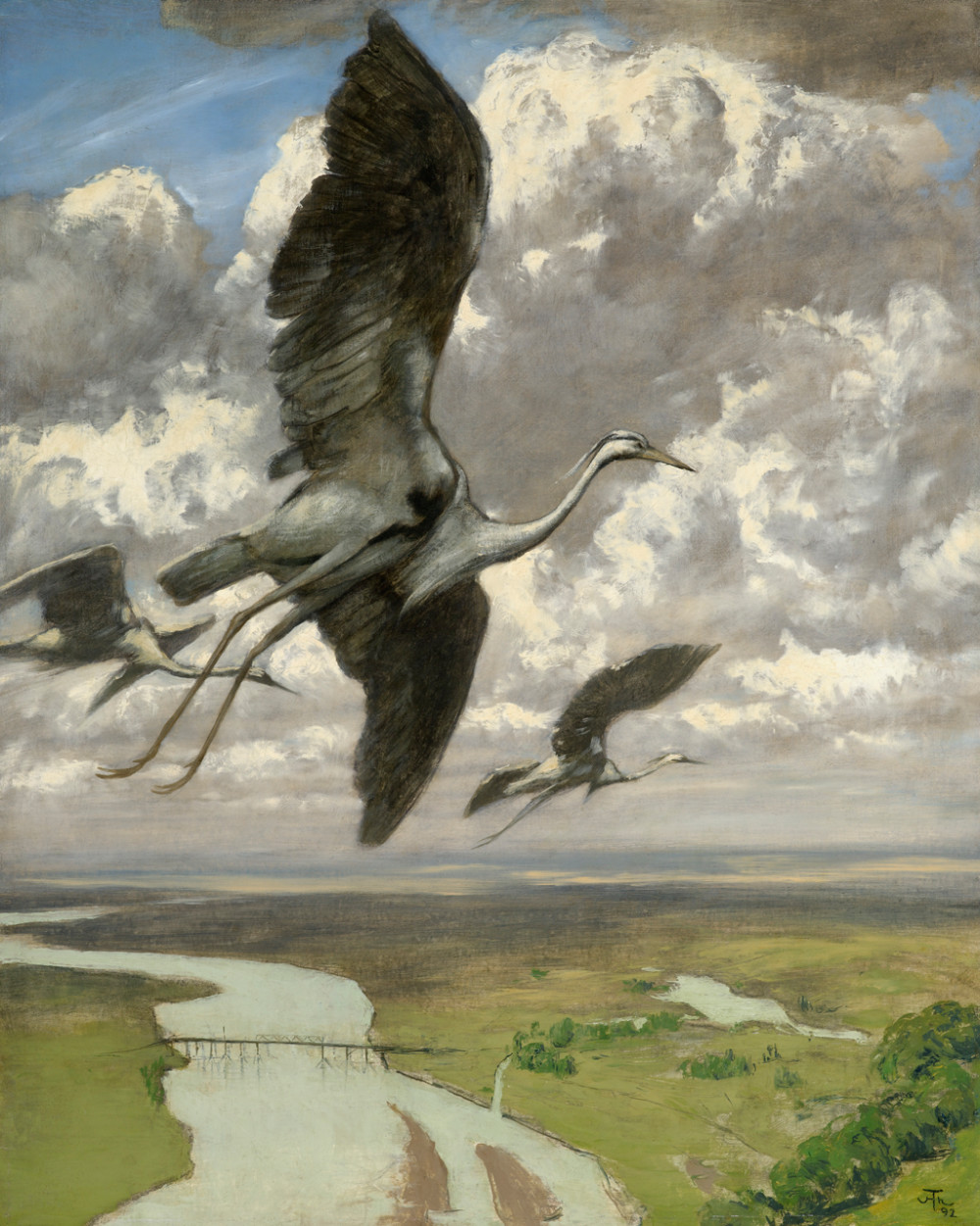
Hans Thoma: Wondrous Birds (1892)
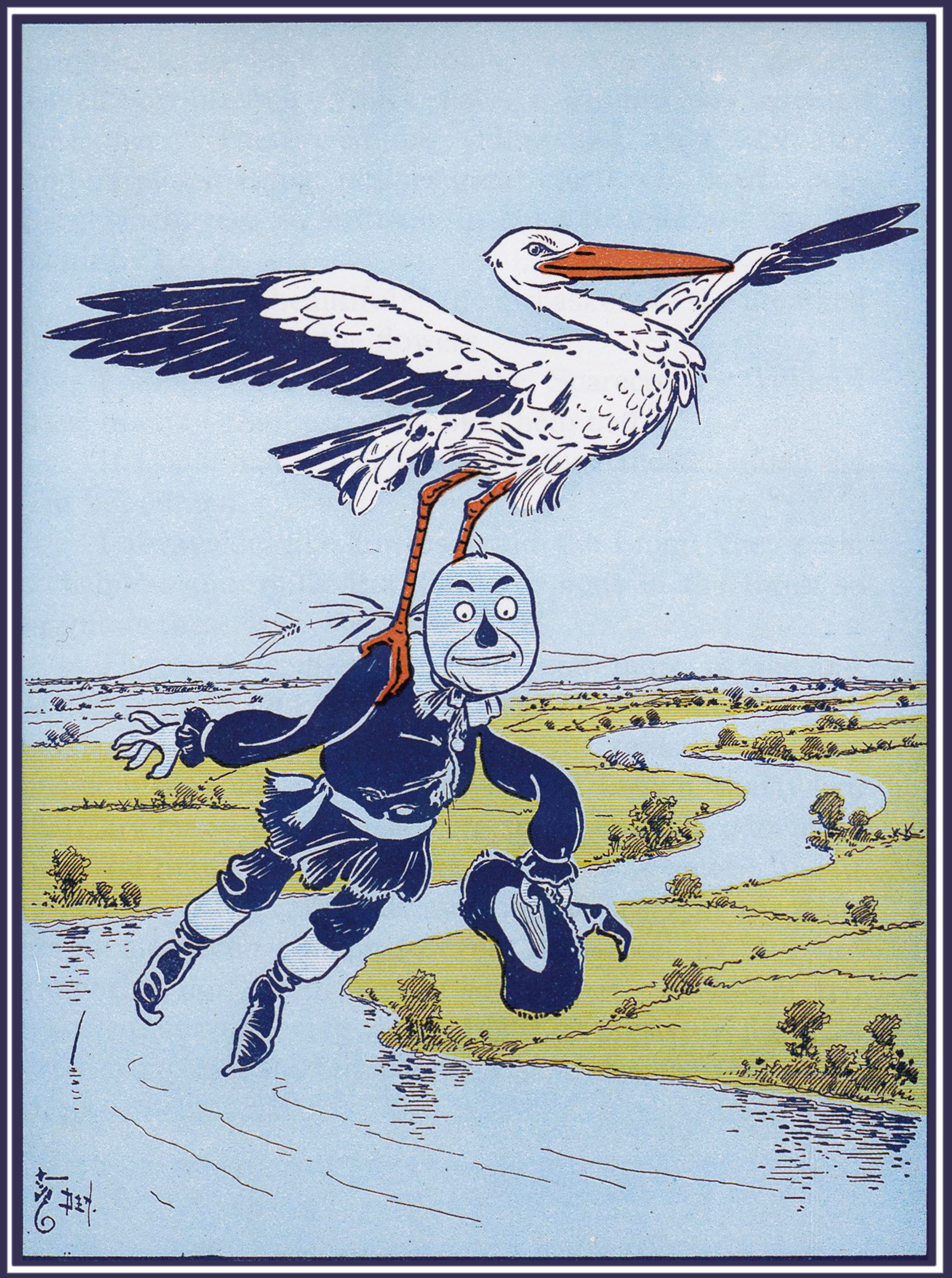
W. W. Denslow: Illustration from The Wonderful Wizard of Oz (1900)

Edward S. Curtis: Kotsuis and Hohhuq (Nakoaktok) (1914); “These two masked performers in the winter dance represent huge, mythical birds. The mandibles of these tremendous wooden masks are controlled by strings.” The ‘Nak’waxda’xw (or Nakoaktok) are a nation of Kwak’wala-speaking peoples from northern Vancouver Island in British Columbia, .
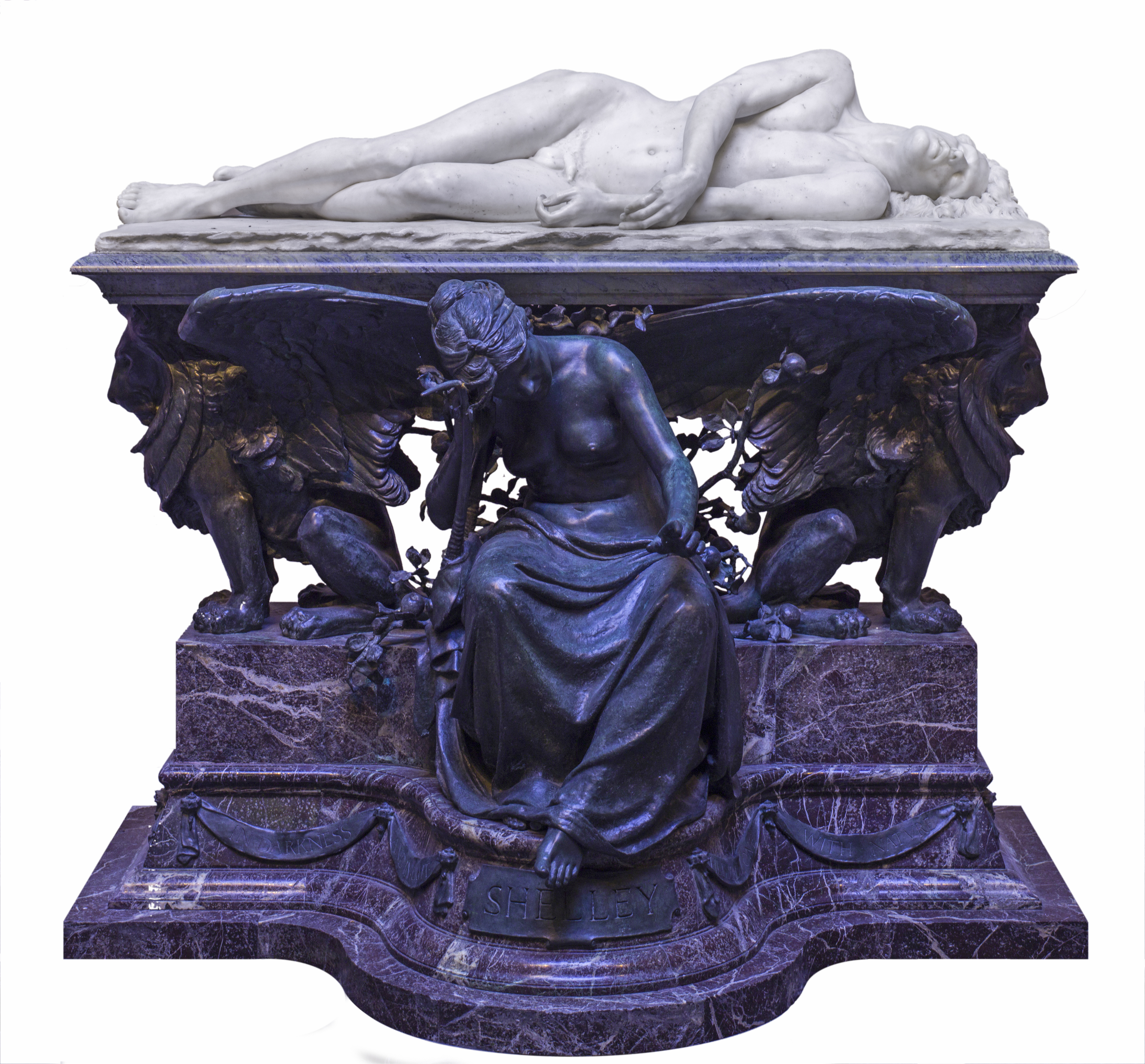
Despite the fact that Percy Bysshe Shelley had been expelled from Oxford University in 1811 for publishing an anonymous pamphlet called The Necessity of Atheism, this elaborate memorial was erected to the poet there in 1893.
Shelly had drowned off the coast of Italy in 1822, at the age of 29.
Mother of this unfathomable world!
Favour my solemn song, for I have loved
Thee ever, and thee only; I have watched
Thy shadow, and the darkness of thy steps,
And my heart ever gazes on the depth
Of thy deep mysteries. I have made my bed
In charnels and on coffins, where black death
Keeps record of the trophies won from thee,
Hoping to still these obstinate questionings
Of thee and thine, by forcing some lone ghost
Thy messenger, to render up the tale
Of what we are. In lone and silent hours,
When night makes a weird sound of its own stillness,
Like an inspired and desperate alchymist
Staking his very life on some dark hope,
Have I mixed awful talk and asking looks
With my most innocent love, until strange tears
Uniting with those breathless kisses, made
Such magic as compels the charmèd night
To render up thy charge:…and, though ne’er yet
Thou hast unveiled thy inmost sanctuary,
Enough from incommunicable dream,
And twilight phantasms, and deep noon-day thought,
Has shone within me, that serenely now
And moveless, as a long-forgotten lyre
Suspended in the solitary dome
Of some mysterious and deserted fane,
I wait thy breath, Great Parent, that my strain
May modulate with murmurs of the air,
And motions of the forests and the sea,
And voice of living beings, and woven hymns
Of night and day, and the deep heart of man.
—Alastor; or, The Spirit of Solitude (1816)

Benjamin Walter Spiers: A Bit of Old London (1890)

A North German custom and superstition is, that if the master of the house dies, a person must go to the Beehive, knock, and repeat these words: “The master is dead, the master is dead,” else the Bees will fly away. This superstition prevails also in England, Lithuania, and in France.
“In some parts of Suffolk,” says Bucke, “the peasants believe, when any member of their family dies, that, unless the Bees are put in mourning by placing a piece of black cloth, cotton or silk, on the top of the hives, the Bees will either die or fly away.
“In Lithuania, when the master or mistress dies, one of the first duties performed is that of giving notice to the Bees, by rattling the keys of the house at the doors of their hives. Unless this be done, the Lithuanians imagine the cattle will die; the Bees themselves perish, and the trees wither.”
At Bradfield, if Bees are not invited to funerals, it is believed they will die.
In the Living Librarie, Englished by John Molle, 1621, p. 283, we read: “Who would beleeve without superstition (if experience did not make it credible), that most commonly all the Bees die in their hives, if the master or mistress of the house chance to die, except the hives be presently removed into some other place ? And yet I know this hath hapned to folke no way stained with superstition.”
A similar superstition is, that Beehives belonging to deceased persons should be turned over the moment when the corpse is taken out of the house.’ No consequence is given for the non-performance of this rite.
—Frank Cowan: Curious Facts in the History of Insects, Including Spiders and Scorpions (1865)
Image: Illustration from John Levett’s The Ordering of Bees: Or, The True History of Managing Them (1634)
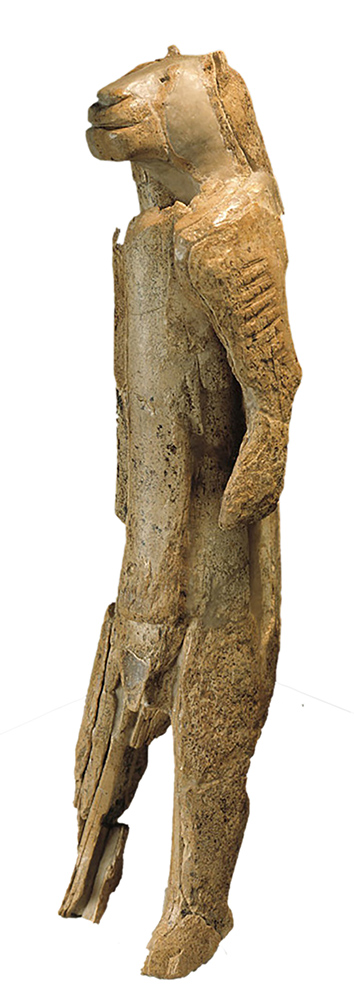
Discovered in 1939, the Löwenmensch (“lion-human”) is an ivory figurine carved from a mammoth’s tusk. It is the oldest-known zoomorphic (animal-shaped) sculpture in the world, as well as the oldest-known example of figurative art. Historically, there has been some debate over the gender of the figure, with some noting that the maneless head indicates a female lion and others suggesting that a fragment in the groin area may be a stylized male sex organ.

“Now that we had our 486,713 starting points we needed to find out how we could reach Rome. For this we created an algorithm that calculated one route for every trip. The more often a specific single street segment was used, the stronger it is displayed on the map. The maps as an outcome of this project are somewhere between information visualization and data art, unveiling mobility on a very large scale.” (source)

 corvusfugit.com