
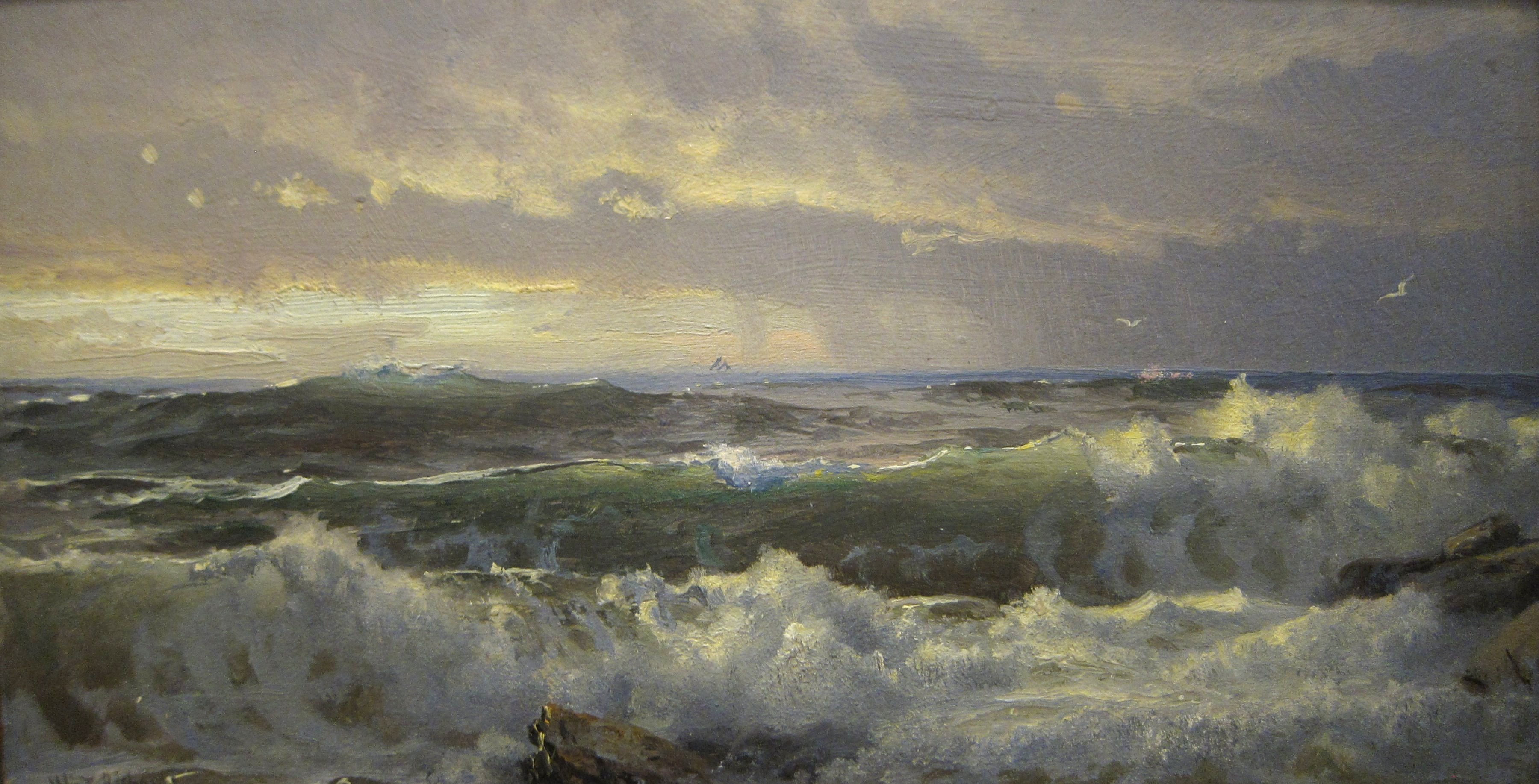
William Trost Richards: Surf on Rocks (c. 1890-1900)
William Trost Richards: Surf on Rocks (c. 1890-1900)
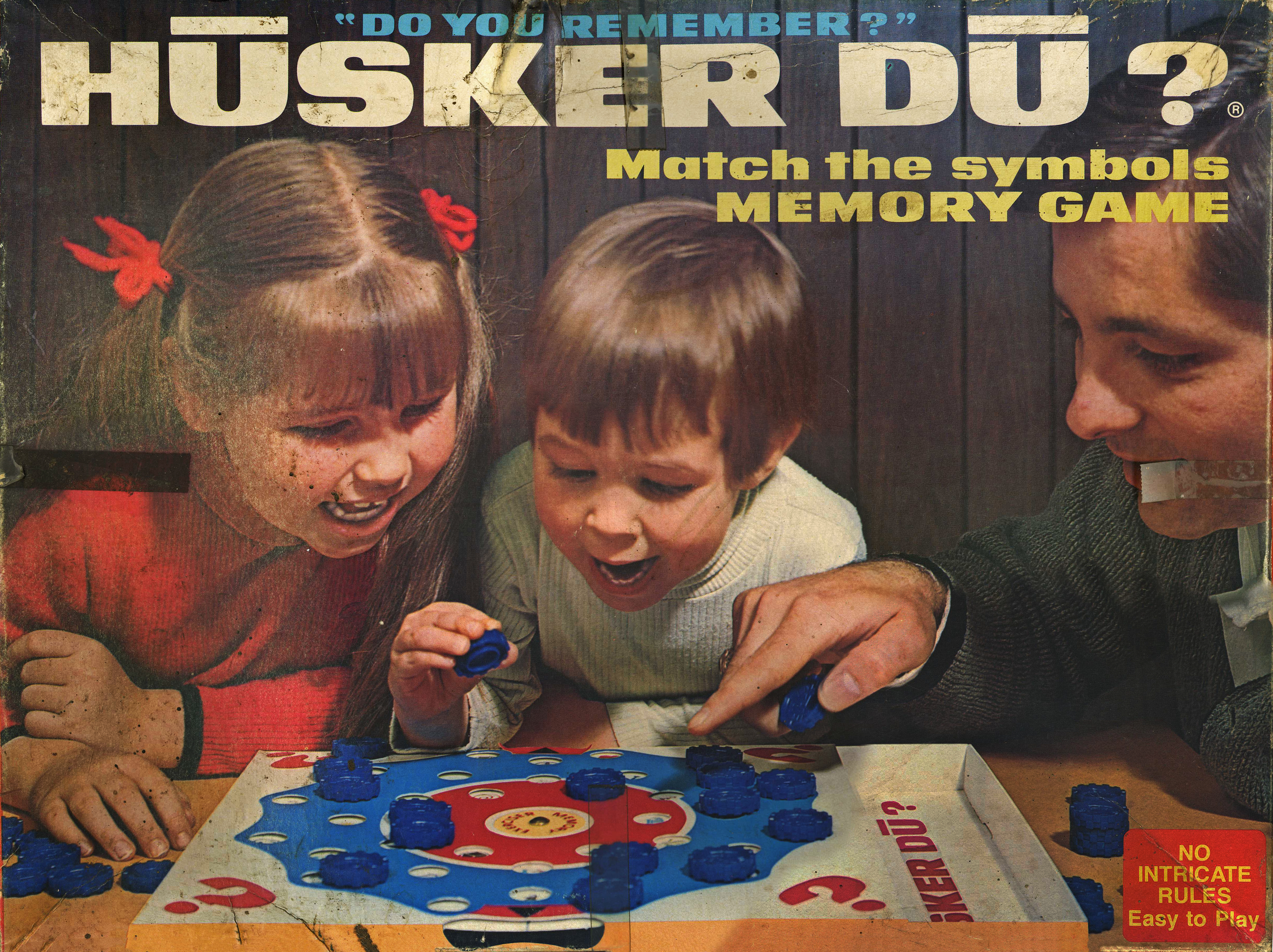
Do you Remember?
We do it all for fun you know
Get loaded after the show, it’s all part of the scene
Don’t hate us, we’re just kids
People say we’re behind the times,
go ahead and see if I care
Do you remember?
When you were our age
Do you remember?
—Hüsker Dü (listen here)
The memory board game—the name means “do you remember?” in Danish and Norwegian—was first sold in the USA in the 1950’s and was popular for decades. The punk band with the same name (with heavy metal umlauts added) came up with the name during a rehearsal of the Talking Heads’ song “Psycho Killer.” They couldn’t remember the French phrase in the lyrics (“Qu’est-ce que c’est?”), so they improvised with any foreign words they could remember, including “Husker du?” The name stuck.

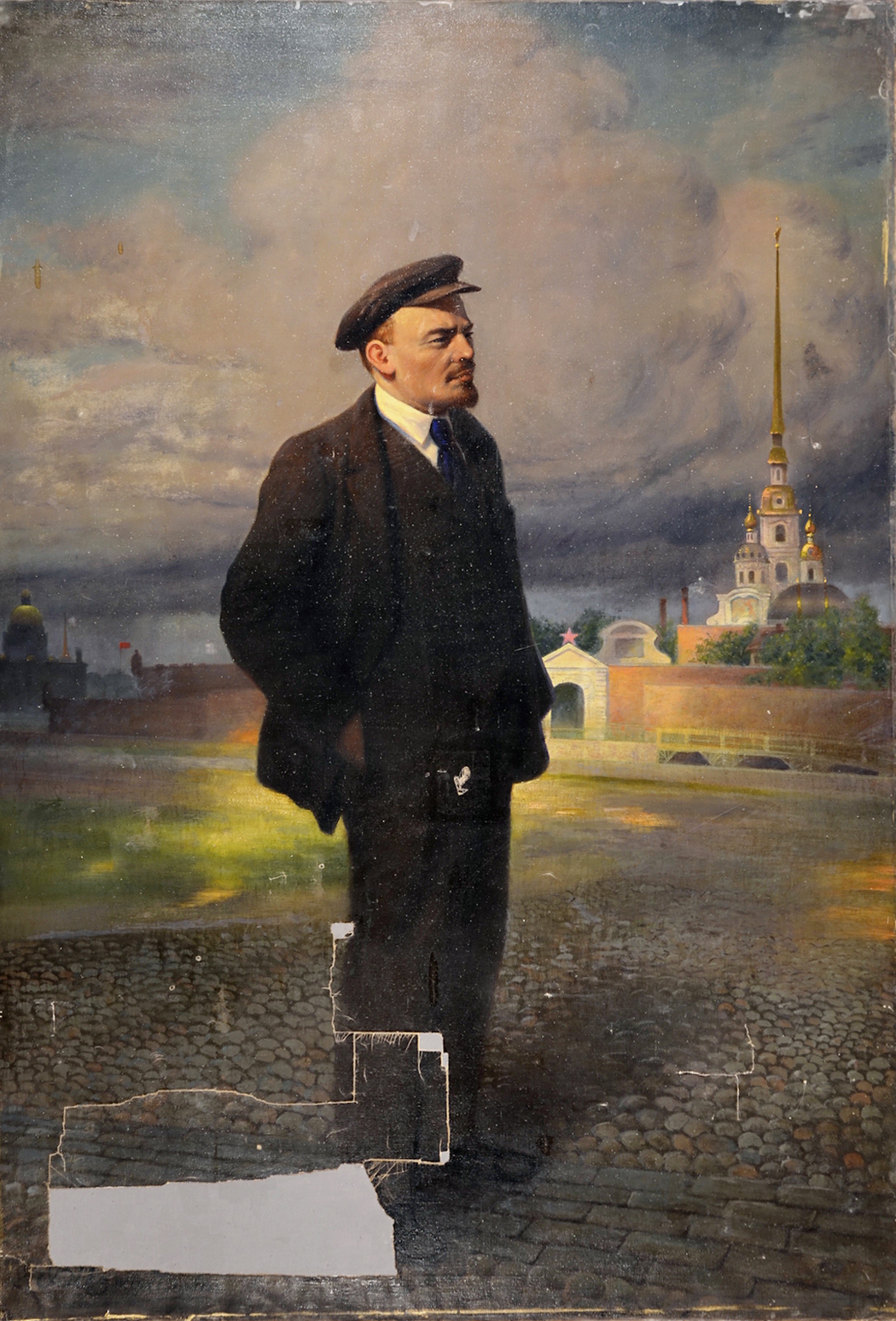
“A portrait of Tsar Nicholas II was discovered during the restoration of a full-size painting of the 1917 October Revolution leader Vladimir Lenin. The image was ‘hidden’ for the last 90 years beneath water-soluble paint on the back of the canvas used by Soviet artist Vladislav Izmailovich for Lenin’s portrait.” (source)
Every ruling class creates its own culture, and consequently, its own art. History has known the slave-owning cultures of the East and of classic antiquity, the feudal culture of medieval Europe and the bourgeois culture which now rules the world. It would follow from this that the proletariat has also to create its own culture and its own art.
The question, however, is not as simple as it seems at first glance. Society in which slave owners were the ruling class, existed for many and many centuries. The same is true of feudalism. Bourgeois culture, if one were to count only from the time of its open and turbulent manifestation, that is, from the period of the Renaissance, has existed five centuries, but it did not reach its greatest flowering until the nineteenth century, or, more correctly, the second half of it. History shows that the formation of a new culture which centers around a ruling class demands considerable time and reaches completion only at the period preceding the political decadence of that class.
Will the proletariat have enough time to create a “proletarian” culture? In contrast to the regime of the slave owners and of the feudal lords and of the bourgeoisie, the proletariat regards its dictatorship as a brief period of transition. When we wish to denounce the all-too-optimistic views about the transition to socialism, we point out that the period of the social revolution, on a world scale, will last not months and not years, but decades – decades, but not centuries, and certainly not thousands of years. Can the proletariat in this time create a new culture? It is legitimate to doubt this, because the years of social revolution will be years of fierce class struggles in which destruction will occupy more room than new construction. At any rate the energy of the proletariat itself will be spent mainly in conquering power, in retaining and strengthening it and in applying it to the most urgent needs of existence and of further struggle. The proletariat, however, will reach its highest tension and the fullest manifestation of its class character during this revolutionary period and it will be within such narrow limits that the possibility of planful, cultural reconstruction will be confined.
On the other hand, as the new regime will be more and more protected from political and military surprises and as the conditions for cultural creation will become more favourable, the proletariat will be more and more dissolved into a socialist community and will free itself from its class characteristics and thus cease to be a proletariat. In other words, there can be no question of the creation of a new culture, that is, of construction on a large historic scale during the period of dictatorship. The cultural reconstruction, which will begin when the need of the iron clutch of a dictatorship unparalleled in history will have disappeared, will not have a class character. This seems to lead to the conclusion that there is no proletarian culture and that there never will be any and in fact there is no reason to regret this. The proletariat acquires power for the purpose of doing away forever with class culture and to make way for human culture. We frequently seem to forget this.
—Leon Trotsky: “What is Proletarian, Culture and Is It Possible?” (1923)
To REPEAT Lenin does NOT mean a RETURN to Lenin — to repeat Lenin is to accept that “Lenin is dead,” that his particular solution failed, even failed monstrously, but that there was a utopian spark in it worth saving. To repeat Lenin means that one has to distinguish between what Lenin effectively did and the field of possibilities that he opened up, the tension in Lenin between what he effectively did and another dimension, what was “in Lenin more than Lenin himself.” To repeat Lenin is to repeat not what Lenin DID, but what he FAILED TO DO, his MISSED opportunities.
—Slavoj Žižek: Repeating Lenin
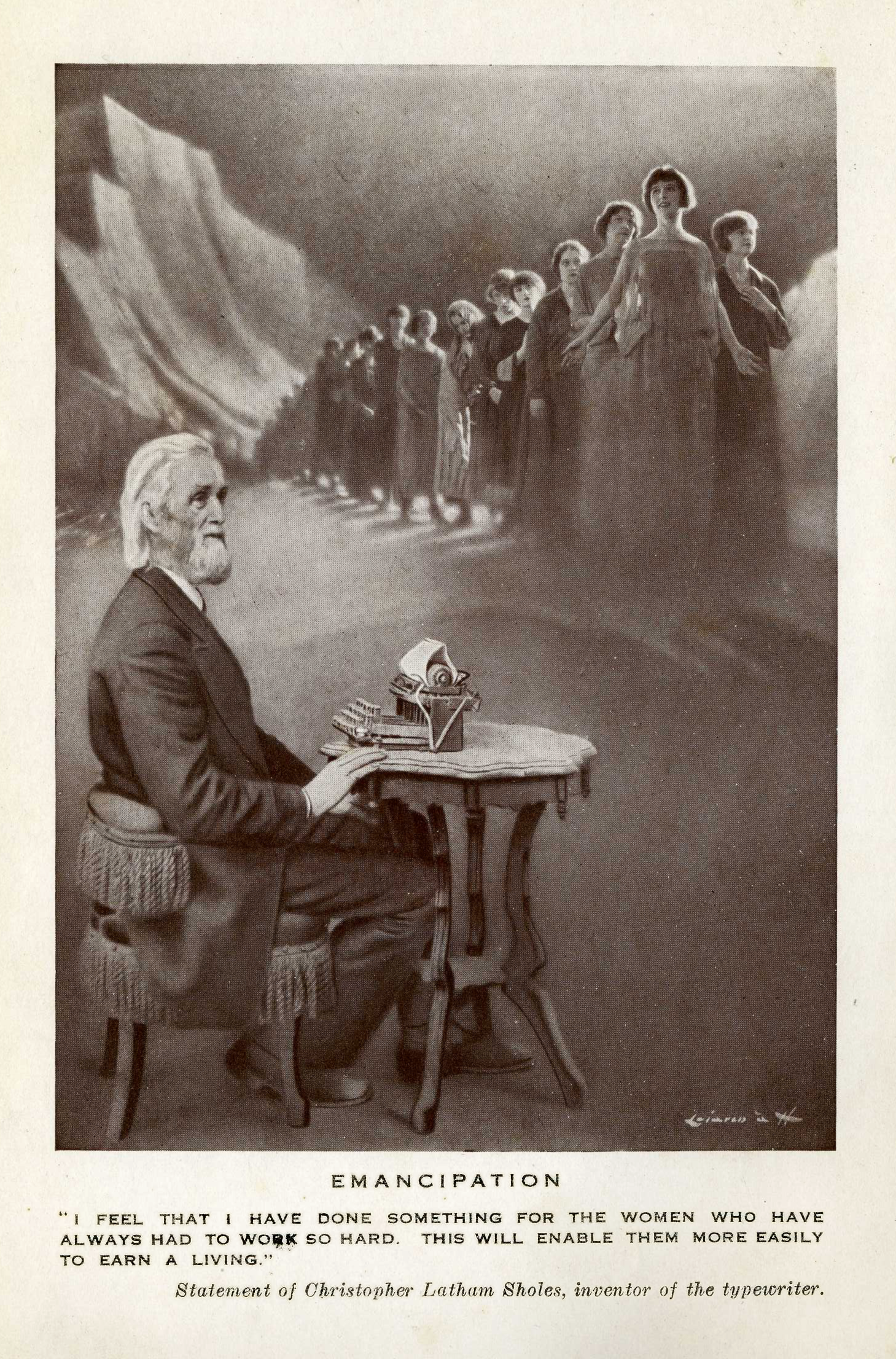
“I feel that I have done something for the women who have
always had to work so hard. This will enable them more easily
to earn a living.”
Statement of Christopher Latham Sholes, inventor of the typewriter
HOW WOMEN ACHIEVED ECONOMIC EMANCIPATION THROUGH THE WRITING MACHINE
The greatest of all the triumphs of the typewriter, greater even than its influence on business or education or language, is the transformation it has wrought in our whole social order.
This is a phase of typewriter influence which even today is far too little understood. The fact that the writing machine has freed the world from pen slavery is itself a triumph so vast and palpable that it rivets attention, almost to the exclusion of anything else. This is not because the facts are obscure concerning other phases of typewriter influence. That it was the writing machine which opened to women the doors of business life is so well known that the mere mention of it sounds like a commonplace. But few indeed have considered the real importance of this fact in its relation to human society.
The movement that we know by the name of “feminism” is undoubtedly the most significant and important social evolution of our time. The aims and aspirations behind this great movement need not detain us. Suffice it is to say that, like all great social movements, its cause and its aim have been primarily economic. What is known as “sex-emancipation” might almost be translated to read “economic emancipation” at any rate it could only be attained through one means, namely, equal economic opportunity, and such opportunity could never have been won by mere statute or enactment. Before the aims of “feminism” could be achieved it was necessary that women should find and make this opportunity, and they found it in the writing machine.
We have described the transformation of the whole business world since the invention of the writing ma-chine. Equally revolutionary, and facilitated by the same agency, has been the transformation in the economic status of women during the same period. The business office of 1873 seems no more remote from the present than the economic restrictions imposed on the women of fifty years ago. It might almost be said that no real career was possible for her outside of the home. Such opportunities for gainful occupation as did exist were usually for the untrained and uneducated, in shops, factories, domestic service and the like. In only two other callings had they made themselves indispensable, that of school teaching and nursing, and all the openings in this and a few minor occupations could do little more than utilize a fraction of intelligent womanhood. They furnished no adequate basis for true and general economic freedom.
—The Herkimer County Historical Society: The Story of the Typewriter 1873-1923

The book also includes this picture of a monument to General Francis E. Spinner, who was appointed Treasurer of the United States by Abraham Lincoln in 1861. Due to the American Civil War, there was a shortage of men to fill government clerkships. Under Spinner’s direction, several hundred women were appointed to these jobs. The inscription reads: “The fact that I was instrumental in introducing women to employment in the office of the government gives me more real satisfaction than all of the other deeds of my life.”
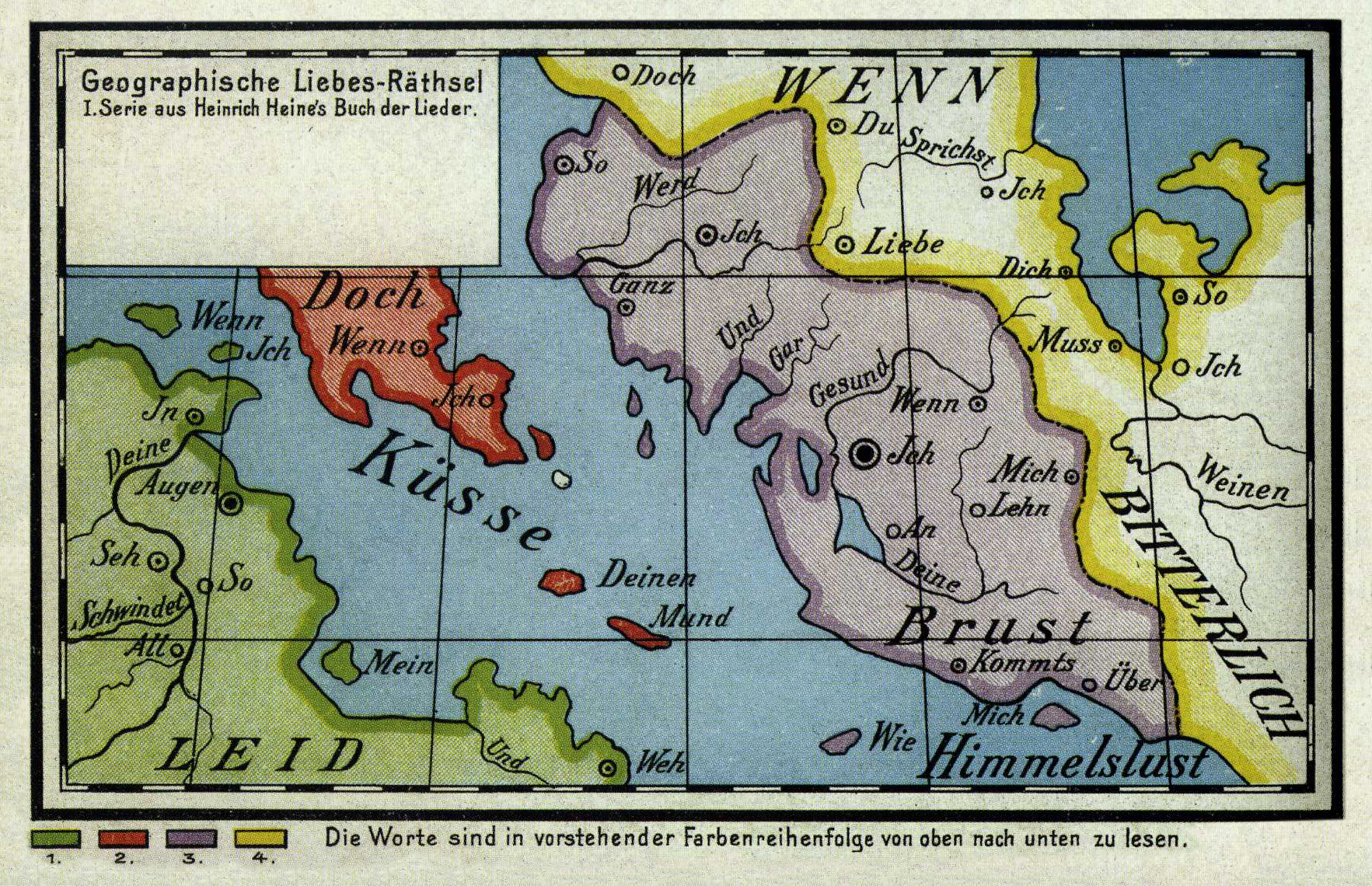
Geographische Liebes-Räthsel (1905); this map by an unknown artist uses the words from a Heinrich Heine poem as its locations:
Wenn ich in deine Augen seh,
So schwindet all mein Leid und Weh;
Doch wenn ich küsse deinen Mund,
So werd ich ganz und gar gesund.Wenn ich mich lehn an deine Brust,
Kommts über mich wie Himmelslust;
Doch wenn du sprichst: Ich liebe dich!
So muß ich weinen bitterlich.When I look into your eyes,
My sorrow and pain just disappear;
And when I kiss your mouth
I recover my health completelyWhen I lean upon your breast,
I am overcome with heavenly joy;
Yet when you say, “I love you!”
Then I must weep bitterly.
The poem is from the 1827 Buch der Lieder [Book of Songs].
Source: Katharine Harmon: You Are Here: Personal Geographies and Other Maps of the Imagination (2003)
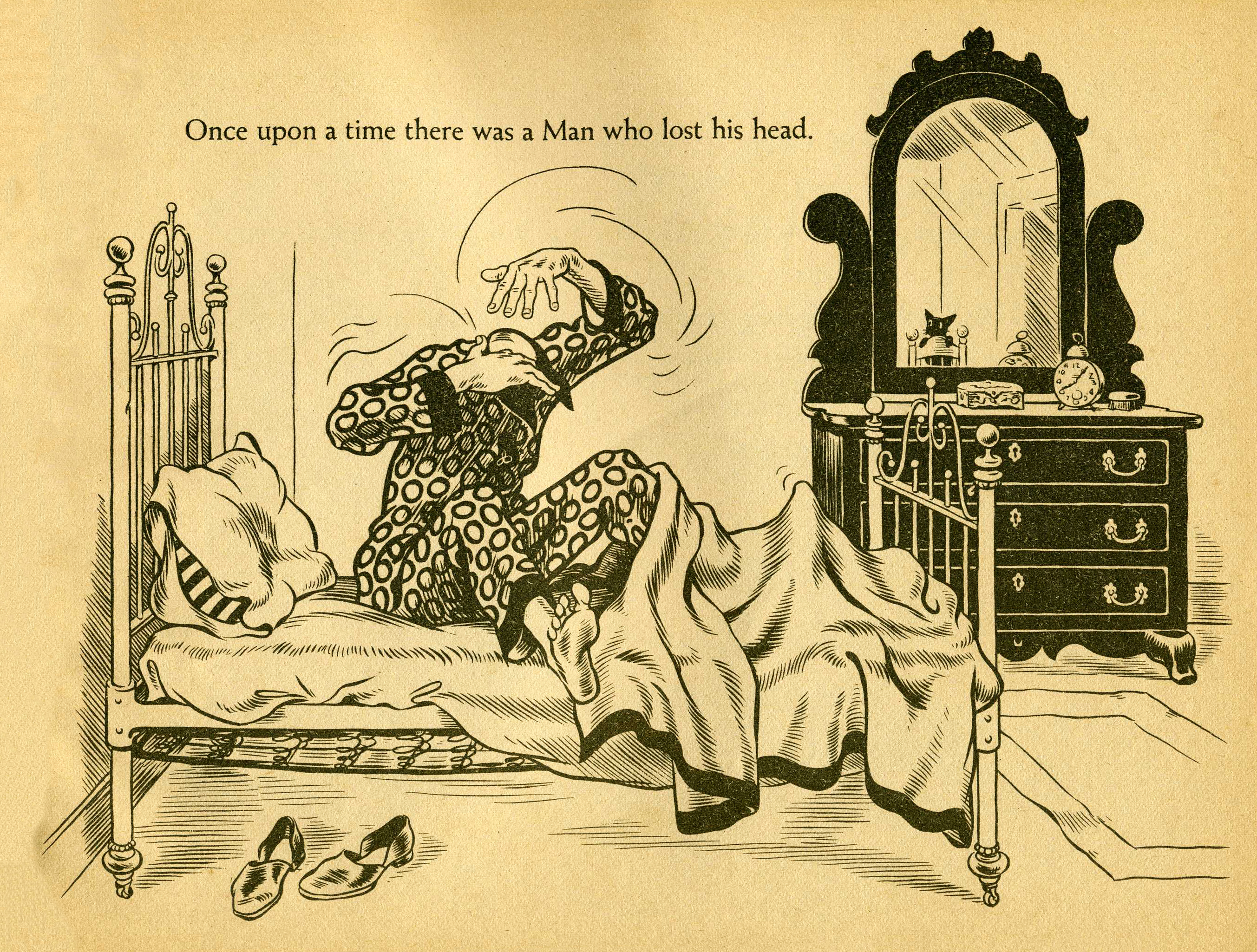
Claire Huchet Bishop: The Man Who Lost His Head (1942); illustration by Robert McCloskey.

Title page and figures from Darkness at Noon; or, The Great Solar Eclipse
of the 18th of June, 1806; “by an inhabitant of Boston.”
Darkness at the break of noon
Shadows even the silver spoon
The handmade blade, the child’s balloon
Eclipses both the sun and moon
To understand you know too soon
There is no sense in tryingPointed threats, they bluff with scorn
Suicide remarks are torn
From the fool’s gold mouthpiece the hollow horn
Plays wasted words, proves to warn
That he not busy being born is busy dyingTemptation’s page flies out the door
You follow, find yourself at war
Watch waterfalls of pity roar
You feel to moan but unlike before
You discover that you’d just be one more
Person crying

William Trost Richards: Rocky Surf off Rhode Island (1899)
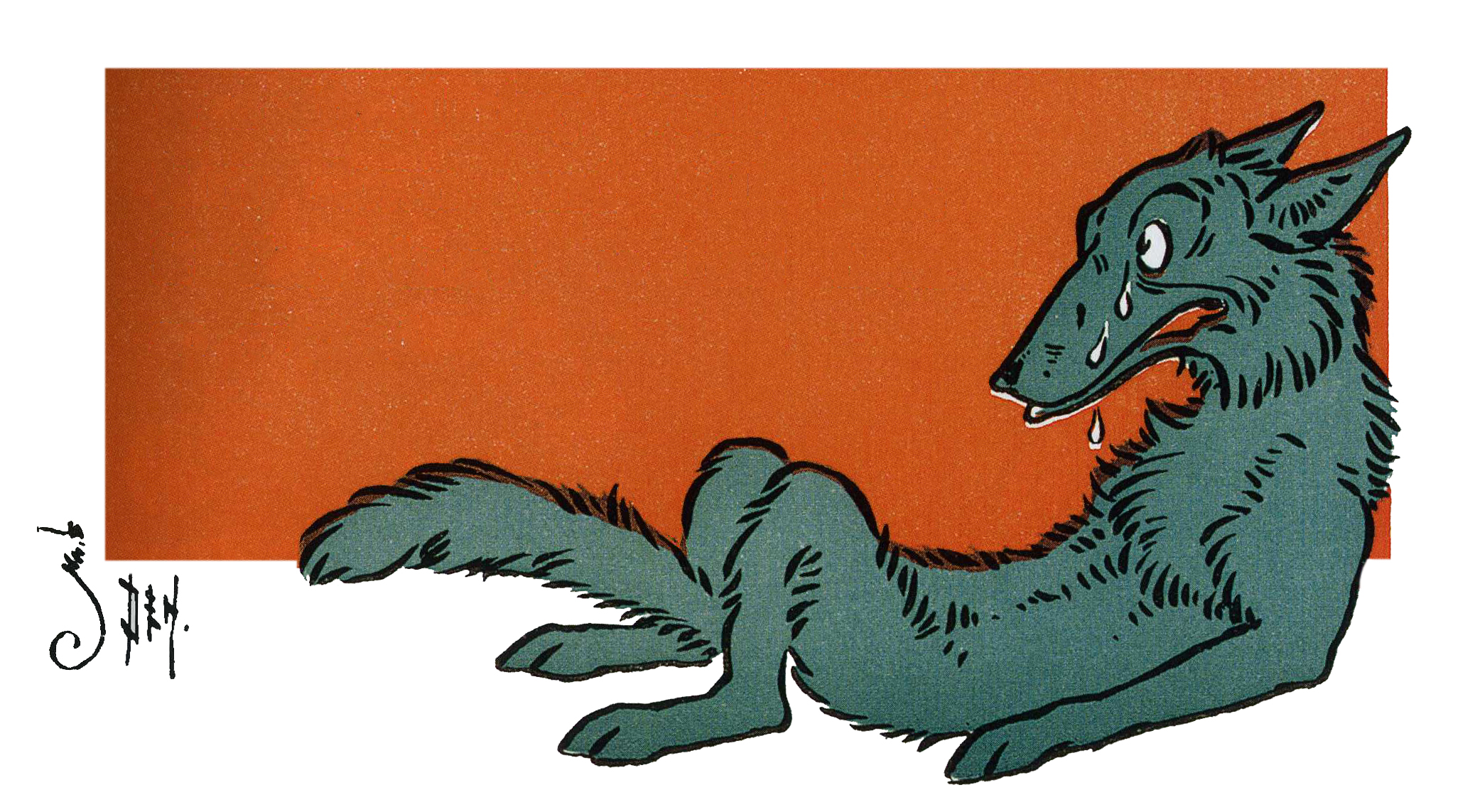
Illustrations from W. W. Denslow’s 1903 series of picture books: Little Red Riding Hood, Denslow’s Humpty Dumpty, The Three Bears, Old Mother Hubbard, and House that Jack Built. Denslow is best known as the illustrator of L. Frank Baum’s The Wonderful Wizard of Oz (1900). (John R. Neill illustrated the other Oz books.)


Two-headed goddess figure from Kültepe, Turkey (c. 2000 BC)

 corvusfugit.com