
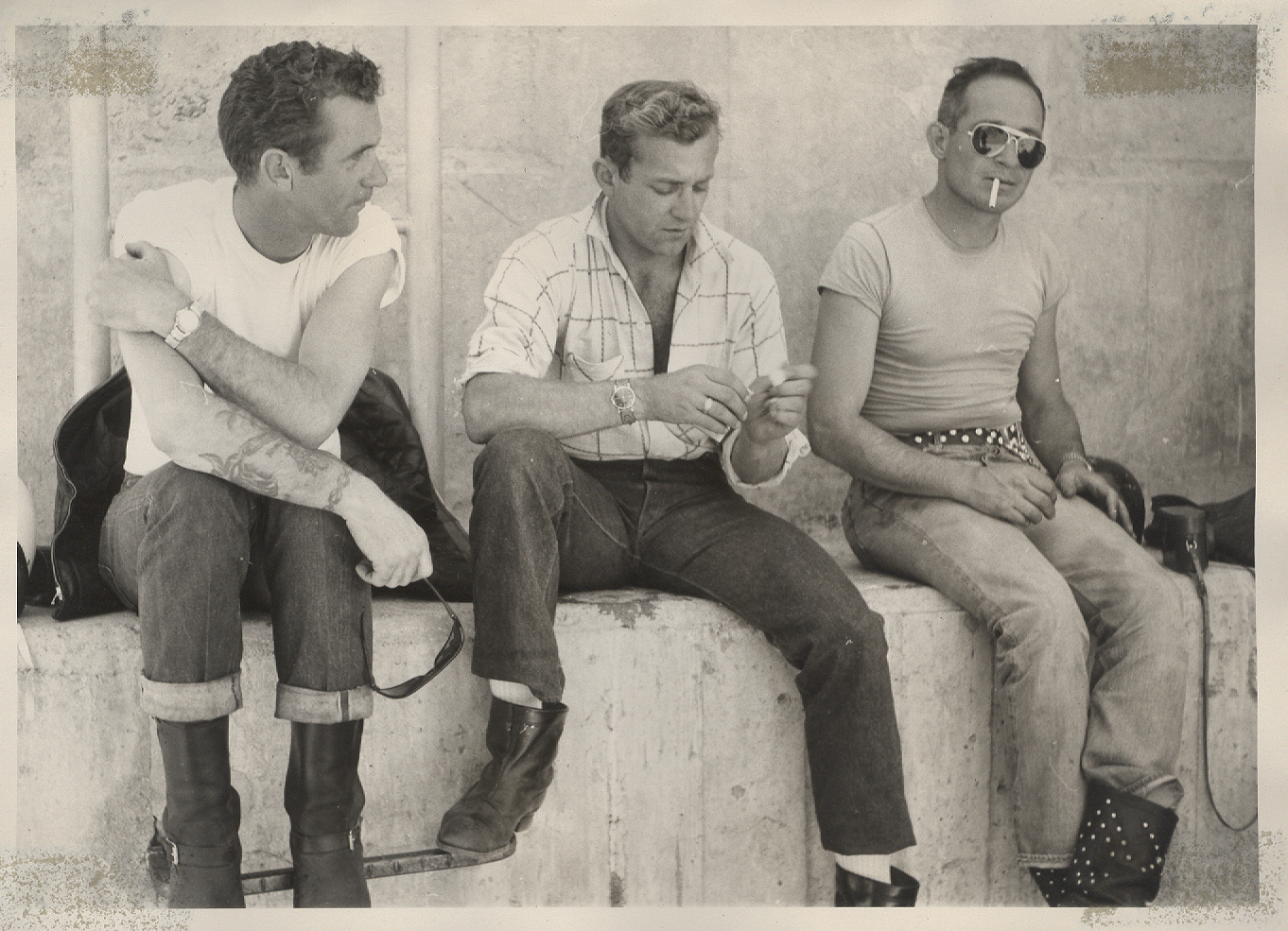
Members of the Satyrs Motorcycle Club at Salton Sea in southern California, 1964; founded in 1954, the club is the oldest continuously operating gay organization in the United States.
Members of the Satyrs Motorcycle Club at Salton Sea in southern California, 1964; founded in 1954, the club is the oldest continuously operating gay organization in the United States.

 No one really has an explanation for the two massive Medusa heads that support columns in the Basilica Cistern, a cathedral-sized reservoir underneath the city of Istanbul.
The Medusa, of course, is a monster from Greek mythology: a winged woman with living snakes for hair; anyone who looked at her was turned to stone.
The structure—the largest of hundreds under the city—was built in the 6th century, during the reign of Byzantine Emperor Justinian I and provided a water filtration system for his palace and other buildings.
The simplest explanation is that the heads were repurposed remains that just happened to be the right height—and no particular meaning was indicated by their orientation. A traditional account is that inverting the heads was meant to negate the power of the medusa; similarly, they may have been placed to show early Christians’ attitude toward the mythological religion of the Greeks.
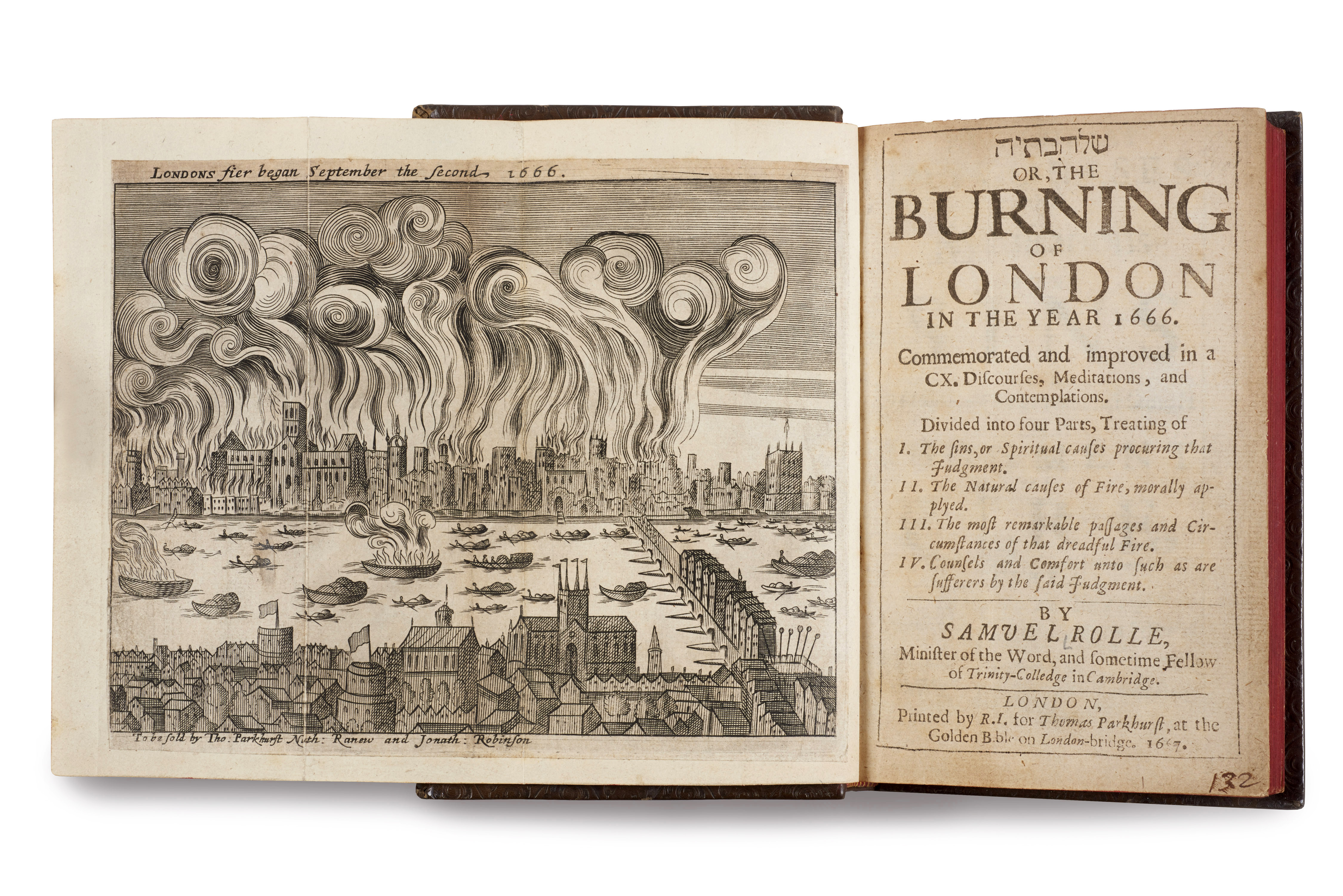
In this dream I was coming up out of the London tube. I was in a rush, under a gray rain. I was preparing myself for a new life, for a joyful freedom. And I had to fathom the dream’s mystery, after long investigations. I remember a double-decker bus, and a young (redheaded?) lady under an umbrella. On awakening I thought I was writing a novel that would be entitled The Great Fire of London, and that I had to preserve this dream, for as long as possible, intact. I note it down here for the first time. This was nineteen years ago.
—Jacques Roubaud: The Great Fire of London: A Story with
Interpolations and Bifurcations (1989)
Image:
Samuel Rolle: Shlohavot, or, The Burning of London in the Year 1666 (1667)

Although Benjamin Franklin likely composed his essay “The Morals of Chess” as early as 1732, it was first published in 1786, during the height of interest surrounding Wolfgang von Kempelen’s mechanical chess-playing Turk; Franklin himself had lost to the machine in 1783. In contrast to what seemed at the time to be the cold logic of a machine, Franklin offers a set of guidelines for the game that emphasize the human interactions surrounding it.
Franklin’s grandson, William Temple Franklin, related an anecdote about a chess game Franklin played while in Paris: When his opponent put Franklin’s king in check, Franklin ignored the rules that require a player to move such that the king is not longer in check; instead, he checked his opponent’s king. “Sir,” protested the other player, “you cannot do that, and leave your king in check.” “I see he is in check,” said Franklin, “but I shall not defend him. If he was a good king like yours, he would deserve the protection of his subjects; but he is a tyrant and has cost them already more than he is worth:—Take him, if you please; I can do without him, and will fight out the rest of the battle, en Républicain—as a Commonwealth’s man.” Thomas Jefferson told a similar story in which Franklin insisted on letting his king be captured so that his democratic forces could continue without it.
Franklin’s most famous chess games were played against Caroline Howe, sister of British Admiral Richard Howe. Howe and Franklin had, early in the American drive for independence, made efforts to negotiate a peaceful settlement to the conflict, and the chess games may have been used as a screen for these diplomatic meetings. (Some versions of the story have Howe offering Franklin a bribe during the talks, but this may only reflect Franklin’s discomfort at any appearance that he might have benefited from the outcome.)
Sir,
Playing at Chess, is the most ancient and the most universal game known among men; for its original is beyond the memory of history, and it has, for numberless ages, been the amusement of all the civilized nations of Asia, the Persians, the Indians, and the Chinese. Europe has had it above 1000 years; the Spaniards have spread it over their part of America, and it begins lately to make its appearance in these northern states. It is so interesting in itself, as not to need the view of gain to induce engaging in it; and thence it is never played for money. Those, therefore, who have leisure for such diversions, cannot find one that is more innocent; and the following piece, written with a view to correct (among a few young friends) some little improprieties in the practice of it, shows at the same time, that it may, in its effects on the mind, be not merely innocent, but advantageous, to the vanquished as well as to the victor.The MORALS OF CHESS
The game of Chess is not merely an idle amusement. Several very valuable qualities of the mind, useful in the course of human life, are to be acquired or strengthened by it, so as to become habits, ready on all occasions. For life is a kind of chess, in which we have often points to gain, and competitors or adversaries to contend with, and in which there is a vast variety of good and ill events, that are, in some degree, the effects of prudence or the want of it. By playing at chess, then, we may learn:
1. Foresight, which looks a little into futurity, and considers the consequences that may attend an action: for it is continually occurring to the player, “If I move this piece, what will be the advantages9 of my new situation? What use can my adversary make of it to annoy me? What other moves can I make to support it, and to defend myself from his attacks?
2. Circumspection, which surveys the whole chess-board, or scene of action, the relations of the several pieces and situations, the dangers they are respectively exposed to, the several possibilities of their aiding each other; the probabilities that the adversary may make this or that move, and attack this or the other piece; and what different means can be used to avoid his stroke, or turn its consequences against him.
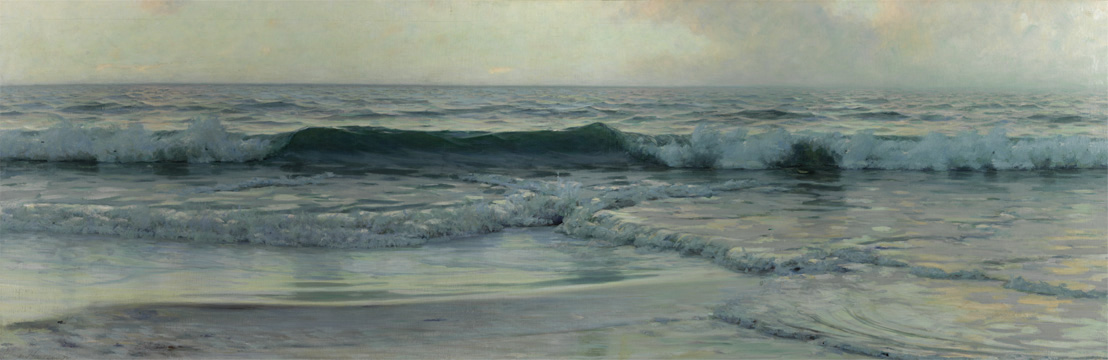
Thomas Alexander Harrison: Wave (1885) (source)

John Craxton: Boy with Kid (1948); see this post.
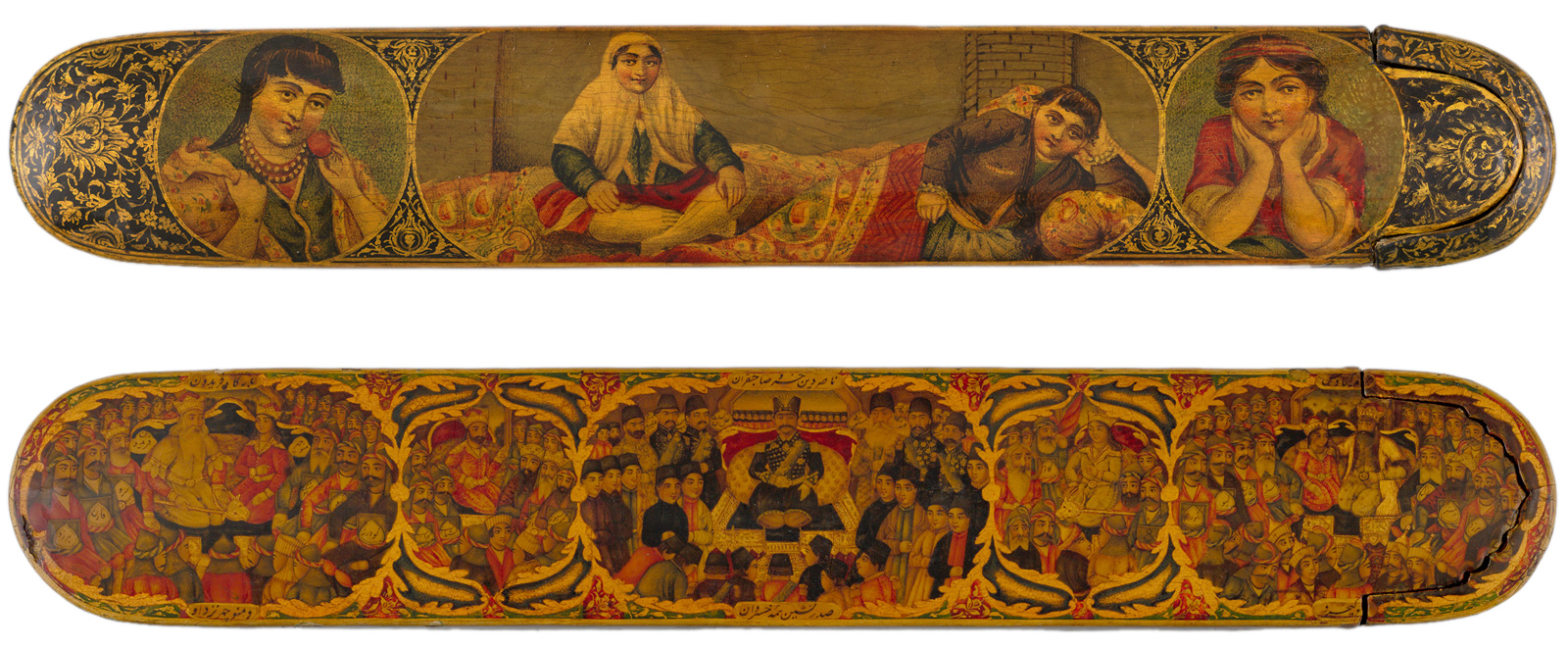
Muhammad Kazim: Pen Box, Iran, late 19th Century (bottom with portraits of Nasir al-Din Shah and persian rulers from the Shāhnameh)

Ólafur Elíasson: The Weather Project, an art installation at Tate Modern in London, 2004. Photo by Adrian Rowbotham (source). More information here.
![Eero Järnefelt - Rantamaisema Porkkalasta [Beach Scene, Porkkala] (1896)](https://corvusfugit.com/wp-content/uploads/2017/11/eero-jc3a4rnefelt-rantamaisema-porkkalasta-beach-scene-porkkala-1896.jpg)
Eero Järnefelt: Rantamaisema Porkkalasta [Beach Scene, Porkkala] (1896)

Zhang Huan: ½ (1998)

 corvusfugit.com