
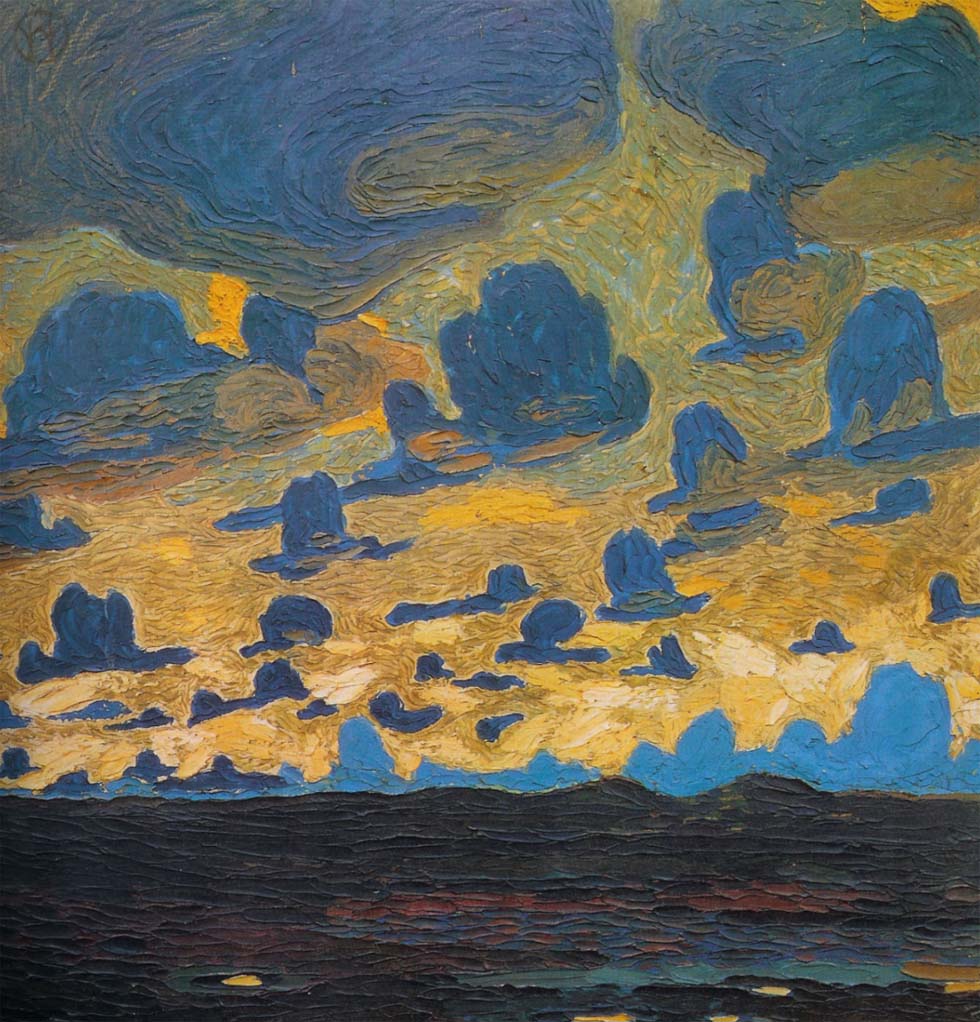
Wenzel Hablik: Kampen, Sylt: Dark Clouds, Mudflats (1907)
Wenzel Hablik: Kampen, Sylt: Dark Clouds, Mudflats (1907)
 Pierre Amédée Marcel-Béronneau: Orpheus in Hades (1897)
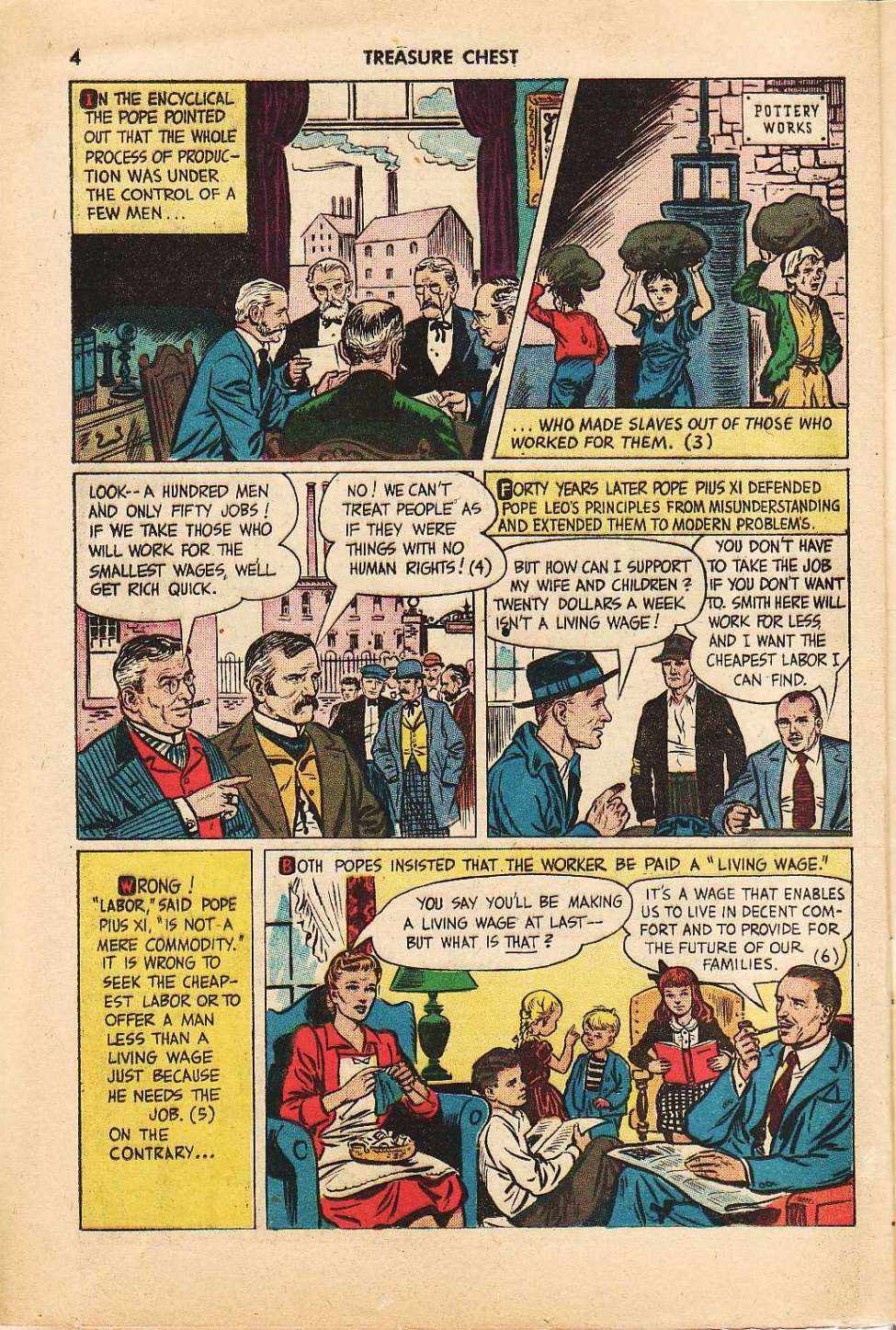
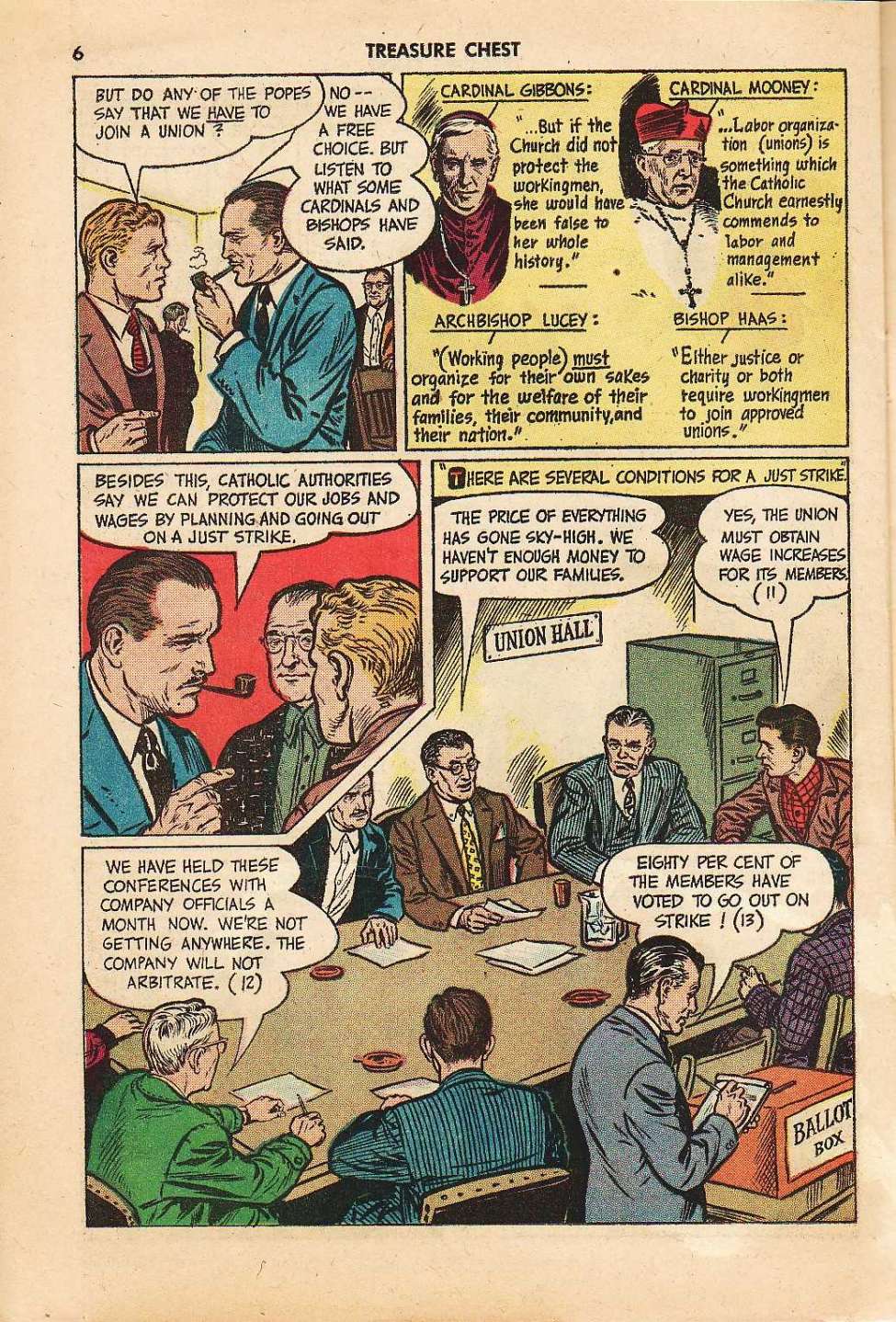
![Treasure Chest Vol 14 no 14 (March 12, 1959) (8) [detail]](https://corvusfugit.com/wp-content/uploads/2019/09/treasure-chest-vol-14-no-14-march-12-1959-8-detail.jpg) Sister Concilla sets the record straight on labor unions. Note the union bug indicating the comic was printed in a union shop.
Sister Concilla sets the record straight on labor unions. Note the union bug indicating the comic was printed in a union shop.





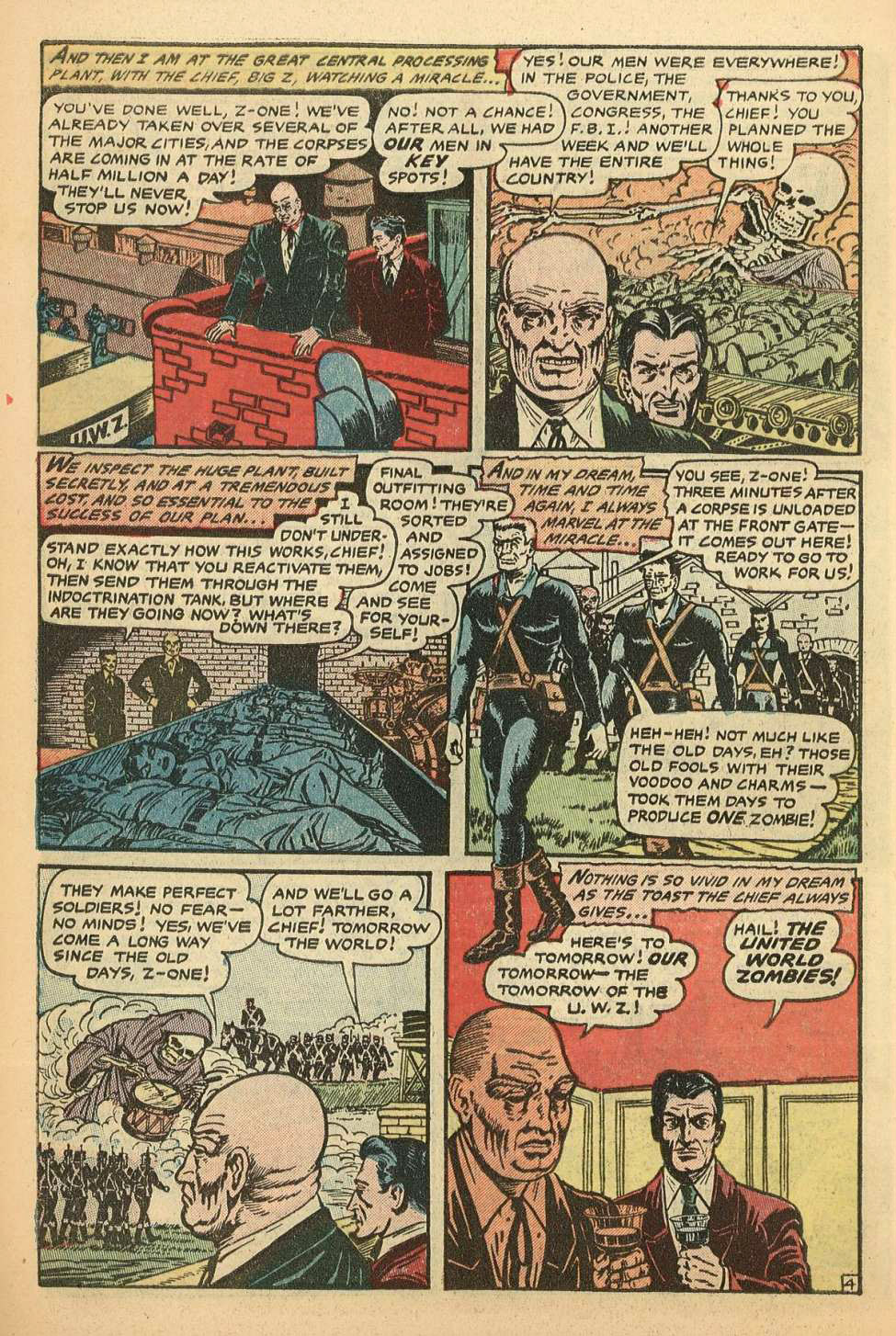
![Voodoo No 14 (March - April 1954) (1) [detail]](https://corvusfugit.com/wp-content/uploads/2019/09/voodoo-no-14-march-april-1954-1-detail.jpg) For Labor Day: a grave-digger’s strike leads to disasterous consequences in this 1954 story from Voodoo comics:
For Labor Day: a grave-digger’s strike leads to disasterous consequences in this 1954 story from Voodoo comics:




In an afterword to the 25th anniversary edition of Portnoy’s Complaint, Philip Roth tells a story about the first lines of his novels. When he was living in Chicago in the late 1950’s, he says, he once went to a cafeteria to splurge on a roast beef dinner. Arriving at his table, he found a sheet of paper “that a previous diner had forgotten or left behind”:
Typewritten on the paper, in the form of a long single-spaced unindented paragraph, were nineteen sentences that taken together made no sense at all. Though no author’s name appeared anywhere on either the front of the back of the page, I figured that the nineteen sentences, amounting to some four hundred or so words, must be the work of a neighborhood avant-gardist with an interest in “experimental” or “automatic” writing. This page was surely a sample of one or the other. The author’s having forgotten this composition here at the cafeteria—while trying perhaps not to forget to remember to leave with his or her own umbrella—did not seem to me a catastrophe for literature or even for a literary career.
Here is what was written on the single sheet of paper:
The first time I saw Brenda she asked me to hold her glasses. Dear Gabe, The drugs help me bend my fingers around a pen. Not to be rich, not to be famous, not to be mighty, not even to be happy, but to be civilized—that was the dream of his life. She was so deeply imbedded in my consciousness that for the first year of school I seem to have believed that each of my teachers was my mother in disguise. Sir, I want to congratulate you for coming out on April for the sanctity of human life, including the life of the yet unborn. It began oddly. Call me Smitty. Far from being the classic period of explosion and tempestuous growth, my adolescence was more or less a period of suspended animation. Temptation comes to me first in the conspicuous personage of Herbie Bratasky, social director, bandleader, crooner, comic, and m.c. of my family’s mountainside resort hotel. First, foremost, the puppyish, protected upbringing above his father’s shoe store in Camden. It was the last daylight hour of a December afternoon more than twenty years ago—I was twenty-three, writing and publishing my first short stories, and like many a Bildungsroman hero before me, already contemplating my own massive Bildungsroman—when I arrived at his hideaway to meet the great man. “What the hell are you doing on a bus, with your dough?” When he is sick, every man wants his mother; if she’s not around, other women must do. “Your novel,” he says, “is absolutely one of the five or six books of my life.” Ever since the family doctor, during a routine checkup, discovered an abnormality on his EKG and he went in overnight for the coronary catheterization that revealed the dimensions of the disease, Henry’s condition had been successfully treated with drugs, enabling him to work and carry on his life at home exactly as before. Dear Zuckerman, In the past, as you know, the facts have always been notebook jottings, my way of springing into fiction. “I’ll write them down. You begin.” My father had lost most of the sight in his right eye by the time he’d reached eighty-six, but otherwise he seemed in phenomenal health for a man his age when he came down with what the Florida doctor diagnosed, incorrectly, as Bell’s palsy, a viral infection that causes paralysis, usually temporary, to one side of the face. For legal reasons, I have had to alter a number of facts in this book.
I came to realize what would surely have been obvious at the outset to anyone less well-trained—or perhaps less poorly trained—in the art of thinking than I was back then. I saw that these sentences, as written, had nothing to do with one another. I saw that if ever a unifying principle were to be discernable in the paragraph it would have to be imposed from without rather than unearthed from within.
What I eventually understood was that these were the first lines of the books that it had fallen to me to write.
Please don’t ask me to defend the notion that I carried away from that piece of paper at the age of twenty-three…I am even willing to concede that my conclusion was completely mistaken and my whole career has been grounded in a baseless premise. An idiotic premise. An insane premise.
Well, whether it was or wasn’t my job to do, the job is now completed. For better or for worse, wisely or stupidly, I did it. The books that, according to my lights, had necessarily to follow from each of those sentences are finished and done with. There is now a little red checkmark beside every single sentence on that piece of paper whose existence I have never before disclosed to anyone and which I have kept securely hidden all these years in a safe deposit box in my bank.
Free at last. Or that’s what I would probably be tempted to think if I were either starting out all over again or dead.
These are in fact the first lines of Roth’s nineteen books up to the point of writing the afterword:
1. Goodbye, Columbus (1959)
2. Letting Go (1962)
3. When She Was Good (1967)
4. Portnoy’s Complaint (1969)
5. Our Gang (1971)
6. The Breast (1972)
7. The Great American Novel (1973)
8. My Life as a Man (1974)
9. Reading Myself and Others (1975)
10. The Professor of Desire (1977)
11. The Ghost Writer (1979)
12. Zuckerman Unbound (1981)
13. The Anatomy Lesson (1983)
14. The Prague Orgy (1985)
15. The Counterlife (1986)
16. The Facts: A Novelist’s Autobiography (1988)
17. Deception (1990)
18. Patrimony: A True Story (1991)
19. Operation Shylock (1993)
Image: Richard Benjamin and D.P. Barnes in the 1972 film version of Portnoy’s Complaint.
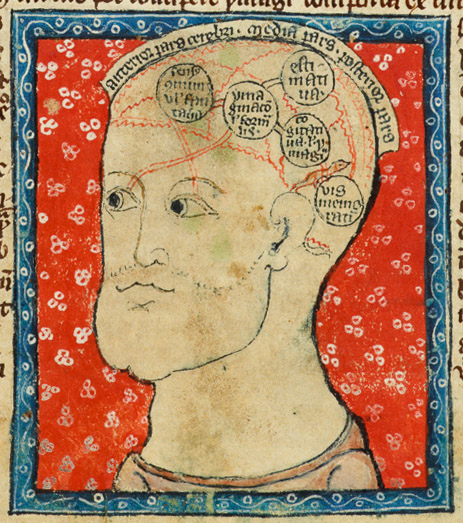 This llustration from an early fourteenth century compendium shows the five functions of the brain: perception, imagination, estimation, cogitation, and memory. Drawn from the works of Thomas Aquinas and the Arabic philosopher Avicenna, the theory posits that sensory information enters the brain and is apprehended by perception; imagination and cogitation then put all the information together; the result is then evaluated by estimation and stored in memory. The short text is entitled Qualiter caput hominis situatur—“regions of the human head” (source).

That which is for me through the medium of money—that for which I can pay (i.e., which money can buy)—that am I myself, the possessor of the money. The extent of the power of money is the extent of my power. Money’s properties are my—the possessor’s—properties and essential powers. Thus, what I am and am capable of is by no means determined by my individuality. I am ugly, but I can buy for myself the most beautiful of women. Therefore I am not ugly, for the effect of ugliness—its deterrent power—is nullified by money. I, according to my individual characteristics, am lame, but money furnishes me with twenty-four feet. Therefore I am not lame. I am bad, dishonest, unscrupulous, stupid; but money is honoured, and hence its possessor. Money is the supreme good, therefore its possessor is good. Money, besides, saves me the trouble of being dishonest: I am therefore presumed honest. I am brainless, but money is the real brain of all things and how then should its possessor be brainless? Besides, he can buy clever people for himself, and is he who has power over the clever not more clever than the clever? Do not I, who thanks to money am capable of all that the human heart longs for, possess all human capacities? Does not my money, therefore, transform all my incapacities into their contrary?
—Karl Marx: Economic and Philosophic Manuscripts of 1844
 Betye Saar: Lo, The Mystique City (1965)
 Xi Huang: Untitled 003 (2016)
(source)
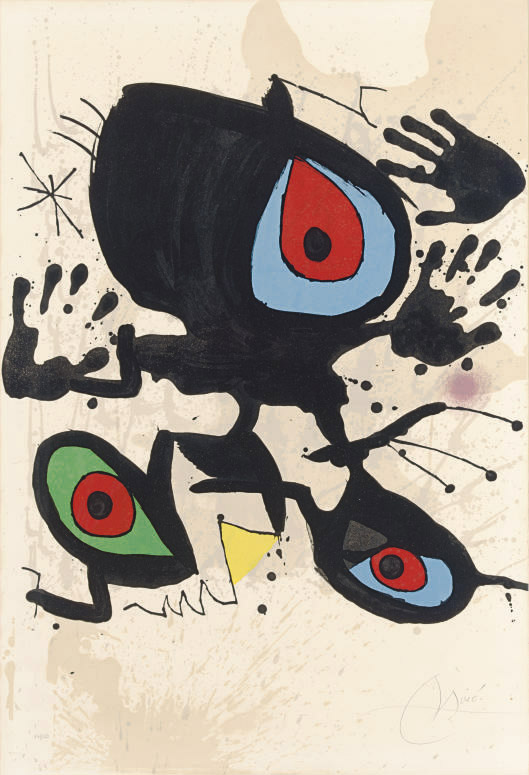 Joan Miró: Homage to Miró (1973)

 corvusfugit.com