

Kazuo Shiraga: Work II (1958)
Kazuo Shiraga: Work II (1958)

Albert Reuss: Fence and Tree (1948)
![Melchior Lechter - Die vier Bücher von der Nachfolge Christi (1922) p 6 [detail]](https://corvusfugit.com/wp-content/uploads/2019/12/melchior-lechter-die-vier-bc3bccher-von-der-nachfolge-christi-1922-p-6-detail.jpg)


Melchior Lechter’s frontispiece, title page, and first chapter title page for a 1922 edition of Thomas à Kempis’s Imitation of Christ. Written in the early 15th century, the work promotes piety, simplicity, and devotion as the key to a personal connection to God.
This is the greatest wisdom: to seek the kingdom of heaven through contempt of the world. It is vanity, therefore, to seek and trust in riches that perish. It is vanity also to court honor and to be puffed up with pride. It is vanity to follow the lusts of the body and to desire things for which severe punishment later must come. It is vanity to wish for long life and to care little about a well-spent life. It is vanity to be concerned with the present only and not to make provision for things to come.It is vanity to love what passes quickly and not to look ahead where eternal joy abides.
(source)

Janus La Cour: Quiet Summer Evening by the River Mouth (1892)
![Sea Serpents and Eels - Italian, 17th Century [detail]](https://corvusfugit.com/wp-content/uploads/2019/12/sea-serpents-and-eels-italian-17th-century-detail.png)
Selections from Thomas Lupton’s book A Thousand Notable Things on Various Subjects: Disclosed from the Secrets of Nature and Art, Practicable, Profitable, and of Great Advantage: Set Down from Long and Curious Study and Experience (1655):
The Soles of the Feet anointed with the Fat of a Dormouse, doth procure Sleep.—As Actius doth say.
Take a Frog, and cut her through the middle of the back with a knife, and take out the liver, and fold it in a Colewart Leaf. and burn it in a new earthen pot well closed, and give the ashes thereof unto him or her that hath the Falling Sickness, to drink with Wine, and it will help them; and if the party be not healed at once, then do so by another Frog, and do so still; and without doubt it will help them if they use it.—This was told me for a sure experiment, and it is also affirmed by Petrus Hispanus.
Pare the Nails of one that hath the Quartan Ague, which being put into a linen cloth, and so tied about the neck of a Quick Eel, and the same Eel put into the water, thereby the Ague will be driven away.—Giber. et Albert.
If any do sprinkle his head with the powder of a skin that a Snake doth cast off, gotten or gathered when the Moon is in the full, being also in the first part of Aries, the Ram, he shall see terrible and fearful dreams. And if he shall have it under the sole of his foot, he shall be acceptable before Magistrates and Princes.—Cardanus.
The Brain of a Weazel dried, and drank with Vinegar, doth help them that have the Falling Sickness. —Mizaldus.
It is said, that Mice Dung, with the Ashes of Burned Wasps, and Hazel Nuts, and a little Vinegar of Roses put thereto, doth trimly deck a Bald Place with Hairs, if the same place be…rubbed or anointed therewith.—Mizaldus
The “falling sickness” is epilepsy. “Quartan Ague” is a mild form of malaria that produces a fever every three days.
The illustration comes from a 17th century Italian book (source).

This mural showing the early history of UAW local 174 was painted by Walter Speck and Barbara Wilson in 1937 and originally hung in the local’s union hall at 2730 Maybury Grand St., in Detroit, Michigan. After moving with the local to several new offices, the mural now resides in the Walter Reuther Library at Wayne State University in Detroit.
Local 174 was Reuther’s home local, and the mural depicts several scenes in the formation of the union, including the 1936-37 Flint Sit-Down Strike and the 1937 Battle of the Overpass at Ford Motor Company. On the right, workers are shown holding copies of Local 174’s first contract.

Adolph von Menzel: Rat in the Gutter (c. 1863-1883)
![Thomas Wright - An original theory or new hypothesis of the universe (1750) C [detail]](https://corvusfugit.com/wp-content/uploads/2019/12/thomas-wright-an-original-theory-or-new-hypothesis-of-the-universe-1750-c-detail.jpg)

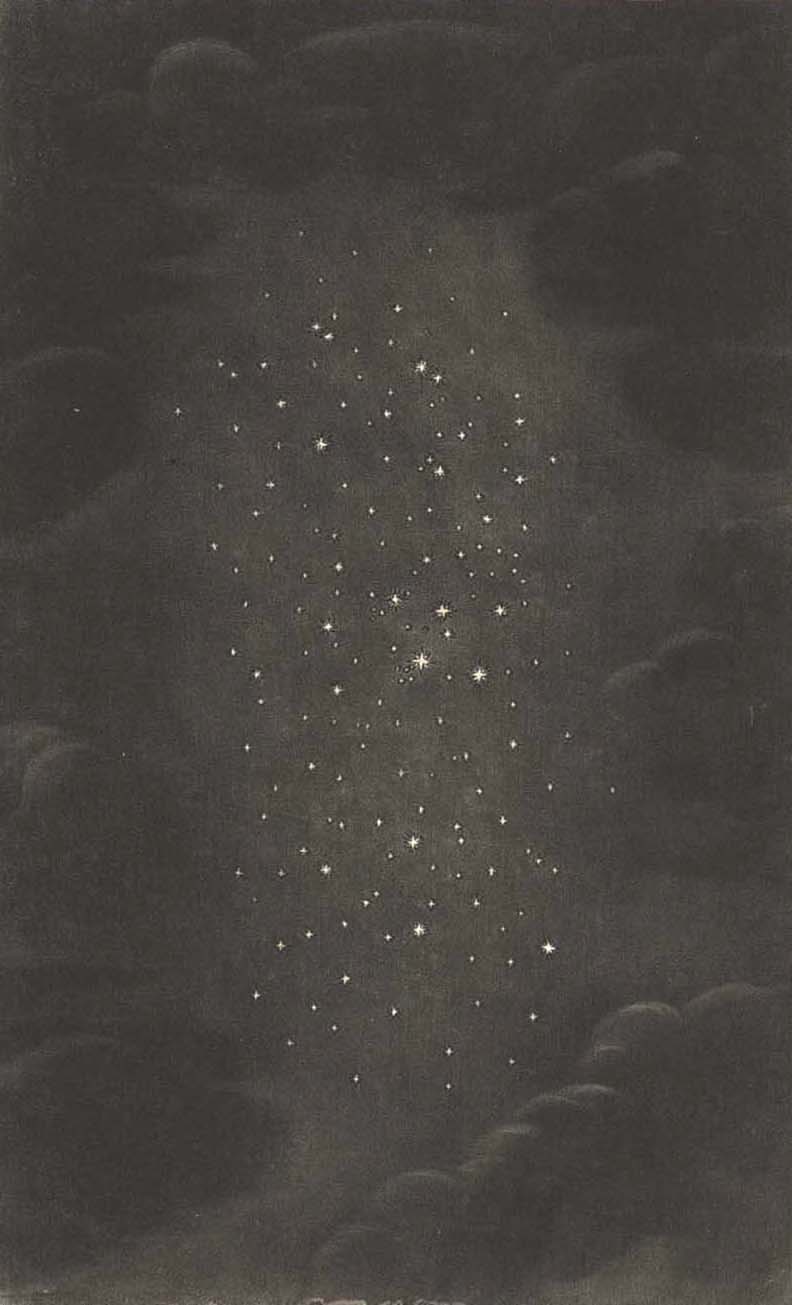

In 1750, astronomer Thomas Wright estimated the number of inhabited planets in the observable universe:
Of…habitable Worlds, such as the Earth, all which we may suppose to be also of a terrestrial or terraqueous Nature, and filled with Beings of the human Species, subject to Mortality, it may not be amiss in this Place to compute how many may be conceived within our finite View every clear Star-light Night. It has already been made appear, that there cannot possibly be less than 10,000,000 Suns, or Stars, within the Radius of the visible Creation; and admitting them all to have each but an equal Number of primary Planets moving round them, it follows that there must be within the whole celestial Area 60,000,000 planetary Worlds like ours. And if to these we add those of the secondary Class, such as the Moon, which we may naturally suppose to attend particular primary ones, and every System more or less of them as well as here; such Satellites may amount in the Whole perhaps to 100,000,000, or more, in all together then we may lately reckon 170,000,000, and yet be much within Compass, occlusive of the Comets which I judge to be by far the most numerous Part of the Creation.
He adds, soberly, that to the Creator the apocalypse of single world may be a mundane matter:
In this great Celestial Creation, the Catastrophy of a World, such as ours, or even the total Dissolution of a System of Worlds, may possibly be no more to the great Author of Nature, than the most common Accident in Life with us, and in all Probability such final and general Doom-Days may be as frequent there, as even Birth-Days, or Mortality with us.
The book—An Original Theory or New Hypothesis of the Universe—was the first to posit the idea of a disc-shaped Milky Way.

Richard Mayhew: Transition II (2013)

In 1942, in an effort to avoid strikes in war-related industries, Franklin Roosevelt reinstated the War Labor Board and directed it to oversee and arbitrate negotiations between unions and employers. Most unions had also agreed not to strike during the war in exchange for the government’s support of the closed shop—the requirement that a company hire only union members.
The retail giant Montgomery Ward operated a mail-order business and department stores across the country; it also supplied Allied forces with tractors, auto parts, clothes, and other items, therefore falling under the board’s jurisdiction. Workers there had organized with the United Mail Order, Warehouse and Retail Store Employees Union, CIO—but Sewell Avery, the company’s anti-union, anti-government, and anti-New Deal chairman, was determined to fight them in spite of the wartime provisions for labor peace. He refused to recognize or negotiate with the union and ignored the board’s orders to compromise.
Conflict between Avery and the union dragged on for almost two years—until April, 1944, when the union contract expired and workers were no longer bound by a no-strike provision. A strike was called in April, 1944 to protest Avery’s refusal to recognize the union and abide by the terms of a contract developed by the board. Almost 12,000 workers went on strike in Detroit, Chicago, St. Paul, Denver, San Rafael, Portland, and Jamaica, New York. The company responded by cutting wages and firing union activists.
The strike lasted about two weeks before FDR ordered the army to take over the company. Troops entered the company building in Chicago and had to physically remove Avery, carrying him from his office out to the street. Jesse Holman Jones, the United States Secretary of Commerce, was appointed manager of the Chicago plant and Montgomery Ward was virtually run by the US government.
The company, of course, challenged the action in court. As the legal process proceeded, workers again certified the union through a National Labor Relations Board election and eventually Jones turned the company back over to private management.
Montgomery Ward, however, again refused to recognize the union, so on December 27, 1944, FDR issued an executive order that authorized the Secretary of War to seize the company a second time and take over its operations in compliance with the board’s orders:
This company, under Mr. Avery’s leadership, has waged a bitter fight against the bona fide unions of its employees throughout the war, in reckless disregard of the Government’s efforts to maintain harmony between management and labor. Its record of labor relations has been a record of continuous trouble. Twice the Government has had to seize properties of Montgomery Ward as a result of Mr. Avery’s defiant attitude, once in Chicago and once in Springfield, Illinois, where the Hummer Manufacturing Company, a Montgomery Ward division, has been operated by the War Department since last May. For more than a year the company has refused to accept decisions involving workers in ten of its retail stores. Four of these stores are in the Detroit area, the very heart of war production from the viewpoint of urgency. A strike is in progress in these four stores, and strikes are threatened in other cities where the company’s stores are located. There is a distinct threat that workers in some of our most critical war plants may join the strike in support of the Montgomery Ward employees if the Government fails to act. We are not going to let this happen. Strikes in wartime cannot be condoned, whether they are strikes by workers against their employers or strikes by employers against their Government. All of our energies are engrossed in fighting a war on the military battle fronts. We have none to spare for a war on the industrial battle fronts. It is up to us to uphold and strengthen our machinery for settling disputes without interruptions of production. We cannot do this in a total war if we permit defiance to go unchallenged.
We cannot allow Montgomery Ward & Co. to set aside the wartime policies of the United States Government just because Mr. Sewell Avery does not approve of the Government’s procedure for handling labor disputes. Montgomery Ward & Co., like every other corporation and every labor union in this country, has a responsibility to our fighting men. That responsibility is to see that nothing interferes with the continuity of our war production. It is because Montgomery Ward & Co. has failed to assume this obligation that I have been forced to sign an Executive Order directing the Secretary of War to take over and operate certain properties of Montgomery Ward & Co.
The seizure was upheld by a United States Court of Appeals, but the takeover was ultimately terminated by President Harry S. Truman in 1945.
Photograph by Harry Hall

 corvusfugit.com