1940: Top Women

28-0978a

The official title of this item in the National Archives is “Like girls from Mars are these ‘top women’ at U.S. Steel’s Gary, Indiana, Works. Their job is to clean up at regular intervals around the tops of twelve blast furnaces. As a safety precaution, the girls wear oxygen masks.” From the series “Women Working In Industry, 1940 – 1945.”

Posted in Uncategorized | Tagged , , , , , , | Leave a comment

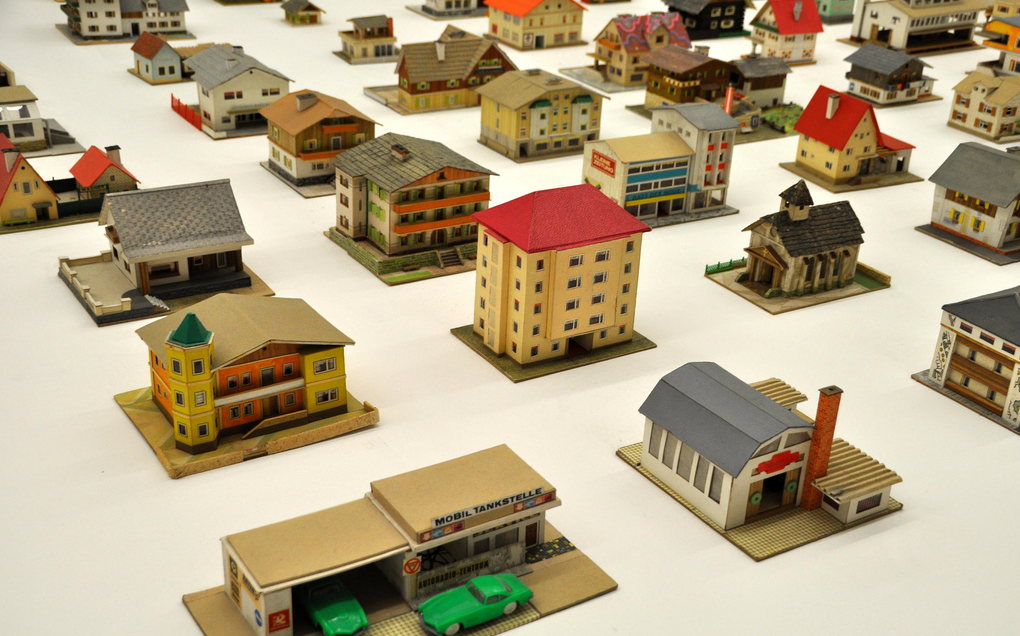
2013: The 387 Houses of Peter Fritz

Fritz

Austrian insurance clerk Peter Fritz constructed these model buildings in the 1950’s and 1960’s, working with cardboard, matchboxes, wallpaper scraps, and magazine pages. They were discovered by artist Oliver Croy in 1993 in a Berlin junk shop, each in a small garbage bagand exhibited at the Venice Biennale in 2013. Little is known about Fritz’s life.

Posted in Uncategorized | Tagged , , , , , , , , , | Leave a comment

100 BC: Permixtio Terrae Oriri Coepit

sallust

Ceterum mos partium et factionum ac deinde omnium malarum artium paucis ante annis Romae ortus est otio atque abundantia earum rerum, quae prima mortales ducunt. Nam ante Carthaginem deletam populus et senatus Romanus placide modesteque inter se rem publicam tractabant, neque gloriae neque dominationis certamen inter civis erat: metus hostilis in bonis artibus civitatem retinebat. Sed ubi illa formido mentibus decessit, scilicet ea quae res secundae amant, lascivia atque superbia incessere. Ita quod in advorsis rebus optaverant otium postquam adepti sunt, asperius acerbiusque fuit. Namque coepere nobilitas dignitatem, populus libertatem in lubidinem vortere, sibi quisque ducere, trahere, rapere. Ita omnia in duas partis abstracta sunt, res publica, quae media fuerat, dilacerata.

Ceterum nobilitas factione magis pollebat, plebis vis soluta atque dispersa in multitudine minus poterat. Paucorum arbitrio belli domique agitabatur, penes eosdem aerarium, provinciae, magistratus, gloriae triumphique erant; populus militia atque inopia urgebatur, praedas bellicas imperatores cum paucis diripiebant. Interea parentes aut parvi liberi militum, uti quisque potentiori confinis erat, sedibus pellebantur. Ita cum potentia avaritia sine modo modestiaque invadere, polluere et vastare omnia, nihil pensi neque sancti habere, quoad semet ipsa praecipitavit. Nam ubi primum ex nobilitate reperti sunt qui veram gloriam iniustae potentiae anteponerent, moveri civitas et dissensio civilis quasi permixtio terrae oriri coepit.

C. Sallusti Crispi, Bellum Jugurthinum XLI

Now the institution of parties and factions, with all their attendant evils, originated at Rome a few years before this as the result of peace and of an abundance of everything that mortals prize most highly. For before the destruction of Carthage the people and senate of Rome together governed the republic peacefully and with moderation. There was no strife among the citizens either for glory or for power; fear of the enemy preserved the good morals of the state. But when the minds of the people were relieved of that dread, wantonness and arrogance naturally arose, vices which are fostered by prosperity. Thus the peace for which they had longed in time of adversity, after they had gained it proved to be more cruel and bitter than adversity itself. For the nobles began to abuse their position and the people their liberty, and every man for himself robbed, pillaged, and plundered. Thus the community was split into two parties, and between these the state was torn to pieces.

But the nobles had the more powerful organization, while the strength of the commons was less effective because it was incompact [“disconnected” maybe?] and divided among many. Affairs at home and in the field were managed according to the will of a few men, in whose hands were the treasury, the provinces, public offices, glory and triumphs. The people were burdened with military service and poverty. The generals divided the spoils of war with a few friends. Meanwhile the parents or little children of the soldiers, if they had a powerful neighbor, were driven from their homes. Thus, by the side of power, greed arose, unlimited and unrestrained, violated and devastated everything, respected nothing, and held nothing sacred, until it finally brought about its own downfall. For as soon as nobles were found who preferred true glory to unjust power, the state began to be disturbed and civil dissension to arise like an upheaval of the earth.

Sallust, The War with Jugurtha, 41 (c. 100 BC); translated by J. C. Rolfe (1921)

Posted in Uncategorized | Tagged , , , | Leave a comment

1913: Whitlock’s Folly

Casnova Mansion

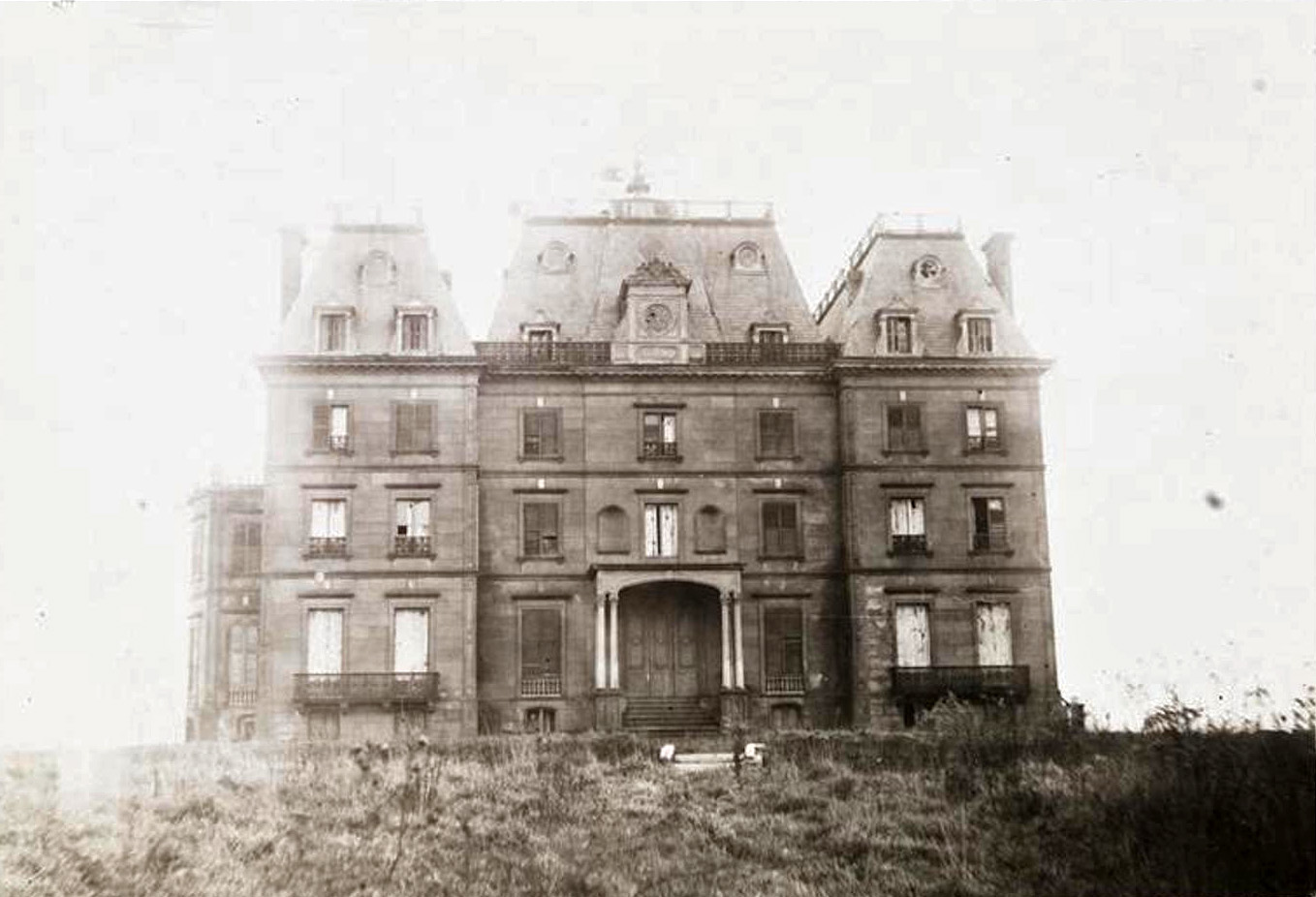
Once located on the southeastern tip of the Bronx, this mansion was built by Benjamin Morris Whitlock in 1859. Sitting on a fifty-acre estate, the structure boasted a hundred rooms and was said to have cost $350,000 (about $9.5 million in 2016). The entrance to the grounds featured a drawbridge and a large iron gateway operated by hidden springs that would seem to open magically. A labyrinth of wells, tunnels, and wine cellars snaked below it.

Whitlock, a pro-slavery southerner, went bankrupt after the Civil War, and the mansion was sold in 1867 to a Cuban sugar importer by the name of Inocencio Casanova; by 1913the date of this photohowever, the estate had become abandoned and the mansion surrendered to the decay of time. (Sources here and here.)

Posted in Uncategorized | Tagged , , , , , | Leave a comment

1976: Kids and Comics

Dennis Huls Kids Reading Comics

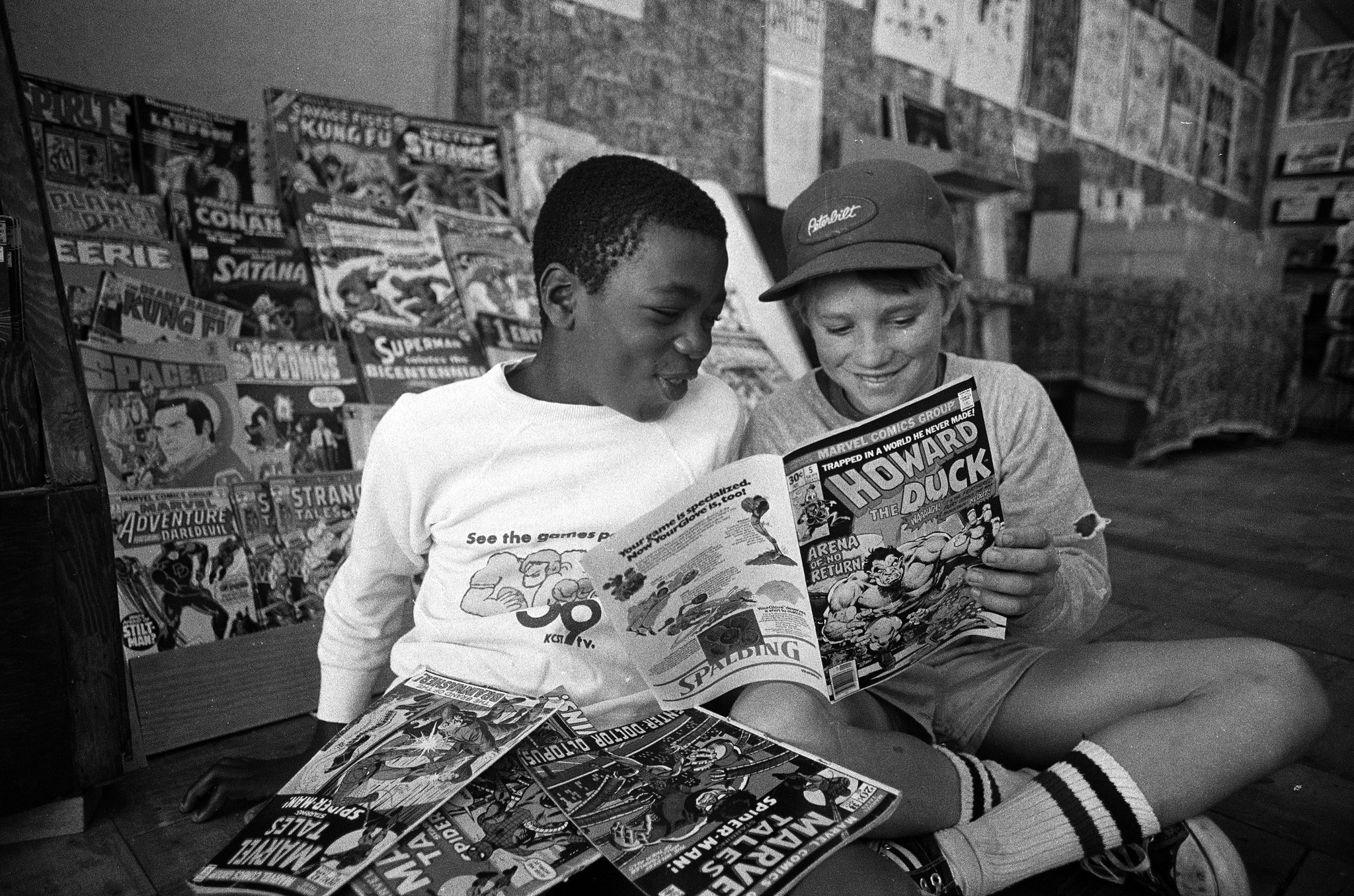
“12-year-old Freddie Lewis, left, and Marshall Beck, both of San Diego’s Normal Heights neighborhood, set aside superhero comics to check out a copy of ‘Howard the Duck’ in 1976. (Dennis Huls / San Diego Historical Society)” (source)

Posted in Uncategorized | Tagged , , , , , , , | Leave a comment

2013: A Child’s Map

children_map_2014

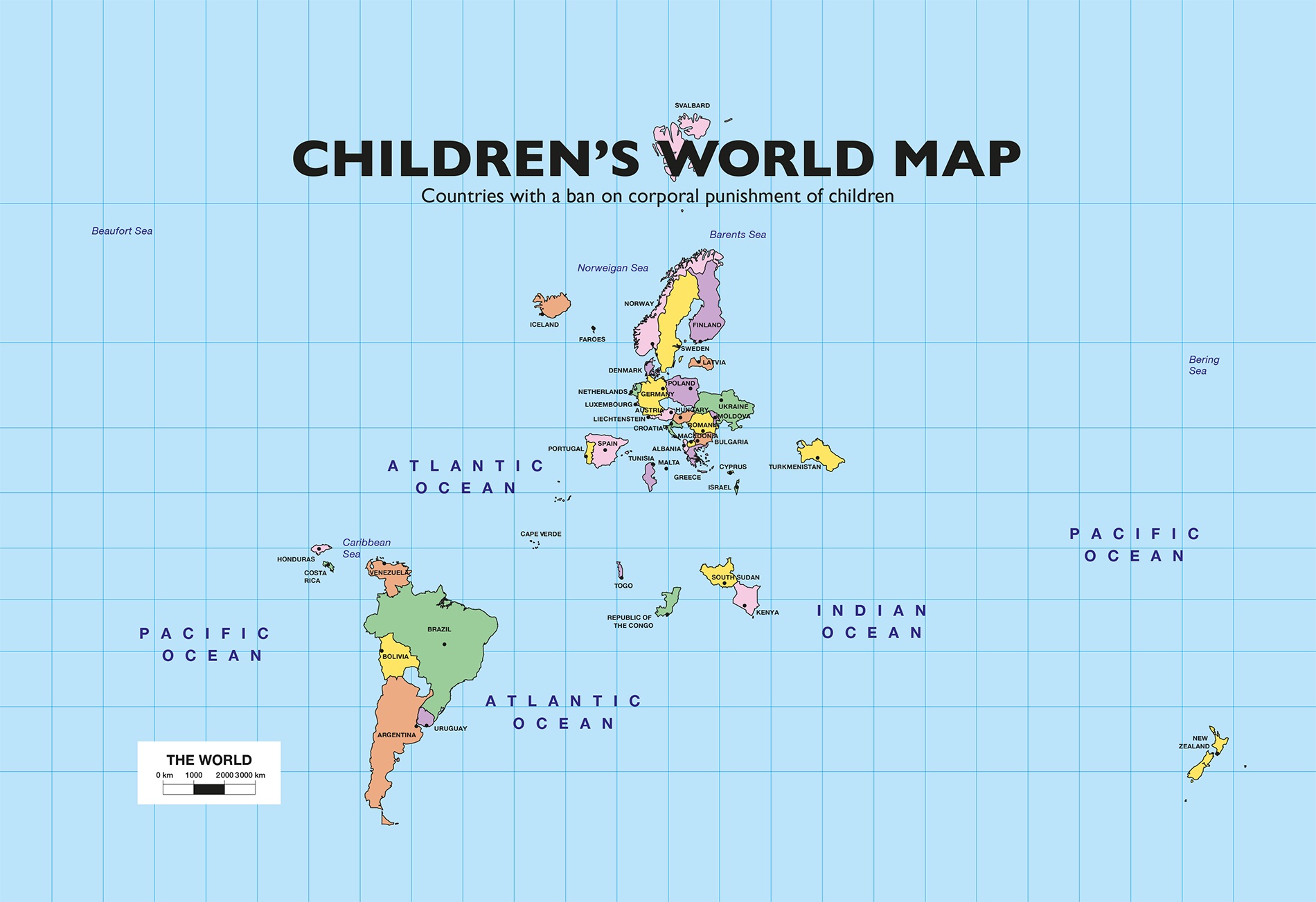
Sweden was the first country to outlaw corporal punishment of children—in 1979. As of 2013, when this map was produced by Save the Children, 52 countries had done so.

Posted in Uncategorized | Tagged , , , , , | Leave a comment

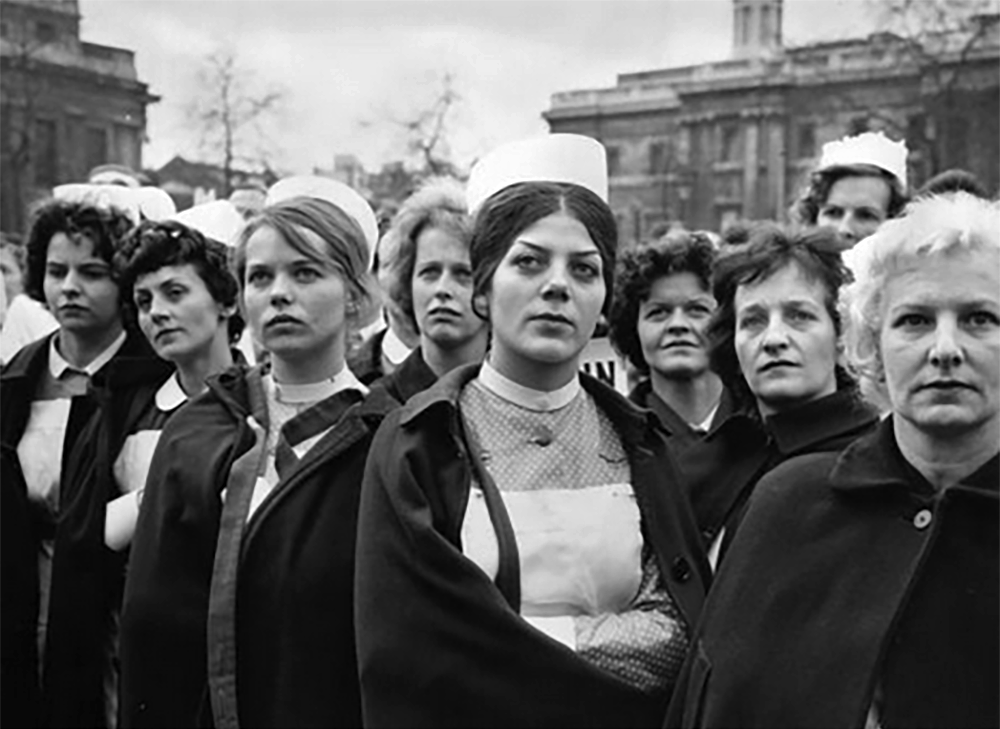
1962: Nurses’ March

Nurses Strike

April 1, 1962: 8,000 union nurses march for higher pay in Trafalgar Square, London.

In 1958, at the worst stage of the recession, the Conservative government took a firm stand against pay increases and, having won the busmen’s strike in 1961, introduced a “pay pause.” The dockers threatened strike action and were awarded 9 per cent: the nurses, who did not, were held to 2½ per cent. Many nurses were earning less than office cleaners, and in 1962 professional nurses for the first time canvassed public support. Led by a group from Manchester and subsequently backed by the Royal College of Nursing, they held lobbies of the House of Commons and a mass meeting at the Royal Albert Hall involving speakers from the three main political parties. The campaign attracted considerable attention; the government lost four by-elections mainly on the issue of pay, and the new MP for Orpington, Mr Lubbock (later Lord Avebury), made his maiden speech on the subject of nurses’ pay. The pay pause faded and nurses were given a special award of 9 per cent.

—Monica F. Baly, Nursing and Social Change (1973)

Posted in Uncategorized | Tagged , , , , , , , , | Leave a comment

2013: Struggle

Charles Avery

Charles Avery: Untitled (Duculi) (2013) (source)

Posted in Uncategorized | Tagged , , , , , , , , | Leave a comment

1703: Forseeing Things to Come

Martin MapIn 1703, the Scottish writer Martin Martin published A description of the Western Islands of Scotland. : Containing a full account of their situation, extent, soils, product, harbours, bays, tides, anchoring places, and fisheries. The ancient and modern government, religion and customs of the inhabitants, particularly of their druids, heathen temples, monasteries, churches, chappels, antiquities, monuments, forts, caves, and other curiosities of art and nature. Of their admirable and expeditious way of curing most diseases by simples of their own product. A particular account of the second sight, or faculty of forseeing things to come, by way of vision, so common among them. A brief hint of methods to improve trade in that country, both by sea and land. With a new map of the whole, describing the harbours, anchoring places, and dangerous rocks, for the benefit of sailers. To which is added a brief description of the Isles of Orkney, and Schetland (here).

His discussion of the “second sight, or faculty of forseeing things to come” that he finds common among the inhabitants of the Hebrides begins as follows:

An Account of the Second-Sight, in Irish called Taish

The Second Sight is a singular Faculty of Seeing an otherwise invisible Object, without any previous Means us’d by the Person that fees it for that end; the Vision makes such a lively impression upon the Seers, that they neither see nor think of anything else, except the Vision, as long as it continues: and then they appear pensive or jovial, according to the Object which was represented to them.

At the sight of a Vision, the Eyelids of the Person are erected, and the Eyes continue staring until the Object vanish. This is obvious to others who are by, when the Persons happen to see a Vision, and occur’d more than once to my own Observation, and to others that were with me.

There is one in Skie of whom his Acquaintance observed, that when he sees a Vision, the inner part of his Eye-lids turn so far upwards, that after the Object disappears, he must draw them down with his Fingers, and sometimes employs others to draw them down, which he finds to be the much easier way….

Children, Horses and Cows see the Second Sight, as well as Men and Women advanced in years.

That Children see it, is plain from their crying aloud at the very instant that a Corpse or any other Vision appears to an ordinary Seer. I was present in a House where a Child cried out of a sudden, and being asked the reason of it, he answer’d that he had seen a great white thing lying on the Board which was in the Corner : but he was not believ’d, until a Seer who was present told them that the Child was in the right; for, said he, I saw a Corpse and the Shroud about it, and the Board will be us’d as part of a Coffin, or some way employed about a Corpse: and accordingly, it was made into a Coffin, for one who was in perfect health at the time of the Vision.

That Horses see it, is likewise plain from their violent and Sudden starting, when the Rider or Seer in Company with him fees a Vision of any kind, night or day. It is observable of the Horse, that he will not go forward that way, until he be led about at some distance from the common Road, and then he is in a sweat….

That Cows see the Second Sight appears from this; that when a Woman is milking a Cow, and then happens to see the Second Sight the Cow runs away in a great fright at the same time, and will not be pacified for some time after….

The Second Sight is not a late Discovery seen by one or two in a Corner, or a remote Isle, but it is seen by many Persons of both Sexes in several Isles, separated above forty or fifty Leagues from one another: the Inhabitants of many of these Isles, never had the least Converse by Word or Writing; and this faculty of seeing Visions, having continued, as we are informed by Tradition, ever since the Plantation of these Isles, without being disproved by the nicest Sceptic, after the strictest enquiry, seems to be a clear proof of its Reality.

It is observable, that it was much more common twenty Years ago than at present; for one in ten do not see it now, that saw it then….

He then gives a great many examples. Here are a few of them:

Continue reading

Posted in Uncategorized | Tagged , , , , , , , , , | 1 Comment

1933: World Revolution

Globe Factory 1933

April 3, 1933: Workers gluing maps to globes at the Geographia factory in London.

Posted in Uncategorized | Tagged , , , , , , | Leave a comment