

Gustave Caillebotte: The Floor Scrapers (1875)

Gustave Caillebotte: The Floor Scrapers (1876)
Gustave Caillebotte: The Floor Scrapers (1875)
Gustave Caillebotte: The Floor Scrapers (1876)

Born in Ireland, Samuel Beckett wrote almost exclusively in French after moving to Paris in 1939. He would then translate his novels and plays into English.
He wrote the following sentence in his 1946 short story “Premier amour”:
Personnellement je n’ai rien contre les cimetières, je m’y promène assez volontiers, plus volontiers qu’ailleurs, je crois, quand je suis obligé de sortir.
A “literal” translation might be “Personally, I have nothing against cemeteries, I’ll gladly take a walk there, more gladly than elsewhere, I believe, when I am obliged to go out.”
Here is Beckett’s translation, done in 1973:
Personally I have no bone to pick with graveyards, I take the air there willingly, perhaps more willingly than elsewhere, when take the air I must.
Image:
John Minihan: Photograph of Beckett in room 604 of the Hyde Park Hotel, London, 1980.

Gustave Courbet: The Waterspout (1866)
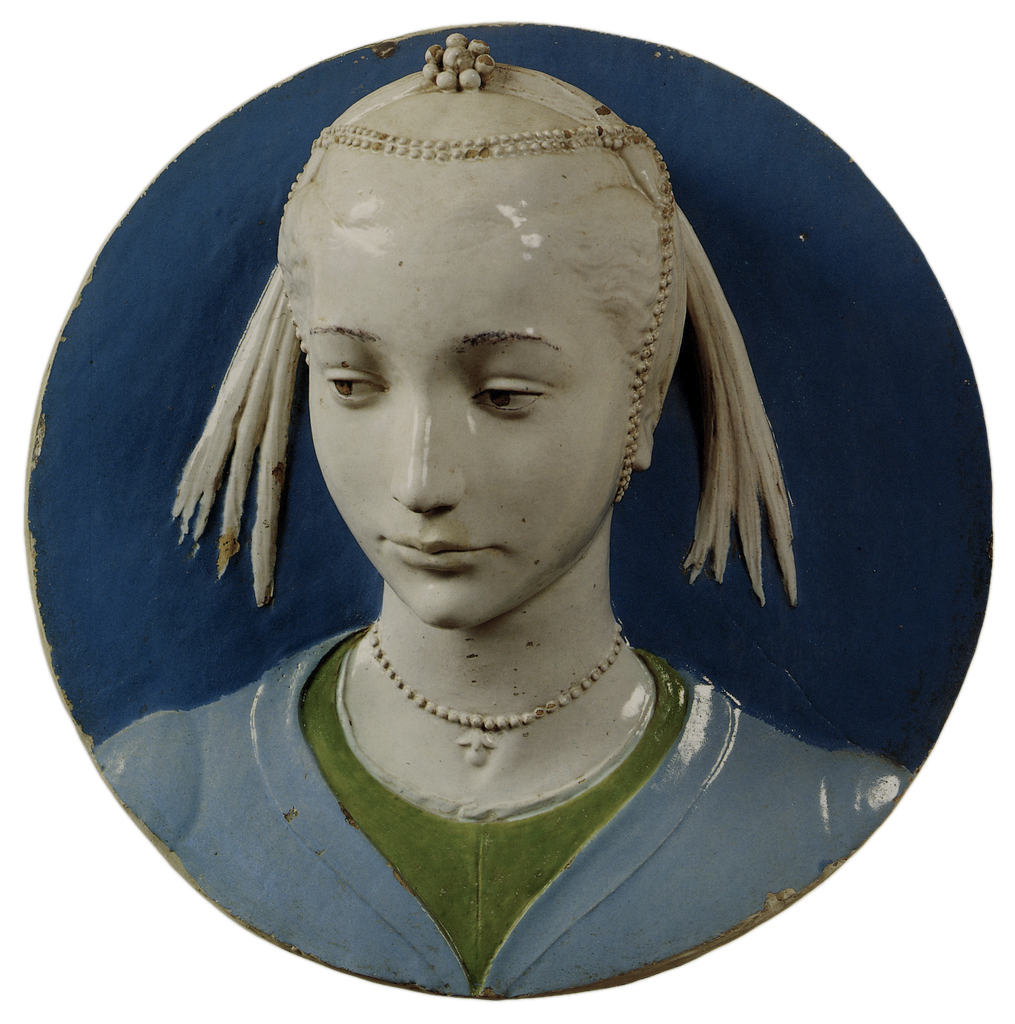
Luca della Robbia: Portrait of a Young Lady (1463)

Rockwell Kent: Maine Headland, Evening (c. 1950)
When I was a student in Italy, a friend of mine once wanted to tell his host family that he liked the bread because it was made “without preservatives.” Not knowing the Italian for “preservative,” he took what seemed like a reasonable guess and said he liked the bread because it was made senza preservativi, only to discover—after some confusion—that he had said that he liked the bread because it was made without condoms.
Here are some “false friends” in Italian; i.e. words that don’t mean what they sound like they mean in English:
Accidenti! means damn it! not accident.
Annoiato means bored, not annoyed.
An argomento is a subject or topic, not an argument.
Assistere means to attend or witness, not to assist.
Attaccare means to attach or fasten, not to attack.
Attendere means to wait, not to attend or attend on or attend to.
An attico is a penthouse, not an attic.
Attuale means present (topical), not actual; attualmente means at present.
Bravo means good or clever, not brave.
A camera is a room, not a camera.
A cantina is a cellar, not a kind of bar.
A cava is a quarry, not a cave.
Coincidenza means train connection, not coincidence
A collegio is a boarding school, not a college.
A commedia is a play (which could be a comedy), not simply a comedy.
Concussione means extortion, not concussion
A conferenza is a lecture, not a conference.
Confetti are sugared almonds, not bits of paper.
Confezione means off-the-rack clothing or packaging, not confection (sweets).
Controllare means to check, not to control.
A delusione is a disappointment, not a delusion.
A diplomato is a graduate, a person with a diploma, not a diplomat.
Discreto means moderate, not discrete
A discussione is an argument, not a discusssion.
A disgrazia is an accident, not a disgrace
Educato means polite or well-mannered, not educated.
Emozione is excitement, not emotion.
Esperienza can mean experience, but also experiment.
Eventualmente means possibly, not eventually.
A fabbrica is a factory, not a fabric.
A fattoria is a farm, not a factory.
Firma means signature, not firm.
A fotografo is a photographer, not a photograph.
Fresco means cool, not fresh.
Geniale means genius, not genial.
Gentile means nice, not gentle.
Ignorare mean not to know, not to ignore.
Insolazione is sunstroke, not isolation.
Largo means wide, not large.
A libreria is a bookstore, not a library.
Lunatico means moody, not crazy.
Lussuria is lust, not luxury.
A magazzino is a store, not a magazine.
Marmellata is just jam, and not specifically marmalade.
Materia means subject, not material.
Morbido means soft, not morbid.
Noioso means boring, not noisy.
Nostalgia means homesickness as well as nostagia.
Notorio simply means well-known, not notorious.
Occorrere means to be necessary, not to occur.
A paragone is a comparison, not a paragon.
Your parenti are your relatives; you parents are your genitori.
A patente is a driving license, not a patent.
The pavimento is the floor, not the pavement.
Pigione is rent, not pigeon.
A pilota is a racing driver, not an airplane pilot.
Preservativi are condoms not preservatives.
Promiscuo means mixed or multipurpose, not promiscuous.
Pronto is something you say when you answer the phone—hello!—or ready; it doesn’t mean “on the double.”
A riunione is a meeting, not a reunion.
A ruffiano is a pimp, not a ruffian.
A rumore is a noise, not a rumor.
Sciocco means silly, not schocking.
Scotch is scotch-tape, not a kind of whisky.
Sensibile means sensitive, not sensible.
Suggestivo means picturesque or impressive, not suggestive.
Superbo means arrogant or haughty, not superb.
Spanish-speakers have their own list; burro in Italian means butter, not donkey.
Image:
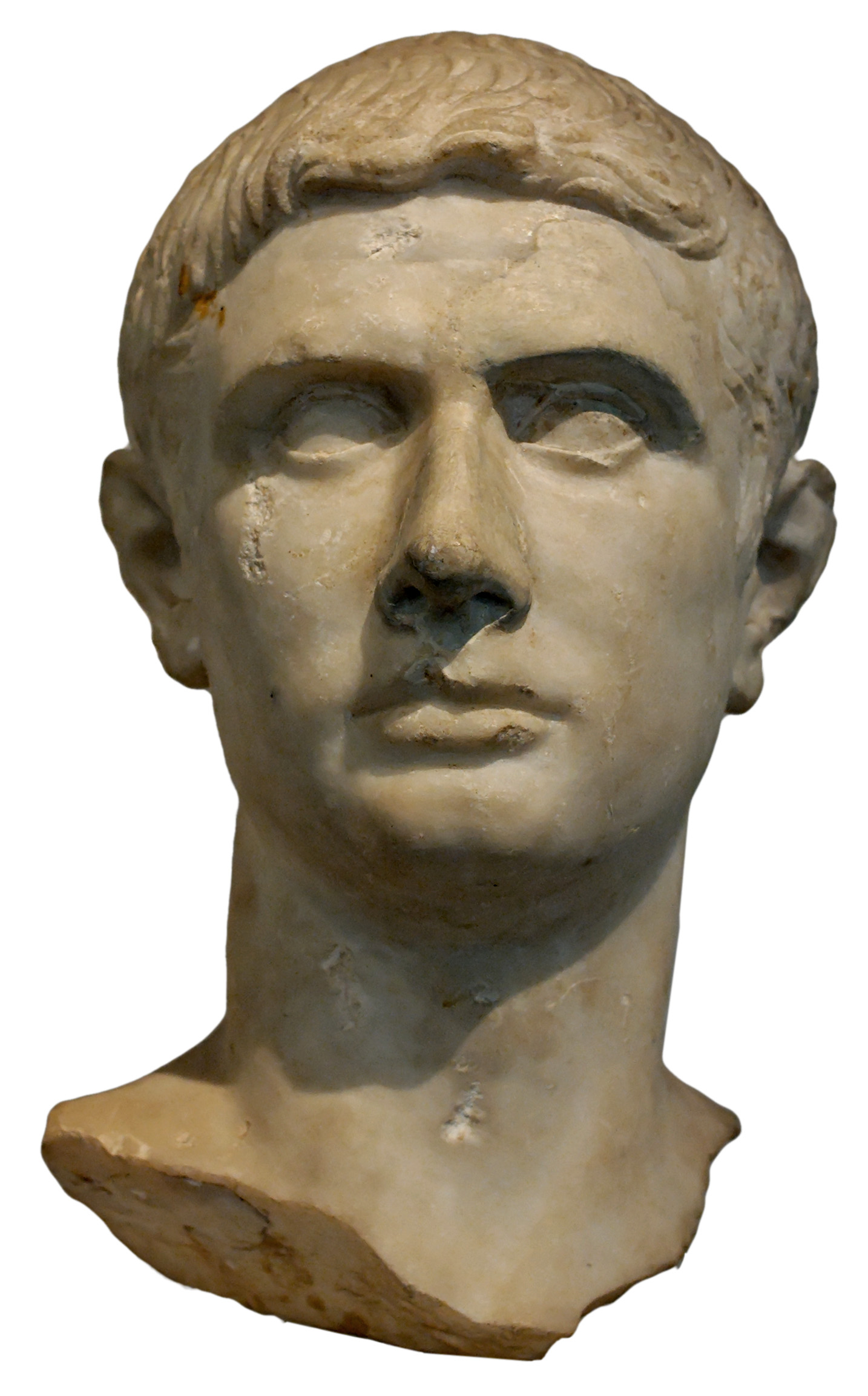
Bust of Brutus; Roman, 30–15 BC
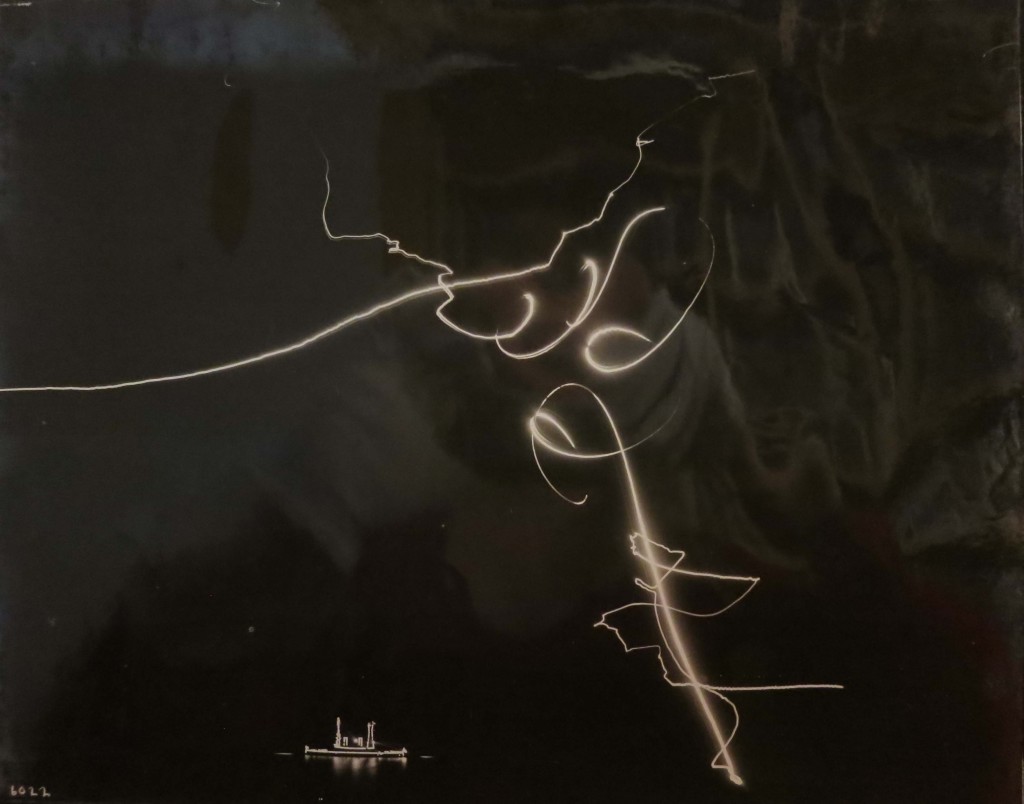
A timed exposure of stunt pilot Art Smith flying his biplane
over the Battleship Oregon, 1915. (source)
 Alexander Cozens: Rocky Bay Scene (c.1759–65)
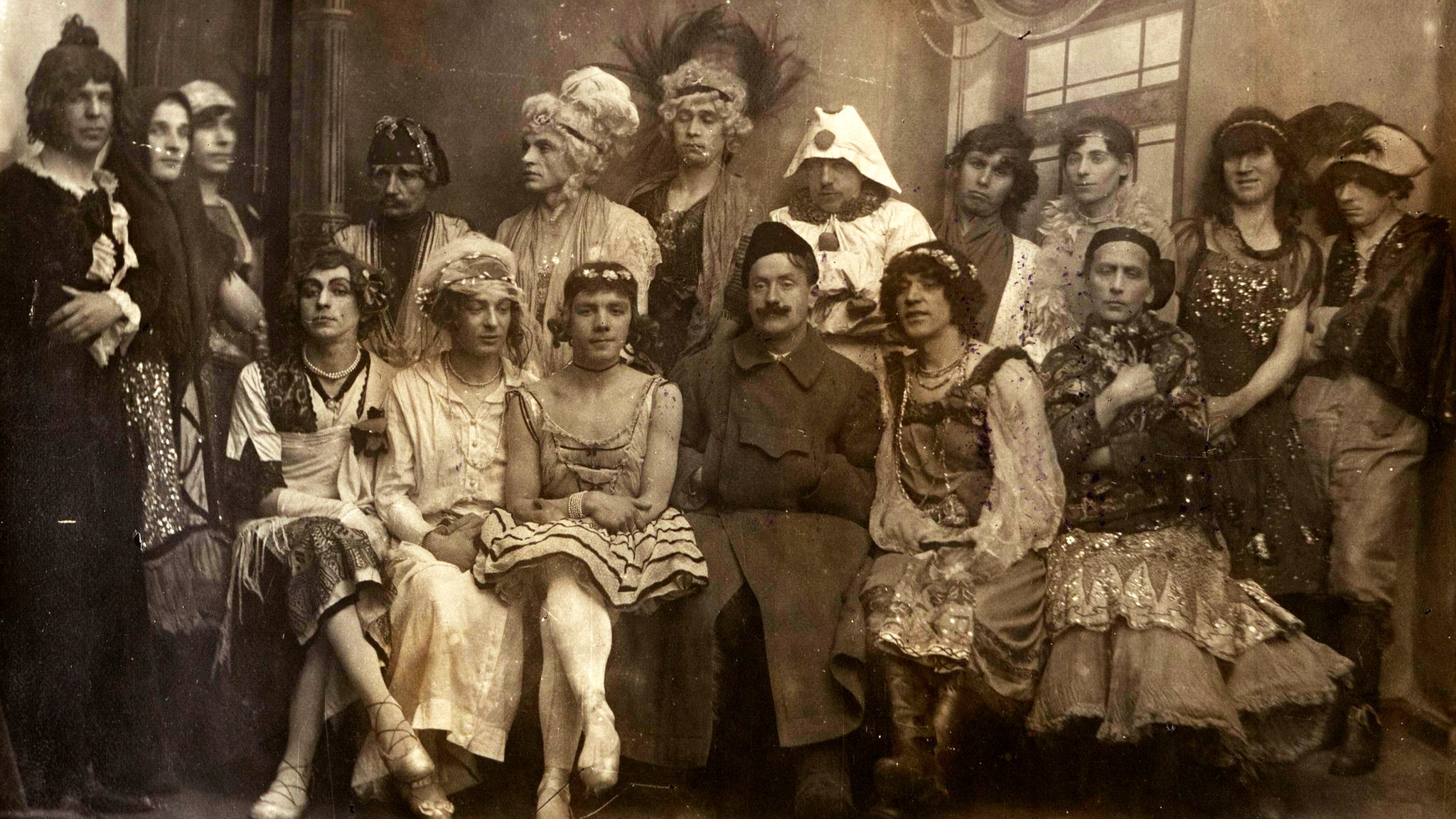
Afanasy Shaur, a member of the Russian Baltic Fleet, organized this gay wedding in Petrograd in 1921. The event featured elements of a traditional Russian wedding, such as a special bread presented with a dish of salt for the betrothed to share, parental approval, and music.
Shaur also apparently had an ulterior motive. As a member of the secret police, he had arranged for all the guests (mostly Russian armed service members) to be detained at the end of the wedding as potential counter-revolutionaries plotting to undermine the Red Army from within. Ultimately, nothing came of these suspicions.
The photo is held in the Central State Library of St. Petersburg (source).
From a review of Dan Healey’s Homosexual Desire in Revolutionary Russia:
Famously, the Russian Revolution brought the decriminalization of homosexuality in an act both nearly unique in Europe and astonishingly advanced in a country with semi-feudal conditions in vast parts where religious hierarchy had long been a cornerstone of the state. Healey reveals long-forgotten, even concealed, facts showing even greater advances: the early Soviet Union was the first industrialized state to recognize same-sex marriage, the USSR alongside Weimar Germany briefly led the world in gender corrective surgery, and Soviet medical experts working alongside transgender people began exploring the idea of gender not being a simple binary of man and woman but, instead, a spectrum.
Even as reformist socialists like the followers of Karl Kautsky took conservative views on sexuality in the early 20th century, the Russian Bolsheviks forged ahead because they were based on a movement from below. Same-sex marriage recognition occurred almost organically: two people of the same legal gender applied to be married, and local courts and officials in the wake of the Russian Revolution quickly decided there was no basis on which to deny the request.
Healey discusses at length the case of one of the parties to this marriage, anonymized as “Evgenii Fedorovich M.” Assigned female at birth, Evgenii Fedorovich struggled with gender identity and inconsistent support from family until the Russian Revolution gave him the chance to express himself as a man. While working as a political instructor far from his village of birth, he courted and married a woman, “S.”, and formed a family. Tragically, Evgenii Fedorovich’s reassignment to a distant city split the relationship and, suffering from psychiatric issues, he sank into alcoholism.
Revolutionary Rethinking of Sex and Gender.
Evgenii Fedorovich’s discussions with Soviet psychiatrists informed a revolutionary political analysis of sex and gender. Healey devotes chapter six of his book to describing how Russian attitudes toward same-sex relationships quickly evolved from the Revolution to the end of the first Five Year Plan (1932) from challenging the idea of same-sex relationships as “perverse,” to medicalization, to the statement by biologist N. K. Kol’tsov that “there is no intermediate sex, but rather an infinite quantity of intermediate sexes.”
Several Soviet doctors were assembled into an expert commission, and ideas such as Kol’tsov’s found broad support. These doctors were being driven by experience: as soon as gender corrective surgery began to be practiced in the early 1920s, its practitioners were inundated with inquiries from ordinary Russians who had fought with their own bodies for their whole lives and finally saw a means of resolution.
Stalinist Reaction
While this commission of doctors put forward highly advanced ideas on gender and gender identity, their ideas were, tragically, never fully realized. With Stalin’s consolidation of power in the late 1920s came a vicious social reaction. In 1933, the Soviet state terminated the commission, and in 1936 it restored homosexuality to the status of a crime in Russia. The legacy of this reaction stands today, with some Stalinist groups around the world still spitting upon the ideas of transgender identity, transsexuality, homosexuality, and bisexuality as “undialectical.”


 corvusfugit.com