
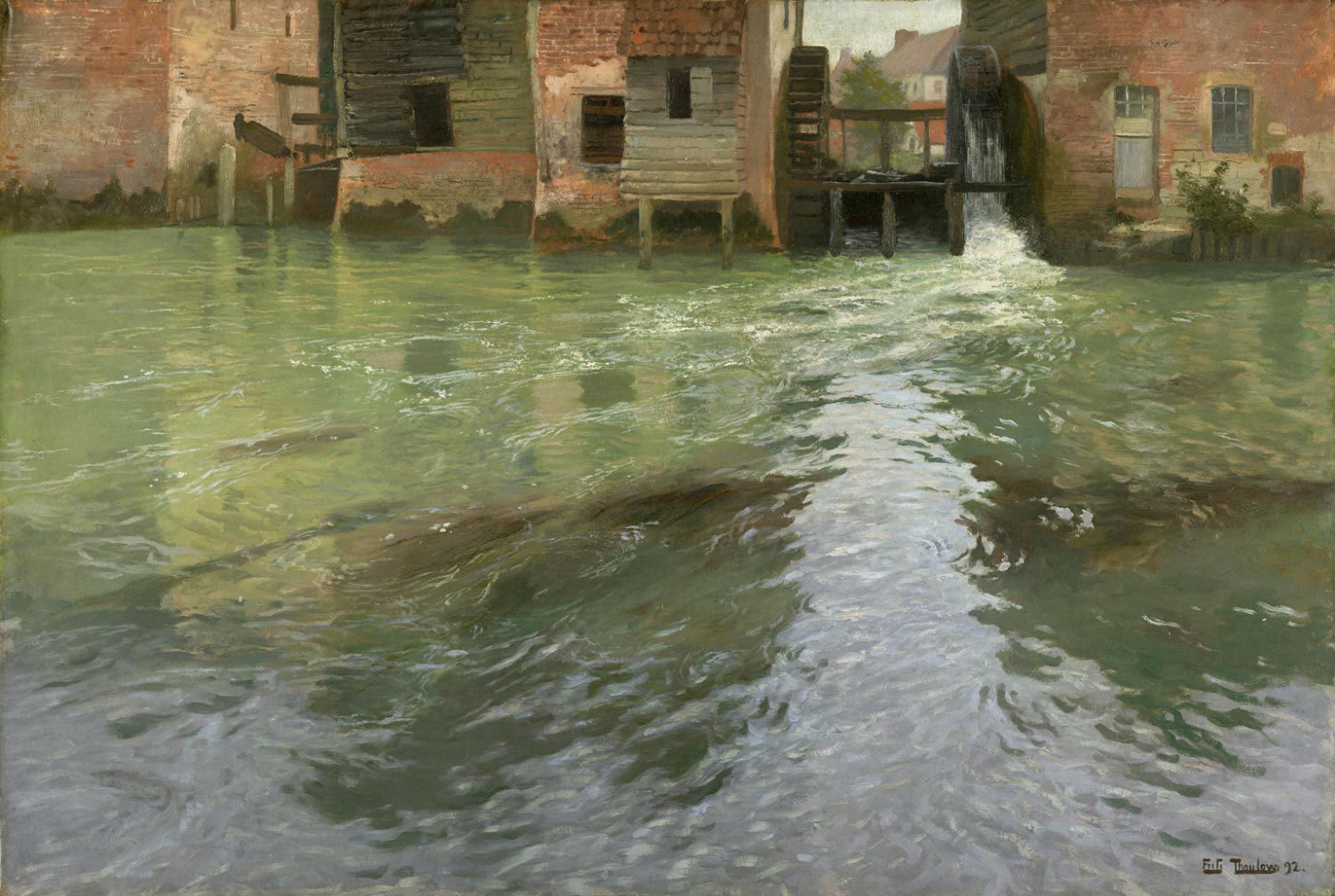
Fritz Thaulow: Water Mill (1892)
Fritz Thaulow: Water Mill (1892)
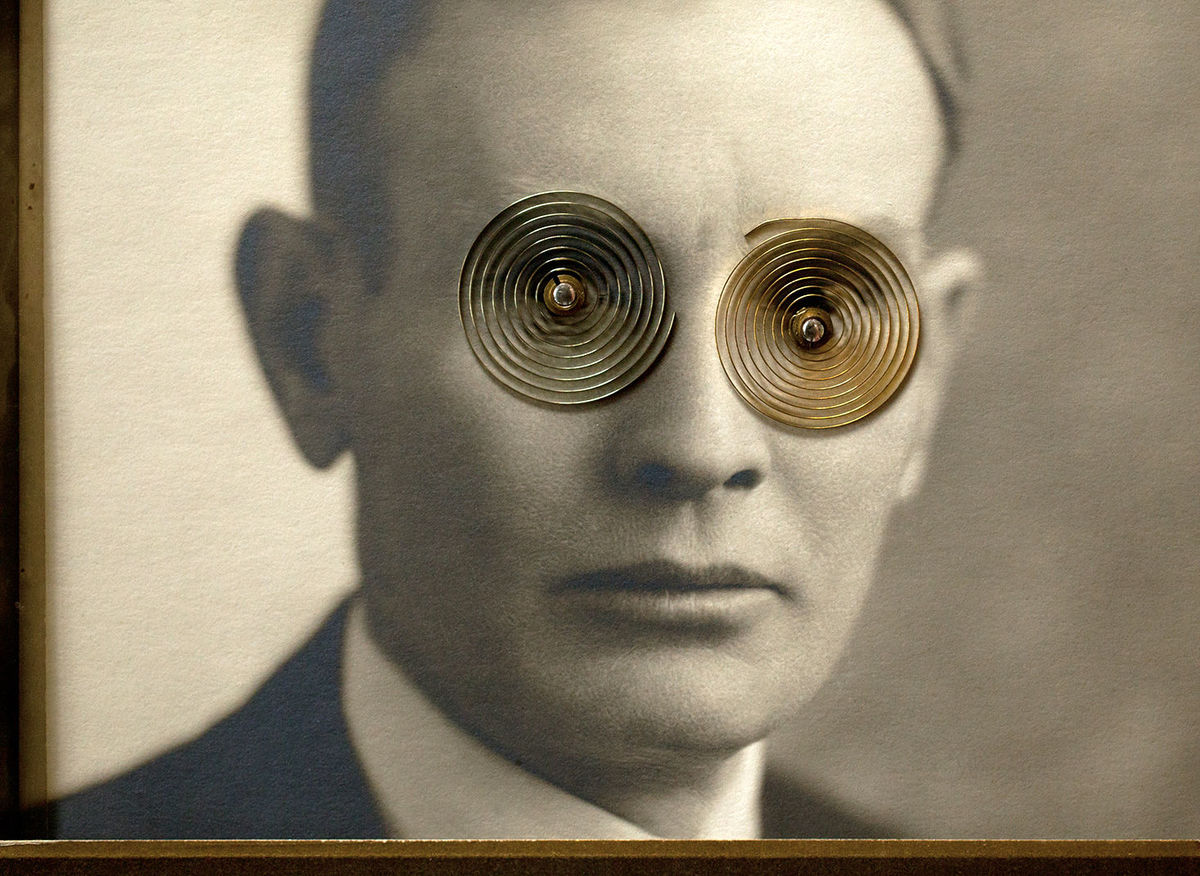
Susan R. Goldstein: Absence of Clarity (2015)
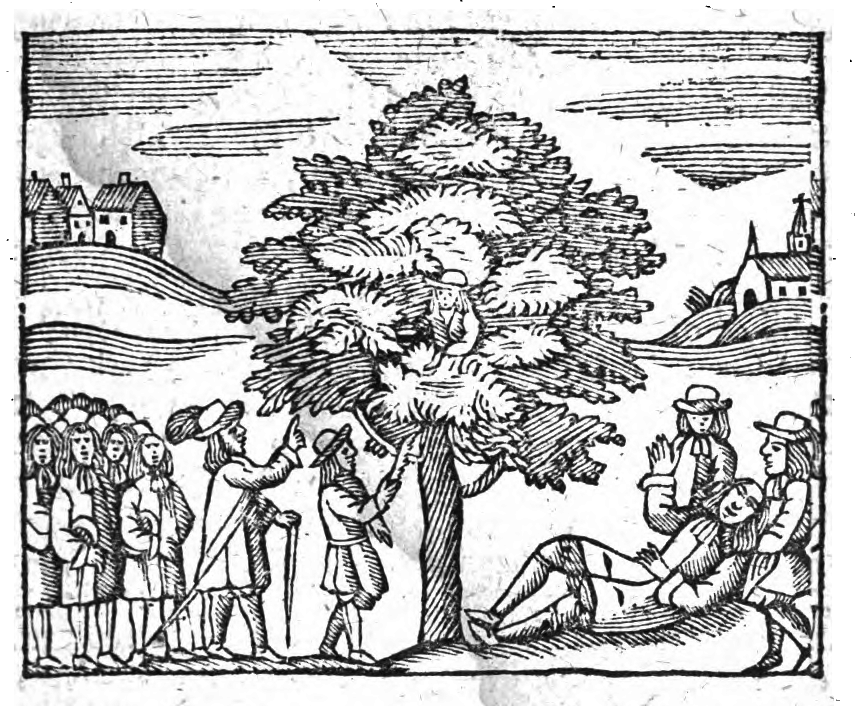
In 1635 at Brampton near Gainsborough an Ash Tree shook both in the Body and Boughs, and there proceeded from thence Sighs and Groans, like those of a Man troubled in his Sleep, as if he felt some sensible Torments. Many climbed to the Top, where they heard the Groans more plainly than below. One being atop spoke to the Tree, but presently came down astonished, and lay groveling on the Earth Speechless three Hours, and then reviving Said, “Brampton, Brampton, thou art much bound to Pray.” The Author of this News was Mr. Vaughan a Minister there present, who heard and saw these Passages, and told Mr. Hildersham of them. The Earl of Lincoln caused one of the Arms of the Ash to be lopped off, and a hole to be bored into the Body, and then was the sound or hollow Voice heard more audible then before, but in a kind of Speech they could not understand.
—Admirable curiosities, rarities, & wonders in England, Scotland, and Ireland, or, An account of many remarkable persons and places … as they are recorded by the most authentick and creditable historians, by R.B. (1710)
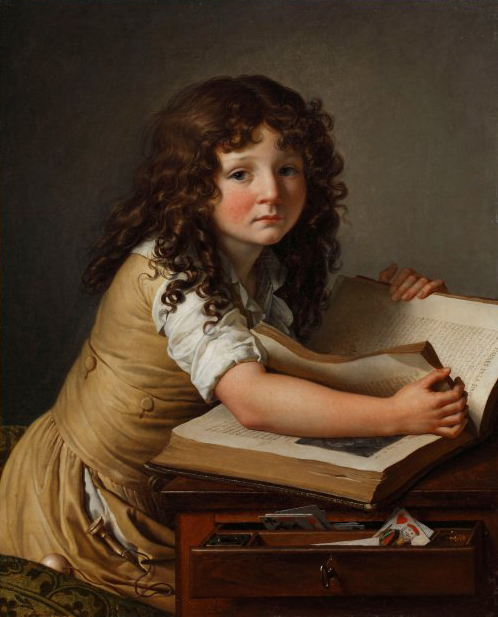
Anne-Louis Girodet de Roussy-Trioson: Benoît Agnès Trioson Reading a Book (1797)
Born Anne-Louis Girodet de Roucy in 1767, Girodet suffered the death of his father in 1784 and his mother in 1787. Dr. Benoît-François Trioson, a close friend of his parents, then took the young artist under his wing, arranging for his first showings in Paris. This 1797 portrait of Trioson’s son, Benoît-Agnès, shows the eight-year-old paging through an illustrated Bible, his melancholy look perhaps explained by the death of his own mother only two years before.
Trioson ultimately adopted Girodet, who then added the doctor’s name to his own.
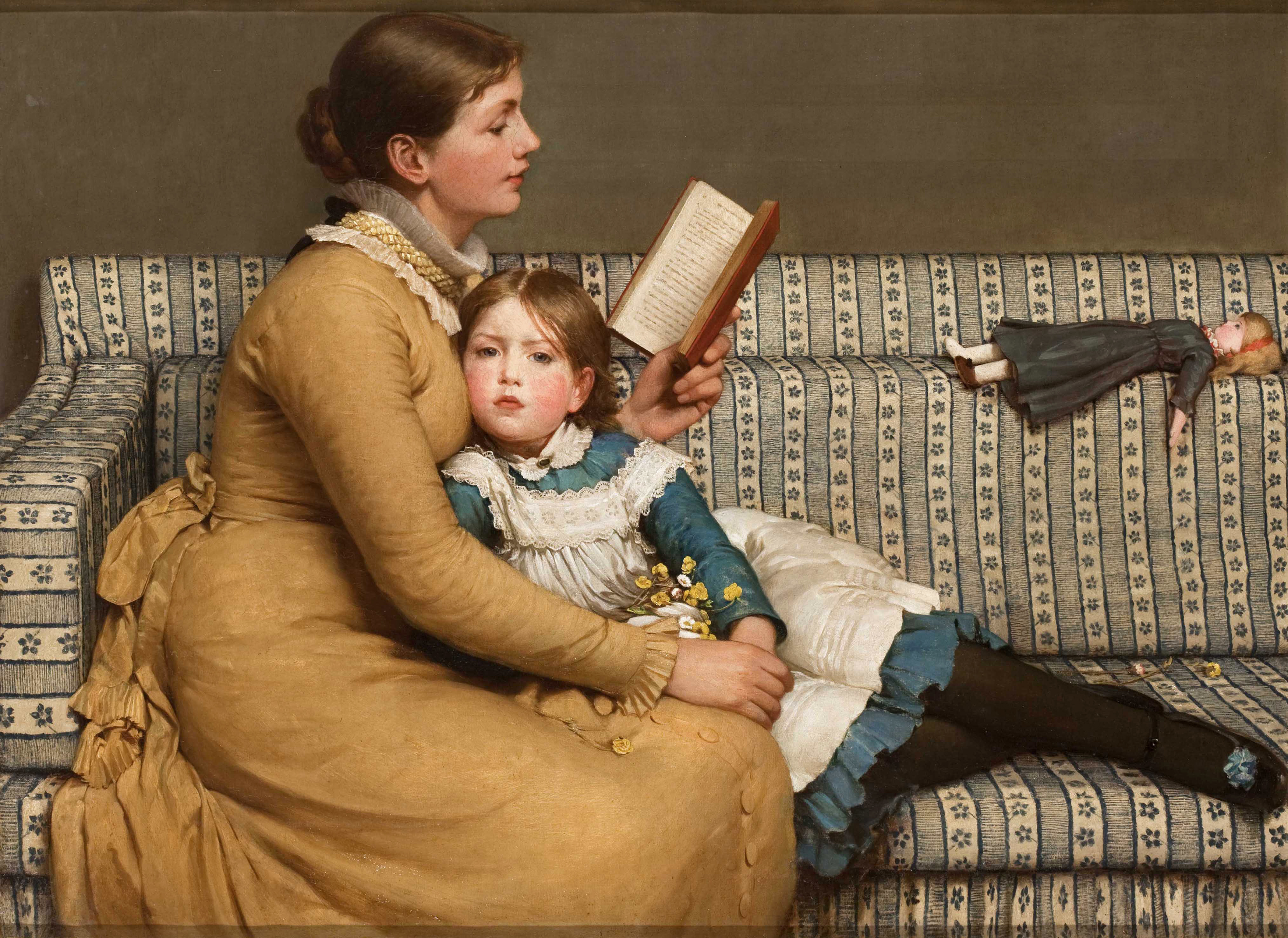
George Dunlop Leslie: Alice in Wonderland (c. 1879)
Alas! it was too late to wish that! She went on growing, and growing, and very soon had to kneel down on the floor: in another minute there was not even room for this, and she tried the effect of lying down with one elbow against the door, and the other arm curled round her head. Still she went on growing, and, as a last resource, she put one arm out of the window, and one foot up the chimney, and said to herself “Now I can do no more, whatever happens. What will become of me?”
Luckily for Alice, the little magic bottle had now had its full effect, and she grew no larger: still it was very uncomfortable, and, as there seemed to be no sort of chance of her ever getting out of the room again, no wonder she felt unhappy.
“It was much pleasanter at home,” thought poor Alice, “when one wasn’t always growing larger and smaller, and being ordered about by mice and rabbits. I almost wish I hadn’t gone down that rabbit-hole—and yet—and yet—it’s rather curious, you know, this sort of life! I do wonder what can have happened to me! When I used to read fairy-tales, I fancied that kind of thing never happened, and now here I am in the middle of one! There ought to be a book written about me, that there ought! And when I grow up, I’ll write one—but I’m grown up now,” she added in a sorrowful tone; “at least there’s no room to grow up any more here.”
—Lewis Carroll: Alice’s Adventures in Wonderland (1865)

Santiago Rusiñol: Novela romántica (1894)
¡Ay! ¡Desgraciadamente no, Elvira! replicó con vehemencia Rodrigo clavando sus rasgados ojos más negros que el azabache en el rostro seductor de su prometida, sobran para mi devoradora inquietud. Ya no comprende vuestro corazón al mío, ya no encuentran nunca mis ojos vuestra mirada, ya me veis en horas de celos y desaliento, dudar de mi ventura, y no os dignáis afirmar la fe que vacila con una palabra de seguridad, ni disipar la tempestad de mi alma con una sonrisa de vuestros labios…
—Disimulad, Ayala, que os intenampa, dijo Elvira con resolución; pero ahora que me ofendéis, ya no debo escucharos por mi propia dignidad.
—Nadie la respeta cual yo, replicó tristemente Rodrigo; pero no es faltar a ella el datos que desde la hora fatal que os trajo a Burgos, comenzó a eclipsarse mi estrella, y que ya apenas si por intervalos me envía un trémulo y fugitivo destello, no de vuestro amor, Elvira, que no he sido tan feliz que lo posea, sino de vuestra antigua preferencia, que tanto me prometía y halagaba.
Encogióse de hombros con un gracioso movimiento de desdén la orgullosa dama, y nada contestó.
—Teresa Arroniz y Bosch: El testamento de Don Juan I (1855)

Evelyn Mary Dunbar: Joseph’s Dream (c. 1940)

Gene Sharp died last week.
Sharp was a prolific theorist of nonviolent action whose writings have influenced anti-government resistance movements around the world. His work was profoundly shaped by the study of Gandhi and the labor and civil rights activist A. J. Muste, as well as others.He founded the Albert Einstein Institution, a non-profit organization dedicated to promoting the study of nonviolent action.
His three-volume The Politics of Nonviolent Action, published in 1973, argues that repressive state power promotes itself as monolithic and unchanging; ultimately, however, it actually multifaceted, relying on multiple political and cultural apparatuses to achieve obedience. Once people come to see this, they realize they are themselves the source of the state’s power and can work to dismantle that power through acts of nonviolent resistance.
The work includes a list of 198 methods of nonviolent action:
PROTEST AND PERSUASION
Formal Statements
1. Public Speeches
2. Letters of opposition or support
3. Declarations by organizations and institutions
4. Signed public statements
5. Declarations of indictment and intention
6. Group or mass petitionsCommunications with a Wider Audience
7. Slogans, caricatures, and symbols
8. Banners, posters, and displayed communications
9. Leaflets, pamphlets, and books
10. Newspapers and journals
11. Records, radio, and television
12. Skywriting and earthwritingGroup Representations
13. Deputations
14. Mock awards
15. Group lobbying
16. Picketing
17. Mock elections

Patrick von Kalckreuth: Seascape at Sunset (c. 1950)
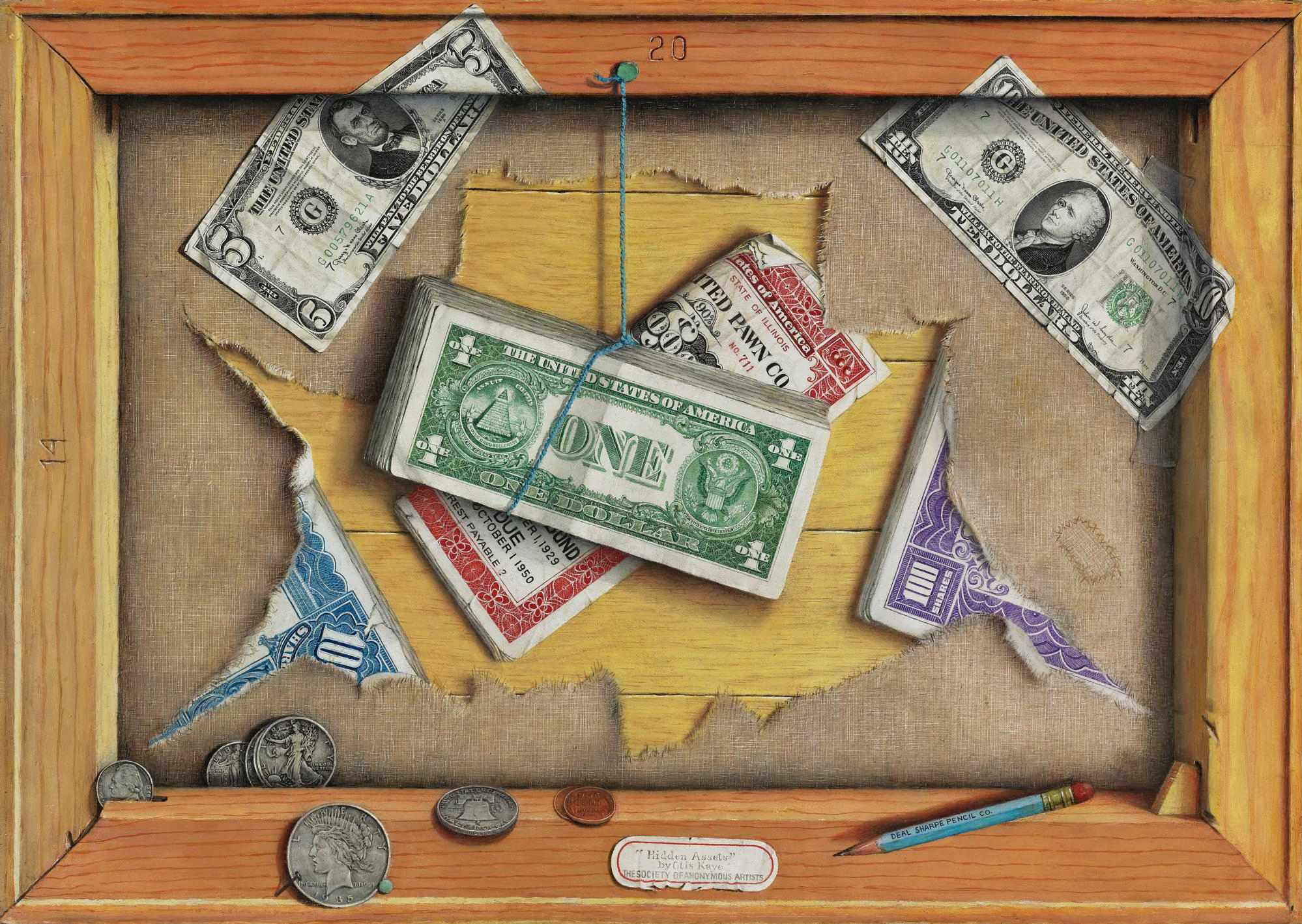
Otis Kaye: Hidden Assets; the painting is undated, but I think the date on that $10 bill is 1960.

 corvusfugit.com