

Henri Rivière: Funeral Under Umbrellas (1891)
Henri Rivière: Funeral Under Umbrellas (1891)
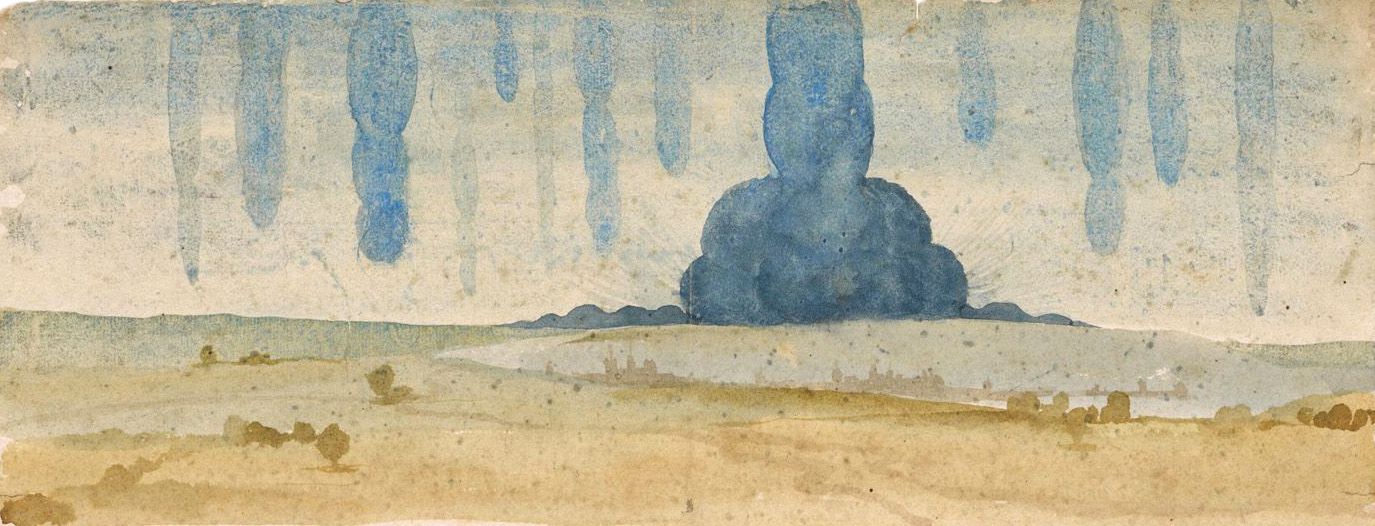
In the year 1525 between Wednesday and Thursday (7-8 June) after Whitsunday during the night I saw this appearance in my sleep, how many great waters fell from heaven. The first struck the earth about four miles away from me with a terrific force, with tremendous clamour and clash, drowning the whole land. I was so sore afraid that I awoke from it before the other waters fell. And the waters which had fallen were very abundant. Some of them fell further away, some nearer, and they came down from such a great height that they all seemed to fall with equal slowness. But when the first water, which hit the earth, was almost approaching, it fell with such swiftness, wind and roaring, that I was so frightened when I awoke that my whole body trembled and for a long while I could not come to myself. So when I arose in the morning I painted above here as I had seen it. God turn all things to the best.
—Albrecht Dürer
Click for full image:


In Black Reconstruction in America (1935), W. E. B. Du Bois argues that a “general strike” by millions of enslaved African-Americans decided the outcome of the civil war. By rebelling against their masters, abandoning southern plantations, contributing their labor to the union cause, and joining the union army, they weakened Confederate forces and brought strength to the North:
Simply by stopping work, they could threaten the Confederacy with starvation. By walking into the Federal camps, they showed to doubting Northerners the easy possibility of using them as workers and as servants, as farmers, and as spies, and finally, as fighting soldiers…[and] by the same gesture, depriving their enemies of their use in just these fields.
It did not happen all at once, Du Bois notes:
It must be borne in mind that nine-tenths of the four million black slaves could neither read nor write, and that the overwhelming majority of them were isolated on country plantations. Any mass movement under such circumstances must materialize slowly and painfully. What the Negro did was to wait, look and listen and try to see where his interest lay. There was no use in seeking refuge in an army which was not an army of freedom; and there was no sense in revolting against armed masters who were conquering the world. As soon, however, as it became clear that the Union armies would not or could not return fugitive slaves, and that the masters with all their fume and fury were uncertain of victory, the slave entered upon a general strike against slavery by the same methods that he had used during the period of the fugitive slave. He ran away to the first place of safety and offered his services to the Federal Army. So that in this way it was really true that he served his former master and served the emancipating army; and it was also true that this withdrawal and bestowal of his labor decided the war.
This “army of striking labor furnished in time 200,000 Federal soldiers” writes Du Bois; however,
this slow, stubborn mutiny of the Negro slave was not merely a matter of 200,000 black soldiers and perhaps 300,000 other black laborers, servants, spies and helpers. Back of this half million stood 3½ million more. Without their labor the South would starve. With arms in their hands, Negroes would form a fighting force which could replace every single Northern white soldier fighting listlessly and against his will with a black man fighting for freedom.
Transforming itself suddenly from a problem of abandoned plantations and slaves captured while being used by the enemy for military purposes, the movement became a general strike against the slave system on the part of all who could find opportunity. The trickling streams of fugitives swelled to a flood. Once begun, the general strike…went madly and relentlessly on like some great saga.
This was not merely the desire to stop work. It was a strike on a wide basis against the conditions of work….They wanted to stop the economy of the plantation system, and to do that they left the plantations.
Image:
Currier & Ives: The Gallant Charge of the Fifty Fourth Massachusetts (Colored) Regiment (1863)
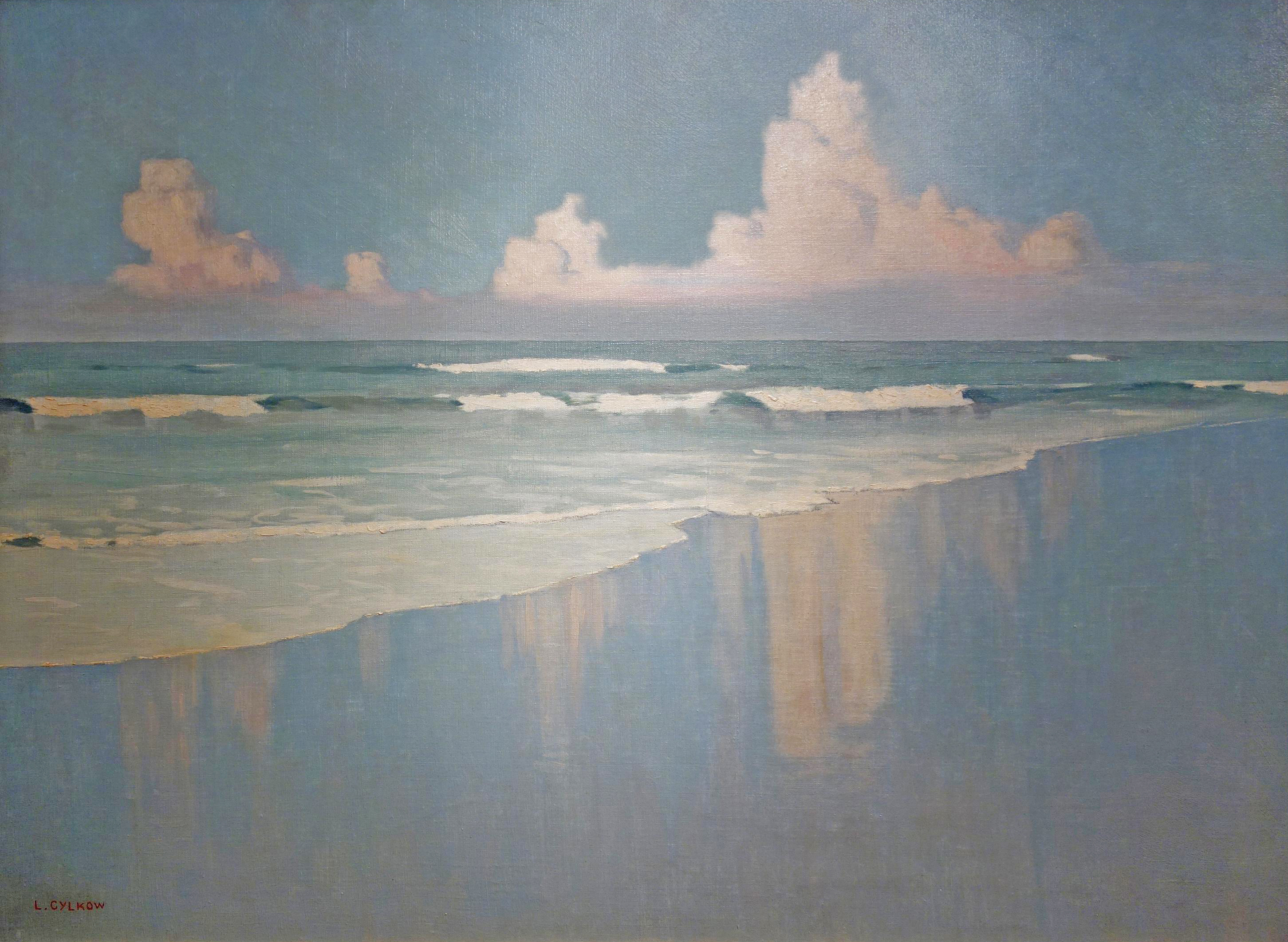
Ludwik Cylkow: Untitled Seascape (c 1920)
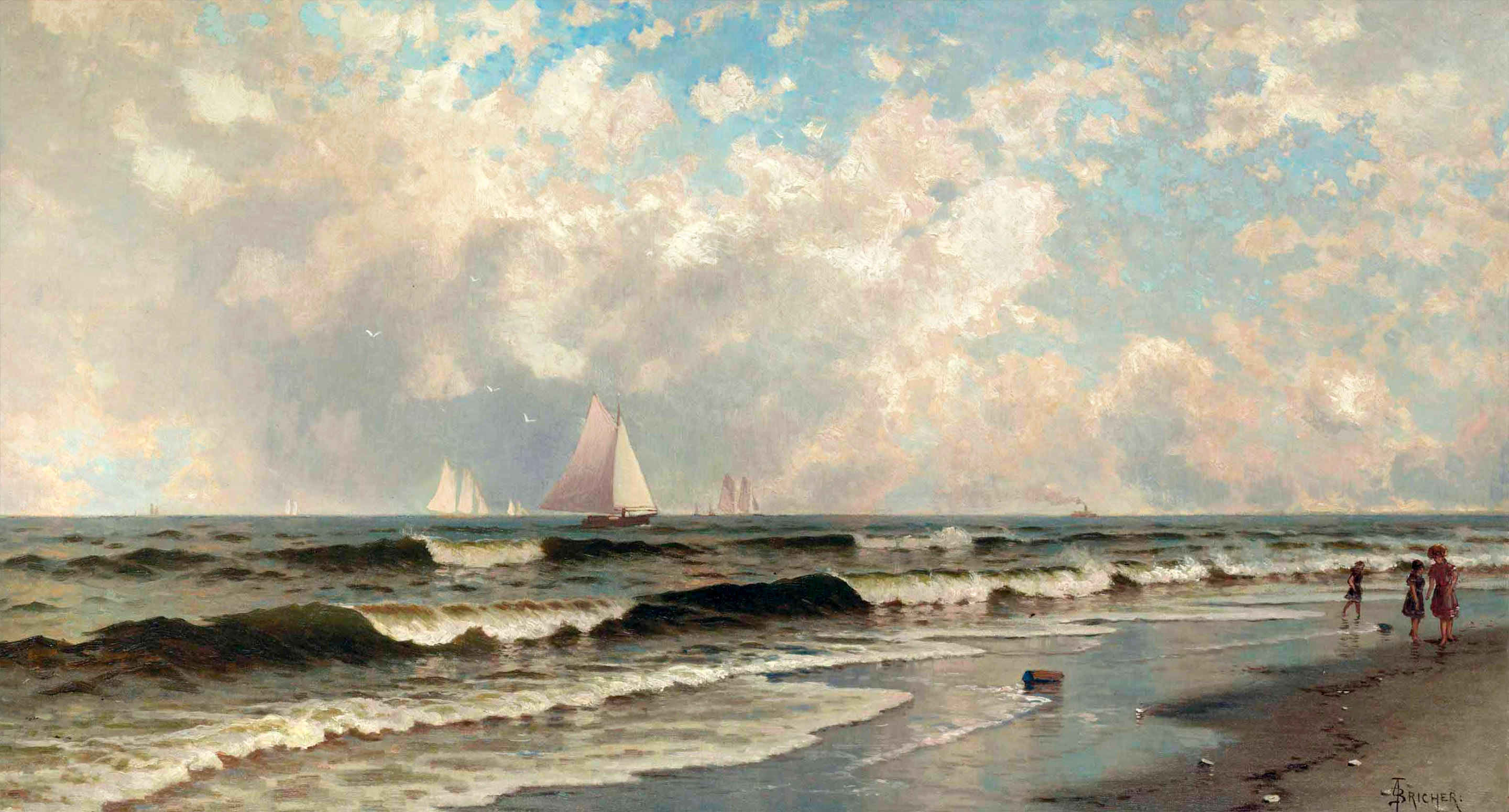
Alfred Thompson Bricher: Afternoon, Southampton Beach; I made up the date.
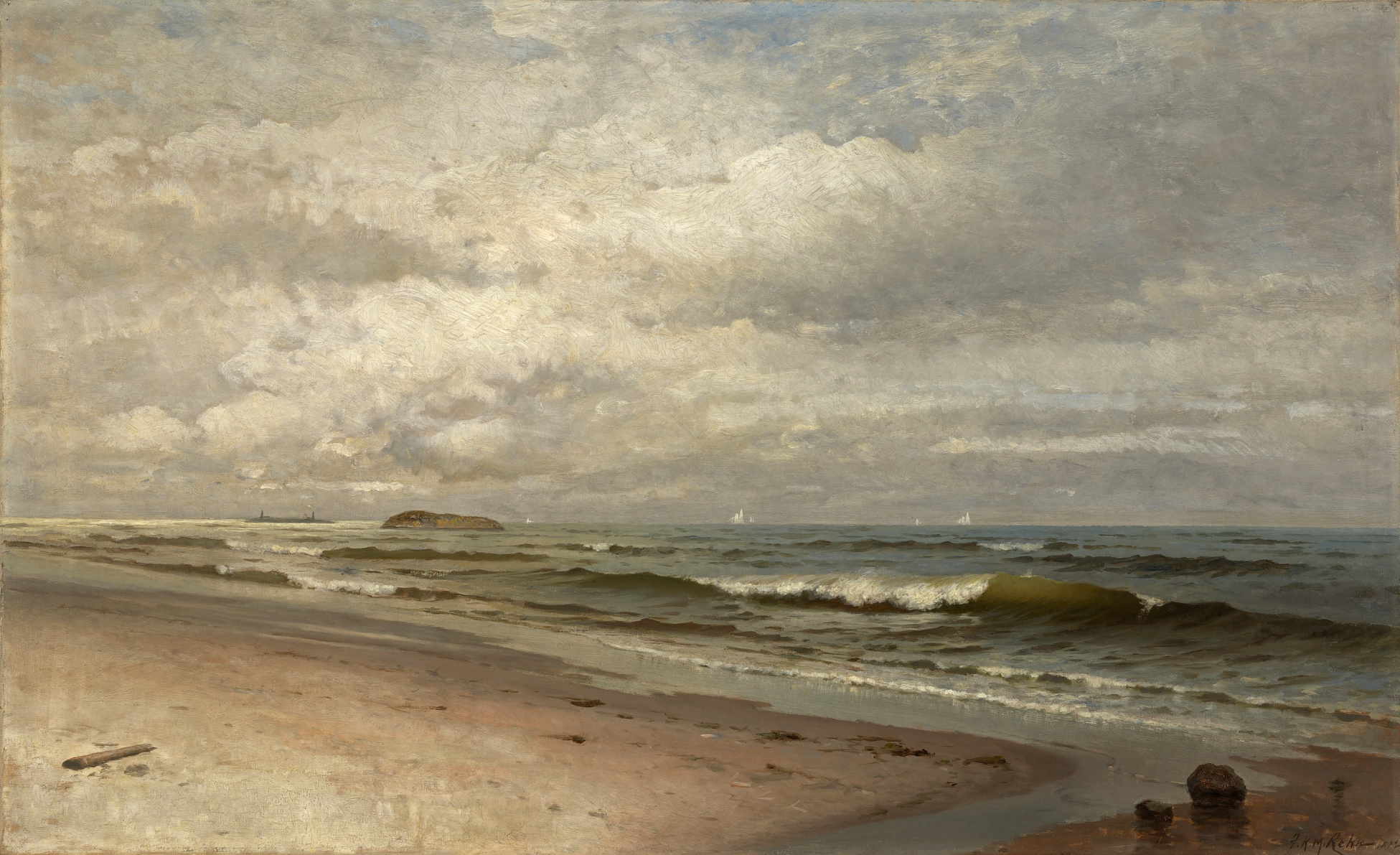
F. K. M. Rehn: Beach of Bass Rocks, Gloucester, Massachusetts (1881)


Samuel Sewell Greeley: Wage Map No. 1-4, Polk St. to Twelfth, Chicago (1895) (source)
In 2019 dollars:
$5.00 and less = $7,852 per year and less
$5.00 to $10.00 = $7,852 to $15,704 per year
$10.00 to $15.00 = $15,704 to $23,556 per year
$15.00 to $20.00 = $23,556 to $31,408 per year
Over $20.00 = Over $31,408 per year
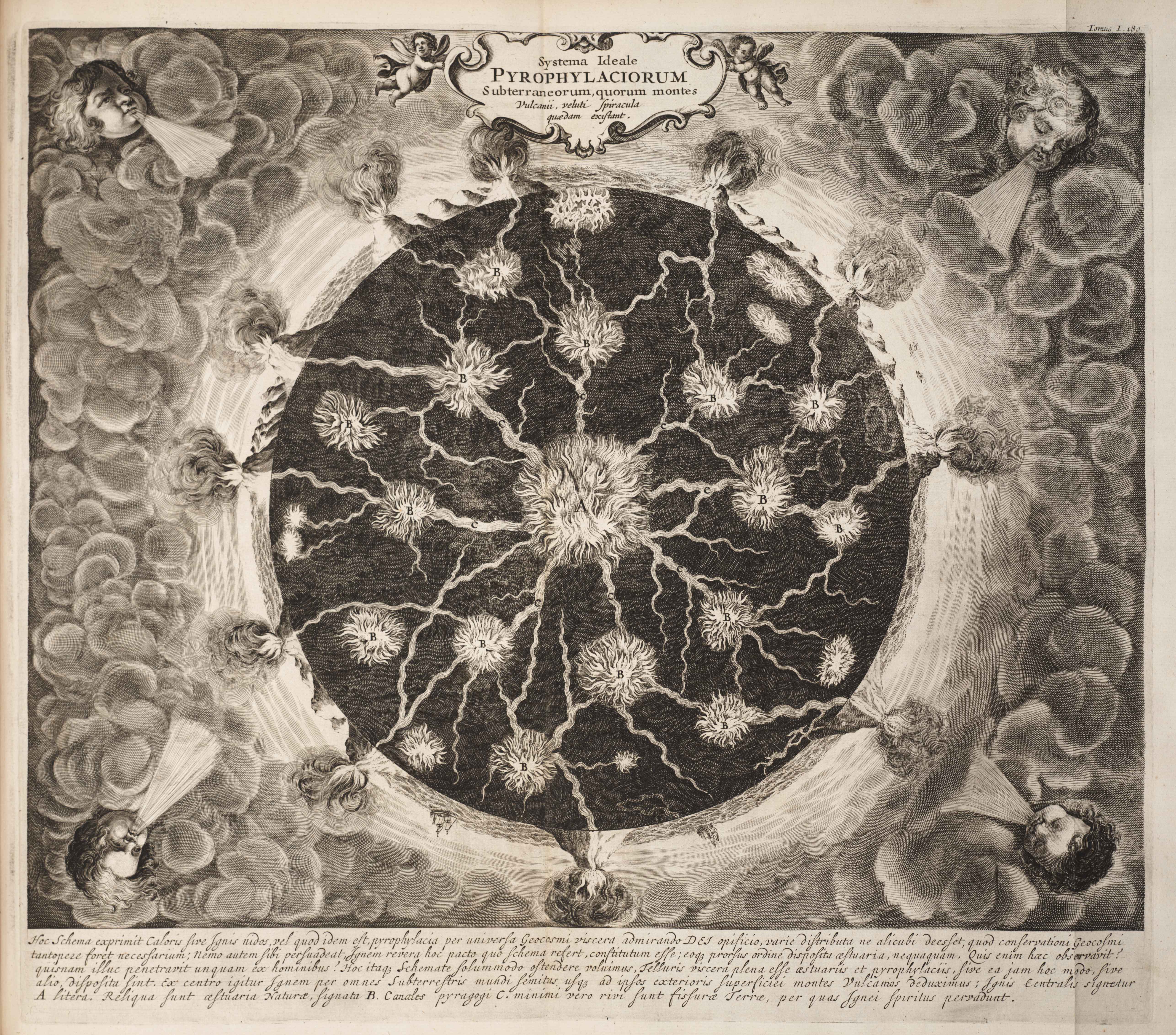
Systema Ideale Pyrophylaciorum Suberraneorum, quorum montes Vulcanii, veluti spiracula quaedam existant, an illustration from Athanasius Kircher’s 1665 Mundus Subterranous.

In the Irish War of Independence (1919-1921), Irish republicans were vastly outnumbered and outgunned by British forces—yet they won, fighting to an eventual truce and the establishment of the Irish Free State in 1922. How did they do it?
In his autobiography and memoir, Guerilla Days in Ireland (1949), IRA commander Tom Barry enumerates the strength of British forces in County Cork seven weeks before the truce:
The 1st Battalion, The Buffs Regiment; The 1st Battalion, The King’s Regiment; The 2nd Battalion, The Hampshires; The 2nd Battalion, The King’s Own Scottish Borderers; The 2nd Battalion, The South Stafford Regiment; The 1st Battalion, Essex Regiment; The 1st Battalion, The Manchester Regiment; The 2nd Battalion, The Queen’s Own Cameron Highlanders; The 2nd Battalion, The East Lancashire Regiment; The 1st Battalion, The West Surrey Regiment; The 1st Battalion, The Gloucestershire Regiment.
These forces comprised 8,800 first line infantry troops. In addition to this were Black and Tans (members of the occupying British police force), machine gun corps, artillery units, and others—totaling in all over 12,500 men. In contrast:
Standing against this field force was that of the Irish Republican Army, never at any time exceeding three hundred and ten riflemen in the whole of the County of Cork, for the very excellent reason that this was the total of rifles held by the combined three Cork Brigades.
Why were the British unable to beat back this small group of rebels? The answer, according to Barry, is simple:
In the last analysis the struggle was never one between the British Army and a small Irish force of Flying Columns and Active Service Units. Had this been so, the few Flying Columns operating would not have existed for a month, no matter how bravely and skilfully they fought. This was a war between the British Army and the Irish people, and the problem before the British from mid-1920 was not how to smash the Flying Columns, but how to destroy the resistance of a people, for, as sure as day follows night, if a Flying Column were wiped out in any area, another would arise to continue the attacks on, and the resistance to the alien rulers. The Irish people had many weapons which the British lacked: their belief in the righteousness of their cause, their determination to be free, their political structure as declared in the General Election of December, 1918, and a strong, militant body of youth, who, though as yet unarmed, were a potential army of great possibilities.
The Cumann na mBan, the women’s auxiliary organisation, ranks high in this estimate of values. The members, organised in companies and districts corresponding to I.R.A. units, were not in any sense women politicians, holding debating classes or propounding political theories. They were groups of women and girls from town and countryside, sisters, relatives or friends of the Volunteers, enrolled in their own organisation, far the sole purpose of helping the Irish Republican Army.

Giacomo Ceruti: Women Working on Pillow Lace (c. 1720)

 corvusfugit.com