1832: Testimony

Yarn

BURNS, CHARLES; age 13; examined 1st June, 1832

1. What were your hours of working at Mr. Hives, of Leeds? ⸺From half past five in the morning till eight at night.

2. Had you any time allowed you for your breakfast there? ⸺No.

3. Nor for your drinking? ⸺No.

4. How much time had you allowed you for your dinner? ⸺Forty minutes.

5. Had you sometimes to clean the machinery at your dinner hour? ⸺Yes; and had to wipe all the machines.

6. How long did that take you, generally? ⸺About a quarter of an hour, and sometimes twenty minutes.

7. Pray how often were you allowed to make water? ⸺Three times a day.

8. And were you allowed to make water at any time you wanted? ⸺No; only when a boy came to tell you it was your turn, and whether we wanted to or not, that was the only time allowed us; if we did not go when he came round, we could not go at all.

9. Could you hold your water all that time? ⸺No; we were forced to let it go

10. Did you then spoil or wet your clothes constantly? ⸺Every noon and every night.

11. Did you ever hear of that hurting any body? ⸺Yes; there was a boy died.

12. Did he go home ill with attempting to suppress his urine? ⸺Yes; and after he had been home a bit, he died.

13. Were you beaten at your work? ⸺If we looked off our work, or spoke to one another, we were beaten.

14. If you had not gone so fast as the machine, should you have been beaten? ⸺If we let the machine stop half a minute we should have been beaten.

15. When you retired for the purposes of nature, how long would they allow you to stop? ⸺If we were longer than five minutes we got beaten; and if we stopped longer they would not let us go out another time, when it was our turn.

16. Was the mill very dusty? ⸺Yes.

17. What effect had it upon your health? ⸺The dust got down our throats, and when we went home at night and went to bed, we spit up blood.

18. Is it not likewise, in what is called hot-water spinning, extremely hot in these mills? ⸺Yes, very hot.

19. Is not the place full of steam? ⸺Yes, and the machinery throws off water perpetually; so that we are wet to the skin by the hot water. And in winter time as soon as we get home our clothes are quite still with the frost.

20. What did you get for your breakfast and drinking? ⸺I had tea, sometimes coffee, and butter, and bread; and my tea, for fear of wanting to make water, I used to throw out of the window.

21. In either of the mills you were in, Mr.Marshall’s or Mr. Hive’s, were you allowed to sit down? ⸺No.

22. Were you not allowed to sit down during the whole of the day? ⸺If we did, we should get beaten; we had nothing to sit on unless we sat upon the frame by getting upon it.

23. Is it a common thing for you children to be beaten in this sort of way? ⸺Yes, there used to be screaming among the boys and girls every time of the day, and they made black and blue marks on the shoulders.

24. Where was this? ⸺At Mr. Hive’s.

25. Are accidents often occurring at these mills? ⸺Yes.

26. State any that occurred within your own knowledge? ⸺I had a sister who worked at Marshall’s, and she got killed there by accident.

27. Were you able to attend the night-school? ⸺No.

28. Were you able to attend the Sunday-school? ⸺I was not able to go; I should have been too late; I had to rest on the Sunday morning.

Charles Wing, Evils of the Factory System: Demonstrated by Parliamentary Evidence (1837)

Posted in Uncategorized | Tagged , , , , , | Leave a comment

2016: Emanation

no1_emanation260_webversion

Sukhi Barber: Emanation (2016) (source)

Posted in Uncategorized | Tagged , , , , , , | Leave a comment

450 BC: Wanting in Delicacy

800px-Angel_Sculpture_in_Vatican_Museum

Athlete with head of Lucius Verus [detail] (c. 460-450 BC); Braccio Nuovo, Vatican. (source)

This portrait-statue, described in the Vatican Catalogue as heroic, is (though larger than life) perhaps as completely the opposite as one can conceive. It may be cited as one of the numerous examples that prove how the ancients, while never wanting in delicacy in any of the representations of the female figure, were frequently so with regard to their male statues. If I might make the distinction, I should call this, not a nude, but a naked figure. It suggests a want of clothing, which would not be the case were it heroic in style and execution. It is six feet ten and a half inches high.

Robert MacPherson, Vatican Sculptures, Selected, and Arranged in the Order in which they are Found in the Galleries, Briefly Explained by Robert Macpherson (1863)

Posted in Uncategorized | Tagged , , , , | Leave a comment

1895: A Forest of Colossal Fungi

John_Uri_Lloyd_-_Etidorhpa.djvuAlong the chamber through which we now passed I saw by the mellow light great pillars, capped with umbrella-like covers, some of them reminding me of the common toadstool of upper earth, on a magnificent scale. Instead, however, of the gray or somber shades to which I had been accustomed, these objects were of various hues and combined the brilliancy of the primary prismatic colors, with the purity of clean snow. Now they would stand solitary, like gigantic sentinels; again they would be arranged in rows, the alignment as true as if established by the hair of a transit, forming columnar avenues, and in other situations they were wedged together so as to produce masses, acres in extent, in which the stems became hexagonal by compression. The columnar stems, larger than my body, were often spiral; again they were marked with diamond-shaped figures, or other regular geometrical forms in relief, beautifully exact, drawn as by a master’s hand in rich and delicately blended colors, on pillars of pure alabaster. Not a few of the stems showed deep crimson, blue, or green, together with other rich colors combined; over which, as delicate as the rarest of lace, would be thrown, in white, an enamel-like intricate tracery, far surpassing in beauty of execution the most exquisite needle-work I had ever seen. There could be no doubt that I was in a forest of colossal fungi, the species of which are more numerous than those of upper earth cryptomatic vegetation. The expanded heads of these great thallogens were as varied as the stems I have described, and more so. Far above our path they spread like beautiful umbrellas, decorated as if by masters from whom the great painters of upper earth might humbly learn the art of mixing colors. Their under surfaces were of many different designs, and were of as many shapes as it is conceivable could be made of combinations of the circle and hyperbola. Stately and picturesque, silent and immovable as the sphinx, they studded the great cavern singly or in groups, reminding me of a grown child’s wild imagination of fairy land. I stopped beside a group that was of unusual conspicuity and gazed in admiration on the huge and yet graceful, beautiful spectacle. I placed my hand on the stem of one plant, and found it soft and impressible; but instead of being moist, cold, and clammy as the repulsive toadstool of upper earth, I discovered, to my surprise, that it was pleasantly warm, and soft as velvet.

“Smell your hand,” said my guide.

I did so, and breathed in an aroma like that of fresh strawberries. My guide observed (I had learned to judge of his emotions by his facial expressions) my surprised countenance with indifference.

“Try the next one,” he said.

This being of a different species, when rubbed by my hand exhaled the odor of the pineapple.

“Extraordinary,” I mused.

John Uri Lloyd, Etidorhpa (1895)

Posted in Uncategorized | Tagged , , , , | Leave a comment

2016: Land Operation

estellechretien_operationterrestre800

Estelle Chrétien: Opération terrestre (2016) (source)

Posted in Uncategorized | Tagged , , , , , | Leave a comment

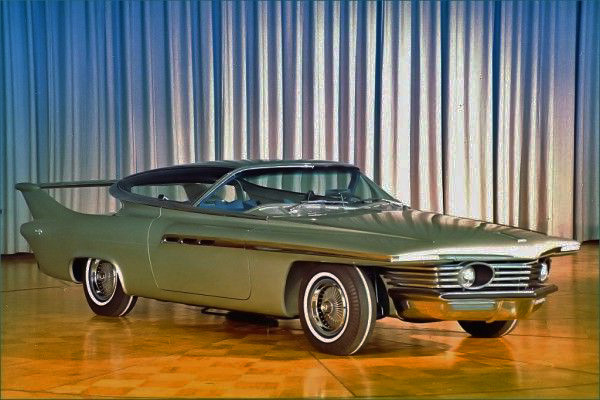
1961: Turboflite

Chrysler-Turboflite-600x400

1961 Chrysler Turboflite

“The Turboflite proved to be a sensation on the show circuit, but the striking concept car never reached production. Chrysler did continue to develop the turbine engine for use in passenger cars, but even this eventually proved fruitless, as the engine’s drawbacks ultimately outweighed its benefits.” (source)

Posted in Uncategorized | Tagged , , , , | 1 Comment

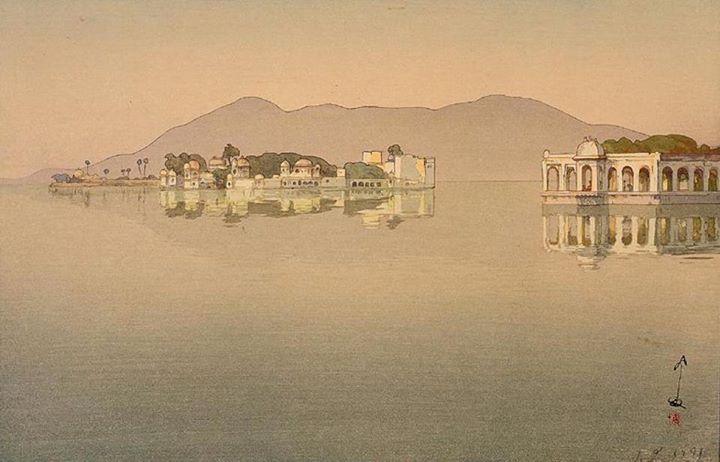
1932: Island Palaces

Yoshida (1)

Yoshida Hiroshi: Island Palaces in Udaipur (1932)

Udaipur (1931)
El Capitan, f
rom the series The United States (1925)
Glittering Sea,
from the series Inland Sea (1926)
Deer in Kasuga
(1928)

Posted in Uncategorized | Tagged , , , , , , | Leave a comment

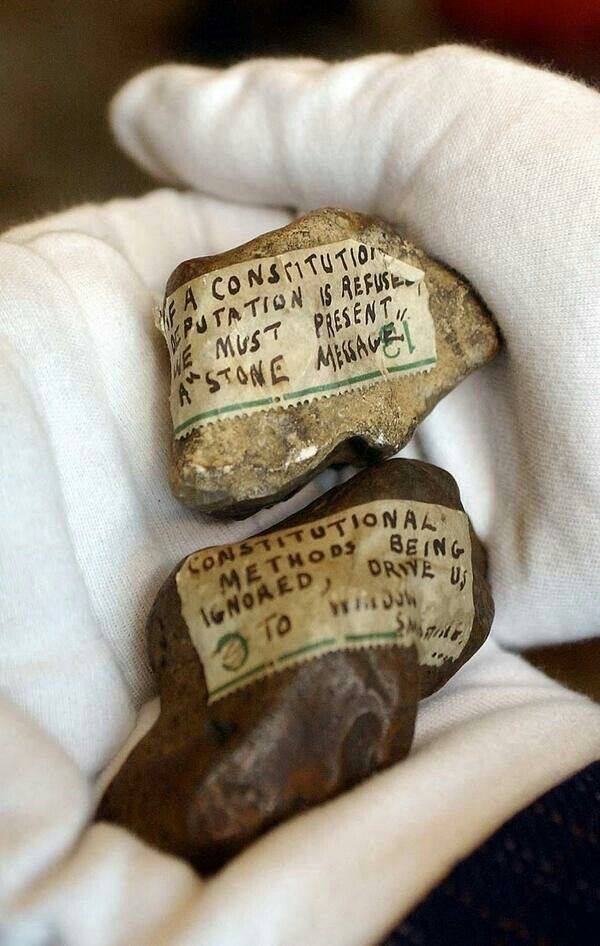
1914: A Stone’s Throw

stones

Rocks thrown through the windows of Buckingham Palace by protesting Suffragettes in 1914:

“If a constitutional deputation is refused, we must present a stone message.”

“Constitutional methods being ignored drive us to window smashing.”

In the United Kingdom, women over the age of 30 gained the right to vote in 1918. In 1928, the Representation of the People (Equal Franchise) Act extended the vote to women over 21 on equal terms with men.

(source)


Posted in Uncategorized | Tagged , , , , , , | Leave a comment

1949: Albert Einstein Tells You Why Socialism

WP_007248

The individual has become more conscious than ever of his dependence upon society. But he does not experience this dependence as a positive asset, as an organic tie, as a protective force, but rather as a threat to his natural rights, or even to his economic existence. Moreover, his position in society is such that the egotistical drives of his make-up are constantly being accentuated, while his social drives, which are by nature weaker, progressively deteriorate….This crippling of individuals I consider the worst evil of capitalism. Our whole educational system suffers from this evil. An exaggerated competitive attitude is inculcated into the student, who is trained to worship acquisitive success as a preparation for his future career.

I am convinced there is only one way to eliminate these grave evils, namely through the establishment of a socialist economy, accompanied by an educational system which would be oriented toward social goals. In such an economy, the means of production are owned by society itself and are utilized in a planned fashion. A planned economy, which adjusts production to the needs of the community, would distribute the work to be done among all those able to work and would guarantee a livelihood to every man, woman, and child. The education of the individual, in addition to promoting his own innate abilities, would attempt to develop in him a sense of responsibility for his fellow men in place of the glorification of power and success in our present society.

Albert Einstein, “Why Socialism?” (1949). Full text here.

Image: Honest Tea bottle cap

Posted in Uncategorized | Tagged , , | 3 Comments

1962: Mean Machine

1962 gm ad seattle worlds fair paleo future

Advertisement for General Motors’s “fully functional Firebird III space-age car” in the Souvenir Program for the 1962 Seattle World’s Fair. (source)

Posted in Uncategorized | Tagged , , , | 1 Comment