945 BC: Shine Thou with Thy Beams of Light

25.3.32

A HYMN OF PRAISE TO RĀ WHEN HE RISETH IN THE EASTERN PART OF HEAVEN.

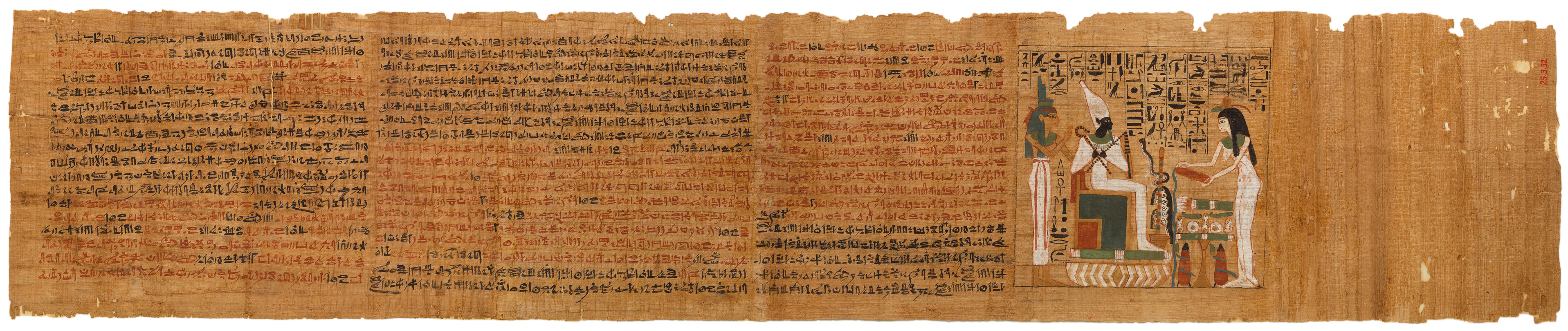
Those who are in his train rejoice, and lo! Osiris Aāi victorious, saith: “Hail, thou Disk, thou lord of rays, who risest on the horizon day by day! Shine thou with thy beams of light upon the face of Osiris Ani, who is victorious; for he singeth hymns of praise unto thee at dawn, and he maketh thee to set at eventide with words of adoration. May the soul of Osiris Ani, the triumphant one, come forth with thee into heaven, may he go forth in the Mātet boat. May he come into port in the Sektet boat, and may he cleave his path among the never-resting stars in the heavens. (E. A. Wallis Budge, trans.)

“Book of the Dead” Papyrus of Gautsoshen (ca. 1000–945 B.C.) “Found inside Gautsoshen’s Osiris figure…this papyrus contains Chapter 15 of the Book of the Dead, a hymn adoring the sun god, Re. The vignette on the right shows the deceased pouring a libation to Osiris and Isis” (source).

Posted in Uncategorized | Tagged , , , , , , | Leave a comment

1929: The Metropolis of Tomorrow

Hugh Ferriss - The Metropolis of Tomorrow (1929)

Hugh Ferriss: Illustration from The Metropolis of Tomorrow (1929) (source)

Posted in Uncategorized | Tagged , , , , , , , , , | Leave a comment

1789: The Bastilles Made from the Bastille

Bastille

Pierre-François Palloy owned one of the largest building firms in Paris when the Bastille fell on July 14, 1789, and, after some debate over the fate of the prison that had come to symbolize tyranny in the city, he acquired a contract to dismantle the structure. Although Palloy did not receive payment for the work for several years, he was able to turn the rubble into profit by selling these model Bastilles made from the stones of the building itself.

Posted in Uncategorized | Tagged , , , , , , | Leave a comment

1650: Very Tempting

2764_Craesbeeck 001

Joos van Craesbeeck: The Temptation of St Anthony (c. 1650)

Posted in Uncategorized | Tagged , , , , , , , | Leave a comment

1845: Daguerreotype with Daguerreotypes

Daguerreotypist

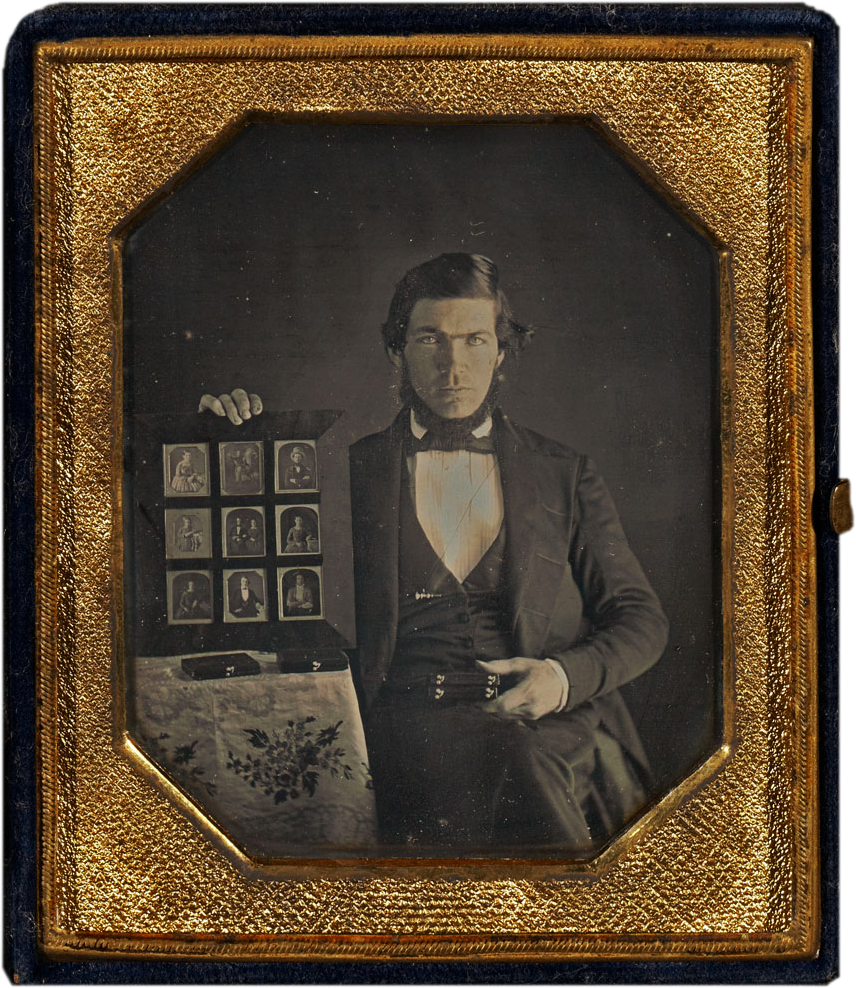
Portrait of a Daguerreotypist Displaying Daguerreotypes and Cases, 1845, maker unknown. (source)

Posted in Uncategorized | Tagged , , , | Leave a comment

1922: Dada for All

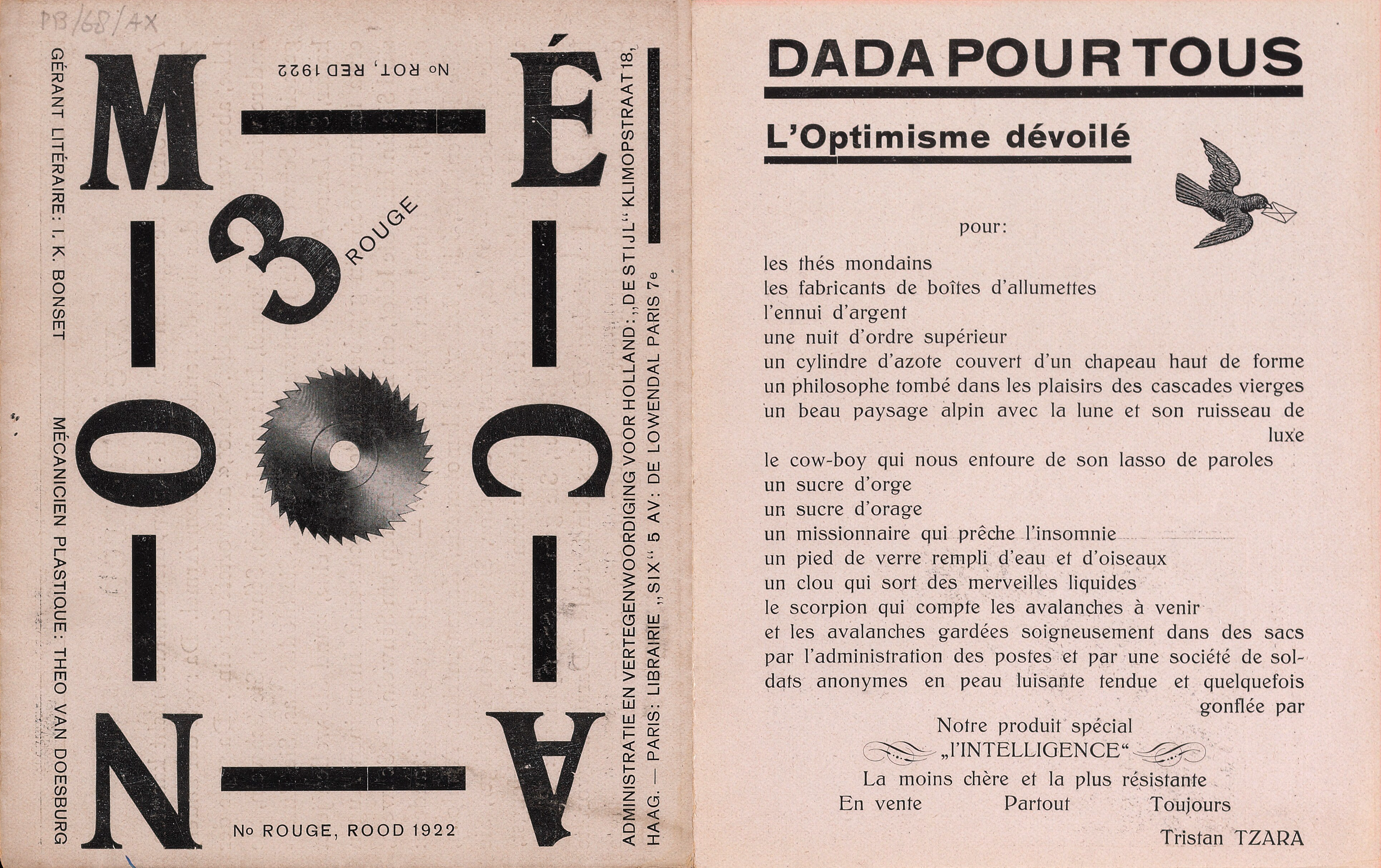
Mecano 3 (1922) - Cover + Tzara

L’optimisme dévoilé

pour:

les thés mondains
les fabricants de boîtes d’allumettes
l’ennui d’argent
une nuit d’ordre supérieur
un cylindre d’azote couvert d’un chapeau haut-de-forme
un philosophe tombé dans les plaisirs des cascades vierges
un beau paysage alpin avec la lune et son ruisseau de luxe
le cow-boy qui nous entoure de son lasso de paroles
un sucre d’orge
un sucre d’orage
un missionnaire qui prêche l’insomnie
un pied de verre rempli d’eau et d’oiseaux
un clou qui sort des merveilles liquides
le scorpion qui compte les avalanches à venir
et les avalanches gardées soigneusement dans des sacs par l’administration des postes et par une société de soldats anonymes en peau luisante tendue et quelquefois gonflée par

notre produit spécial
« L’INTELLIGENCE »
la moins chère et la plus résistante
en vente          partout          toujours

Tristan TZARA

Optimism unveiled

for:

the society teas
the makers of matchboxes
the boredom of money
a night of a higher order
a cylinder of nitrogen covered with a top hat
a philosopher fallen into the pleasures of virgin waterfalls
a beautiful alpine landscape with the moon and its luxury stream
the cowboy who ropes us with his lasso of words
a candy cane
a thunder cane
a missionary who preaches insomnia
a wine glass filled with water and birds
a nail that releases liquid wonder
the scorpion that counts the avalanches to come
and the avalanches in bags guarded carefully by the Post Office and by a society of soldiers, anonymous in shining skin stretched and sometimes expanded with

our special product
INTELLIGENCE
low-cost and long-lasting
on           sale           everywhere

Tristan TZARA

MECANO No. Red (1922)

Posted in Uncategorized | Tagged , , , , , , | Leave a comment

1862: Billedbog

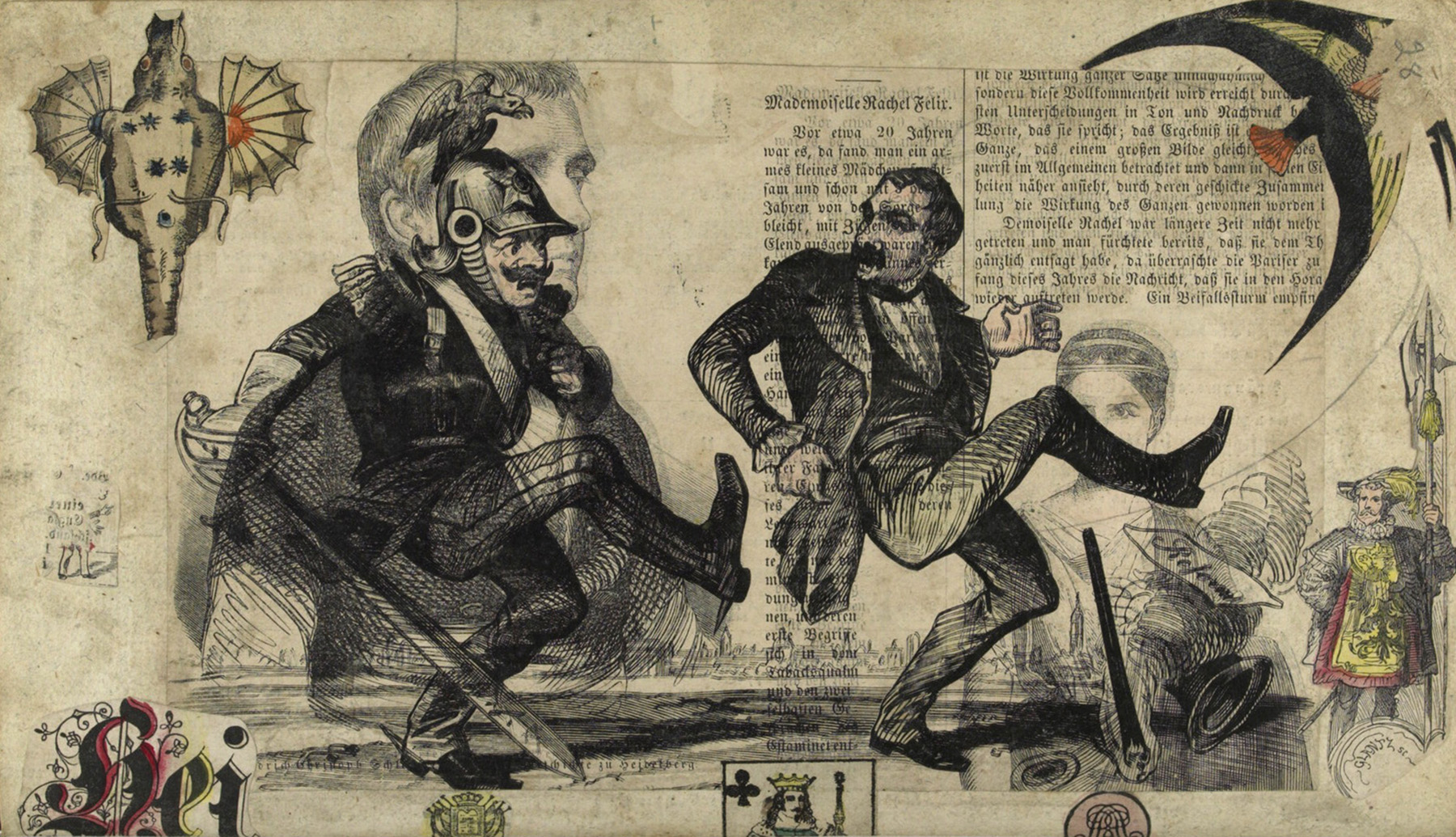
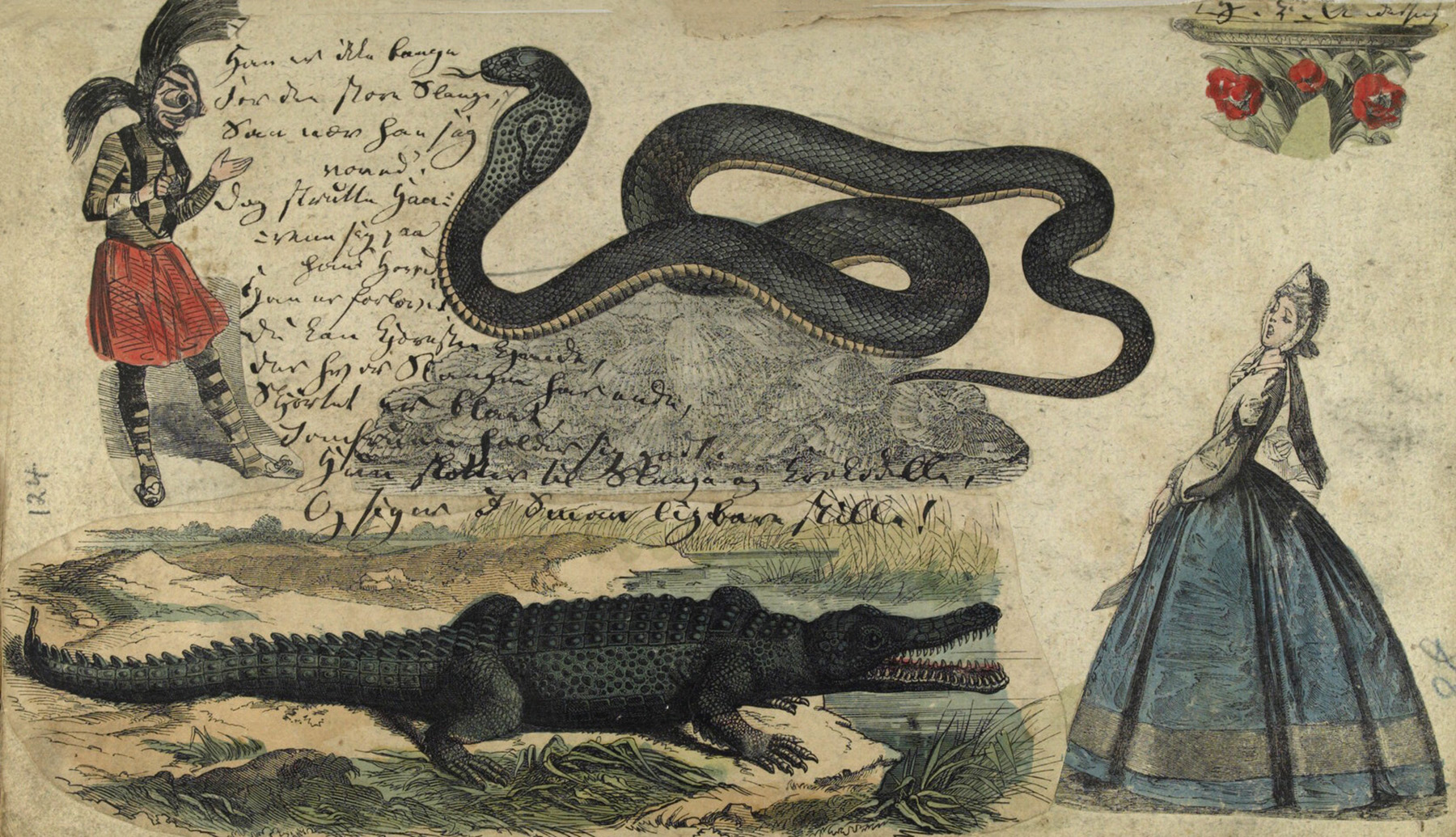
Pages from a scrapbook billedbog (Danish: “picture book”) made by Hans Christian Andersen and his friend Adolph L. Drewsen for eight-year-old Jonas Drewsen. Andersen and Drewsen both contributed to the collages and wrote stories and poems around the pictures and in the margins. I have lightly edited the images and brightened the colors. (source)

0032r

0128r

0057r           0033r           0066r            0109r

Posted in Uncategorized | Tagged , , , , , , , , , | Leave a comment

1876: Marsh

Martin_Johnson_Heade_-_Marsh_Sunset,_Newburyport,_Massachusetts

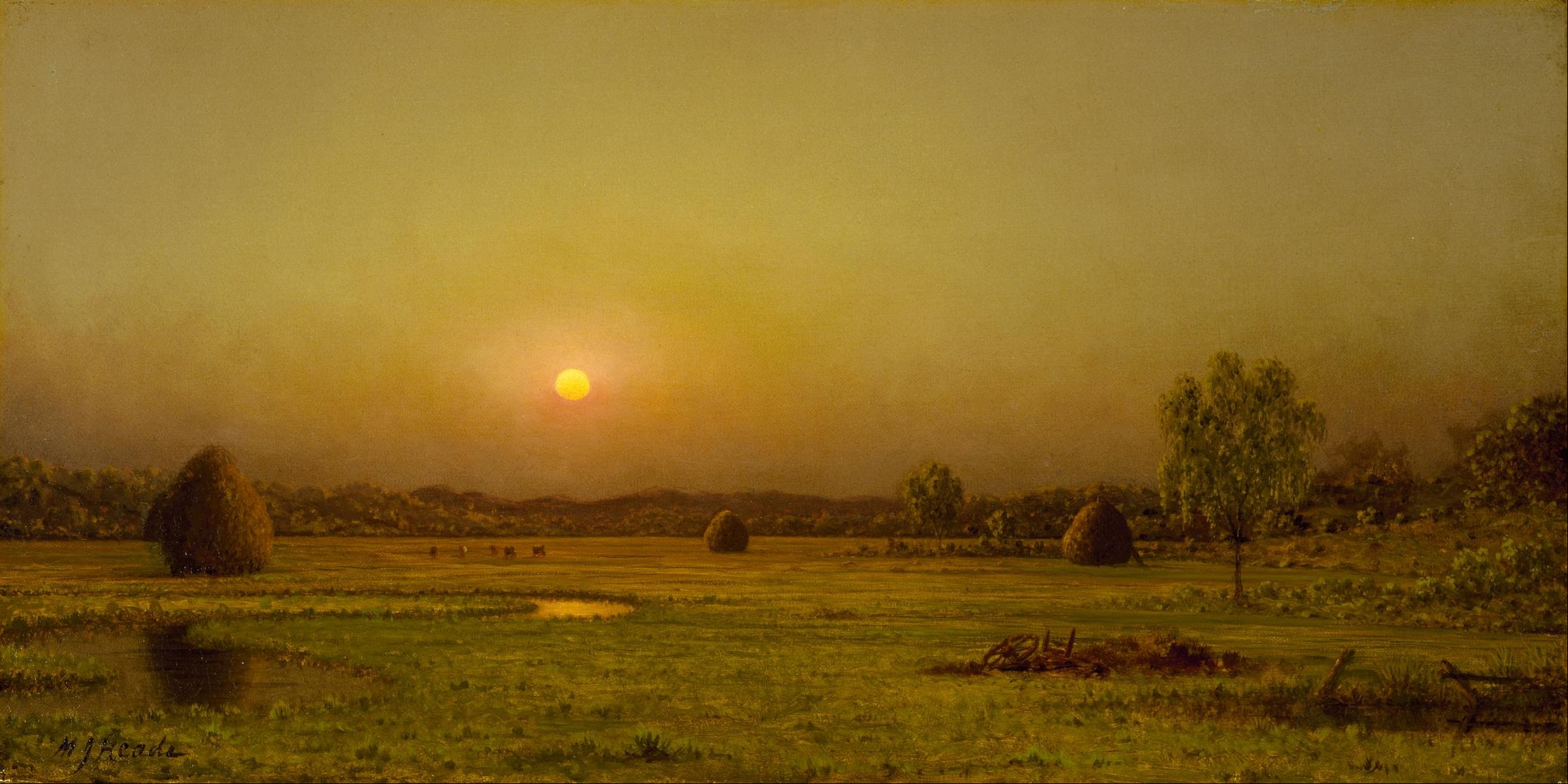
Martin Johnson Heade: Marsh Sunset, Newburyport, Massachusetts (c. 1876–1882)

Posted in Uncategorized | Tagged , , , , , , , | Leave a comment

1494: The Poisoning of Pico della Mirandola

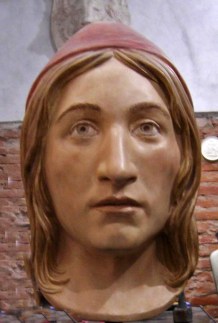
PICO2     Figure-1-Left-lateral-view-of-the-skull-of-Pico-della-Mirandola-b-3D-digital-model-of.png

The brilliant and audacious Humanist philosopher Pico della Mirandola died under mysterious circumstances at the age of 31.

His life had been exceptional. A child prodigy who had left home at fourteen to study church law, Pico turned to philosophy after the death of his mother in 1480. In addition to the traditional languages expected of any scholar of the Renaissance, Latin and Greek, he studied Hebrew, Arabic, and Aramaic. In 1485, he traveled to Paris, where he began composing his 900 Theses—a work composed of that number of philosophical and theological arguments, which he intended to present to the world and defend in public debate across Europe with the intellectual establishment of the time.

In Florence he befriended the scholar and poet Angelo Poliziano, as well as the Dominican monk Girolamo Savonarola, who would later become notorious for disobeying the pope and presiding over the Bonfire of the Vanities in 1497, at which his supporters publicly burned thousands of luxury items, including works of art by Botticelli and Michelangelo, furniture, mirrors, and pagan booksto protest not only the decadence of the rich and powerful but the Renaissance project of seeking new knowledge. (He would be hanged and burned by the Church in 1498.) Pico also met the great neoplatonist  Marsilio Ficino and Lorenzo de’ Medici, who ruled the Florentine Republic and supported many of the great artists and scholars of the day; Lorenzo took a liking to Pico, supported his work and provided protection when the Church took issue with his challenging philosophy.

His personal life was no less dramatic. He, perhaps unwisely, pursued an affair with the wife of one of Lorenzo’s cousins, attempting to run off with her; only Lorenzo’s intervention saved him.

He began to delve into mystical works: Chaldean philosophy, the Kabbalah, and the works of Hermes Trismegistus, developing an eclectic syncretism that attempted to harmonically fuse the ideas in these texts with the Christian Bible, Church teaching, Plato, Aristotle, and Islamic thinkers such as Averroes and Avicenna.

Continue reading

Posted in Uncategorized | Tagged , , , , , , , , , , , , , , | Leave a comment

1910: Portrait of a Woman

Senegalese-Woman-from-around-1910-by-an-unknown-photographer

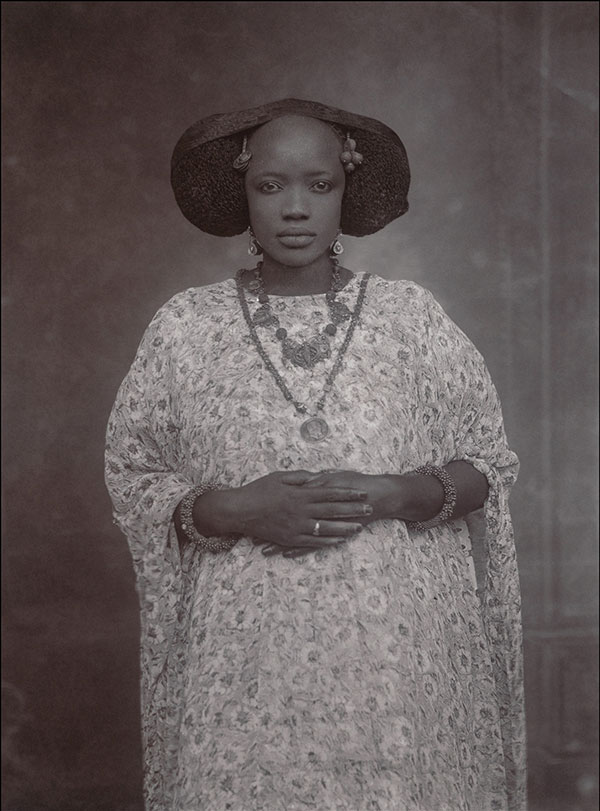
Portrait of a woman by an unknown photographer; Senegal, c. 1910. Her hair style is called nguuka. “Created using black wool to produce two symmetrical voluminous spheres held by a textile on top of the head, this hairdo became popular in the first decades of the twentieth century among married women” (source).

Posted in Uncategorized | Tagged , , , , , | Leave a comment