
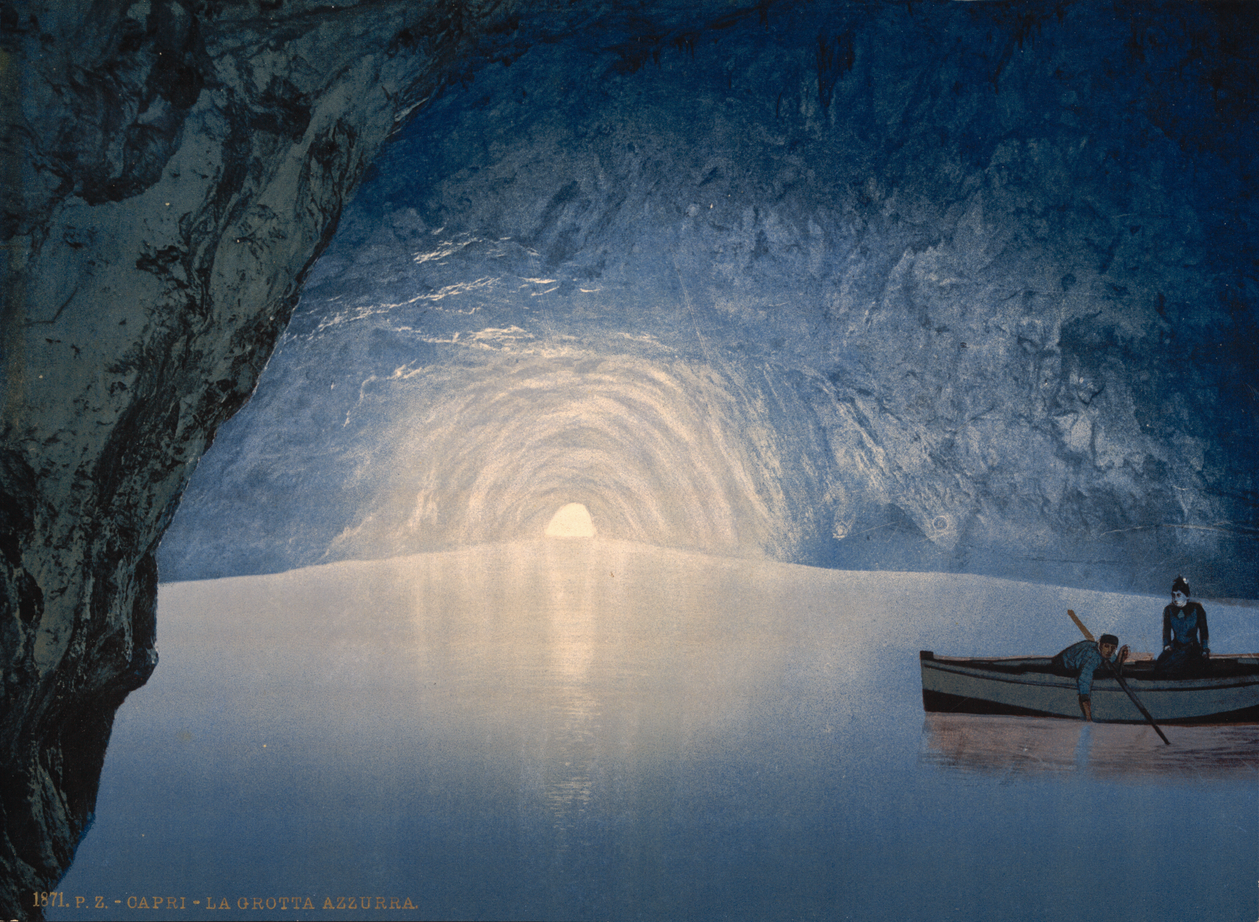
Detroit Publishing Company: La Grotta Azzurra [The Blue Grotto], Capri, photochrome print from “Views of Architecture and Other Sites in Italy” (1905) (source)
Detroit Publishing Company: La Grotta Azzurra [The Blue Grotto], Capri, photochrome print from “Views of Architecture and Other Sites in Italy” (1905) (source)

Rudolf von Alt: Solar Eclipse, Vienna (1842)
![Konstantin Yuon - Новая планета [New Planet] (1921)](https://corvusfugit.com/wp-content/uploads/2017/08/konstantin-yuon-d0bdd0bed0b2d0b0d18f-d0bfd0bbd0b0d0bdd0b5d182d0b0-new-planet-1921.jpg)
Konstantin Yuon: Новая планета [New Planet] (1921)

In the morning of April 14, 1561, at daybreak, between 4 and 5 a.m., a dreadful apparition occurred on the sun, and then this was seen in Nuremberg in the city, before the gates and in the country – by many men and women.
At first there appeared in the middle of the sun two blood-red semi-circular arcs, just like the moon in its last quarter. And in the sun, above and below and on both sides, the color was blood, there stood a round ball of partly dull, partly black ferrous color. Likewise there stood on both sides and as a torus about the sun such blood-red ones and other balls in large number, about three in a line and four in a square, also some alone. In between these globes there were visible a few blood-red crosses, between which there were blood-red strips, becoming thicker to the rear and in the front malleable like the rods of reed-grass, which were intermingled, among them two big rods, one on the right, the other to the left, and within the small and big rods there were three, also four and more globes.
These all started to fight among themselves, so that the globes, which were first in the sun, flew out to the ones standing on both sides, thereafter, the globes standing outside the sun, in the small and large rods, flew into the sun. Besides the globes flew back and forth among themselves and fought vehemently with each other for over an hour. And when the conflict in and again out of the sun was most intense, they became fatigued to such an extent that they all, as said above, fell from the sun down upon the earth “as if they all burned” and they then wasted away on the earth with immense smoke. After all this there was something like a black spear, very long and thick, sighted; the shaft pointed to the east, the point pointed west.
Whatever such signs mean, God alone knows. Although we have seen, shortly one after another, many kinds of signs on the heaven, which are sent to us by the almighty God, to bring us to repentance, we still are, unfortunately, so ungrateful that we despise such high signs and miracles of God. Or we speak of them with ridicule and discard them to the wind, in order that God may send us a frightening punishment on account of our ungratefulness. After all, the God-fearing will by no means discard these signs, but will take it to heart as a warning of their merciful Father in heaven, will mend their lives and faithfully beg God, that He may avert His wrath, including the well-deserved punishment, on us, so that we may temporarily here and perpetually there, live as his children. For it, may God grant us his help, Amen.
By Hanns Glaser, letter-painter of Nurnberg

William and Frederick Langenheim: Eclipse of the Sun (1854)
On May 26, 1854, William and Frederick Langenheim took the first photographs of a total eclipse of the sun visible in North America. (Other photographers did take pictures, but the Langenheims’ are the only that survive.) The images are reversed due to the daguerreotype process—in the northern hemisphere, the moon actually covers the sun from right to left.
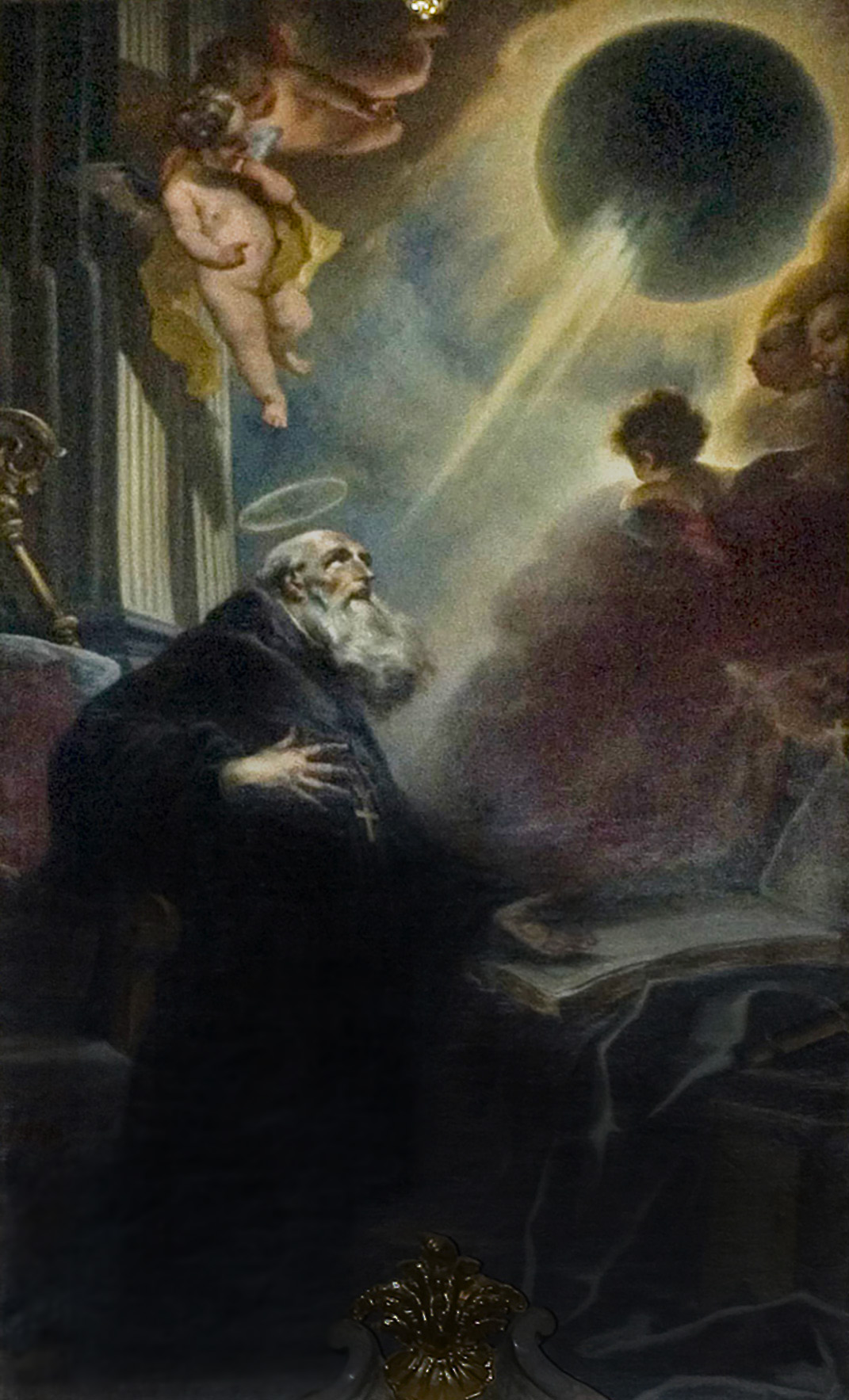
Cosmas Damian Asam: Vision of St. Benedict (1735)
“The canvas shows an elderly saint who, confronted by a solar eclipse, seems to experience a seizure—as well as enlightenment—at the moment when light erupts from the celestial sphere, as described in Benedict’s vision. The artist accurately depicted the solar corona surrounding the moon, which is obscured by the sun as well as by the light that bursts forth from the edge of the dark lunar disk in the moment after totality. This phenomenon—when the first ray of light breaks through a valley on the edge of the moon’s silhouette—is known as the ‘diamond-ring effect.’ Comparing this later representation with his earlier attempt suggests that Asam witnessed the eclipse of May 13, 1733, and perhaps combined his own observations of it with descriptions from contemporary scientists.” (source)
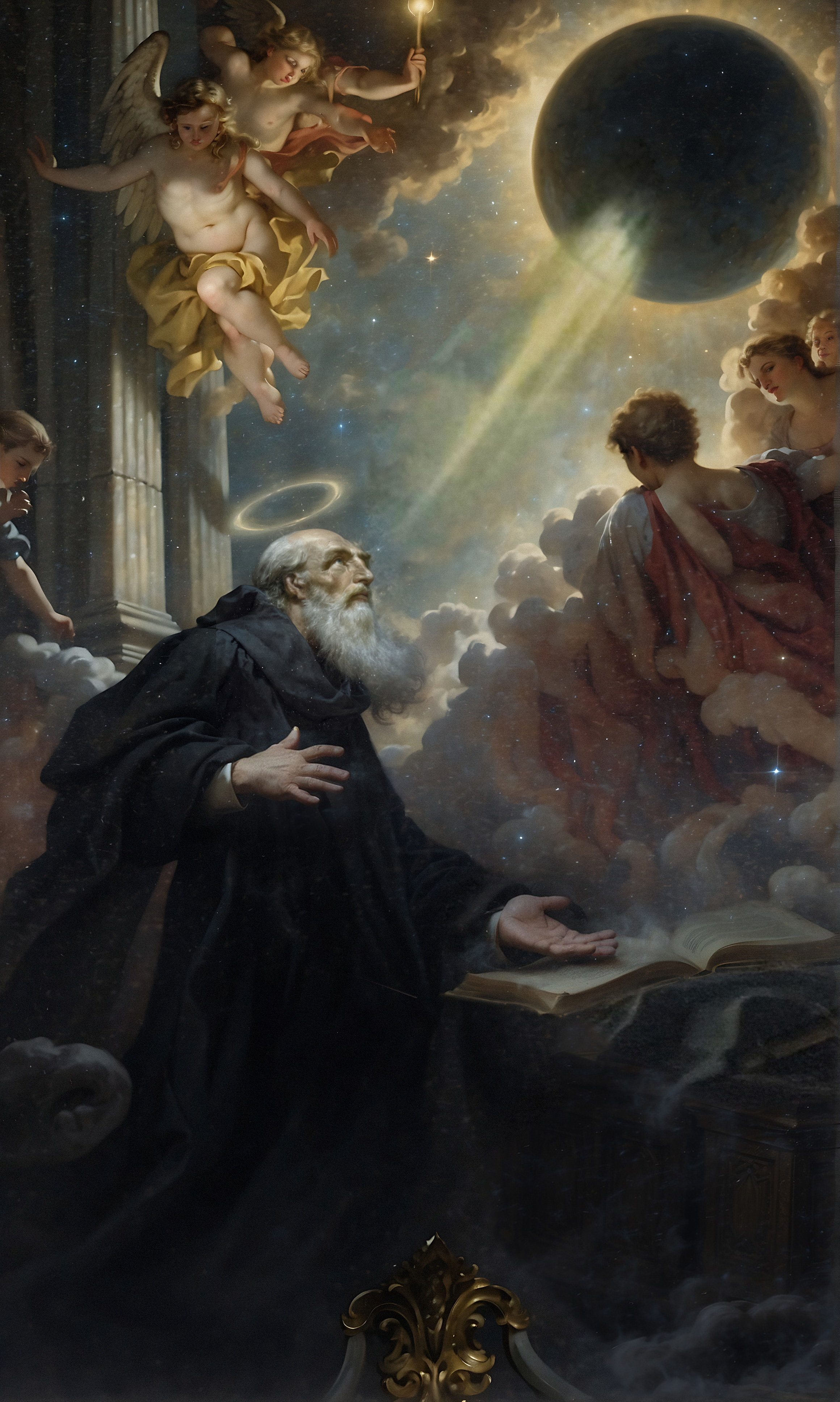
[4-7-24] Here is an AI-enhanced version:
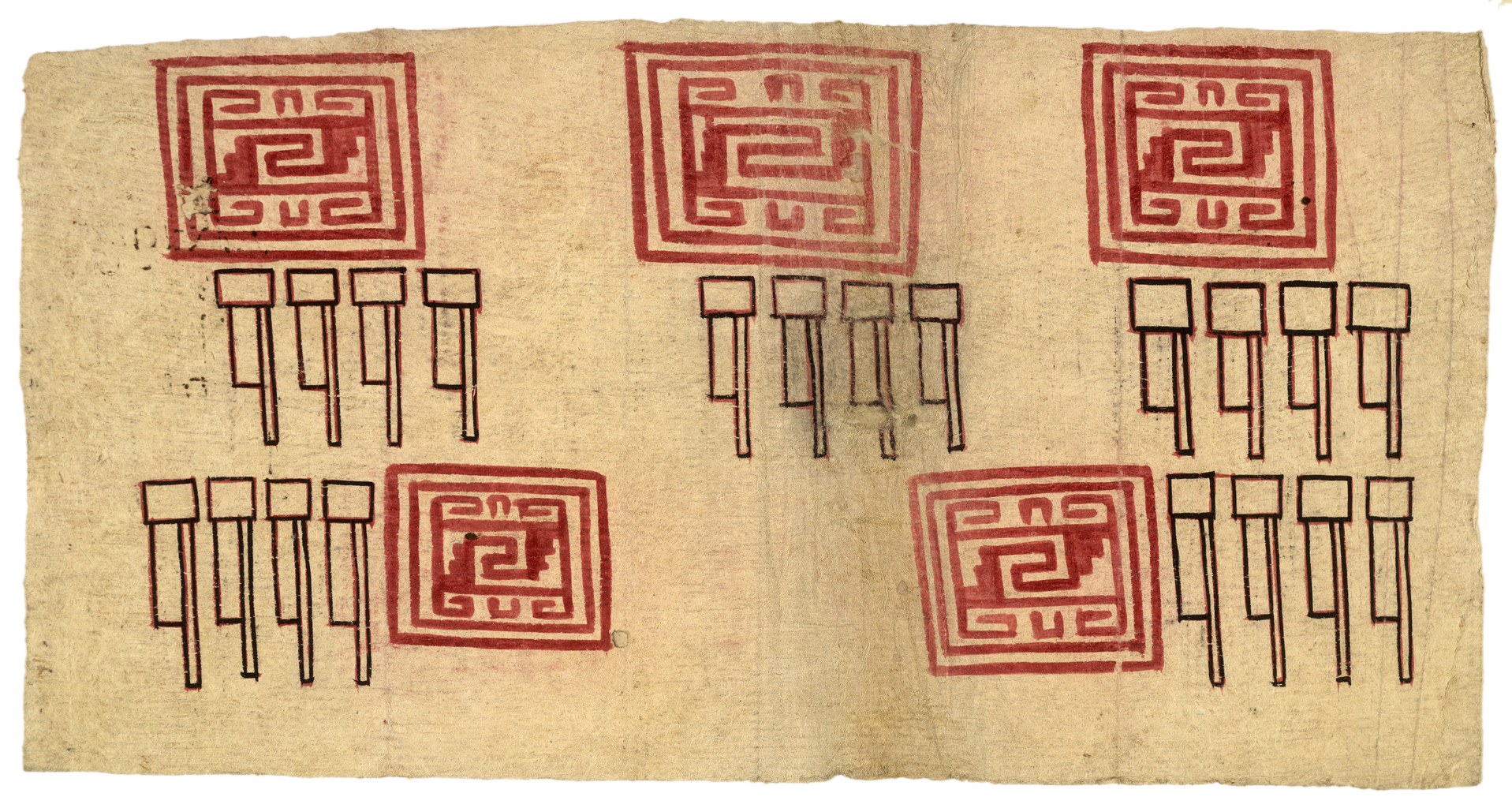
The Huexotzinco Codex is an eight-sheet document on amatl, a pre-European paper made in Mesoamerica. It is part of the testimony in a legal case against representatives of the colonial government in Mexico, ten years after the Spanish conquest in 1521. Huexotzinco is a town southeast of Mexico City, in the state of Puebla. In 1521, the Nahua Indian people of the town were the allies of the Spanish conqueror Hernando Cortés, and together they confronted their enemies to overcome Moctezuma, leader of the Aztec Empire. After the conquest, the Huexotzinco peoples became part of Cortés’s estates. During 1529-30, when Cortés was out of the country, Spanish colonial administrators intervened in the daily activities of the community and forced the Nahuas to pay excessive taxes in the form of goods and services. When Cortés returned, the Nahuas joined him in a legal case against the abuses of the Spanish administrators. The plaintiffs were successful in their suit in Mexico, and later when it was retried in Spain. The record shows (in a document uncovered in the collections of the Library of Congress) that in 1538, King Charles of Spain agreed with the judgment against the Spanish administrators and ruled that two-thirds of all tributes taken from the people of Huexotzinco be returned. (source)

Tullio Crali: Upside Down Loop (Death Loop) (1938)

“Helen Martinez and her children (her grandchild was too young to picket) wear placards announcing that Tex-Son workers are on strike.” (source)
In Friedrich Gottlieb Klopstock’s epic poem The Messiah, published from 1748 to 1773, Satan tricks Judas into betraying Jesus by appearing to him in a dream “in the form of his father…with disconsolate looks of grief and perturbation,” telling him that Jesus hates him and has lied to him about the afterlife—that all the other disciples will receive rich and fertile estates in heaven but Judas will only get a patch of barren land:
Dost thou here sleep, Judas, careless and at thine ease…as if thou knewest not that thou art the object of his hatred, and that all his other disciples he prefers to thee? ….Dost thou suppose thou shalt enjoy greater happiness in the new empire Christ is to erect? how miserably art thou deceived! Peter and the favourite sons of Zebedee, will be greater and more mighty than thee ! treasures in a full stream shall flow to them from the spacious land. All the others too shall receive from the Messiah a much more splendid inheritance than my unhappy son.
Come Judas, I will shew thee his kingdom in all its glory. Rise with me: be not dismayed but arm thyself with courage, Now thou seest before thee that endless chain of mountains, which cast their lengthening shades into that fertile valley. There gold shall be incessantly dug ; gold, bright and glittering as that of Ophir: while the valley shall through the prosperous year pour forth a rich exuberance of blessings. This is the delightful inheritance of the favourite John. Those hills, covered with vineyards, and those wide-spreading fields, clothed with waving corn, the Messiah has given to Peter. Seest thou all the opulence of that smiling country, where cities rising, in lofty splendor, each like Jerusalem, the king’s daughter, glitter in the sun, and with their innumerable inhabitants extend along the vale. Behold how those cities are watered by the limpid streams of a new Jordan, which passes through noble arches in the lofty walls. Gardens. resembling fertile Eden, wave their blushing fruit, over the golden sands, on its happy shores. These are the kingdoms of the other disciples.
But now, Judas, my son, observe that far distant mountainous country, wild, stony, and covered with withered shrubs. How barren, how desolate! Above it rests night in cold and drisly clouds, and beneath, on the tops of the eminences, a sterile depth of ice and northern snow. That, 0 Judas! is thine inheritance. In those gloomy, regions thou, and the birds of night, thy companions, are condemned to wander solitary among the aged oaks. With what haughty—with what contemptuous airs will the happy disciples look down on thee ! they will pass by without condescending to observe thee!
Ah, Judas, thou weepest with indignation!—but in vain thou weepest!—in vain are all thy tears, while surrounded with despair, thou neglectest to help thyself! ….Do thou, therefore, deliver him into the hands of the priests….the grateful priests will not fail to reward thee for delivering up Jesus. This is the advice of a father ever attentive to thy interest. Fix thine eye upon me, and know me in spite of the paleness of death. Awake. Despise not the admonitions of a parent who is come to revive thy courage; and let me not return melancholy and dejected to the mansions of the dead.
Satan having thus infected the mind of Iscariot with this deceitful vision, swelled, inflated with pride, like a mountain raised by a volcano, while convulsive earthquakes rock the neighbouring eminences, and sink the surrounding hills. Judas awoke. Furious he started up, crying, Yes, it was he—it was the voice of my deceased father!—Thus he spake—thus be looked, when before me he expired. Ah! it is then but too true that Jesus hates me! the very dead know that he hates me ! Well, I will haste and put in execution my father’s advice.
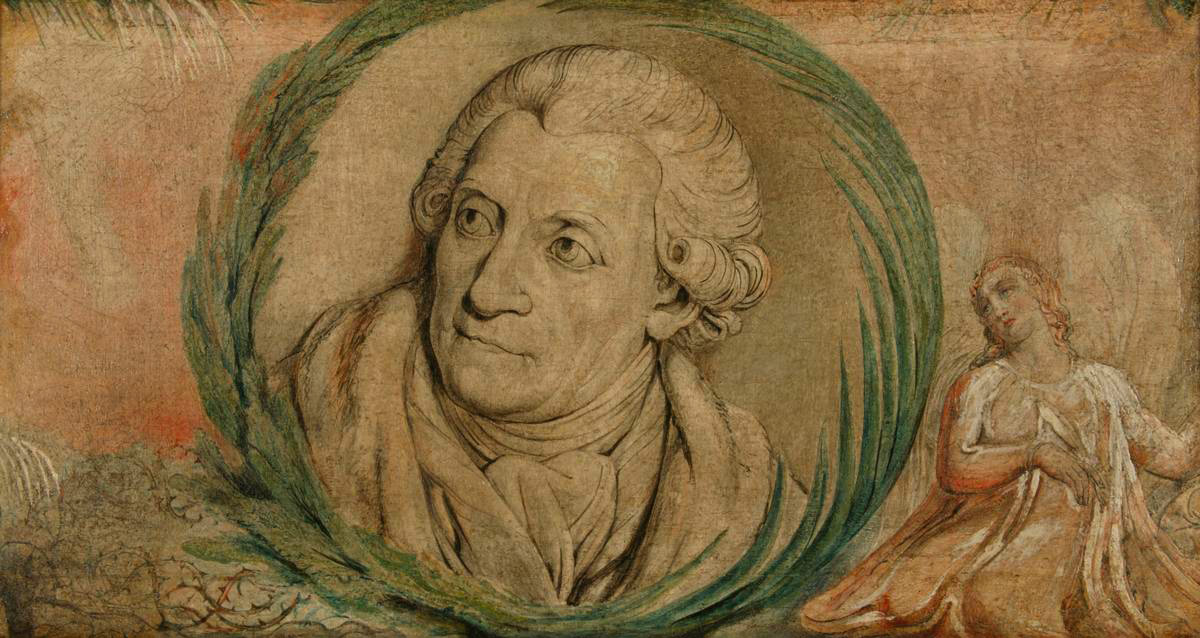
The translation from the German is by Joseph and Mary Collyer (1808). I have added some paragraph breaks. The image is an undated portrait of Klopstock by William Blake.

 corvusfugit.com