

Totoya Hokkei: 「三ひらの内」日輪に烏 [Three Crows against the Rising Sun] (mid 1810’s)
Totoya Hokkei: 「三ひらの内」日輪に烏 [Three Crows against the Rising Sun] (mid 1810’s)

Clyfford Still: PH-129 (1949)
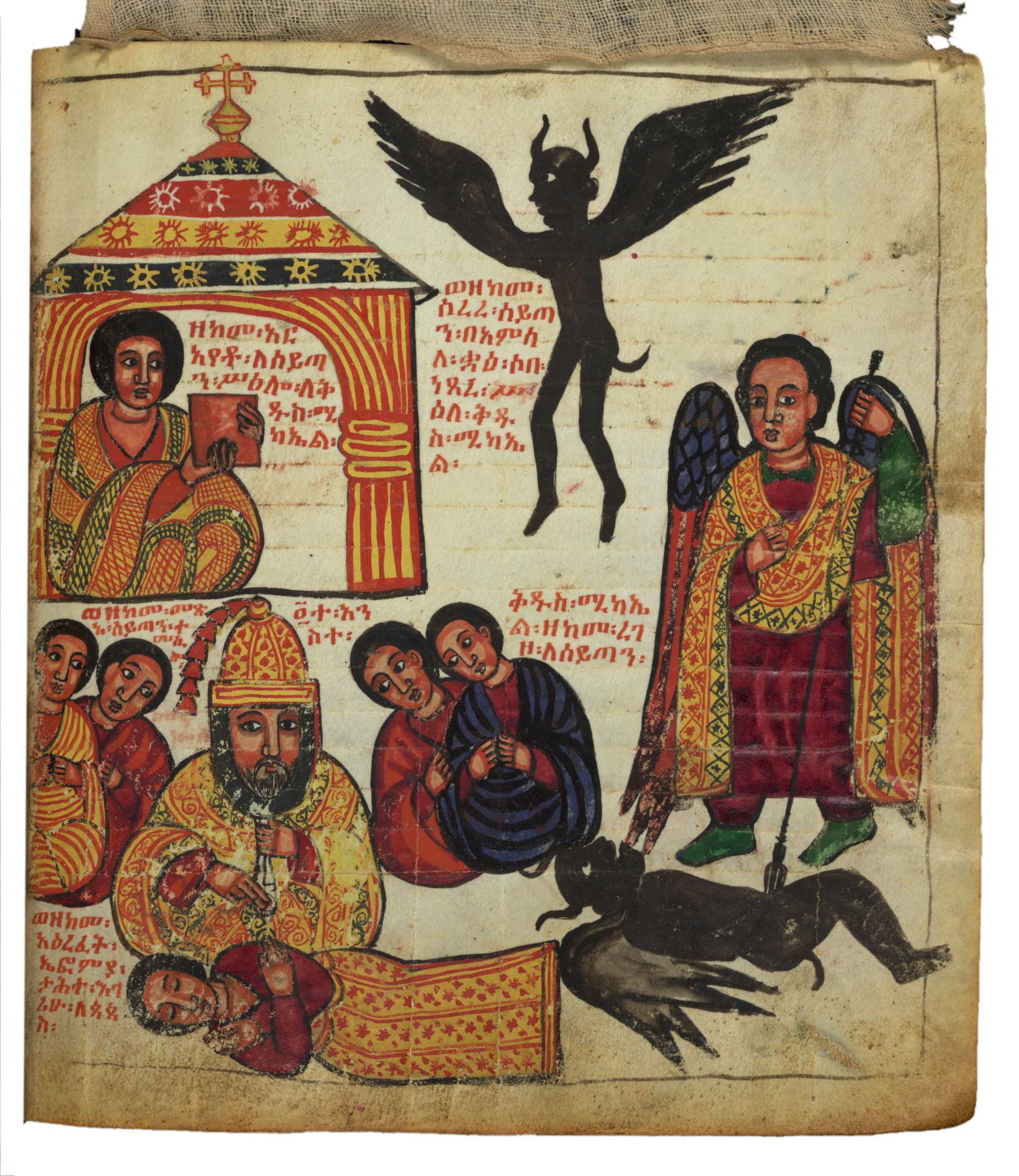
Zämänfäs Qeddus: How Satan came (again) looking like four women and St. Michael trod on him; a page from the late 17th century Gondar Homiliary.
This Homiliary was created in Gondar, Ethiopia, during a period of artistic flowering in the late seventeenth century. The Imperial court and its accompanying aristocracy took up permanent residence in Gondar at this time, and the taste of these wealthy patrons for paintings and extensive image cycles is exemplified by this richly illuminated manuscript. The text, a Homiliary focused on the Miracles of the Archangel Michael, combines liturgical readings with forty-nine brightly colored renderings of God, St. Michael, and the miracles related in the text. Sections of the manuscript would have been read aloud on monthly feast days of the Archangel, and the images would have punctuated the readings. The artists were likely trained as painters, rather than solely as manuscript illuminators, and their art can therefore be linked stylistically to contemporary mural painting.(source)
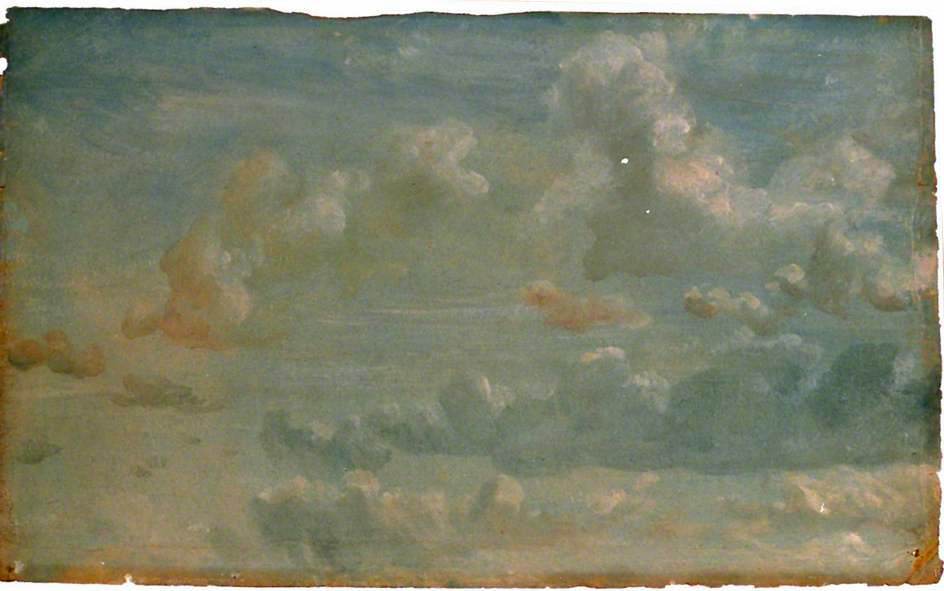
John Constable: Cloud Study (1822)
Twenty of Constable’s studies of skies made during this season are in my possession, and there is but one among them in which a vestige of landscape is introduced. They are painted in oil, on large sheets of thick paper, and all dated, with the time of day, the direction of the wind, and other memoranda on their backs. On one, for instance, is written, “5th of September, 1822. Ten o’clock, morning; looking south-east; brisk wind at west Very bright and fresh, grey clouds running fast over a yellow bed, about half-way in the sky.”
—C. R. Leslie, Life and Letters of John Constable, R. A. (1843)

Aaron Harry Gorson: Steel Mills – Nocturne, Pittsburgh (c. 1903-1920)

I couldn’t pass up this Christmas figurine of Santa Claus piloting a WWII-era Soviet Polikarpov I-16, complete with red star markings on the vertical stabilizer.
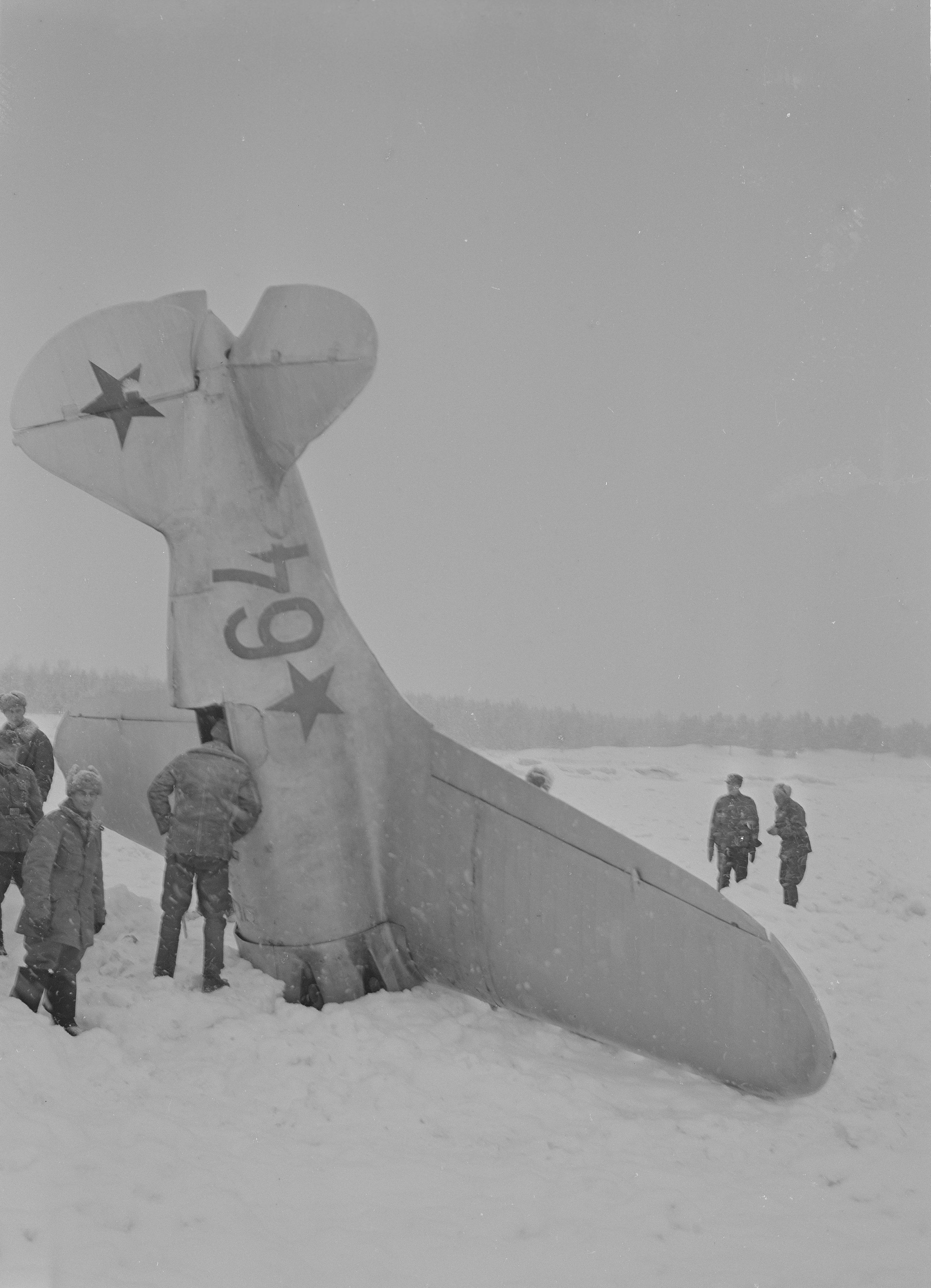
Santa crashes while delivering presents in Siberia. (Actually a Polikarpov I-16 after an emergency landing near the village of Riiska on the Karelian Isthmus—December 10, 1941.)

The two archetypal “wild men” that frame Albrecht Dürer’s portrait of Oswolt Krel (1499) were part of a popular theme in the late Medieval period and the early Renaissance. Wild men symbolized lust, fighting spirit, and the power of the primitive. Particularly in Germany and other northern countries, they gradually grew more positive in their associations, coming to represent fearless prowess and brash lion-hearted determination.
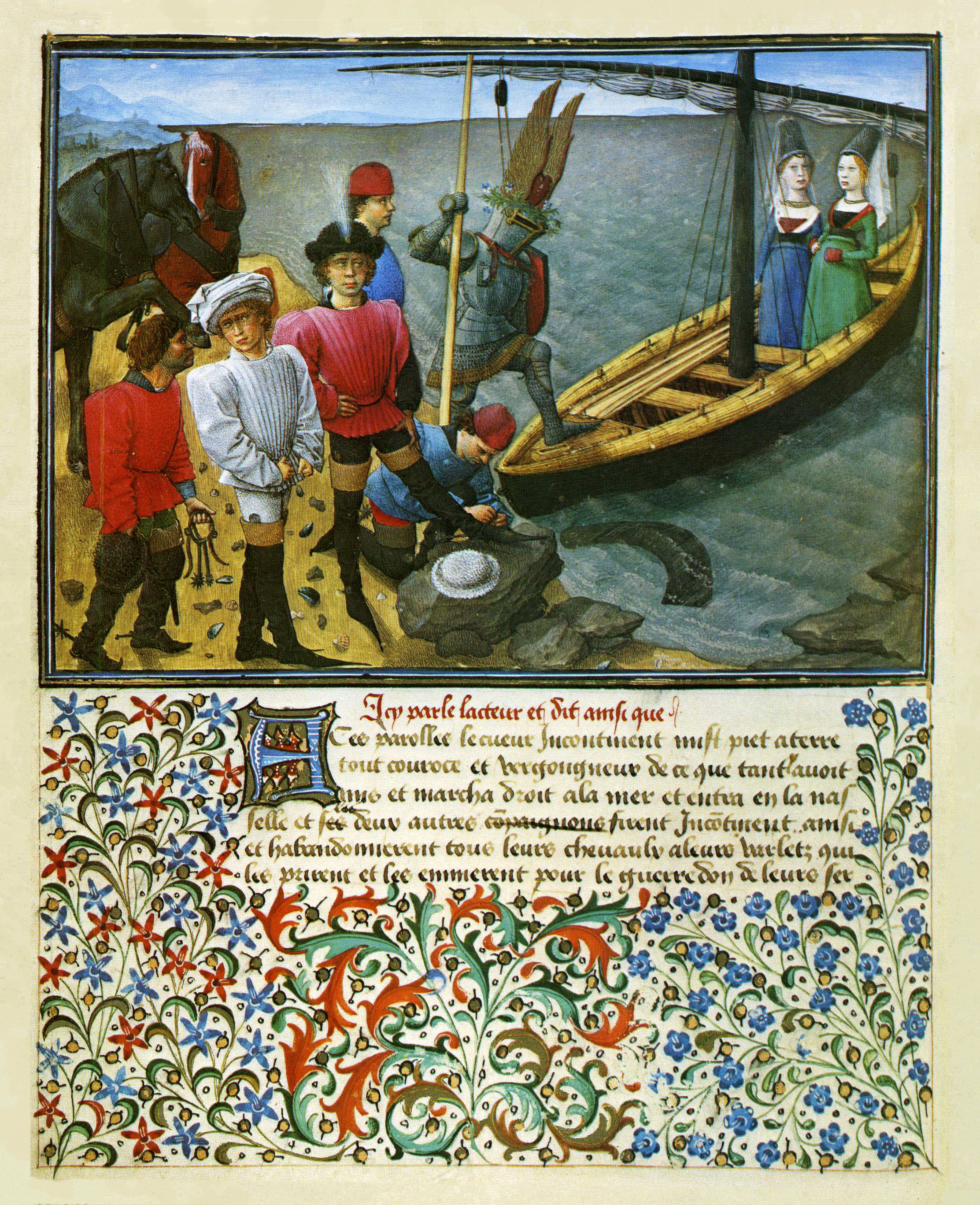
In the early 15th century, King René of Anjou’s devotion to the courtly arts and literature flourished only after decades of conflict, war, and inter-familial drama. He spent years in prison following a struggle for the throne with his older brother and war with the powerful duke Antony of Vaudémont. A complicated net of alliances and strategic marriages—along with competing claims for the inheritance of several thrones—led to armed clashes until peace was finally established in 1453.
Thereafter, René turned his attention to economic and legal reforms—but mostly to promoting arts, literature, and the genteel pastimes of courtly life.
His Livre du Cueur d’amours espris [The Book of the Love-Smitten Heart] (1457) is an allegorical romance framed as a dream. The fully-armored Cueur [Heart] sets off with his page Desire to liberate the captive Sweet Grace from the enemies of Love: Denial, Shame, and Fear. Along the way, they confront various challenges, gain new companions, and suffer the loss of others. Here, on this page, Cueur is stepping into a boat to head for the Island of Love; his two companion knights, Generosity and Desire, are set to follow. All three have brought their pages. The neighing of their horses has awakened two sleeping women in the boat: Confidante and Accord.
The illuminations are likely by Barthelemy de Cler, but a traditional belief is that René himself was the artist, having learned to paint during his time in prison.
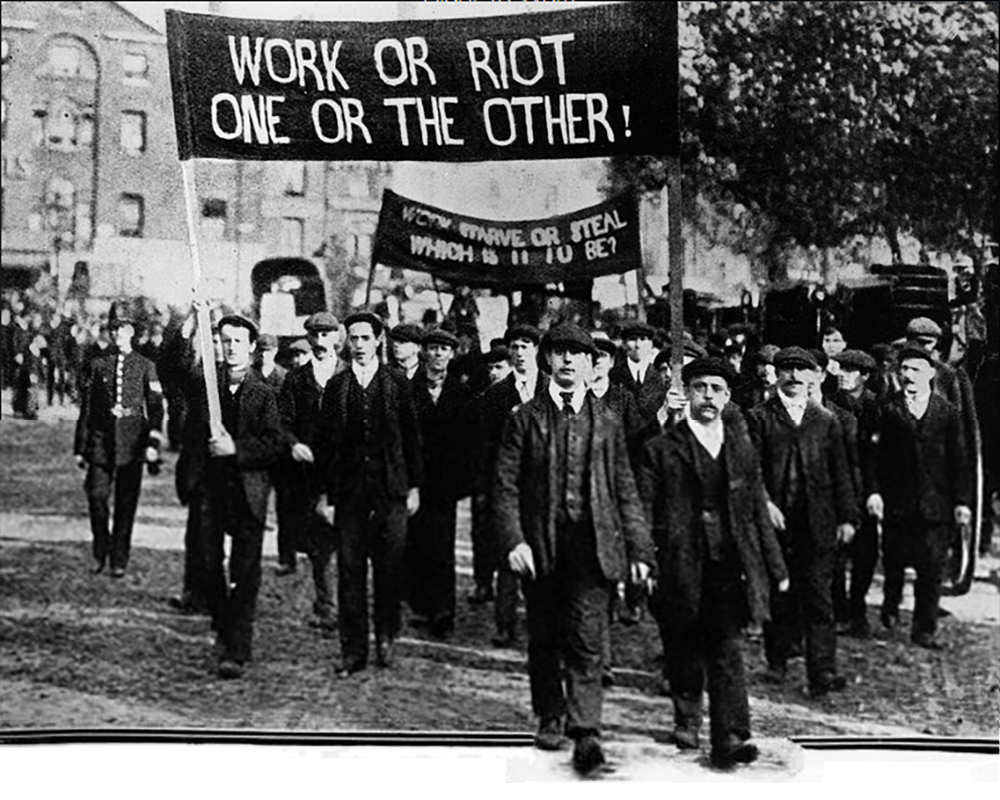
On October 15, 1908, an Irish clerk and ex-soldier named Wallace Brandford Collins ordered a throng of unemployed men and women in Hyde Park to riot at the British Museum. Collins was described as a man of powerful physique who wore a dirty red rag and a war ribbon in his buttonhole. He exhorted the crowd, estimated by the police at four or five hundred people, to raid the public collections at Bloomsbury: “If you chaps go into the British Museum and see any art-pictures there, and it is not yours, well, you take it. It is worth taking it. If the police interfere with you, smash the frame on his head. It ought to be yours. We made all the art in this country. If you go to the British Museum, take all that is in it.” After this rousing speech, Collins gathered his followers at Marble Arch and set out to storm the British Museum. One hundred men followed him through the streets of London, waving their “Work or Riot!” banners high. The crowd was halted en route to Bloomsbury by a police inspector, who warned the marchers that the museum’s iron gates would be closed against them. Collins bid the protestors to join him the next day at the House of Commons with bricks, iron bars, razors, and homemade bombs. He was promptly arrested for using language calculated to cause a breach of the peace and inciting the public to acts of violence.
The Collins trial was a raucous affair, brought to a speedy conclusion by the defendant’s own disruptive behavior. Collins shouted down the chief police witness’s testimony, declaring that he would smash any work of art in his possession over the inspector’s head. In the end, Collins was sentenced to three months in Pentonville, the infamously harsh model prison in north London where Oscar Wilde had been incarcerated ten years earlier.’ There was great difficulty in getting Collins to leave the courtroom; he refused to make his exit until he had addressed the judge directly, declaring himself a martyr and a hero for world emancipation.
—Jordanna Bailkin, The Culture of Property: The Crisis of Liberalism in Modern Britain (2004)
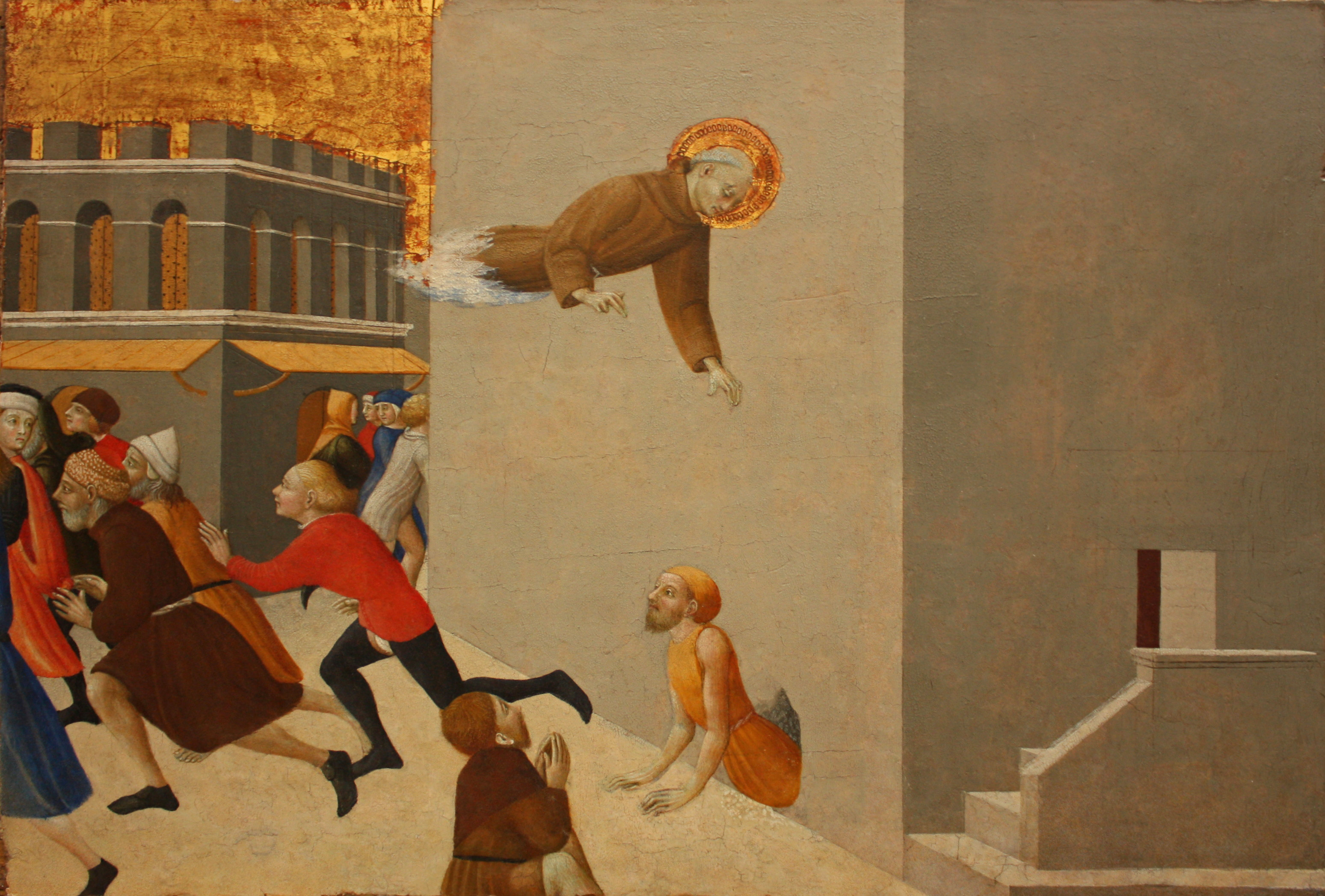
Sassetta: The Blessed Ranieri Frees the Poor from a Prison in Florence (1437-44)
This painting—now in the Louvre—was once part of an elaborate altarpiece in the Church of S. Francesco in Sansepolcro, Tuscany. The altarpiece contained 60 images and was constructed over the tomb of the Blessed Ranieri Rasini, the patron saint of Pisa; only about half of those images now survive, scattered in museums and private collections.
Ranieri (also know as Saint Rainerius) was born in the early twelfth century, the son of a prosperous Pisan merchant and shipowner. According to his official biography, he lived a lavish and sinful life as a wandering minstrel, carousing at night and sleeping by day. One evening, he met and spoke with a holy man, which lead him to see the light, burn his fiddle, and renounce his carefree life. He then became a successful merchant like his father and amassed a large fortune.
One day, however, he found that his money exuded an evil stench. Taking this as as a sign, he gave away his fortune and lived the rest of his life in poverty, eventually becoming capable of healing the sick and performing miracles.
The miracle depicted above occurred when prisoners in Florence wrote Ranieri a letter asking for his help; he soon appeared outside the prison, the story goes, and miraculously engineered their release.

 corvusfugit.com