

Albert Richards: The Drop (1944)
Albert Richards: The Drop (1944)
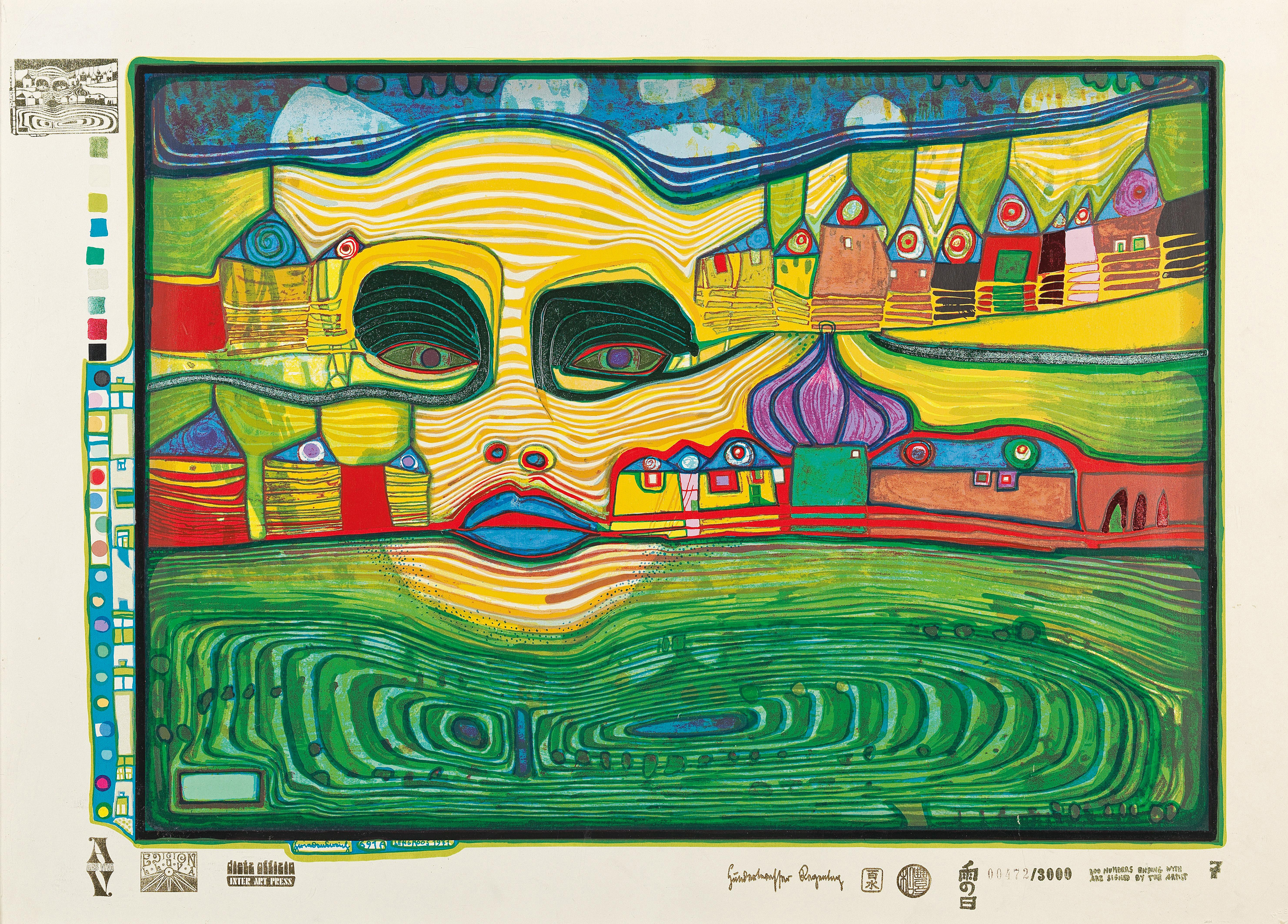
Friedensreich Hundertwasser: Irinaland over the Balkans (1971-1972)
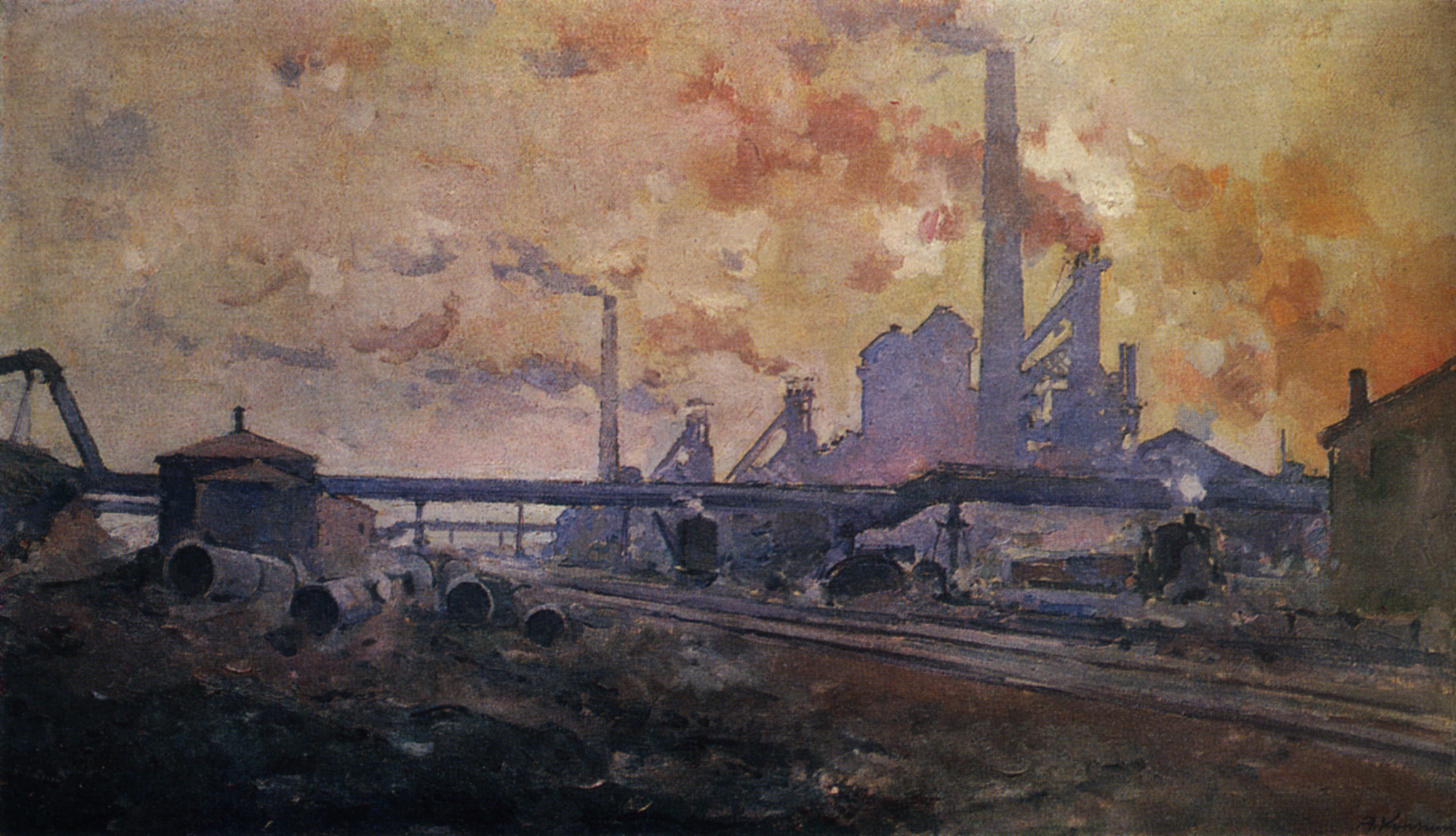
Aleksander Vasilievich Kuprin: G. I. Petrovsky Metallurgy Plant, Dnepropetrovsk (1930)
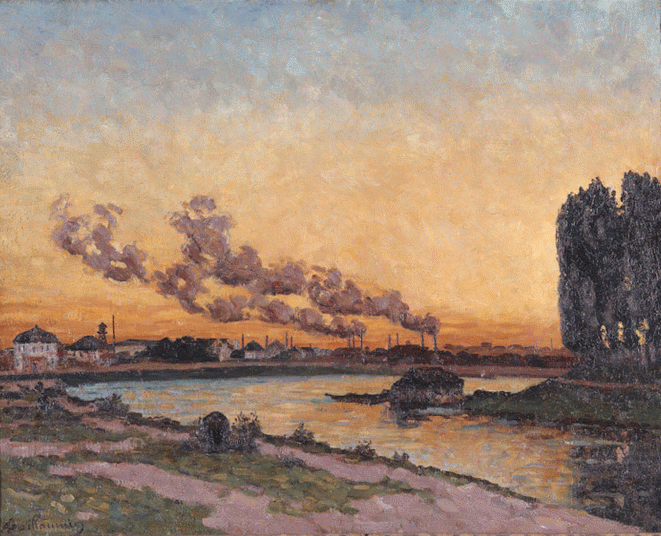
Armand Guillaumin: Sunset over Ivry (1873)
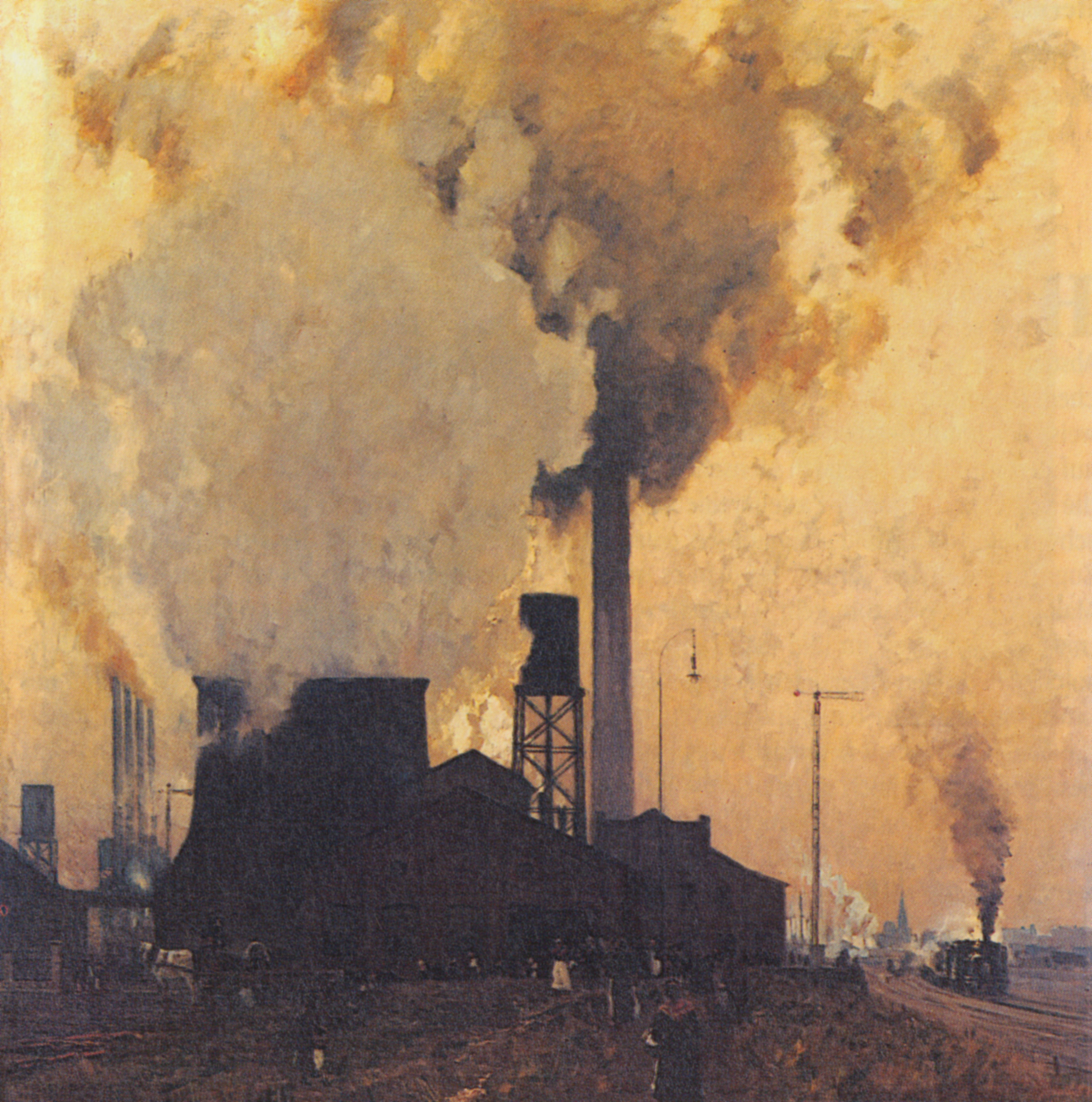
Eugen Bracht: Hoesch Iron and Steel Works, Dortmund (1907)

Robert Pruitt: Heliocentrist (2013)
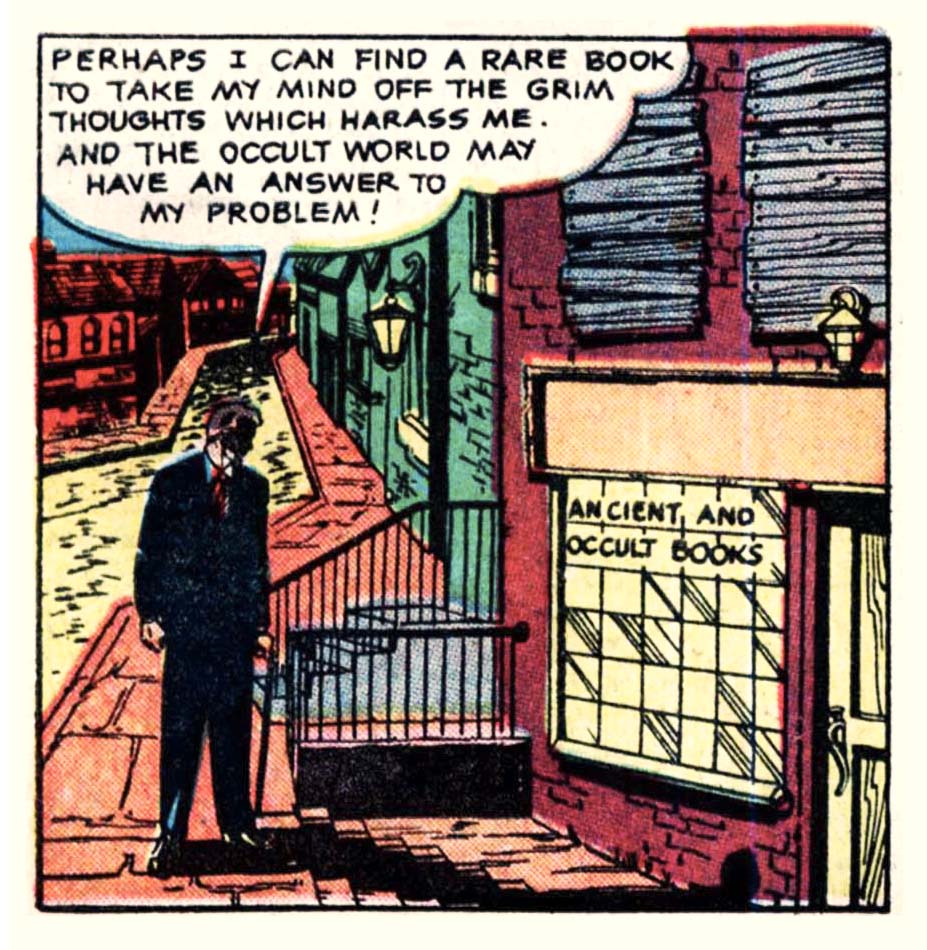
Baffling Mysteries No. 7 (March 1952);
art by Lou Cameron, found here.

In 1895, King Njoya of the Bamum, an ethnic group from what is now western Cameroon, invented an alphabet to record the history of his people.
Njoya, who traced his linaege back 16 or 17 generations of kings, was insipred by a dream and solicited ideas for the new writing system from his subjects:
When King Njoya was asleep one night he had a dream. A man came and before him saying: “Oh King, take a wide, flat piece of wood and mark on it a man’s hand. Then wash the board and drink the water.” The king took a plank and made a mark as the man directed, and handed it to that man who also made a mark thereon and returned the plank to the King. In the dream there were many people sitting around, all schoolboys, and they had paper in their hands. They all made marks thereon and passed on what they marked to their neighbors.
When it was daylight the King took a wide plank and marked thereon a man’s hand. He then washed the plank with water and drank it, as the man in the dream directed. The King now summoned many of his courtiers and told them to mark out many things and to give names to all these things so that the result would be a book. In this way man’s speech could be inaudibly recorded. (source)
I’ve found a few interpretations of the role the script played in the society’s hierarchy. In one, Njoya “created a secret court language, Shumum”—the language is exlcusive—but in the other
The Shumom writing system was invented and used in such a participatory democracy where all the members of the society are asked by the king to participate in the project. King Njoya, the able and visionary leader, ordered his constituency to contribute symbols for the writing system. In so doing not only he succeeded in ensuring a wide range of ideographic ideas to choose from, but he also paved the way for eventual acceptance of the system by the whole nation.
Finally, one source says that “two systems of writing were taught at the school: the Royal and the popular scripts.”
The inital set of symbols numbered 510 and were mostly pictographs, but over the next decade or two a series of revisions reduced the collection to an alphabet/syllabary of seventy, eighty, or thirty-odd characters (depending on the source). It was named the A-ka-u-ku script.
Njoya had the script taught in schools and commanded that it be used for offical purposes such as court case records, official communications, and written laws. He had a printing press made and the Complete History and Customs of the Bamun was published (1,190 pages long, reportedly available in a French translation), as well as a map of the kingdom and books on religion and medicine.
After WWI, the area passed from German to French colonial rule and the script was banned; the printing press was detroyed along with books and records. Njoya was sent into exile in 1931 and died a few years later.
Some reports indicate efforts at rejuvinating A-ka-u-ku, but I have been unable to find details.
Image source here.
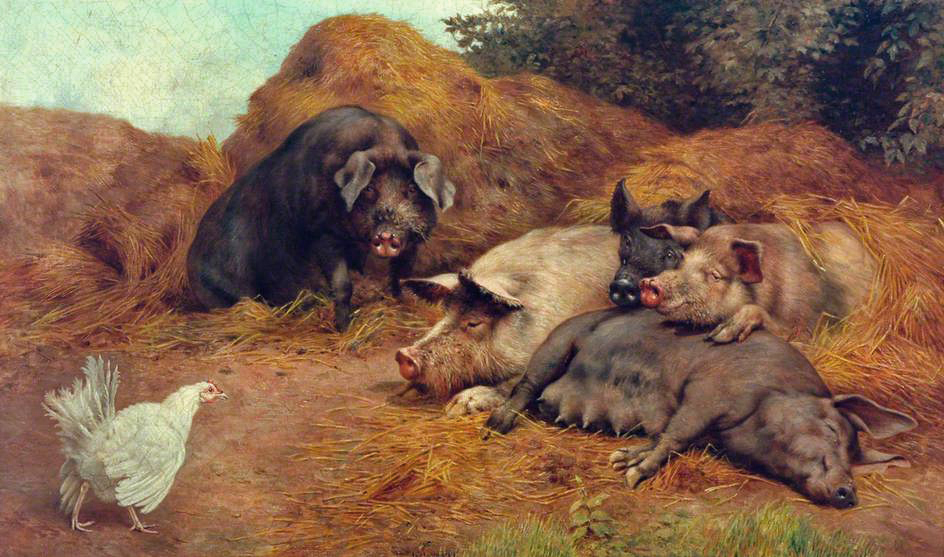
William Weekes: Pigs Disturbed by a Hen; I made up the date.

Congress of South African Trade Unions: 1987 Calendar
In 1987, COSATU conducted a two-day strike during the general elections in May as part of its Living Wage Campaign. More than 2.5 million workers took part. Later that month, their headquarters were bombed. Although the apartheid regime’s state media claimed that COSATU itself had perpetrated the bombing, it was later revealed—during the Truth and Reconciliation Commission—that Minister of Law and Order Adriaan Vlok and other state officials were responsible.
In August, 340,000 members of the National Union of Mineworkers (NUM), the largest affiliate of COSATU, launched a 21-day strike against the gold mining industry—the largest strike in the history of South Africa. Management and the state reacted harshly, sending in police and armored trucks to assault workers. Tens of thousands of workers were fired and the union was forced to accept less than a living wage.
Throughout the 80’s, COSATU played a major role in the struggle against apartheid. Activists and shop stewards were leaders in their community and were crucial in the movement for liberation and democracy.
Ilizwe lelethu basebenzi masimanyane
Solimetyeni kudala sisebenz’ ababhulu mahala,
basebenzi masimanyane
Amandla nga wethu yebasebenzi, basebenzi masimanyaneThis country is ours, workers we must unite
We shall plough on the rock we have been working for white farmers for free,
Workers we must unite
The power is our workers, workers we must unite

 corvusfugit.com