
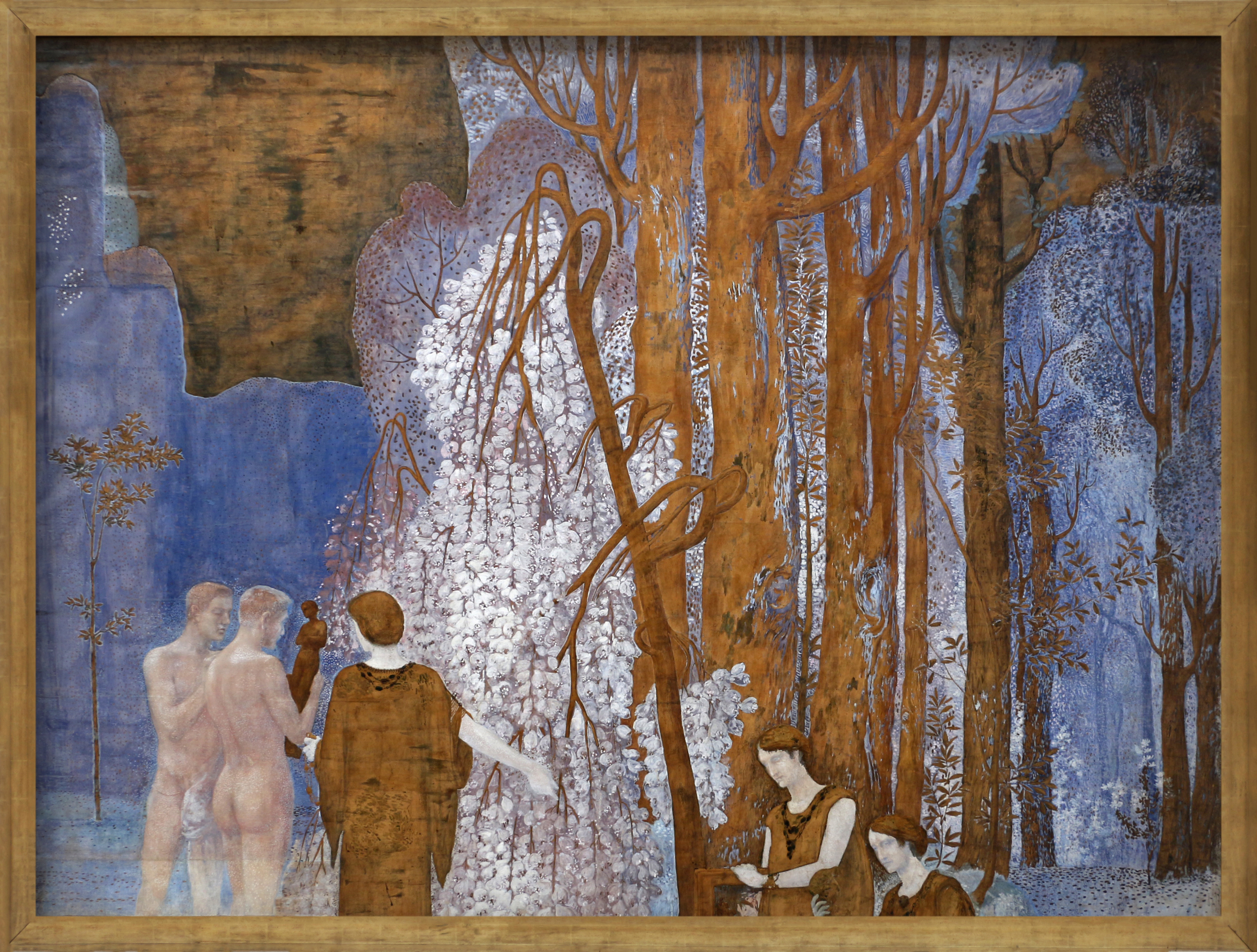
Constant Montald: The Boat of the Ideal (1907)
Constant Montald: The Boat of the Ideal (1907)
![Antonio Montauti - Portrait of Antonio Magliabechi (1725) [detail]](https://corvusfugit.com/wp-content/uploads/2019/09/antonio-montauti-portrait-of-antonio-magliabechi-1725-detail.jpg)
In 1673, Antonio Magliabechi became librarian to Cosimo III de’ Medici, Grand Duke of Tuscany. He was an eruidite scholar, fluent in Latin, Greek and Hebrew, and—according to his contemporary and biographer Giacinto Gimma—versed in physics, mathematics, rhetoric, grammar, history, magic, zoology, mineralogy, chemistry, medicine, and many other subjects. His residence was a center of intellectual life in Florence and drew scholarly visitors from across Europe.
He was passionate about books. His own personal library was vast, consisting of 140,000 books and 10,000 manuscripts—far too many to fit in the shelves in his house. Books lined the stairways and were piled on the front porch. He “lived amid books and upon books. They were his bed, board, and washing.” Isaac Disraeli recounted the following:
Heyman, a celebrated Dutch professor, visited this erudite librarian, who was considered as the ornament of Florence. He found him amongst his books, of which the number was prodigious. Two or three rooms in the first story were crowded with them, not only along their sides, but piled in heaps on the floor; so that it was difficult to sit, and more so to walk. A narrow space was contrived, indeed, so that by walking sideways you might extricate yourself from one room to another. This was not all; the passage below stairs was full of books, and the staircase from the top to the bottom was lined with them. When you reached the second story, you saw with astonishment three rooms, similar to those below, equally so crowded, that two good beds in these chambers were also crammed with books.
Indeed, it seems he cared for little else. He ate simply—”eggs, bread, and water, in great moderation”—and would wear the same clothes until they became ragged. He reputedly simply slept in his clothes, thinking it a waste of time to do otherwise, “life being so short and books so plentiful.” Indeed,
he fought against sleep until it conquered him, and even when it did so, he would not lay himself on his bed, but, spreading an old rug over any books that were on the floor, would stretch himself upon them. Only if it were very cold he would throw himself, completely dressed, into his unmade bed, which was filled full of books, taking a basin of coals with him. Several times by these means he caused a fire to break out, which was, however, fortunately quenched by the other inmates of the house.
He was famed for his memory:
It was common for the learned to consult him when they were writing upon any subject, and he could tell them not only what previous authors had directly treated of the same matters, but could also point to such as had briefly and incidentally alluded to them, naming the author, the book, the words, and often the very page at which each passage occurred.
A friend gave him a manuscript composition to read, and after a time received it again. Shortly afterward, the individual came to Magliabechi, lamenting the loss of the manuscript, and entreating him to put down as much of it as he could remember, that it might be rewritten. The other consented, and, sitting down, wrote over the production, word for word, from beginning to end.
In later years he retired to the Dominican convent of Santa Maria Novella, where he died at the age of 81. In his will, he left his books to be used as a public library “to promote studies, virtues, sciences, and with those, piety and the universal good, for the universal benefit of the city and especially for the poor, clerics, priests and seculars who have no way of buying books and being able to study.” He left his fortune to the poor.
Sources here, here, here, here, and here. Bust of Magliabechi by Antonio Montauti (1725).
A quite common superstitious practice, in order to rid a house of Cockroaches, is in vogue in our country at the present time. It is no other than to address these pests a written letter containing the following words, or to this effect : “0, Roaches, you have troubled me long enough, go now and trouble my neighbors.” This letter must be put where they most swarm, after sealing and going through with the other customary forms of letter writing. It is well, too, to write legibly and punctuate according to rule.
—Frank Cowan: Curious Facts in the History of Insects, Including Spiders and Scorpions (1865)

Jean Cocteau, director: La Belle et la Bête (1946)
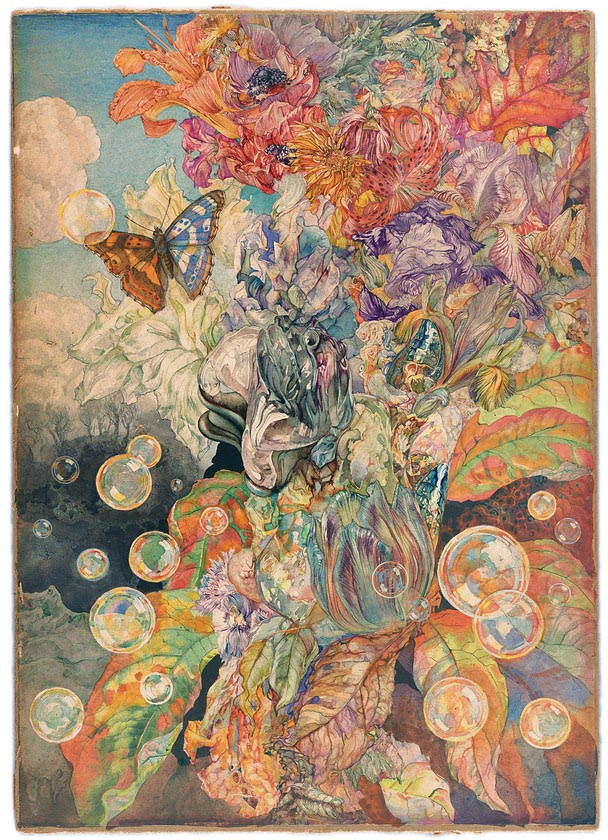
Andrey Avinoff: Iridescence (1925-1947)
The entomologist Andrey Avinoff emigrated from Russia to the USA after the revolution and worked at the Carnegie Museum of Natural History for 20 years, eventually becoming its director. He turned to painting only later in life after moving to New York City. He was close friends with sex researcher Alfred Kinsey.

Birge Harrison: Fifth Avenue at Twilight (ca. 1910)
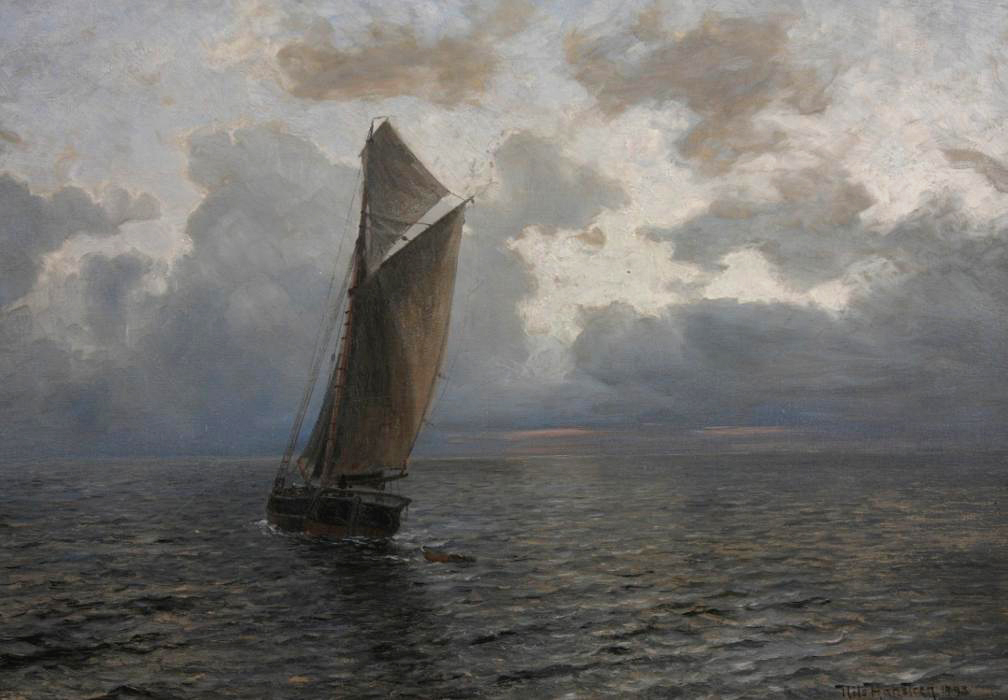
Nils Hansteen: Marine (1893)
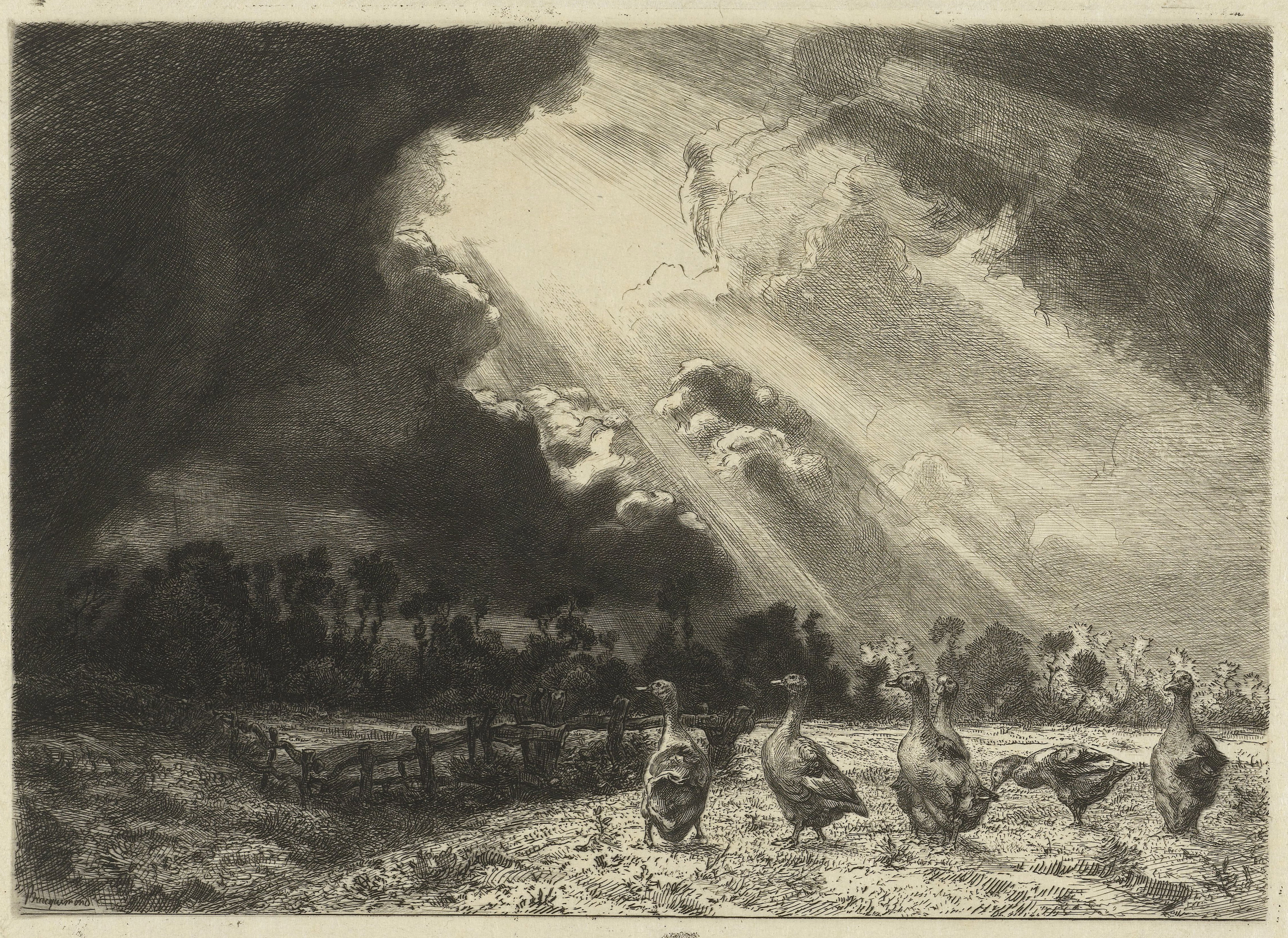
Félix Bracquemond: The Storm Cloud (1860-1870)
Every Tlingit clan in every major village was supposed to have its own shaman (’ixtˈ), who might also be a clan or house chief, uniting supernatural power with economic and ceremonial leadership….The functions of the shaman were several. He fought with the shaman of an enemy clan in war time, and furnished military intelligence to his own people, as reported by his spirits (yé’k). He sent his spirits for news of absent friends and relatives, to find lost persons, and, if not too late, to restore to human form those who had been “captured” and transformed by Land Otter Men… He brought good weather, restored fish runs, announced the warnings of the spirit, and furnished amulets for good luck. He cured those suffering from aggression by evil spirits, and instructed others in the use of devilclub branches to ward off “disease spirits.” Although the shaman had considerable medical and surgical knowledge, he personally undertook fewer and fewer cures during the later decades of the nineteenth century. His major function was to detect witches.
There were very few women shamans among the Tlingit, but they were judged to be as powerful as their male colleagues. One even brought to life a youth who had died, and another prophesied the coming of the Russians. The power of a shaman depended entirely on the character and number of the spirits he or she could call.
—Frederica de Laguna: “Atna and Tlingit Shamanism: Witchcraft on the Northwest Coast.” Arctic Anthropology Vol. 24, No. 1 (1987), pp. 84-100.
Image: Tlingit Wood Shaman Figure, c. 1929 (source)
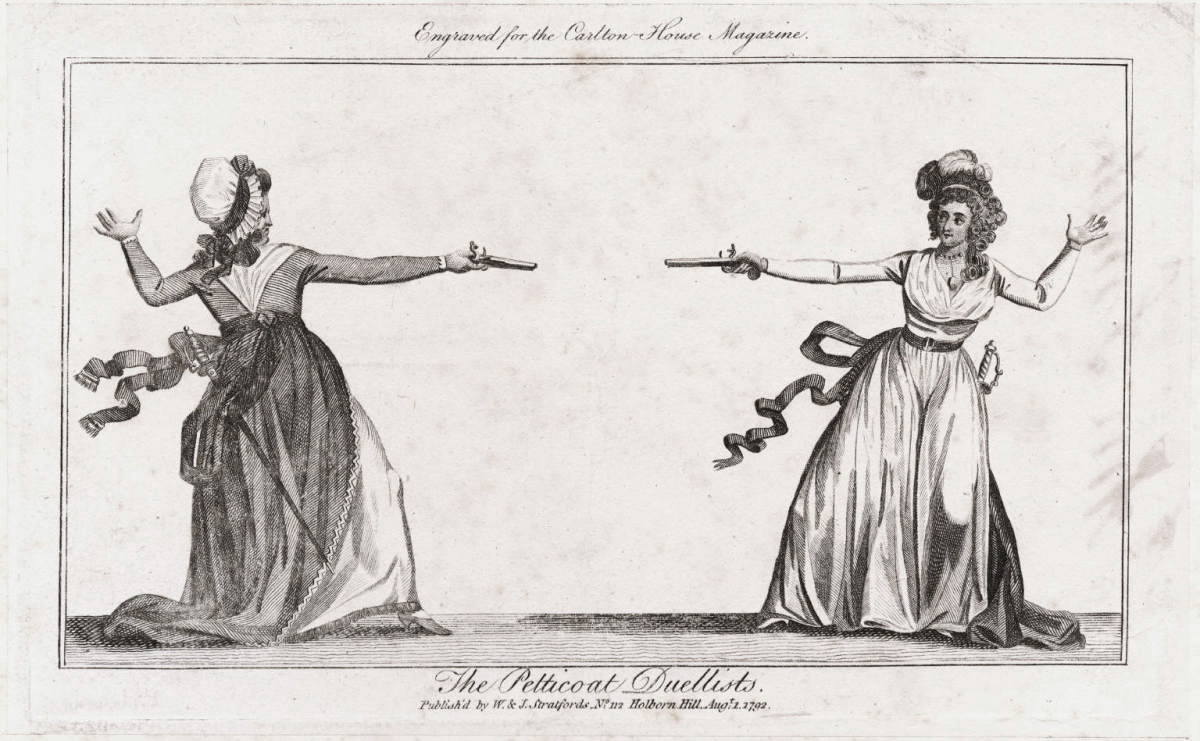
One afternoon in 1792, Lady Almeria Braddock and a certain Mrs. Elphinstone were having tea when the following exchange occurred:
Mrs Elphinstone: “You have been a very beautiful woman.”
Lady Almeria: “Have been? What do you mean by ‘have been’?”
Mrs Elphinstone: “You have a very good autumn face, even now . . . The lilies and roses are somewhat faded. Forty years ago I am told a young fellow could hardly gaze on you with impunity.”
Lady Almeria: “Forty years ago! Is the woman mad? I had not existed thirty years ago!”
Mrs Elphinstone: “Then Arthur Collins, the author of the British Peerage has published a false, scandalous and seditious libel against your ladyship. He says you were born the first of April 1732.”
Lady Almeria: “Collins is a most infamous liar; his book is loaded with errors; not a syllable of his whole six volumes is to be relied on.”
Mrs Elphinstone: “Pardon me. He asserts that you were born in April 1732 and consequently are in your sixty first year.”
Lady Almeria: “I am but turned of thirty.”
Mrs Elphinstone: “That’s false, my lady!”
Lady Almeria: “This is not to be borne; you have given me the lie direct . . . I must be under the necessity of calling you out . . . ”
Mrs Elphinstone: “Name your weapons. Swords or pistols?”
Lady Almeria: “Both!”
The two met at Hyde Park and drew pistols. Mrs Elphinstone shot a hole through Lady Almeria’s hat, knocking it to the ground. When swords were drawn, Lady Almeria wounded the arm of her opponent, who then agreed to compose a letter of apology. (source)



 corvusfugit.com